Winter Storm and Blizzard Prep for Rural Homes
The National Weather Service's before-the-storm page says the main concerns at home are loss of heat, power and telephone service, and a shortage of supplies if storm conditions continue for more than a day. It says to refuel before your heating fuel is empty, because fuel carriers may not reach you for days after a storm. The CDC's winter storm safety page says to keep at least one backup heat source for power outages, and the National Weather Service's during-the-storm page says that if you get stuck in a vehicle, stay in it.
A winter storm takes away the things a rural home leans on: heat, power, a plowed road, a quick call for help. The storm itself may last a day. Getting back to normal can take longer.
This guide follows the National Weather Service's winter safety pages and the CDC's winter storm safety page. Where we add a suggestion of our own, we say so. For conditions in your own area, local forecasts and emergency officials are the authority.
Stock The House Before The Storm
The National Weather Service's before-the-storm page says to stock your home, office and vehicles with supplies before a storm, and to make sure farm animals and pets have essentials too. For the home, its list is specific.
| 01 | Light and a radioA flashlight with extra batteries, and a battery-powered NOAA Weather Radio plus a portable radio. |
| 02 | Food and water that need no cookingExtra food and water that needs no cooking or refrigeration. The page gives dried fruit, nuts and granola bars as examples. |
| 03 | Medicine, first aid and baby itemsExtra prescription medicine, first-aid supplies, and baby items such as diapers and formula. |
| 04 | Heating fuelRefuel before you are empty. The page says fuel carriers may not reach you for days after a storm. |
| 05 | An emergency heat sourceA fireplace, wood stove or space heater, properly ventilated to prevent fire. |
| 06 | Fire and carbon monoxide protectionA fire extinguisher and smoke alarm, with the alarm tested monthly, and a working carbon monoxide detector. The page says to clear the outside vent of leaves, debris and snow. |
| 07 | Pet food and a warm shelterExtra pet food and a warm place for pets to stay. |
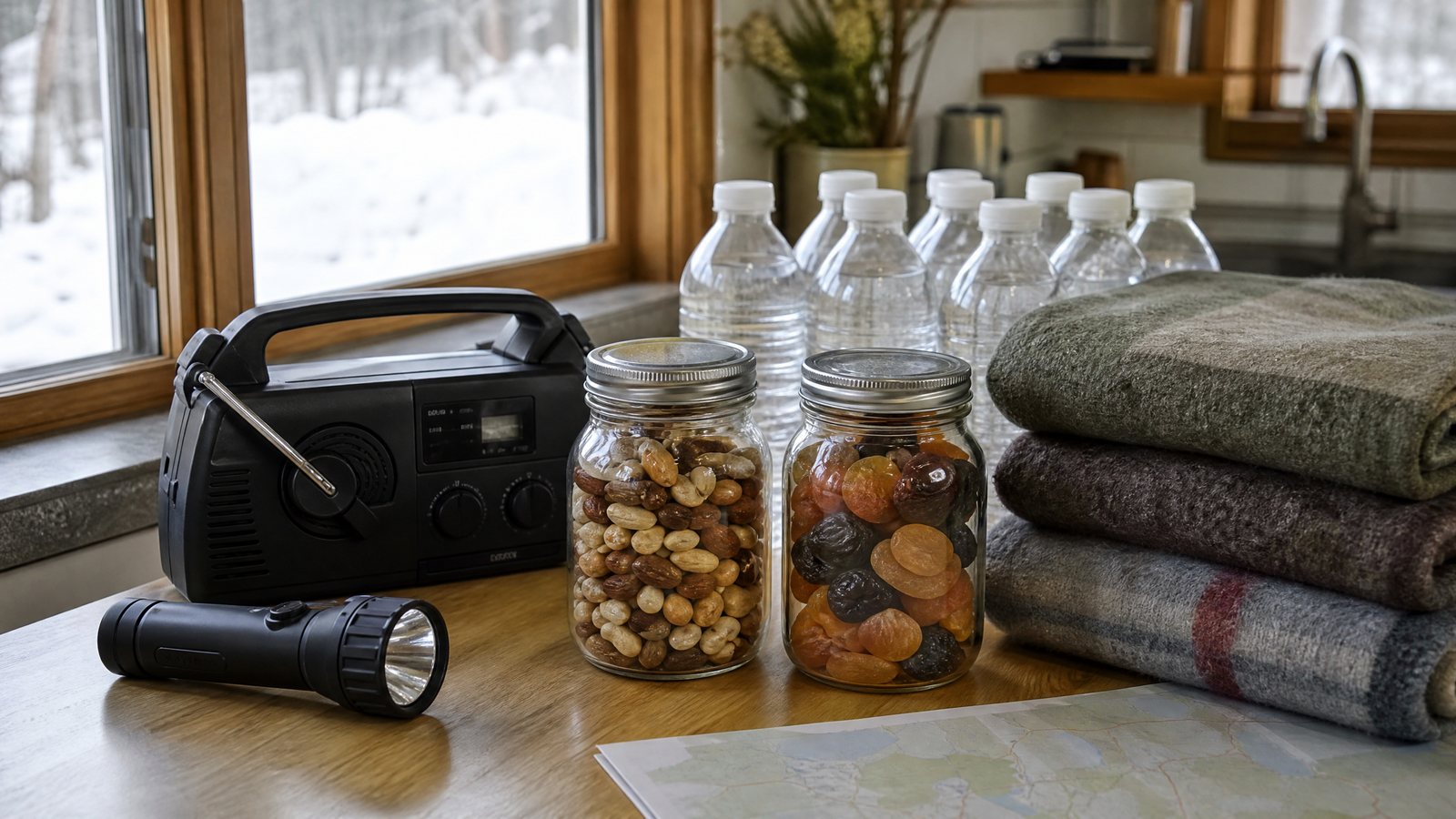
Our own suggestion, not the National Weather Service's: keep the winter supplies together in one spot you can reach in the dark. Our guides to water storage basics, emergency lighting and choosing a portable power station cover quantities and options.
For animals, the same page says to move animals to sheltered areas, haul extra feed to nearby feeding areas, and make sure water is available. It says dehydration is a leading cause of animal deaths in winter storms. For household pets, our guide to preparing your pets for an emergency goes through the kit.
Keep The House Warm Without Hurting Anyone
The CDC's winter storm safety page says to keep at least one backup heat source for power outages. Its examples are extra blankets, sleeping bags and warm coats; a code-compliant fireplace with dry firewood or a gas log fireplace; or portable or kerosene heaters, with a note to check local fire department rules on kerosene. It also says, plainly: “Turning on the stove for heat is not safe!”
| 01 | Use space heaters the way the CDC describesChoose electric heaters with automatic shut-off switches and non-glowing elements. Keep them at least 3 feet from drapes, furniture, bedding and other flammable materials, and never cover one. Do not place a heater on furniture or near water, and avoid extension cords. |
| 02 | Vent combustion heaters outsideUse fireplaces, wood stoves or combustion heaters only if they are vented to the outside and do not leak gas or exhaust indoors. Have your heating system serviced by a qualified technician every year. |
| 03 | Keep generators outside and far awayLocate a generator at least 20 feet from any window, door or vent, where rain and snow cannot reach it. Never use generators, gas or charcoal grills, camp stoves or similar devices inside your home, in basements, in garages or near windows. The page says: “The fumes are deadly.” |
| 04 | Install a battery-operated carbon monoxide detectorThe CDC lists this as protection against carbon monoxide poisoning when you use a generator or other fuel-burning equipment. |
| 05 | Use flashlights instead of candles when possibleThe CDC says candles can lead to house fires, and that if you use them, you should never leave lit candles unattended. |
| 06 | Keep furnace vents clear of snowThe National Weather Service's during-the-storm page says to clear a gas furnace's vent of snowdrifts as soon as it is safe to go outside. If an upstairs gas furnace vents through the roof, it says you may need to shut the furnace off until snow melts off the roof. |
Our guide to cooking safely without power covers the camp-stove side of the same carbon monoxide rule, and our guide to choosing a fire extinguisher covers the one tool the NWS says to have on hand.
Vehicle And Travel Prep
The National Weather Service's before-the-storm page says that on average, more than 5,000 people are killed and more than 418,000 injured each year in weather-related vehicle crashes. Its advice for a longer winter trip is short.
| 01 | Winterize before winter startsFully check and winterize the vehicle. Keep fluid levels full, and check that the lights, heater and windshield wipers work properly. |
| 02 | Keep the tank near fullThe page says this helps avoid ice in the tank and fuel lines. |
| 03 | Tell someone your planGive someone your timetable and your primary and alternate routes, and avoid traveling alone. The page also says to call 511 for traffic, construction, weather and road restriction updates before you leave. |
| 04 | Slow downThe page says: “TAKE IT SLOW IN THE SNOW,” that black ice is hard to see, and that when temperatures are near freezing you should drive as if the road is icy, because it may be. |
| 05 | Do not travel in low visibilityThe CDC says not to travel in low visibility, to avoid ice-covered roads, overpasses and bridges when possible, and never to pour water on your windshield to remove ice or snow, because it can shatter the glass. |
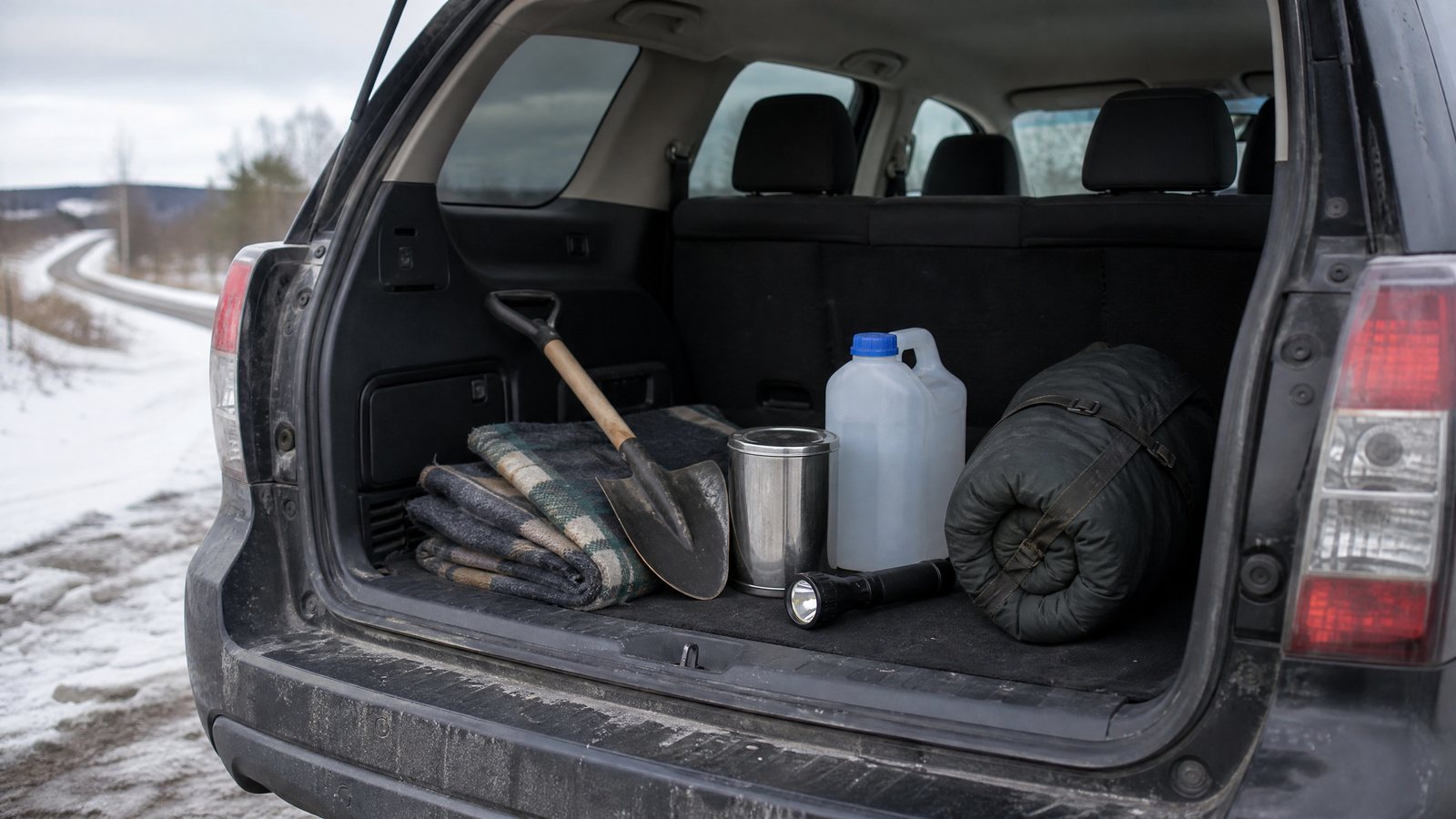
The same page lists a Winter Storm Survival Kit for the vehicle: a mobile phone, charger and batteries; blankets or sleeping bags; a flashlight with extra batteries; a first-aid kit; a knife; high-calorie, non-perishable food; extra dry clothing; a large empty can for use as an emergency toilet, plus tissues, toilet paper and paper towels; a small can and waterproof matches for melting snow into drinking water; sand or cat litter for traction; a shovel; a windshield scraper and brush; a tool kit; a tow rope; battery booster cables; a water container; a candle and matches; and a compass and road maps, since mobile devices have limited battery life.
Our own suggestion, not the National Weather Service's: build that kit once and leave it in the vehicle for the season. Our guides to the winter car emergency kit and winterizing your vehicle go through both in detail.
If The Power Fails Or You Get Stranded
The National Weather Service's during-the-storm page lists these steps if the heat goes out.
| 01 | Shrink the space you are heatingClose off unneeded rooms, stuff towels or rags into cracks under doors, and close blinds or curtains to hold in some heat. |
| 02 | Eat and drinkThe page says food provides energy for producing body heat, and to drink plenty of water and other non-caffeinated, non-alcoholic drinks to prevent dehydration. |
| 03 | Dress in layersWear layers of loose, lightweight, warm clothing, and remove layers to avoid overheating, sweating and chilling. |
| 04 | Watch your pipesThe CDC says to leave taps slightly open so they drip continuously, keep the home warm, and open cabinet doors under sinks. If pipes freeze, it says not to thaw them with a torch but slowly with warm air from an electric hair dryer. |
| 05 | Check on othersThe CDC says infants less than one year old should never sleep in a cold room, and to check on older friends and neighbors often to confirm their homes are heated properly. |
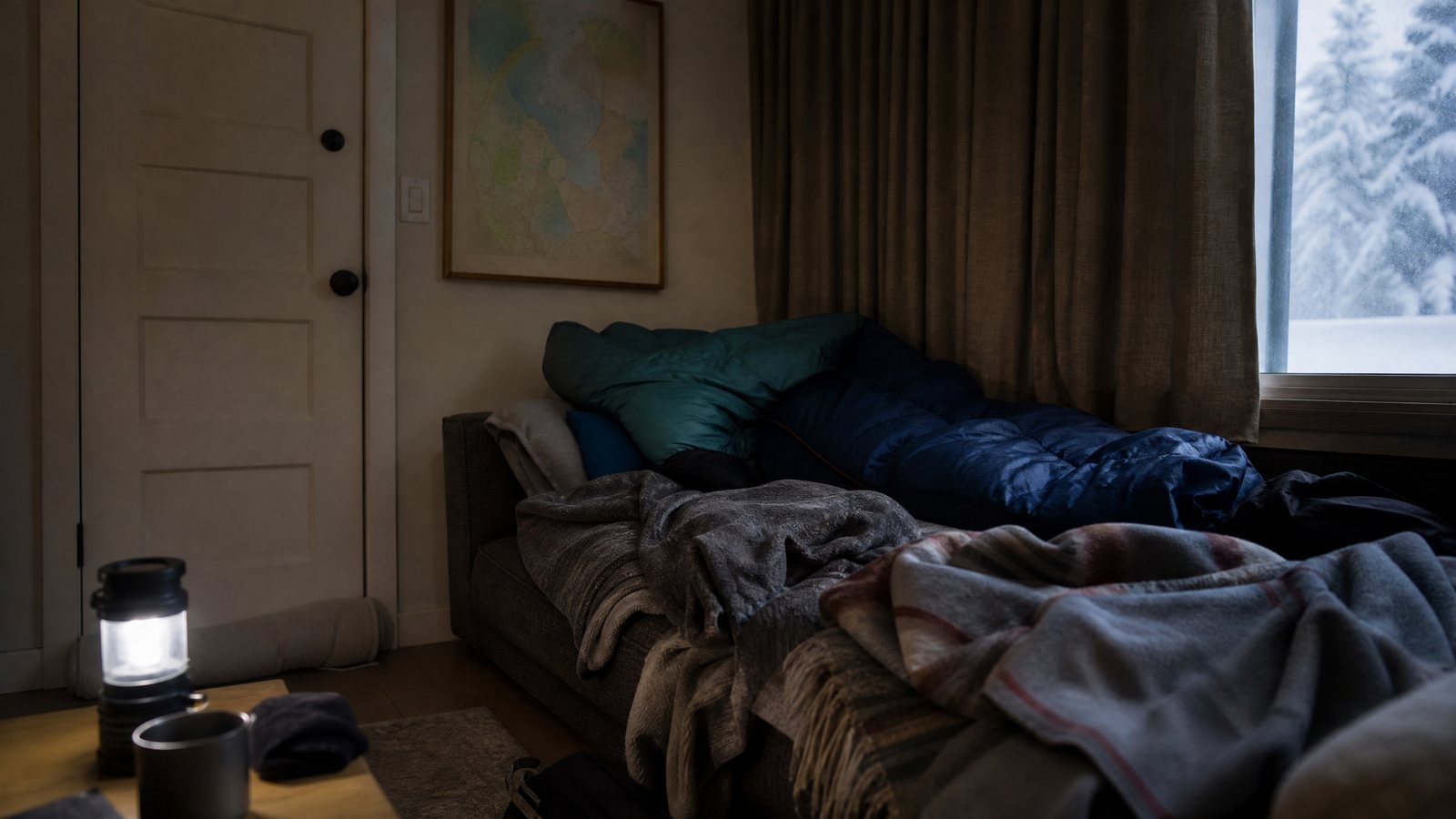
If you are stranded in a vehicle, the National Weather Service's during-the-storm page says: “Stay in the vehicle!” because leaving it can quickly lead to disorientation in wind-driven snow and cold. It says to run the engine about 10 minutes each hour for heat, with a window open slightly for fresh air to avoid carbon monoxide poisoning, and to clear snow from the exhaust pipe. To stay visible, it says to turn on the dome light at night while the engine runs, tie a bright cloth, preferably red, to the antenna or door, and raise the hood after the snow stops falling.
The CDC adds that if you are stranded you should stay awake, keep moving your arms and legs, and not eat snow, because it will lower your body temperature. Both pages warn about overexertion. The NWS names heavy shoveling and pushing a car, and says the strain may cause a heart attack and that sweating could lead to chills and hypothermia.
The CDC lists the warning signs of hypothermia in adults as shivering, exhaustion, confusion, fumbling hands, memory loss, slurred speech and drowsiness, and says a temperature below 95°F is an emergency that needs medical attention immediately. Our friends at 1stHour have guides to hypothermia first aid and frostbite first aid. For dressing for the cold, see our guide to layering clothing, and for the warm-room side, how to stay warm at home when the power goes out.
Get The Winter Storm Field Card As A PDF
One page: the home supply list, safe heating rules, vehicle kit and what to do if the heat goes out or you are stranded, with a box to tick for each.
Download the Field Card (PDF)Build Out Your Winter Kit
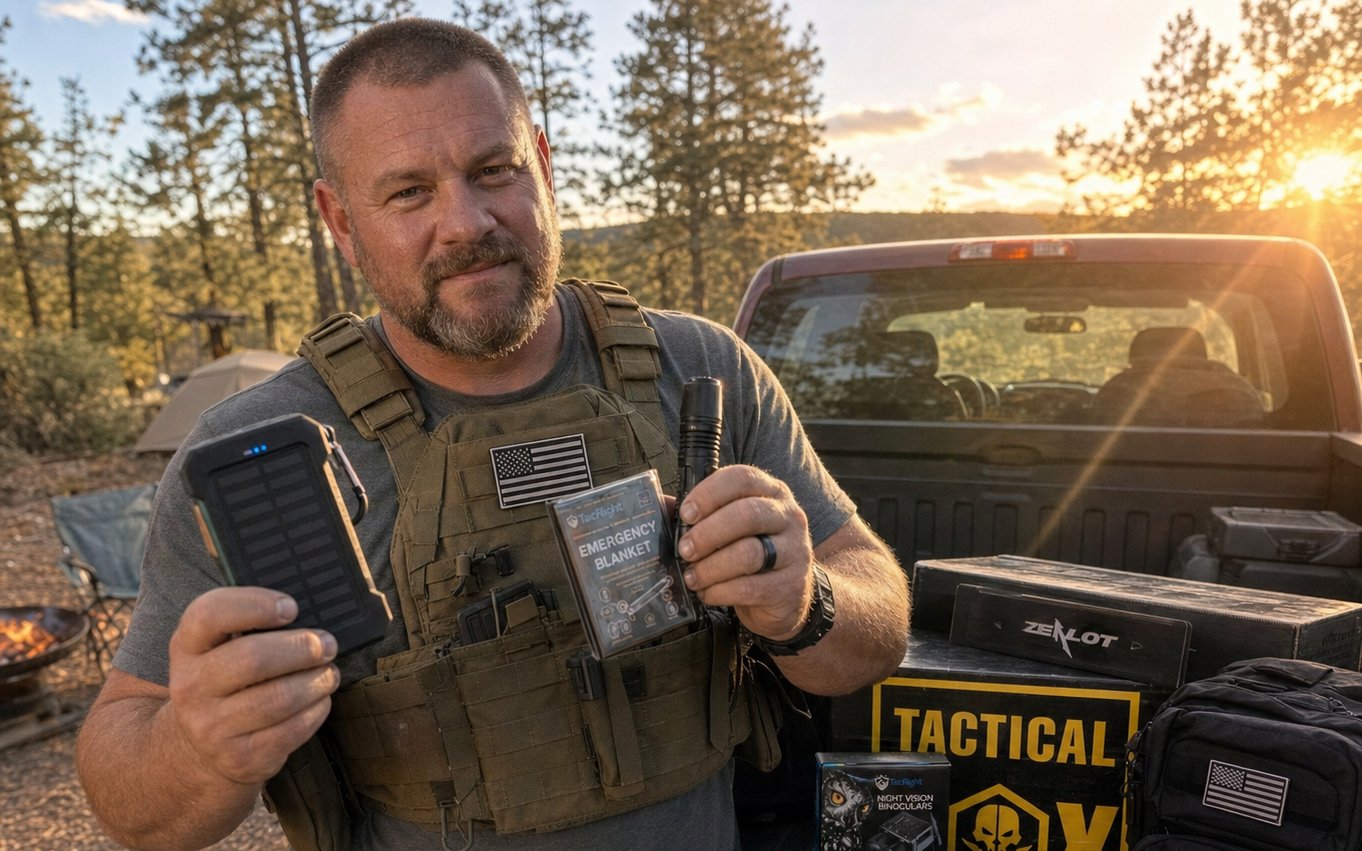
Every month, TacticalBox members get hand-picked tactical, survival, and outdoor gear, sourced ourselves from makers all over the country and curated to be some of the best equipment on the market, worth $150 or more per box on the Standard plan. It's an easy way to keep building out a real emergency kit without hunting down every piece yourself. Backed by a money-back guarantee. Cancel, pause, or skip anytime.
Join TacticalBoxThis content is for informational purposes only. Winter weather, road conditions and heating equipment vary by location: follow your local forecasts and emergency officials, use heating and generator equipment according to the manufacturer's instructions, and call 911 in an emergency.