
Cooking Safely Without Power: Camp Stoves and Outdoor Rules
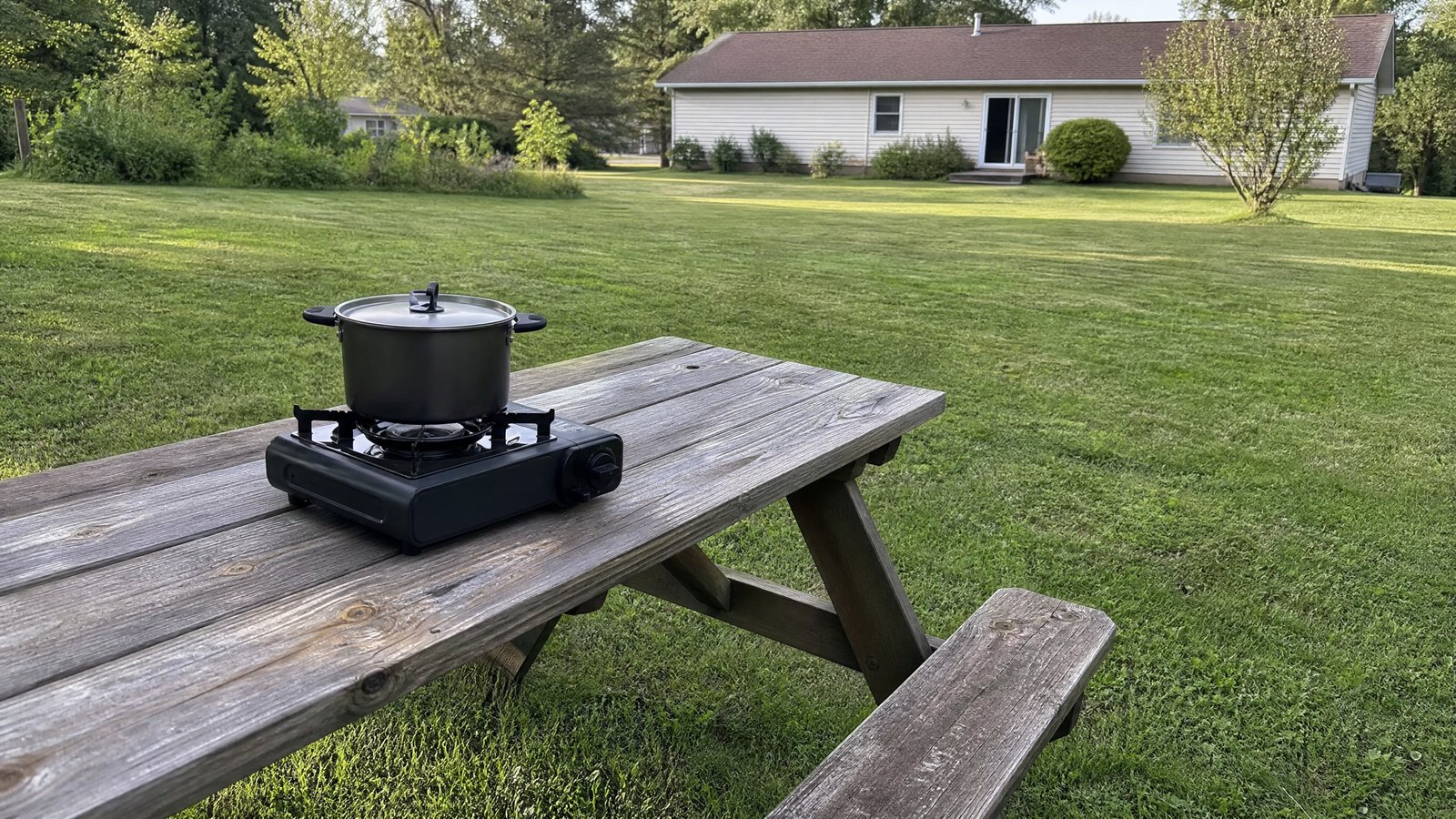
The CDC says never to use a charcoal grill, hibachi, lantern or portable camping stove inside a home, tent or camper. Cook outside, in the open, with a clear zone around the stove, and stay with it while it is lit. Those last two points are our application of the U.S. Fire Administration's grilling rules, which are written for grills: keep a grill at least 3 feet from siding, deck rails and eaves, and do not walk away from it when it is lit. Before you cook food from a dead refrigerator, check how long it has been warm: FoodSafety.gov says to discard food that was above 40°F for 2 hours or more, and to cook what you keep to a safe minimum internal temperature.
When the power goes out, the stove goes with it, and the first idea many people have is to light whatever they own that makes heat. That is where outages turn dangerous. Camp stoves and grills are made for open air, and carbon monoxide does not care how good your intentions are.
This guide covers where to cook, how to set up an outdoor stove, and how to decide which food is still safe to eat. The rules come from the CDC, the U.S. Fire Administration and FoodSafety.gov. Where we add practical advice of our own, we say so.
The One Rule: Cook Outside
The CDC is blunt on this point: never use a charcoal grill, hibachi, lantern or portable camping stove inside a home, tent or camper. It also says never to use a gas range or oven to heat a home. A stove that is safe on a campsite is not safe in a garage with the door cracked, and a closed-in porch is still a closed-in space.
| 01 | Move the stove outdoors before you light itSet it up in the open, not in a garage, tent, camper or enclosed porch. If you would not want to stand in the space with the doors shut, do not cook in it. |
| 02 | Keep the exhaust away from the houseThe CDC's generator rule is a useful picture of how far engine exhaust should be from openings: not less than 20 feet from any window, door or vent. That rule is written for generators, and the CDC gives no distance for stoves. Our own advice is to use it as a conservative guide and place a stove well away from doors, windows and vents too. |
| 03 | Know the warning signsThe CDC describes carbon monoxide as an odorless, colorless gas, so you cannot rely on your nose. Common symptoms include headache, dizziness, weakness, nausea, vomiting, chest pain and confusion. If anyone has them, call 911 right away. Moving everyone into fresh air is our own advice, not a quote from the CDC. |
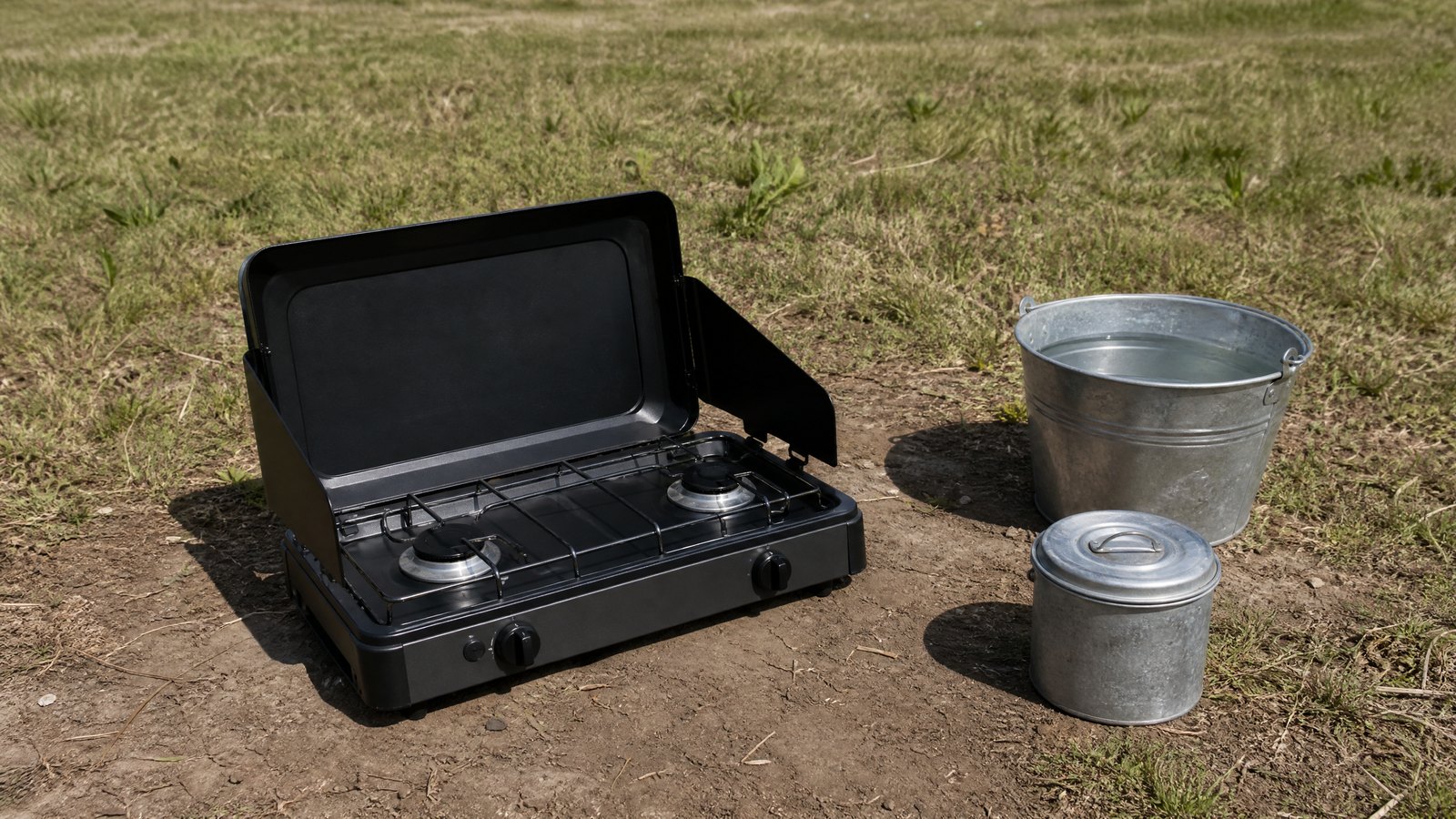
The same logic applies to a charcoal grill. Charcoal is a fuel you light outdoors and nowhere else, however cold the night is.
Setting Up An Outdoor Stove
The U.S. Fire Administration publishes simple grilling rules, and they apply well to a camp stove or any outdoor cooker used during an outage. Its flyer is written about grills, so we are borrowing the principles, not claiming it names your exact stove.
| 01 | Keep it 3 feet from siding, deck rails and eavesThe Fire Administration says to keep a grill at least 3 feet from siding, deck rails and eaves. Our own addition: give any other flammable thing the same space. |
| 02 | Hold a 3-foot safe zone for kids and petsIt also recommends a 3-foot safe zone around the grill to keep kids and pets safe. |
| 03 | Stay with it while it is litThe flyer says to keep an eye on your grill, fire pit or patio torches and not to walk away from them when they are lit. |
| 04 | If you use a gas grill, open it before lightingThe flyer says to open your gas grill before lighting. This applies to grills with lids, and most camp stoves do not have one. |
| 05 | Clean up after each useIt advises cleaning the grill after each use to remove grease that can start a fire, and placing coals in a metal can with a lid once they have cooled. |
Our own practical additions, not from the flyer: set the stove on flat, bare, stable ground so a pot cannot tip, keep a bucket of water or a hose within reach, and follow the instructions that came with your particular stove and fuel.
Deciding What To Cook And What To Throw Out
A working outdoor stove does not make unsafe food safe. FoodSafety.gov and the CDC give timings that tell you what to keep before you cook anything.
| 01 | The refrigerator buys you about 4 hoursThe CDC says a refrigerator will keep food safe for up to 4 hours without power if you do not open the door. FoodSafety.gov says it will keep food cold for about 4 hours if unopened. |
| 02 | A full freezer holds about 48 hoursThe CDC says a full freezer keeps food safe for 48 hours, or 24 hours if half full, without power if you do not open the door. FoodSafety.gov says a full freezer holds its temperature for approximately 48 hours (24 if half full) if the door stays closed. |
| 03 | Apply the 40°F ruleFoodSafety.gov says that if at any point the food was above 40°F for 2 hours or more, discard it. When the surrounding temperature is above 90°F, the window is 1 hour. The 4-hour window is about how long the power has been off, and the 2-hour rule is about the food's actual temperature, so the two work together. |
| 04 | Cook what you keep thoroughlyFoodSafety.gov says that if you plan to eat refrigerated or frozen meat, poultry, fish or eggs while they are still at safe temperatures, each item needs to be thoroughly cooked to a safe minimum internal temperature. Our own advice: a food thermometer is the reliable way to check internal temperature. |
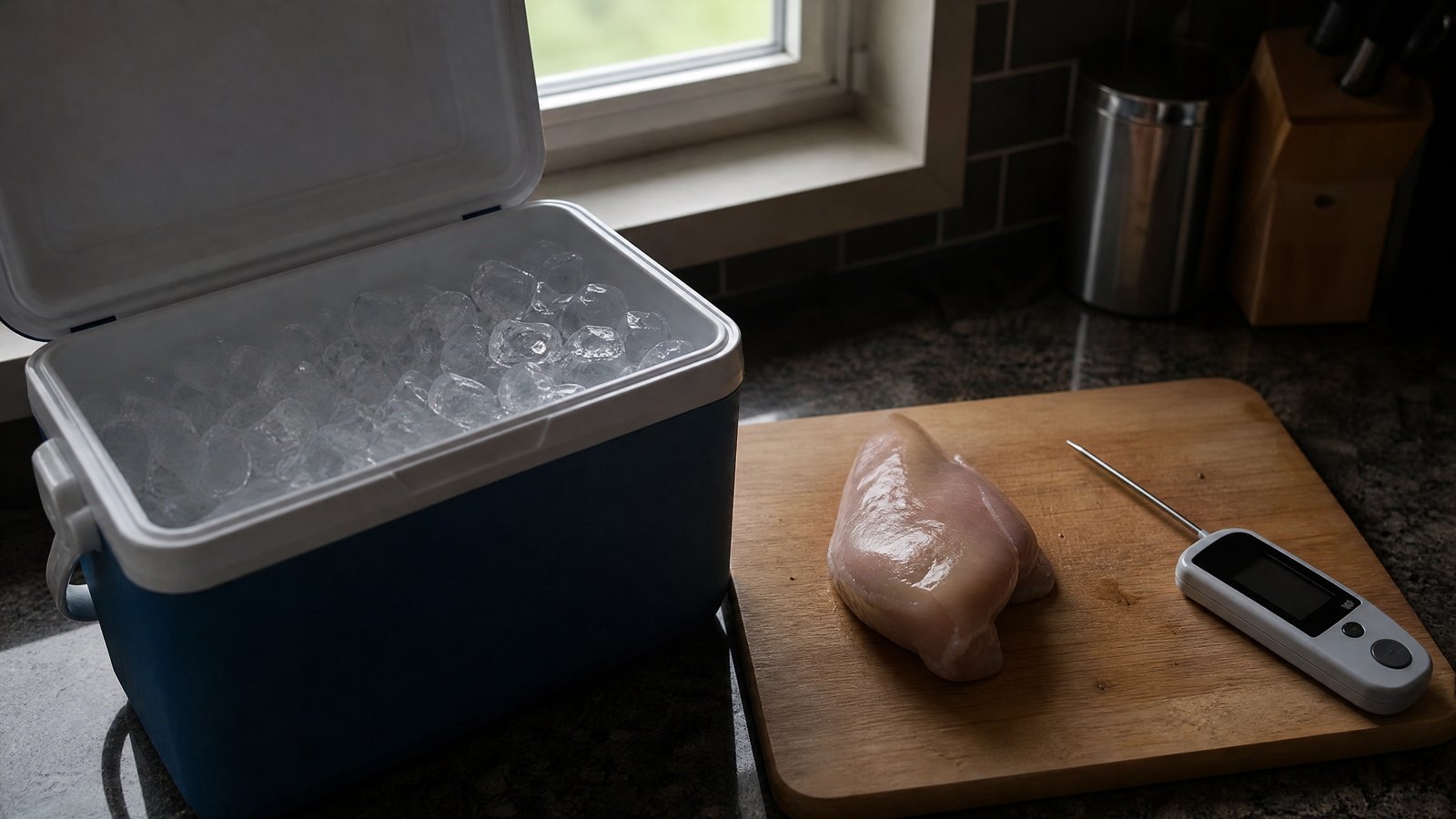
The CDC says to discard perishable foods in your refrigerator, including meat, poultry, fish, eggs and leftovers, when the power has been off for 4 hours or more. FoodSafety.gov's own rule is worth keeping too: when in doubt, throw it out.
A Simple Outage Cooking Plan
The rest of this section is our own advice, not a cited rule. Cooking in an outage goes better when you decide the order of things before you are hungry and tired.
| 01 | Eat the most perishable food firstCook what is in the refrigerator before what is in the freezer, and keep the freezer closed as long as you can. See our guide to storing emergency food for what to keep on the shelf. |
| 02 | Keep the stove outdoors, every timeMake it a household rule, so the person cooking at midnight does not have to decide. If it is raining or freezing, plan the meal for the time the weather allows. |
| 03 | Have light and water readyYou will cook better with a headlamp than with a candle. See our guides to emergency lighting and water storage. |
| 04 | Plan for the whole outageOur guides to preparing for a power outage and building a home blackout kit cover the rest of the list. |
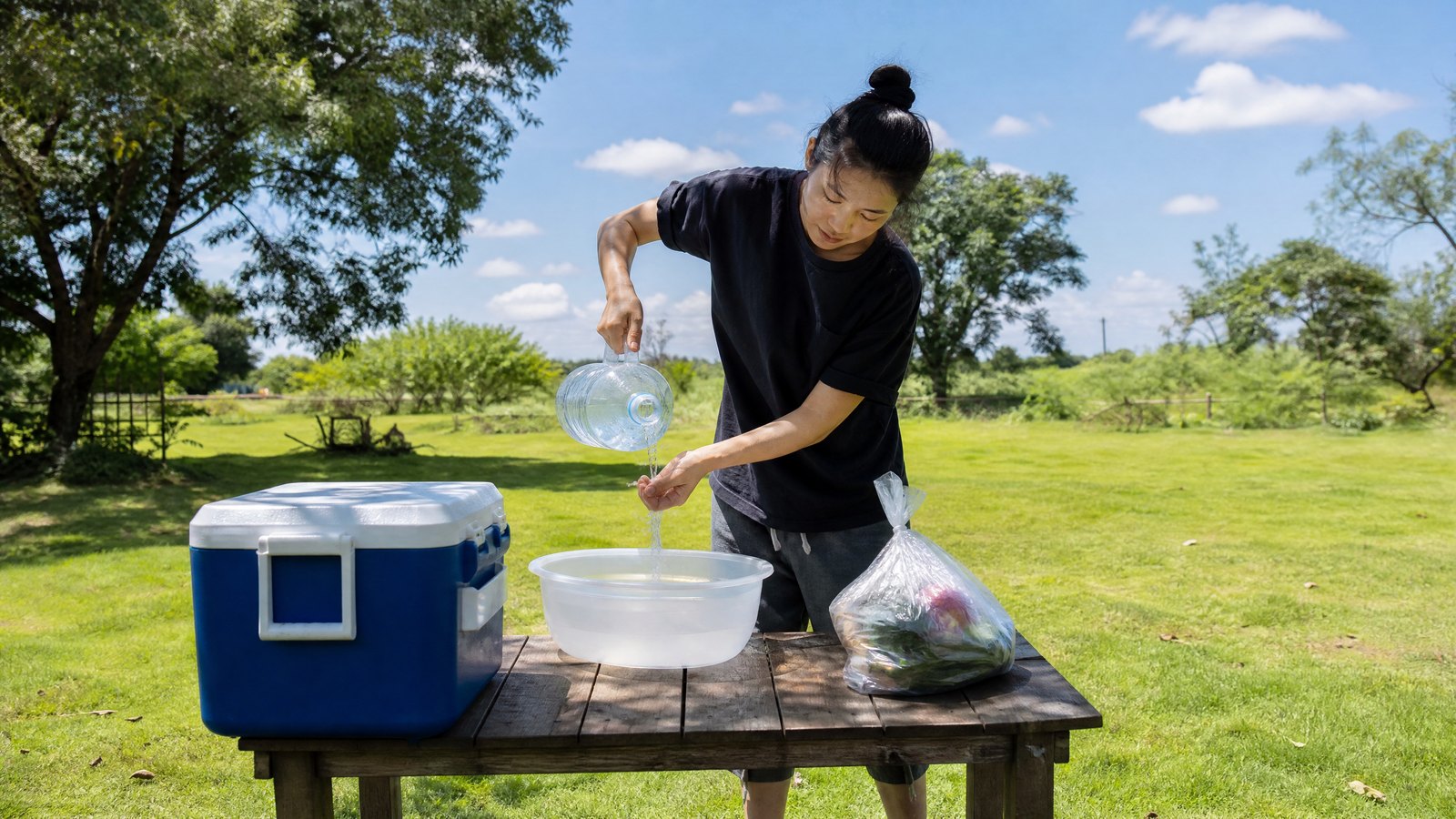
If someone gets burned while cooking, our friends at 1stHour cover what to do and what not to do in their guide to burn first aid.
Get The Outage Cooking Field Card As A PDF
One page: where to cook, how to set up a stove, and the food safety timings, with a checklist to tick off.
Download the Field Card (PDF)Build The Rest Of Your Kit While You're At It
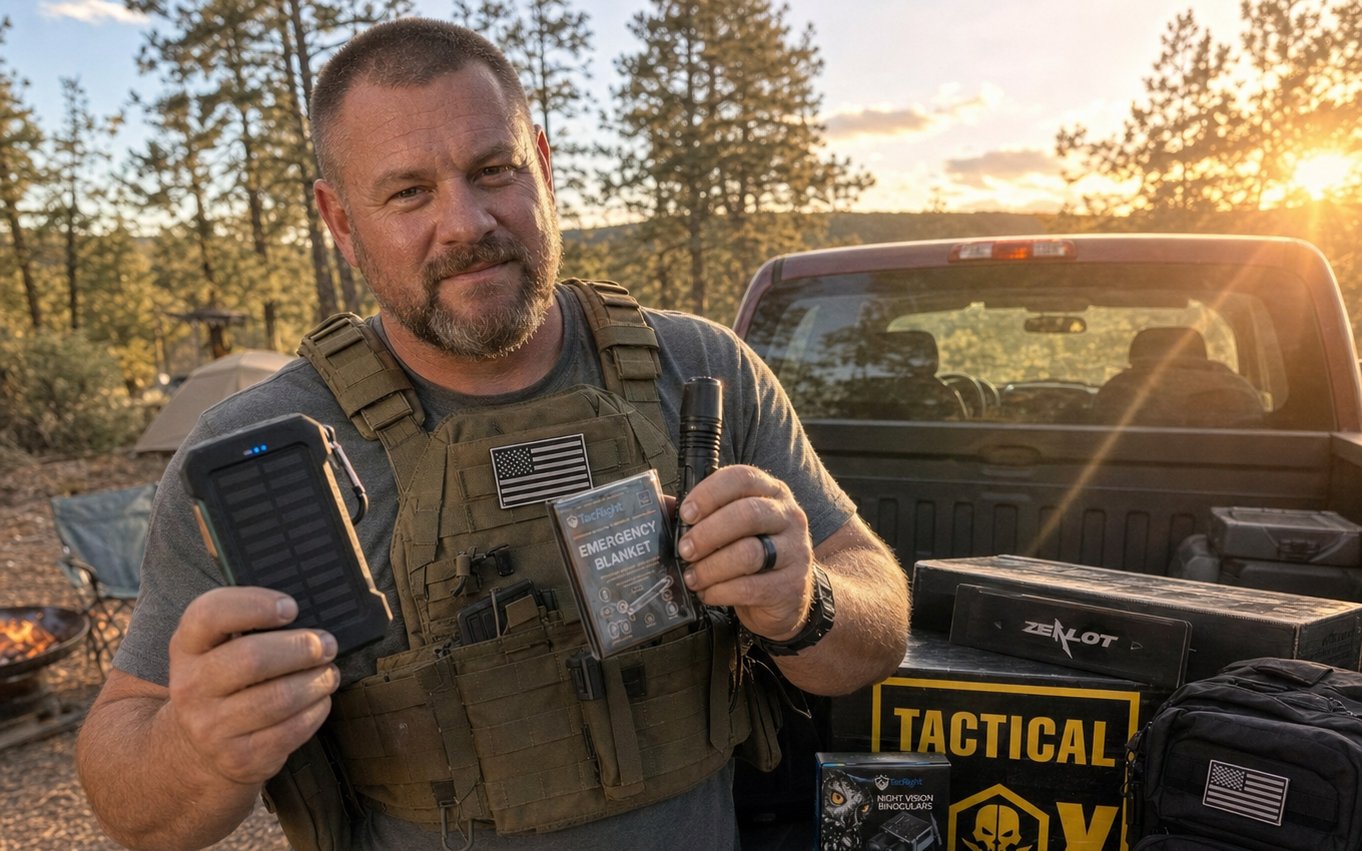
Every month, TacticalBox members get hand-picked tactical, survival, and outdoor gear, sourced ourselves from makers all over the country and curated to be some of the best equipment on the market, worth $150 or more per box on the Standard plan. It's an easy way to keep building out a real emergency kit without hunting down every piece yourself. Backed by a money-back guarantee. Cancel, pause, or skip anytime.
Start Your TacticalBoxThis content is for informational purposes only. Never use a camp stove, grill, hibachi or lantern inside a home, tent, camper or garage. Follow the instructions for your own stove and fuel, keep a fire extinguisher or water within reach, and call 911 for a fire or suspected carbon monoxide poisoning. Food safety timings are general guidance from federal sources, and when you are unsure whether food is safe, discard it.