
How To Build A Home Blackout Kit, Room By Room
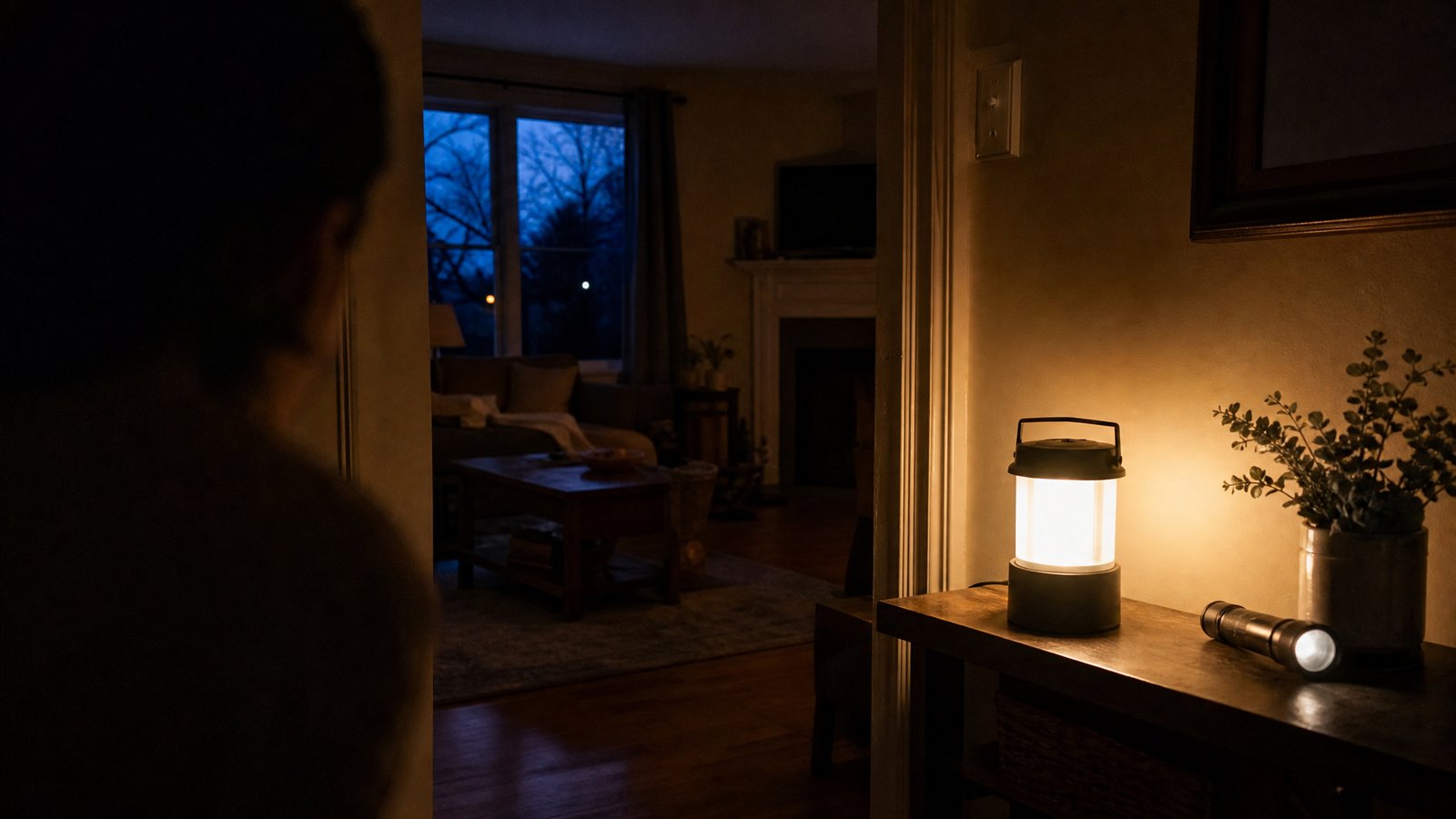
A single "emergency bag by the door" misses half of what a real outage needs. Spread the gear across the rooms where you'll actually need it: a cooler and thermometer in the kitchen, a headlamp and power bank on every nightstand, a weather radio in the main living space, and a generator and CO alarm rule for the garage that you follow every single time. Build it room by room and nothing is buried in a bin when you need it at 11pm with no lights.
Most outage checklists read the same way: flashlight, water, radio, batteries, done. That's not wrong, it's just not how a house actually works during a blackout. Nobody experiences an outage in one room. You're moving between the kitchen, the bedroom, the bathroom, and the garage, and each one has its own specific failure point if you haven't planned for it.
So instead of one master list, here's the gear sorted by the room it actually belongs in, along with the specific guidance from FEMA, the CDC, and FoodSafety.gov behind each call.
The Kitchen: Buy Yourself Time On Food
The kitchen is where an outage turns into a second problem if you don't move fast. A closed refrigerator keeps food safe for about 4 hours without power, and a full freezer holds a safe temperature for about 48 hours, or 24 hours if it's only half full, according to FoodSafety.gov. Past that window, meat, poultry, dairy, and most leftovers get thrown out, not risked. An appliance thermometer inside both the fridge and freezer takes the guesswork out of that decision entirely, which is exactly why the CDC's power outage checklist lists one for each.
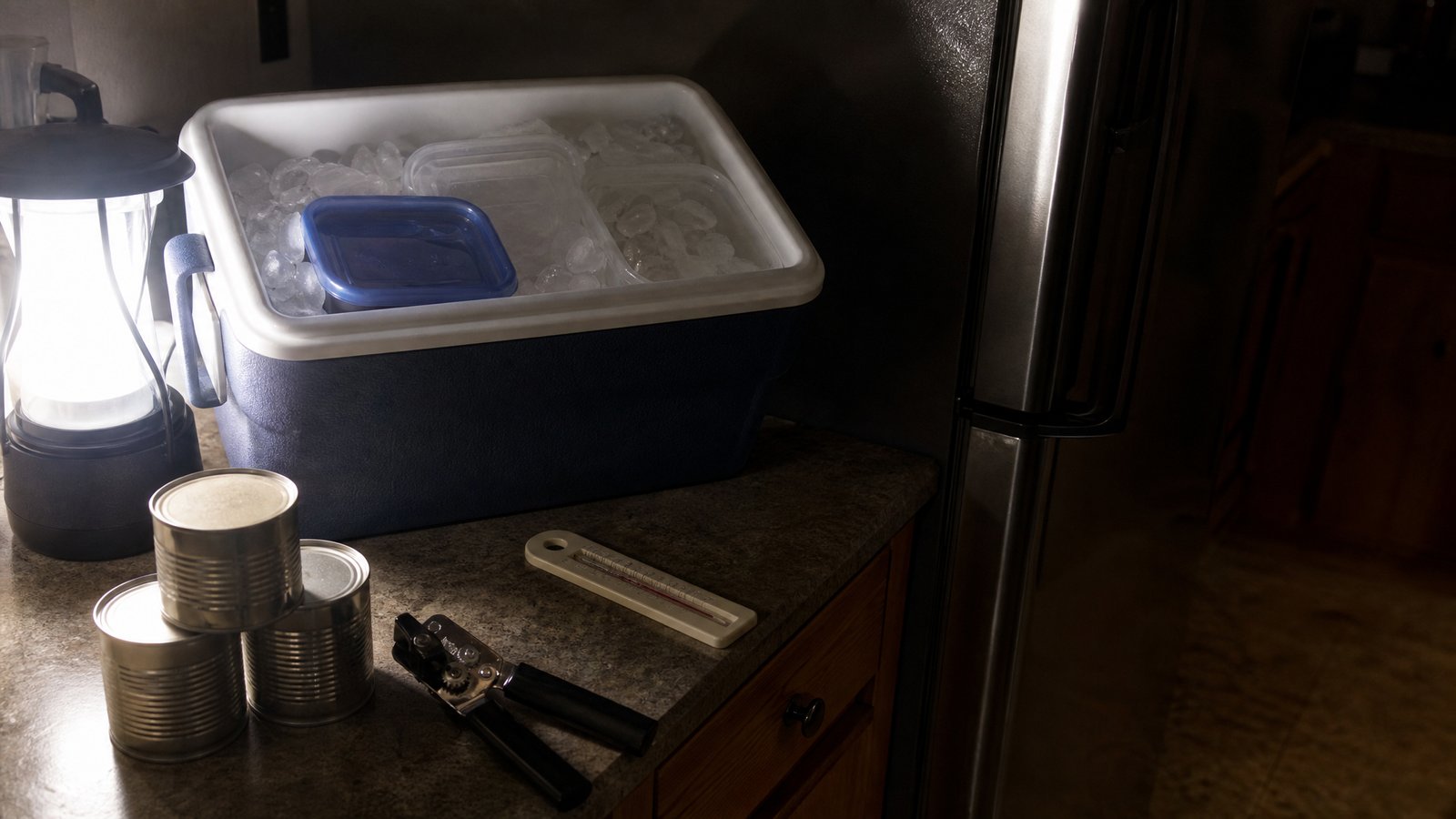
Keep a stocked kitchen shelf ready before anything happens: a cooler and a bag or two of ice you can grab from the freezer the moment power drops, several days of food that doesn't need cooking or refrigeration, and a manual can opener, because an electric one is dead weight in a blackout. Keep the fridge and freezer doors closed as much as possible; every extra minute they're open shortens the window above.
The Bedroom: Light And Warmth Within Arm's Reach
This is the room people get wrong most often, because they assume one household flashlight covers everyone. It doesn't. The CDC's fundamental checklist calls for emergency lighting like a flashlight, headlamp, or battery-powered lantern, plus extra batteries in common sizes, and that means one per person, not one per house. Waking up in a dark bedroom and fumbling for a light switch that doesn't work is a genuinely bad way to start a blackout.
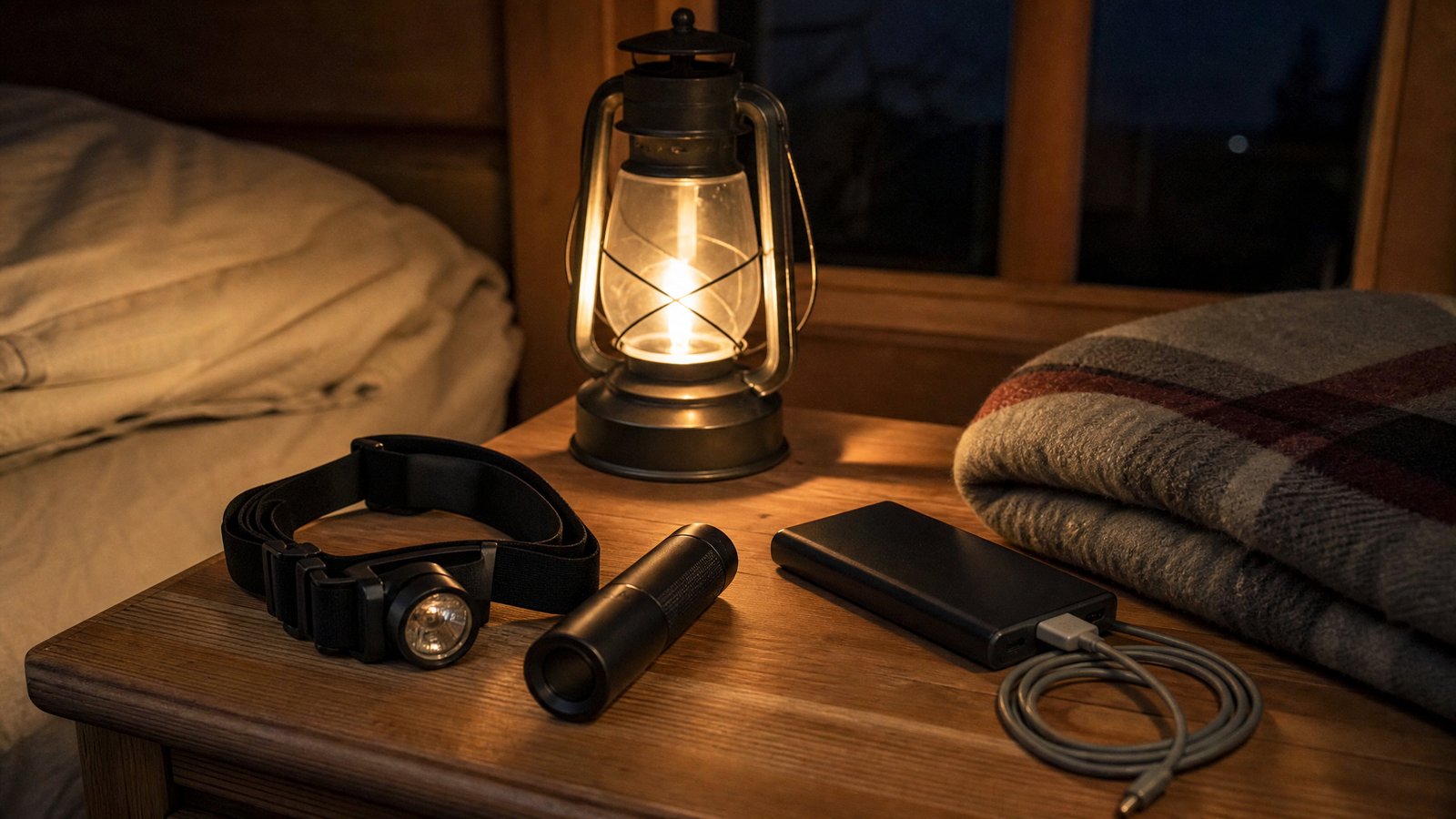
Stock each bedroom with its own headlamp or flashlight, a portable power bank with the right charging cable already attached, and a warm blanket or sleeping bag. FEMA's guidance specifically calls out planning to stay warm in a winter outage as its own category, separate from general preparedness, and a bedroom that's already stocked for it means nobody's hunting for blankets in the dark.
The Living Room Or Common Area: Information And Sanitation
This is command central for the rest of the house. A battery-powered or hand-crank NOAA weather radio with a tone alert belongs here, not in a closet, because cell towers can go down along with the grid and a radio keeps working when a phone doesn't, per Ready.gov's basic disaster supply kit guidance. Keep it next to a first aid kit, a supply of drinking water at one gallon per person per day, and sanitation basics like moist towelettes and garbage bags for when running water or the toilet is affected.
| 01 | Skip the candles here if you can help itThe NFPA estimates candles cause roughly 15,600 home structure fires a year, with about 150 deaths, 1,270 injuries, and $539 million in direct property damage. Battery lanterns give the same light without the fire risk. |
| 02 | If you do use a candle, keep it 12 inches from anything flammableCurtains, bedding, and paper count. Never leave it burning unattended, and never in a room where kids or pets are alone with it. |
| 03 | Unplug non-essential electronicsThe CDC's checklist includes a surge protector power strip for exactly this reason; a sudden power return can spike and damage whatever's still plugged in. |
The Garage And Outdoors: Where The Real Risk Lives
If there's one room-by-room rule that actually matters most, it's this one. A portable generator has to run outdoors, at least 20 feet away from windows, doors, and any other building opening, according to both FEMA's power outage guidance and the CDC's generator safety fact sheet. Never in a garage, even with the door open. Carbon monoxide is odorless and colorless, and it kills without warning, which is exactly why it's dangerous. It doesn't announce itself the way smoke does.
Install Battery-Backup Alarms Before You Need ThemFEMA recommends smoke and carbon monoxide alarms with battery backup on every level of the home and near sleeping areas, installed now, not after a generator is already running. Learn the early symptoms of CO poisoning, which mimic the flu, in 1st Hour's guide on recognizing carbon monoxide poisoning, so a headache and nausea during an outage reads as a warning sign instead of something to sleep off.
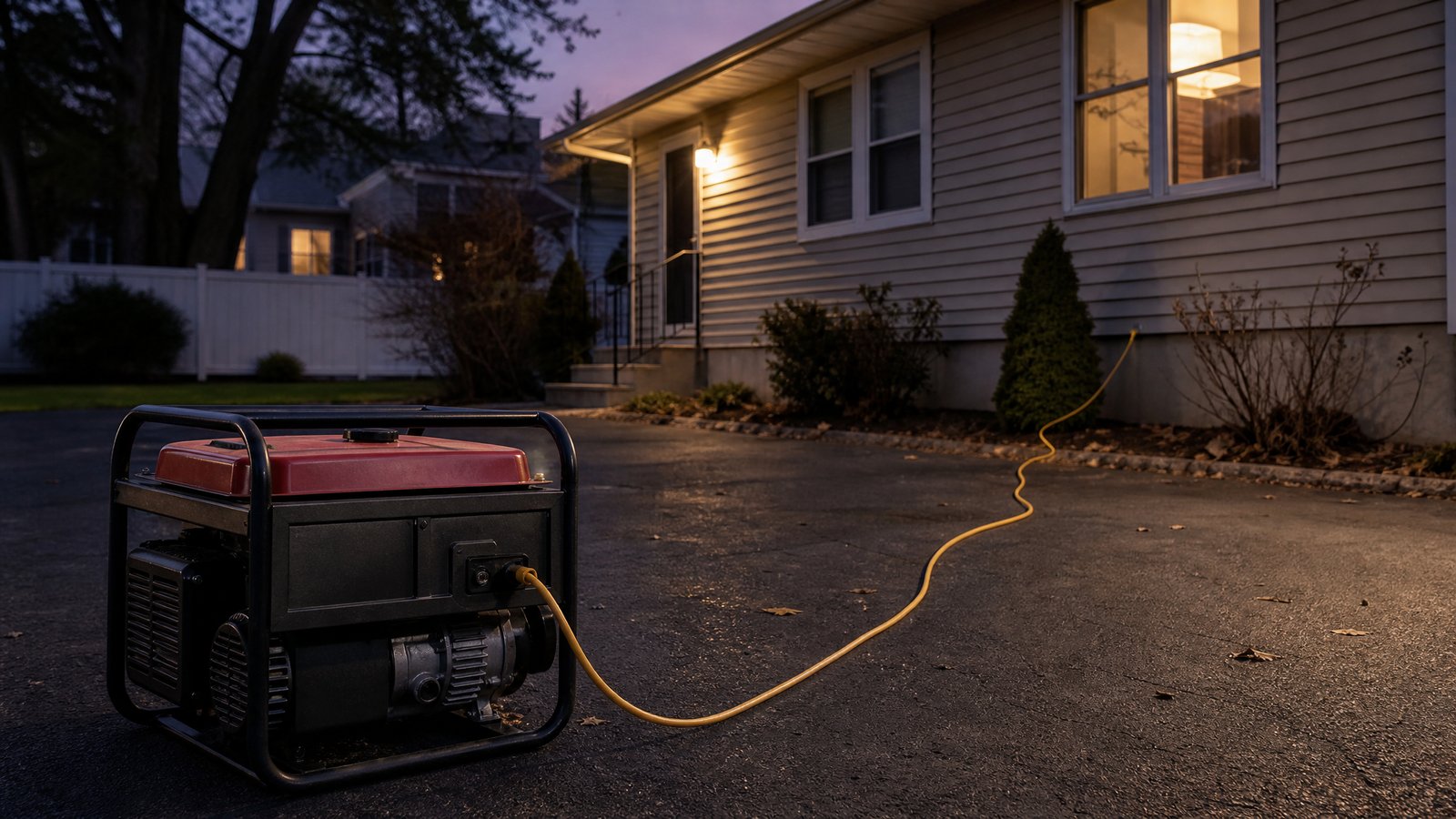
Stock the garage with an outdoor-rated extension cord long enough to actually reach that 20-foot distance, fuel stored safely and away from any ignition source, and a fire extinguisher within reach. Never run a vehicle in the garage for power or warmth either, even with the door open. FEMA is explicit that this is just as dangerous as running a generator indoors.
The Entryway: A Grab-And-Go Spot For Everything Else
Keep one more spot, by the door or in a front closet, for the things you'd want if you had to leave fast: copies of important documents like insurance and identification in a waterproof container, cash since ATMs and card readers may not work, a few days of any prescription medication, and a spare charger and cable set for phones. Ready.gov's supply kit guidance lists all of this together for a reason. A blackout kit that lives in five rooms only works if everyone in the house knows where each piece is, so walk the house once and point out where everything landed.
None of this requires turning your house into a bunker. It just means the right gear is already sitting in the room where you'll need it, instead of buried in a bin in the garage that you can't find in the dark.
Get The Room-By-Room Blackout Kit Checklist As A PDF
Every room's gear list from above, condensed to one printable sheet: kitchen, bedroom, living room, garage, and the grab-and-go spot by the door.
Download the Checklist (PDF)Fill Every Room Before The Lights Go Out
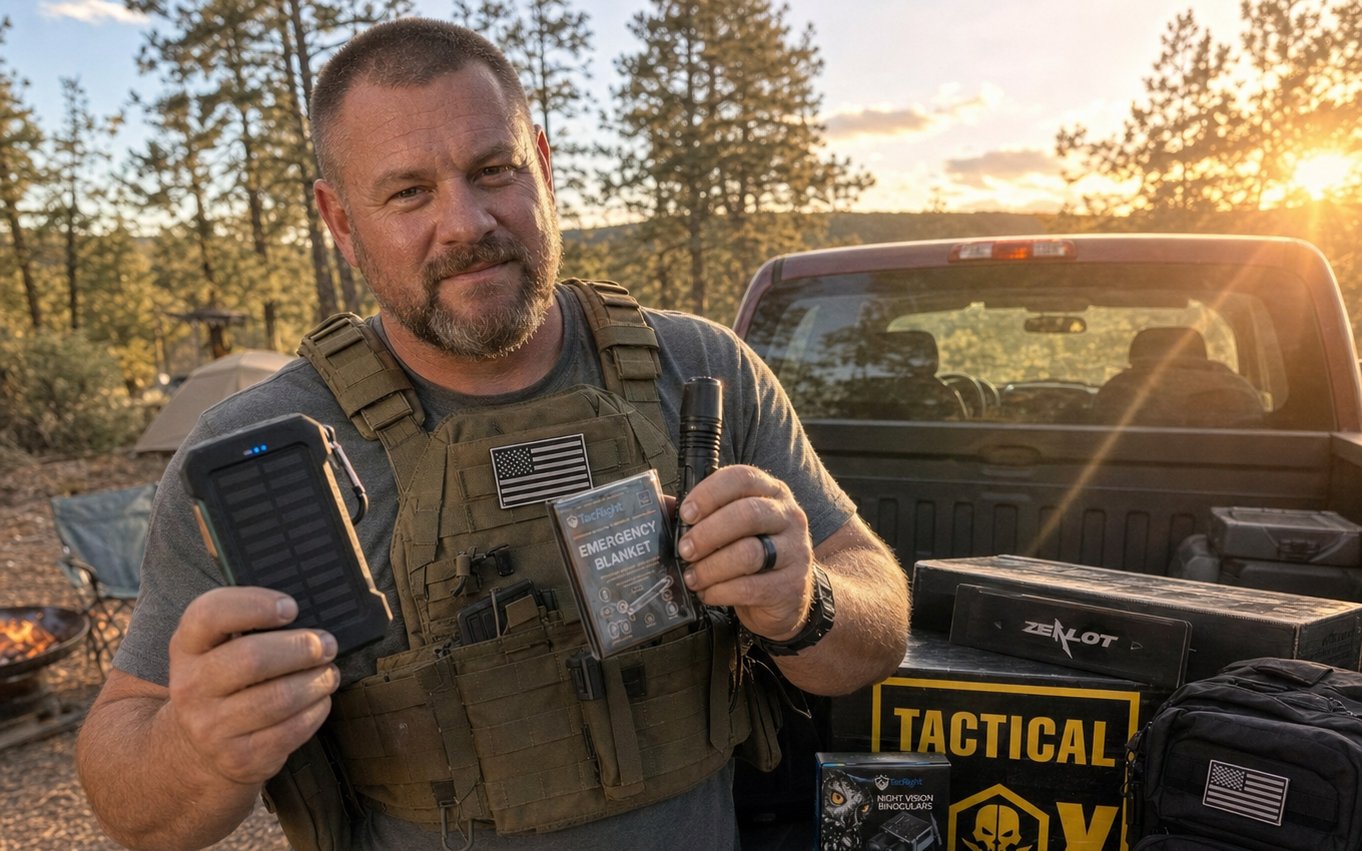
Every month, TacticalBox members get hand-picked tactical, survival, and outdoor gear, sourced ourselves from makers all over the country and curated to be some of the best equipment on the market, worth $150 or more per box on the Standard plan. It's an easy way to keep every room in the house actually stocked, not just the junk drawer. Backed by a money-back guarantee. Cancel, pause, or skip anytime.
Get Your TacticalBoxThis content is for informational purposes only and is not a substitute for guidance from local emergency management or utility officials during an actual outage event. Always place generators outdoors and away from windows, doors, and vents, and install working smoke and carbon monoxide alarms with battery backup in your home.