
Water Storage Basics: How Much and How Long
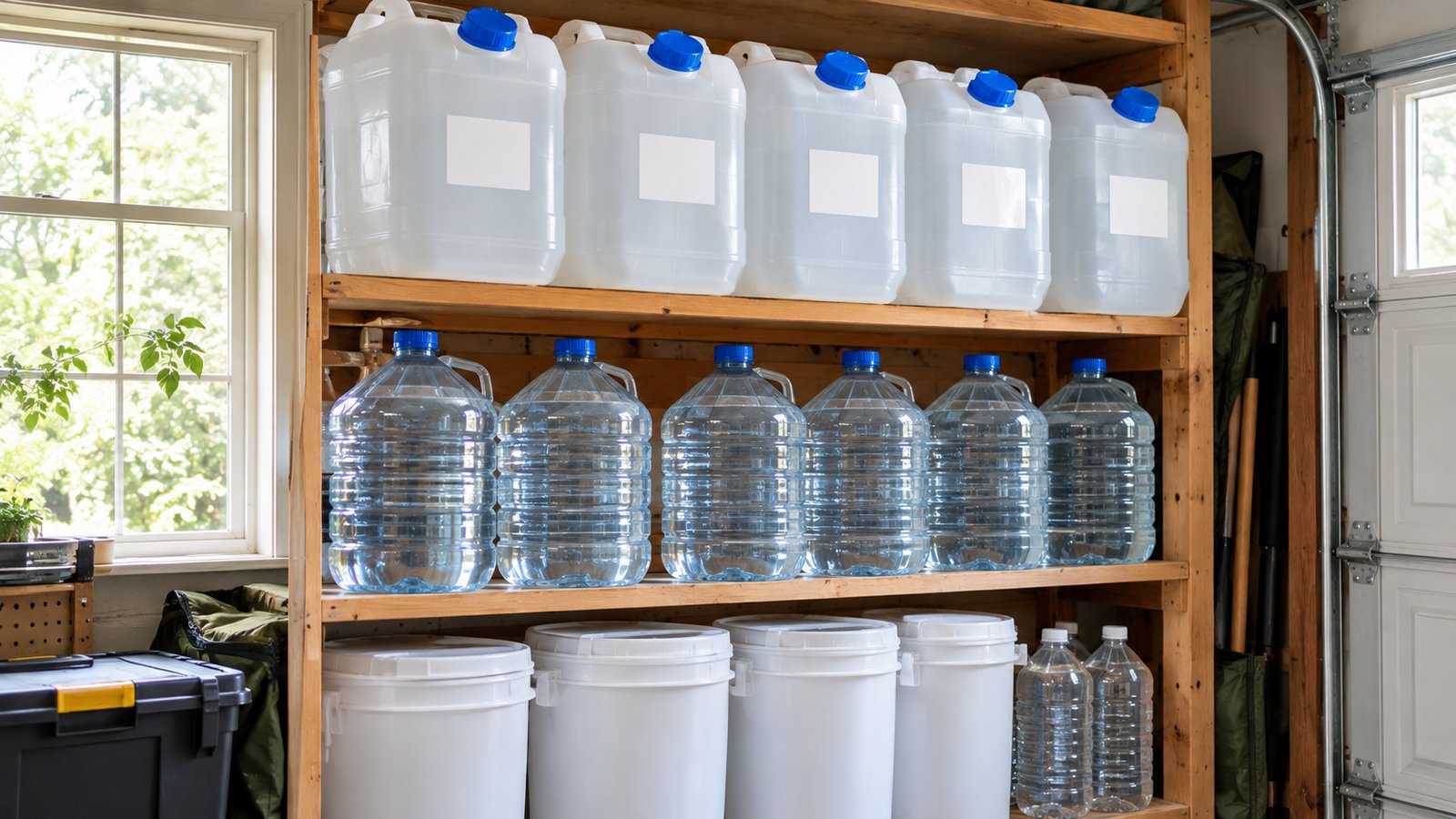
Store at least one gallon of water per person per day, for a minimum of three days and up to two weeks if you have the room, according to the CDC and Ready.gov. That figure covers drinking and basic hygiene, and it goes up for pregnant or nursing household members, anyone sick, pets, and hot climates, where needs can double. Unopened commercially bottled water is the simplest option and only needs its printed date watched. If you fill your own containers, use food-grade containers, sanitize them first, and swap the water every six months.
Most households picture a hurricane or a wildfire when they think about needing stored water. The more common trigger is smaller than that. An EPA review of boil water advisories counted roughly 4,036 issued across the U.S. in a single year, and 80 percent of them traced back to ordinary infrastructure trouble, water main breaks, repair work, and pressure loss, not floods or storms. When one hits your zip code, the tap still runs. It just isn't safe to drink until you boil or treat it, and that's exactly the moment a shelf of stored water pays for itself.
The guidance for how much to keep and how to keep it comes from the CDC and Ready.gov, and it's more specific than most people assume, right down to which containers are safe and how often to refill them.
How Much To Actually Store
The baseline is simple math, and it's worth doing on paper for your own household instead of guessing.
| 01 | One gallon per person, per dayThe CDC's number covers drinking water plus basic hygiene and food prep. Multiply by the number of people in the house, kids and adults both, to get your daily total. |
| 02 | Three days is the floor, two weeks is the targetThe CDC's stated minimum is a three-day supply, with a two-week supply preferred when a household has the space to store it. A family of four at the three-day minimum needs 12 gallons. At two weeks, that's 56. |
| 03 | Add more for specific people and conditionsThe CDC calls out pregnant or nursing household members and anyone sick as needing extra water, along with pets. Ready.gov notes that in hot temperatures, water needs can double, so a household in a warm climate should plan closer to two gallons per person per day. |
If you've already worked through how to store emergency food long-term, water deserves the same deliberate approach. It's the resource with the shortest runway if you get the amount wrong.
Picking A Container That Won't Let You Down
Not every container is safe for long-term water storage, and the wrong one can contaminate the water sitting inside it.
| 01 | Unopened commercially bottled water is the easy answerThe CDC calls it the safest and most reliable option for an emergency supply. Keep it sealed, store it in a cool dark spot, and just watch the printed expiration date. No sanitizing, no rotation schedule to remember. |
| 02 | FDA-approved food-grade containers for filling your ownThese are sold at camping and surplus stores and are built specifically to hold drinking water without leaching anything into it. If food-grade isn't available, the CDC says look for a container with a tight-sealing top, an unbreakable body, and a narrow neck for easier pouring and cleaning. |
| 03 | Skip glass and skip anything that held chemicalsGlass works for short-term storage but breaks, so it shouldn't be your only method. The CDC is direct about one rule with no exceptions: never reuse a container that previously held a toxic chemical, including bleach or pesticides, even if it's been rinsed. |
Cleaning And Filling A Container The Right Way
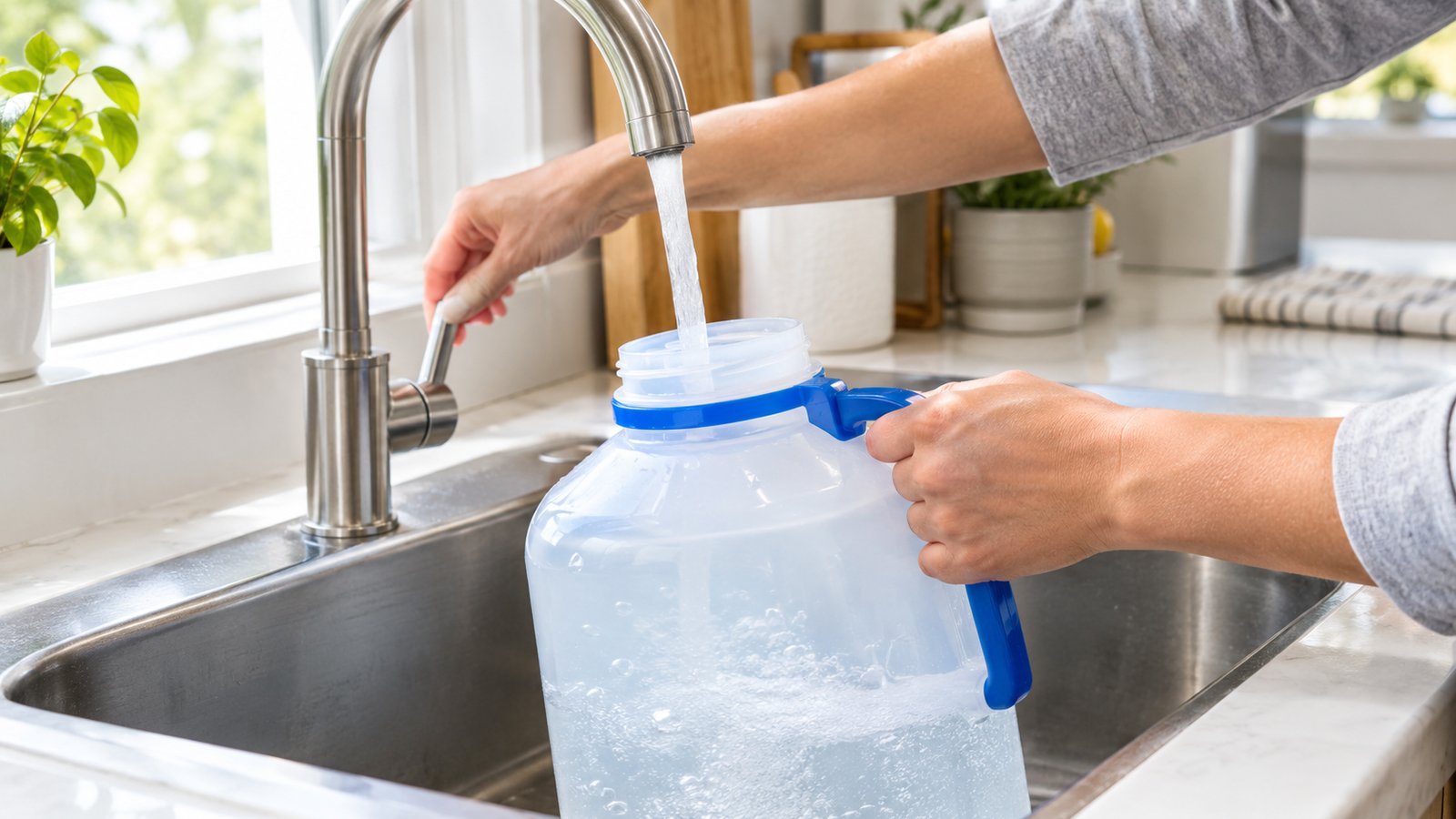
If you're filling your own containers instead of buying bottled water, the CDC lays out a specific process. Skipping steps is how stored water goes bad before you ever need it.
| 01 | WashClean the container with dish soap and rinse it thoroughly with water. |
| 02 | SanitizeMix 1 teaspoon of unscented liquid household chlorine bleach (5 to 9 percent sodium hypochlorite) into 1 quart of water, then pour it into the container. |
| 03 | Shake and waitCover the container tightly and shake it so the solution reaches every interior surface, then let it sit for at least 30 seconds. |
| 04 | Empty and air-dryPour the bleach solution out completely and let the container air-dry before filling it. |
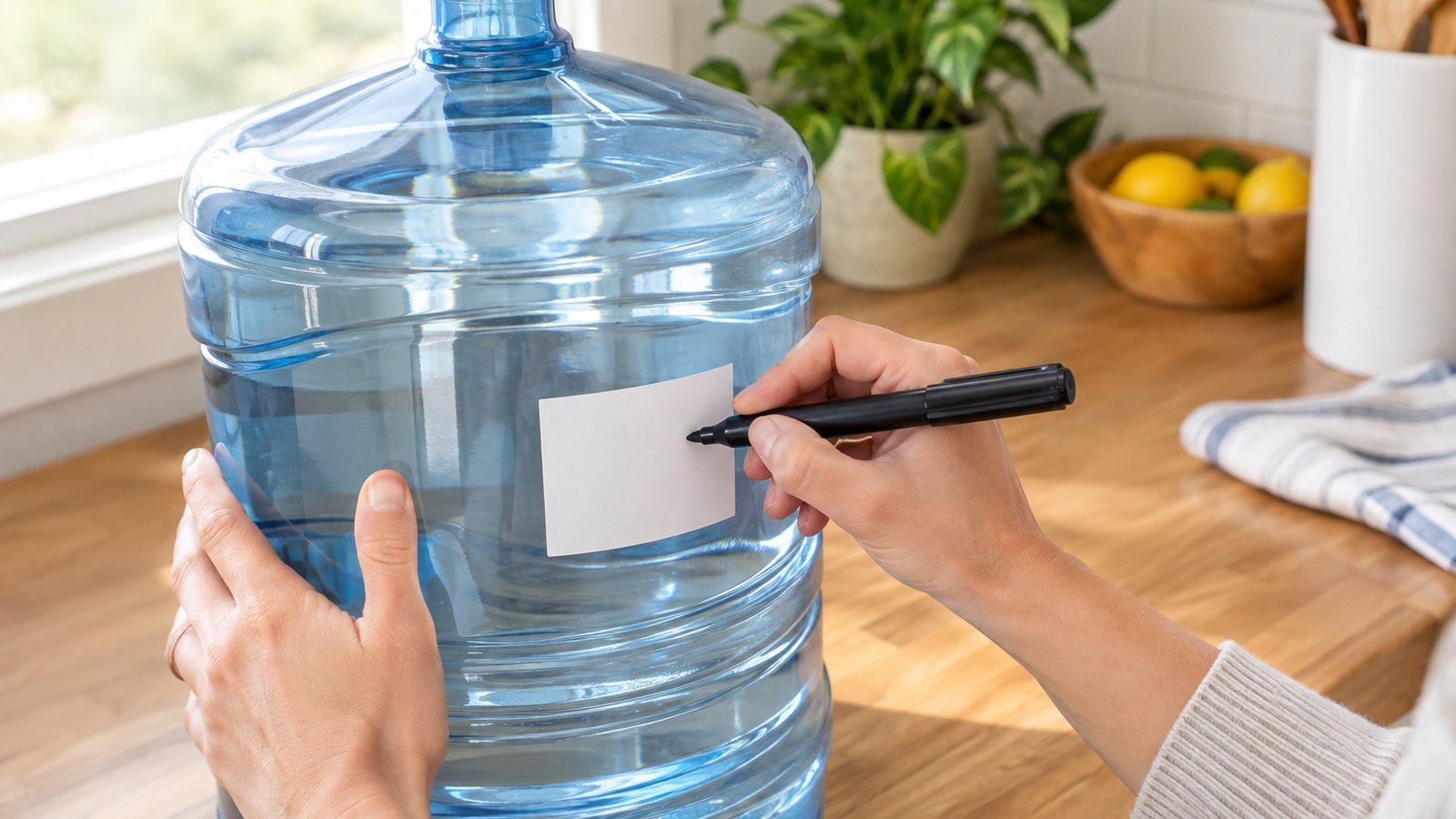
| 05 | Fill, label, and sealFill with clean water, seal it tightly, and label it "drinking water" with the date you filled it. That date is what tells you when it's time to rotate. |
Keep that sanitizing step separate in your head from treating water you intend to drink. One prepares an empty container. The other treats the water itself, which is a different process covered further down.
Where To Keep It And When To Swap It
The CDC's standing rule is straightforward: store containers at 50 to 70 degrees Fahrenheit, away from direct sunlight and away from gasoline, solvents, or other chemicals that could seep through the container wall, and replace the water every six months. That six-month swap is the simple, safe default, and it's the one worth following if you'd rather not think about it further.
Extension research from Utah State University adds a useful nuance for anyone who'd rather not dump and refill twice a year: water that was properly disinfected and sealed can hold an indefinite shelf life, as long as you inspect it every 6 to 12 months for a secure lid, cracks, or cloudiness, and treat or replace it if anything looks off. Store containers off the ground on a shelf, not directly on concrete or bare dirt, and keep them somewhere you'll actually walk past during a seasonal check, not buried behind everything else in the garage.
Never Reuse A Chemical ContainerThis is worth repeating on its own. A jug that once held bleach, pesticide, or any other toxic chemical is never safe for drinking water again, no matter how well it's rinsed. Buy a container built for the job instead.
If Your Stored Water Or Tap Water Needs Treating
A boil water advisory means the tap still runs, it just isn't safe until you treat it. The EPA's emergency disinfection guidance gives two methods, and they're worth knowing before the notice ever shows up on your phone.
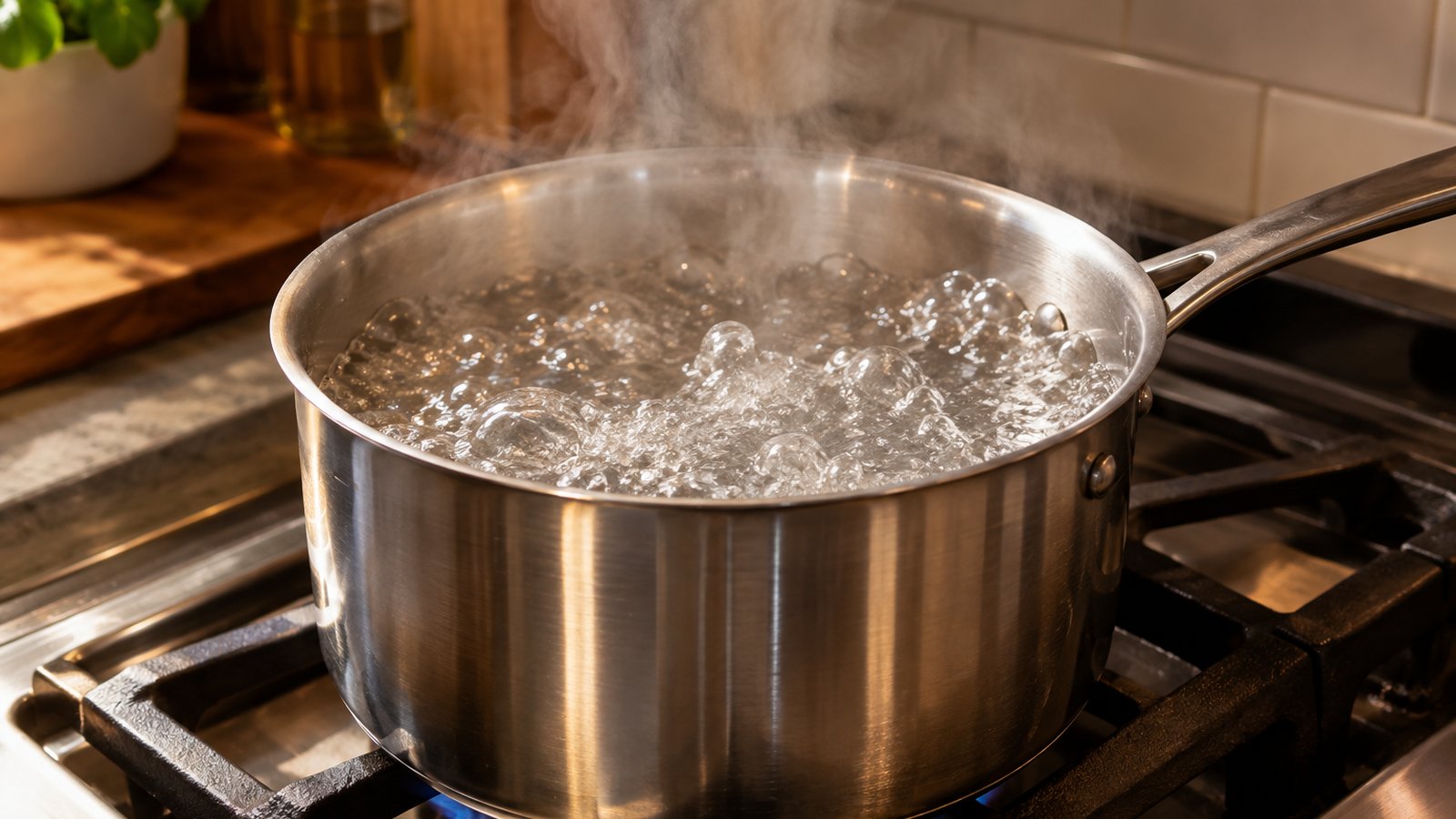
| 01 | BoilingBring water to a rolling boil for at least one minute. Above 5,000 feet of elevation, boil it for three minutes instead. This is the EPA's preferred method when you have a working heat source. |
| 02 | Bleach, if boiling isn't an optionUse plain, unscented liquid chlorine bleach only, never a scented or color-safe formula. For bleach that's 6 percent sodium hypochlorite, the EPA's dose is 8 drops per gallon of water. Stir it in and let it stand for 30 minutes before drinking. The water should carry a faint chlorine smell when it's ready. |
| 03 | Cloudy water needs an extra step firstIf the water is cloudy, let it settle, then filter it through a clean cloth, paper towel, or coffee filter before boiling or treating it. If it's still cloudy, colored, or very cold after that, double the bleach dose. |
This is a different job than what a backcountry filter or purification tablet does. Our guide to purifying water in the backcountry covers treating water from a stream or lake in the field. This section is about restoring safety to water that's already coming out of your own tap or sitting in your own storage.
Get The Water Storage Planner As A PDF
A fill-in calculator for how much your household needs, the container and sanitizing checklist, storage rules, and a rotation log to track when each container was filled.
Download the Planner (PDF)Build The Rest Of Your Kit While You're At It
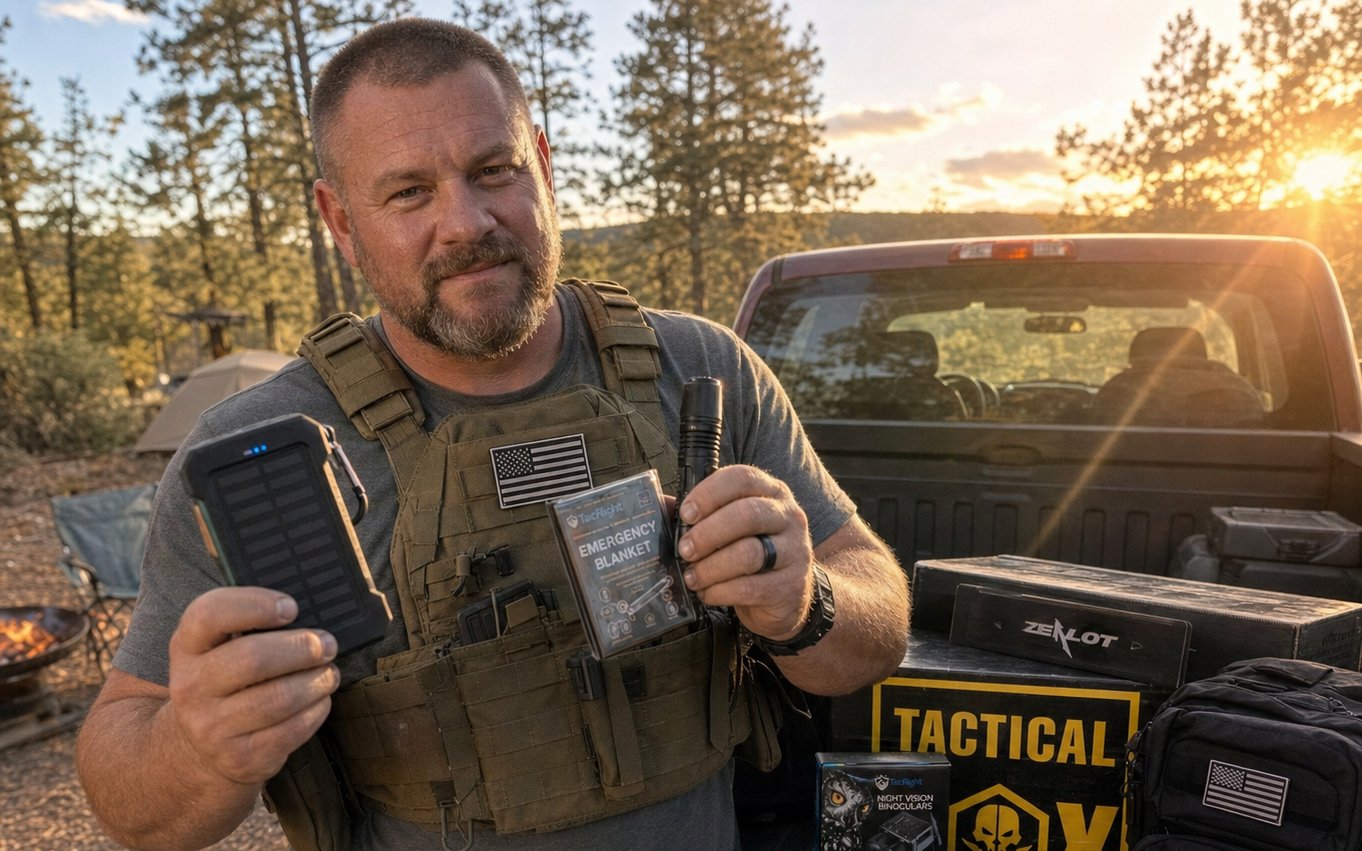
Every month, TacticalBox members get hand-picked tactical, survival, and outdoor gear, sourced ourselves from makers all over the country and curated to be some of the best equipment on the market, worth $150 or more per box on the Standard plan. It's an easy way to keep building out a real emergency kit without hunting down every piece yourself. Backed by a money-back guarantee. Cancel, pause, or skip anytime.
Start Your TacticalBoxThis content is for informational purposes only and is not a substitute for official guidance from your local water utility or health department. During a boil water advisory or contamination notice, follow the specific instructions issued for your area. If tap water looks, smells, or tastes unusual outside of a known advisory, treat it or use stored water instead of assuming it's safe.