
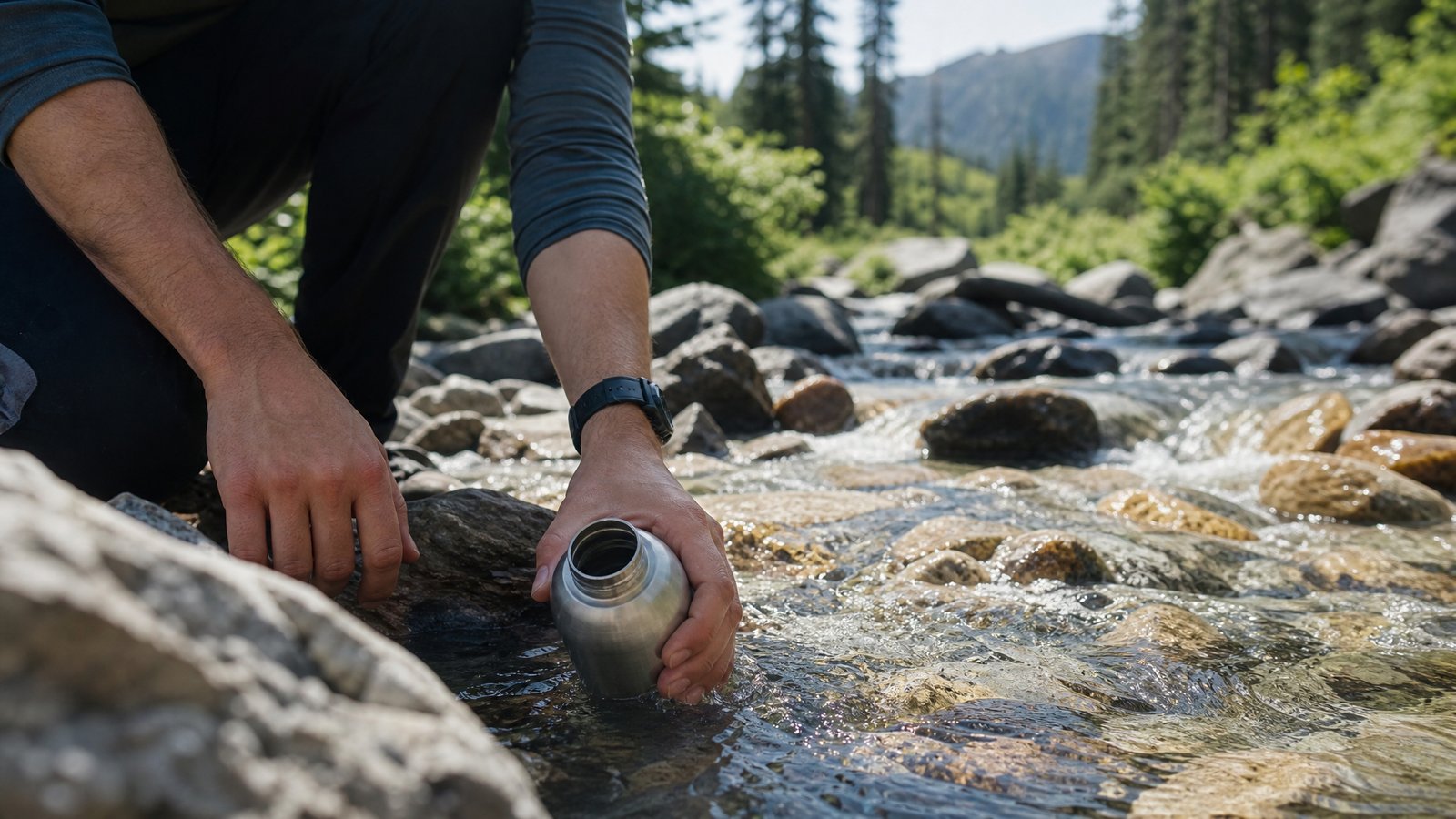
How to Purify Water in the Backcountry
Boiling is the single most reliable way to make backcountry water safe: bring it to a rolling boil for 1 minute, or 3 minutes above 6,500 feet elevation, and it kills viruses, bacteria, and parasites like Giardia and Cryptosporidium. If you can't boil, filter the water first with a filter rated 1 micron or smaller (or NSF 53/58 certified) to remove parasites, then disinfect with chlorine dioxide tablets, iodine, or UV light to handle what the filter can't catch. Filtering or disinfecting alone isn't enough on its own, and neither one fixes water contaminated with chemicals or fuel.
A mountain stream can look perfectly clean and still put you on your back for two days. The National Park Service is direct about it: never drink water from a natural source you haven't purified, even if it looks clean, since parasites like Cryptosporidium and Giardia don't show up to the naked eye. The CDC's own guidance goes further: drinking straight from a clear mountain stream is generally not safe. Every hiker eventually stands at the edge of a stream with an empty bottle asking the same question. Clear doesn't mean safe, and there are three real methods that work, each with a real limitation worth knowing before you're the one testing it in the field.
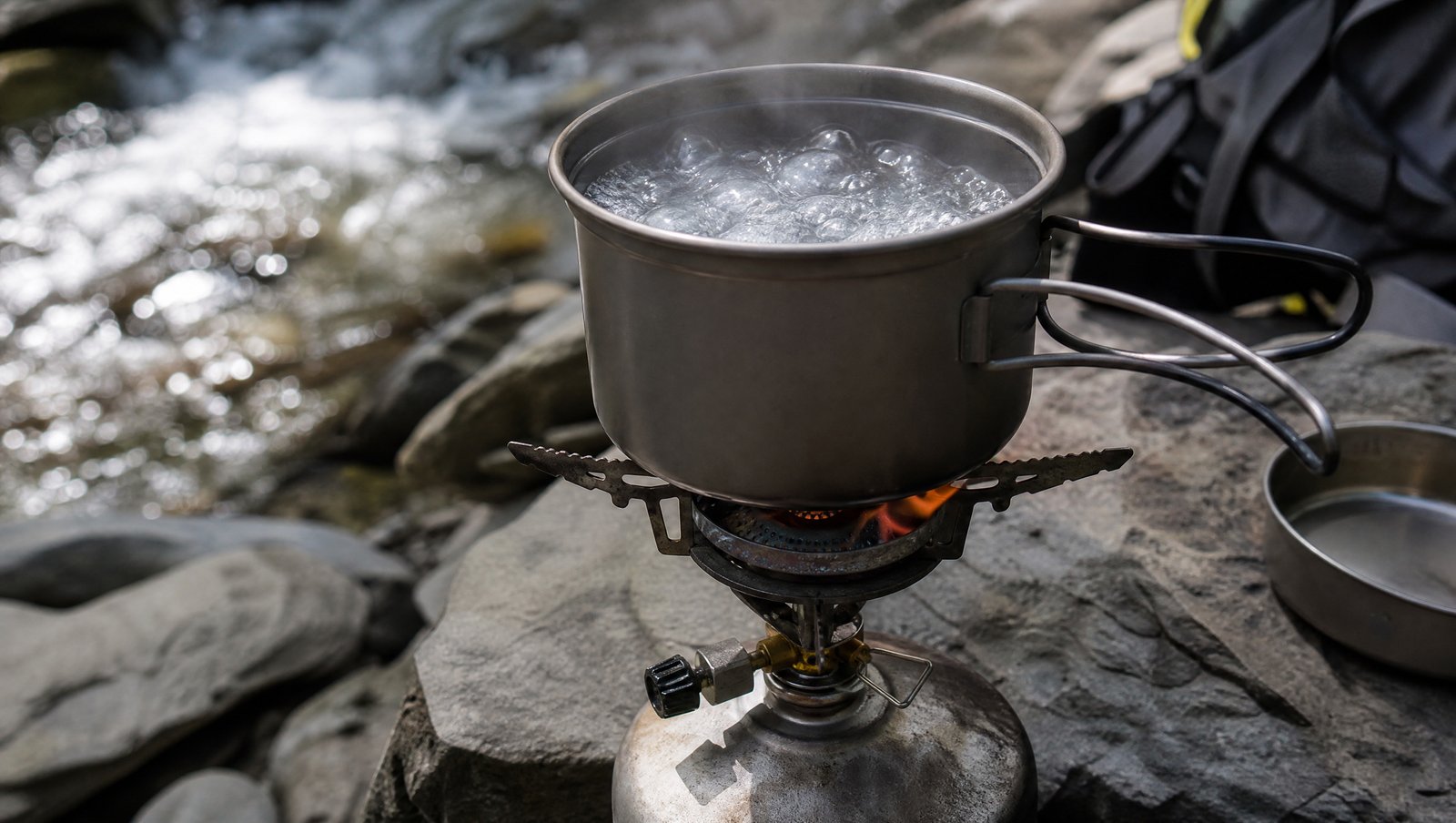
Boiling: The Method That Actually Kills Everything
Boiling is the standard everything else gets measured against, because it's the only single method here that reliably kills all three threats at once: viruses, bacteria, and parasites like Giardia and Cryptosporidium. The CDC's guidance is specific: bring the water to a rolling boil for 1 minute. If you're above 6,500 feet elevation, where water boils at a lower temperature, stretch that to 3 minutes. Let it cool before you drink it; a fast boil doesn't do you much good if you burn your mouth grabbing the pot too soon. The real tradeoff is fuel and time, not effectiveness, so pair boiling with a filter on cloudy water to get more purified water out of less fuel.
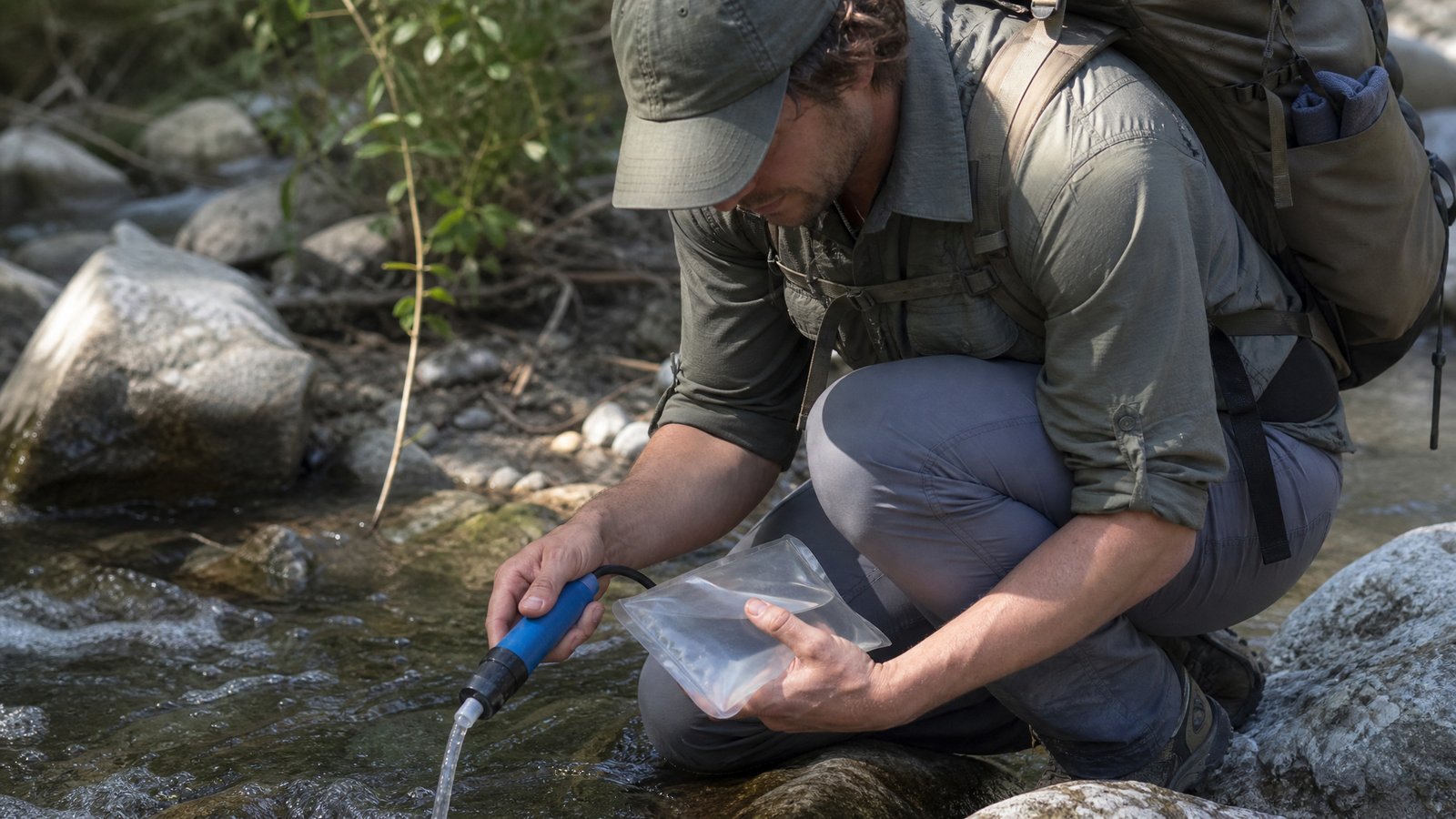
Filtering Removes Particles, Not Everything
A filter alone will not purify your water, and it's an easy assumption to get wrong. Filters can't catch viruses because viruses are simply too small for a physical membrane to trap. What a filter is genuinely good at is parasites: a filter labeled with an absolute pore size of 1 micron or smaller, or certified to NSF standard 53 or 58 for cyst removal, handles Giardia and Cryptosporidium well. Step down to 0.3 micron or smaller and the filter also removes bacteria, though still not viruses. Only a reverse osmosis filter removes parasites, bacteria, and viruses all in one pass, and it strips out salt too, which matters if you're ever near brackish water. Filtering matters most as the step before you disinfect, since cloudy water makes both chemical disinfectants and UV light less effective.
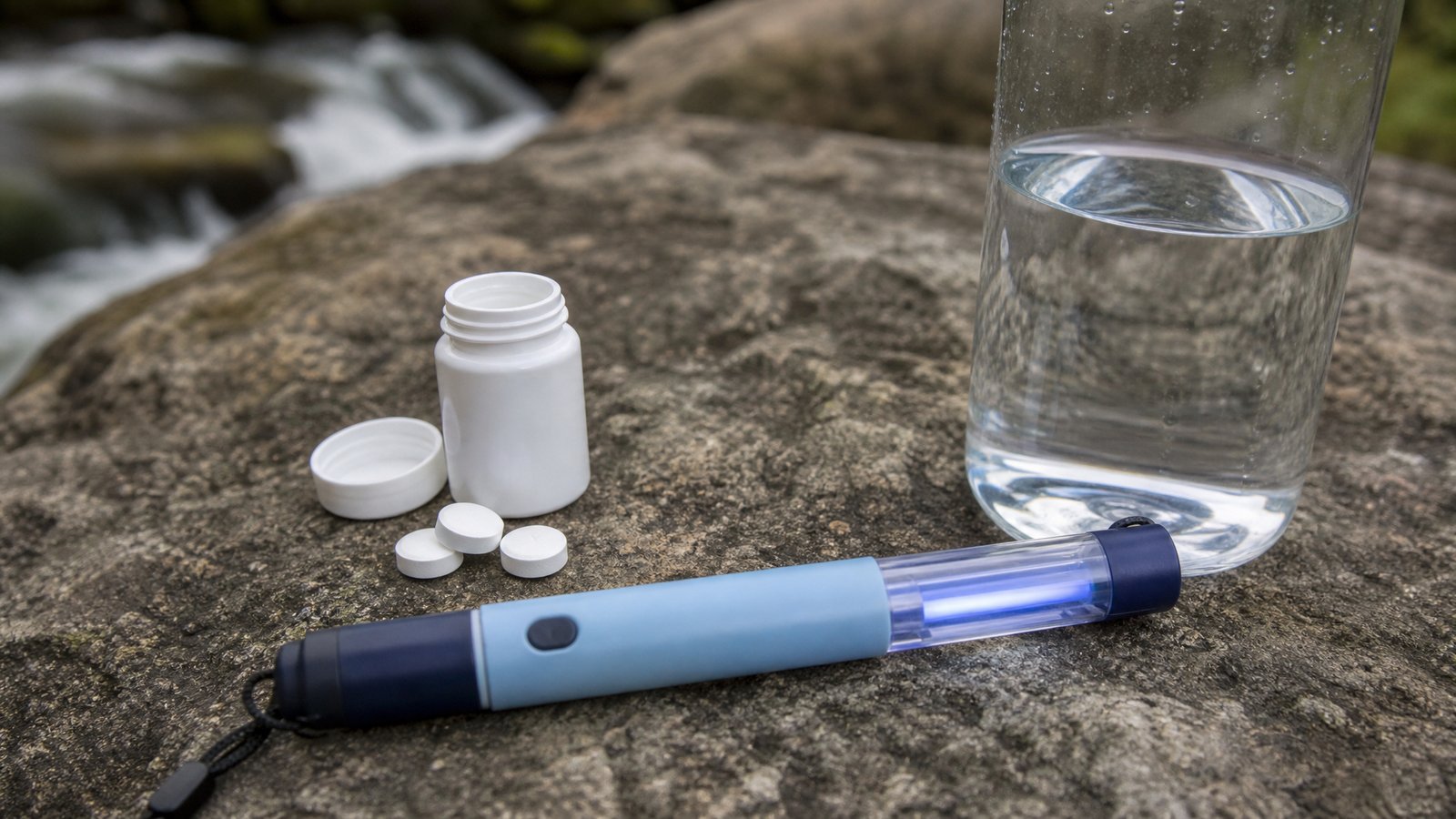
Disinfecting and UV Light: The Backup for What Filtering Missed
Chemical disinfectants like unscented household chlorine bleach, iodine, and chlorine dioxide tablets kill viruses and bacteria, but bleach and iodine don't reliably kill Giardia or Cryptosporidium. Chlorine dioxide tablets do a better job on Giardia and are somewhat effective against Cryptosporidium, though the CDC still recommends filtering first rather than leaning on chemistry alone. If you go the iodine route, know the limits: skip it if you're pregnant, have a thyroid condition, or are sensitive to iodine, and nobody should drink iodine-treated water for more than a few weeks at a stretch. Portable UV light units are a cleaner option for clear water since they knock out parasites, bacteria, and viruses in a small batch at once, but they don't work well through cloudy water, so filter first there too. And none of this, boiling included, will save you from water contaminated with chemicals, fuel, or other toxins. That calls for a different source entirely.
How you collect the water changes how hard your purification method has to work in the first place. Moving water in a river or stream, or the top few inches of a lake, carries less sediment than standing water, which state health guidance flags as a breeding ground for insects, bacteria, and viruses. Collect away from established campsites and animal grazing areas, since runoff there tends to carry the worst of it. None of the three methods above covers every scenario on its own, which is exactly why serious backcountry travelers carry more than one: a filter for the everyday cloudy-water problem, a way to boil when fuel allows it, and a backup disinfection method for when neither is practical. That kind of redundancy, gear that actually covers the gaps instead of leaving you with one tool and a hope, is the same logic behind what shows up in a TacticalBox every month.
Get the Backcountry Water Purification Checklist as a Printable PDF
The three methods, what each one actually removes, and a spot to track what's already in your pack.
Download the Checklist (PDF)Never Scramble For Gear Again
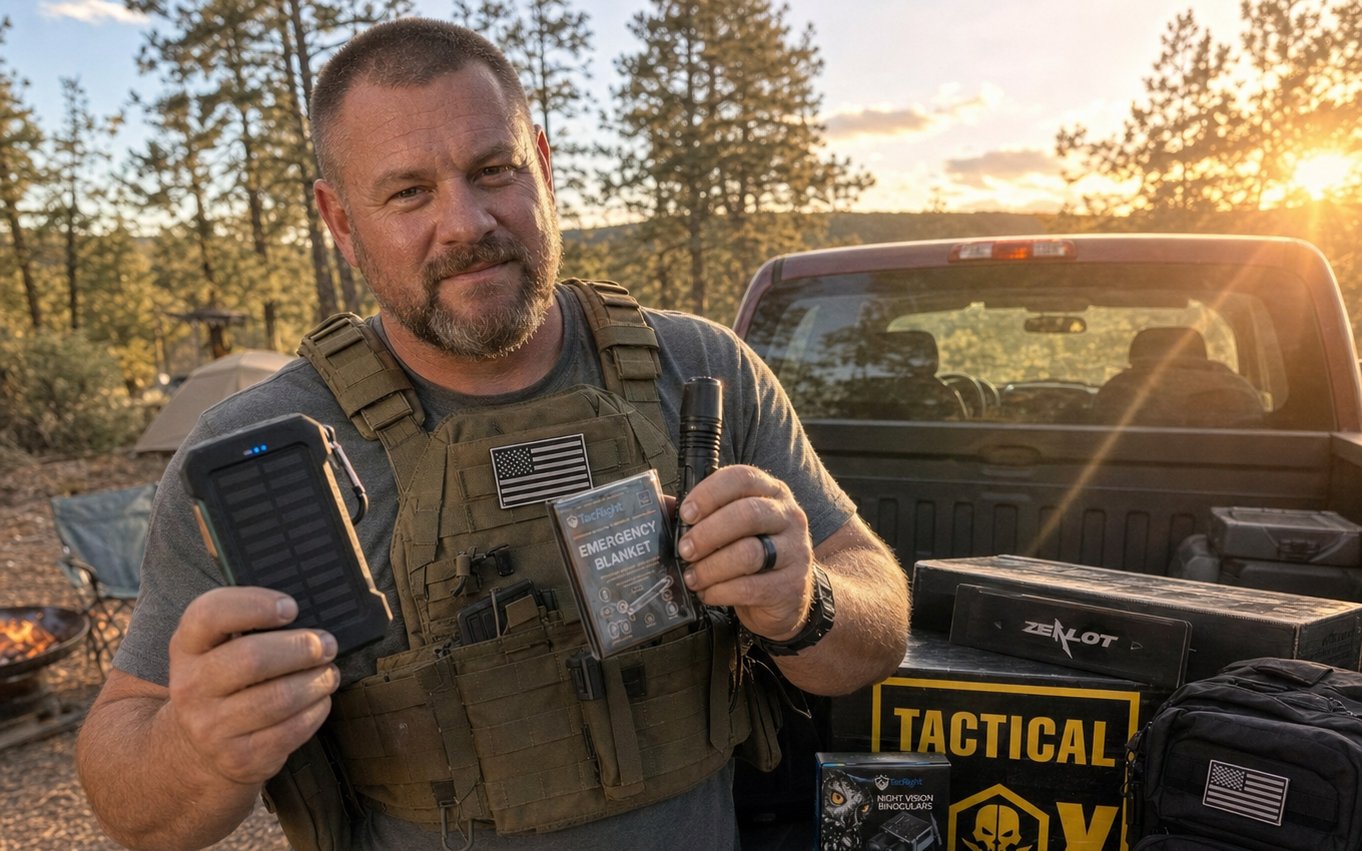
Every month, TacticalBox members get hand-picked tactical, survival, and outdoor gear, sourced ourselves from makers all over the country and curated to be some of the best equipment on the market, worth $150 or more per box. Subscribe once and the right gear keeps showing up before you need it, backed by a money-back guarantee.
Get Your TacticalBoxThis content is for informational purposes only and is not a substitute for professional medical guidance. Water purification methods reduce risk but aren't guaranteed to remove every contaminant — always follow the manufacturer's instructions for any filter, tablet, or UV device, and never rely on boiling or disinfecting to treat water you suspect contains chemicals, fuel, or other toxins.