
Choosing a Fire Extinguisher for Home and Vehicle
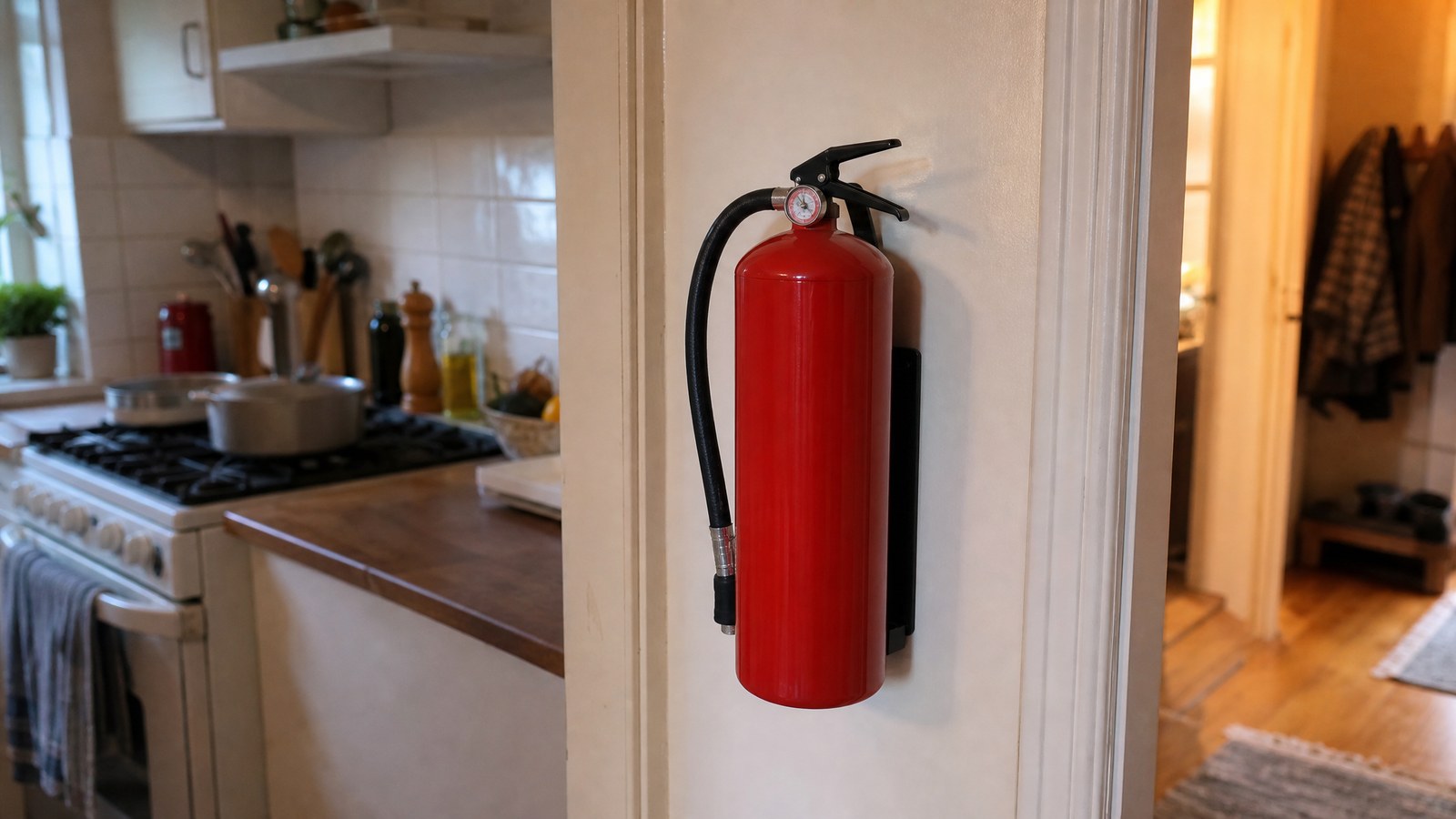
For the house, look for a multipurpose extinguisher labeled A-B-C or B-C, and pick the largest one you can safely and comfortably handle, which is the U.S. Fire Administration's own advice. Keep one in the kitchen, learn Pull, Aim, Squeeze, Sweep before you need it, and only use it on a small fire when everyone is alerted, 911 has been called, and you have a clear way out. For a burning vehicle, the guidance is different: the Fire Administration says do not try to put it out yourself. Get everyone out, move at least 100 feet away, and call 911.
The U.S. Fire Administration estimates there were 344,600 residential building fires in 2023, with 2,890 deaths and 10,400 injuries. Ready.gov puts the speed of it bluntly: in less than 30 seconds a small flame can turn into a major fire, and a fire can become life-threatening in just two minutes.
That short window is the whole argument for owning an extinguisher, and also the reason most people should be more careful about using one than they think. The right extinguisher, in the right place, in the hands of someone who knows when to use it and when to walk out the door, can stop a small fire from becoming a house fire. The wrong choice, or the wrong moment, can put you in the smoke.
What The Letters On The Label Mean
Extinguishers are sorted into classes by what is burning. The U.S. Fire Administration lists the ones that matter for a home this way.
| 01 | Class A: ordinary materialsCloth, wood and paper. Found in homes and businesses. |
| 02 | Class B: flammable and combustible liquidsGrease, gasoline, oil and oil-based paints. Also found in homes and businesses. |
| 03 | Class C: electrical equipmentAppliances, tools and other equipment that is plugged into an outlet. |
| 04 | Classes D and K are not for the average houseClass D covers flammable metals, mostly in factories. Class K covers vegetable oils and animal fats in commercial kitchen cooking appliances. |
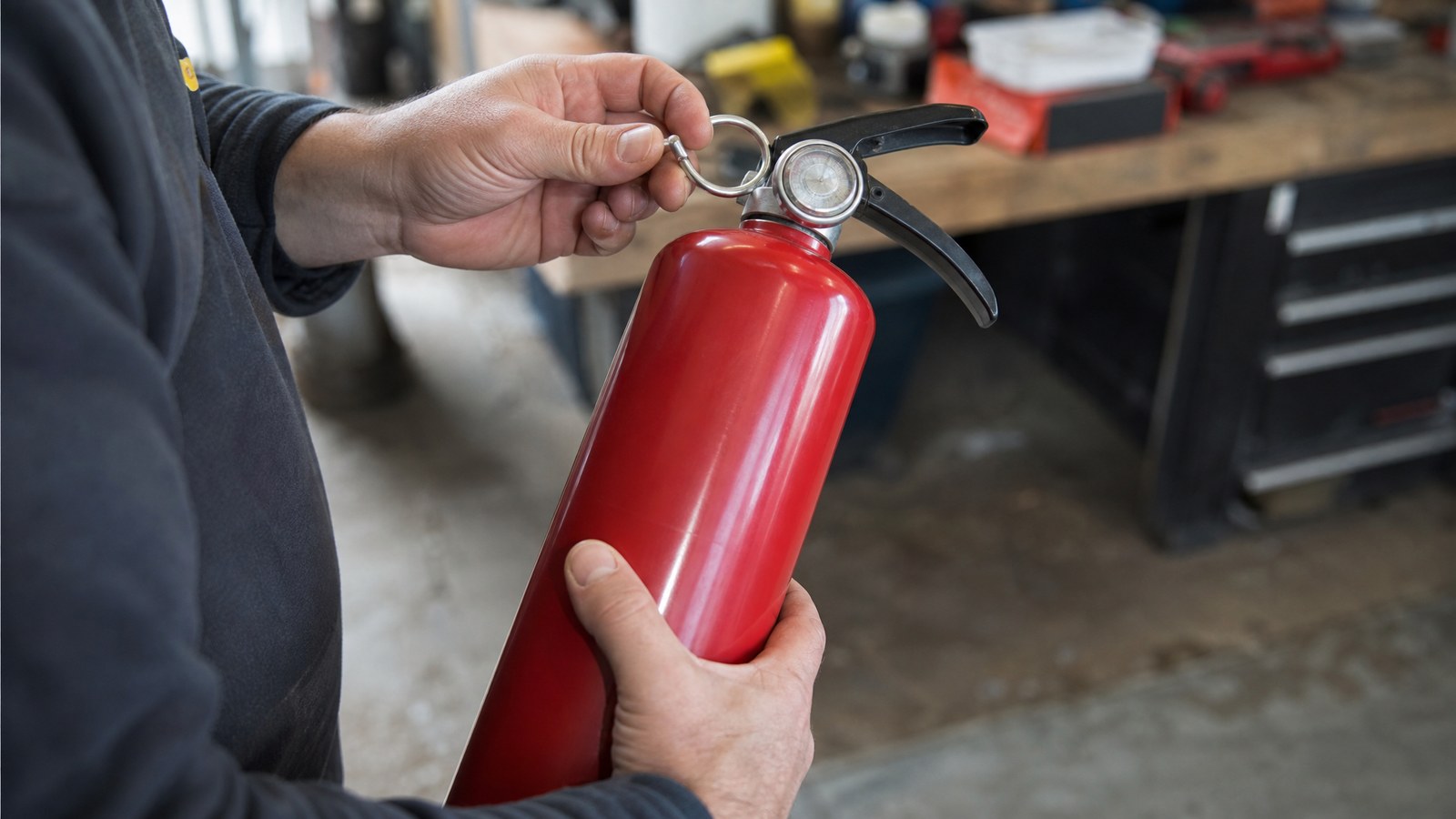
The practical takeaway from the Fire Administration is that multipurpose extinguishers labeled B-C or A-B-C work for most home fires, and most home improvement stores stock A-C multipurpose models. You will also see a rating like 1A:10B:C. The number before the A is a multiple of 1.25 gallons of water, and the number before the B is a multiple of the area, in square feet, of fire to be extinguished. Bigger numbers mean more firefighting capacity.
Picking A Size You Can Actually Use
The Fire Administration's recommendation is to select the largest fire extinguisher that a user can safely and comfortably operate. Both halves of that sentence matter. A heavy unit that is awkward to lift, aim and hold steady is worse than a smaller one you can handle with one hand on the lever, because the person who needs it in a hurry may be the smallest or oldest adult in the house.
Ready.gov's home fire guidance adds the one placement rule worth building around: keep a fire extinguisher in your kitchen, and contact your local fire department for help with proper use and maintenance. That call is worth making for the specific model you bought.
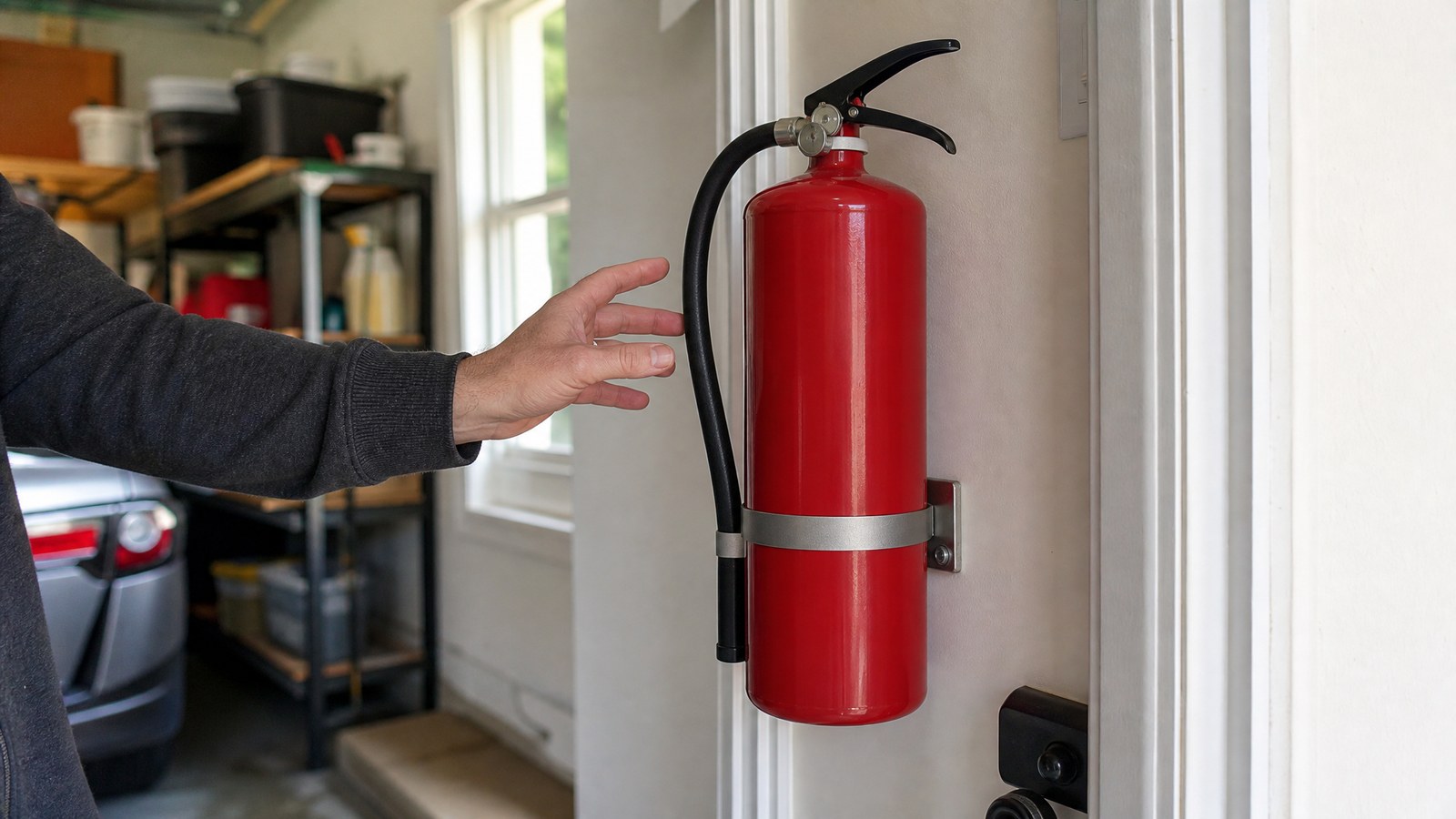
Check The Gauge, Then Check It AgainThe Fire Administration's maintenance advice is to make sure the extinguisher is easy to reach, at the correct pressure, free of dents and rust, and clean. Some models call for a periodic shake, others for pressure testing every few years, and a unit with low pressure should be recharged or replaced. An extinguisher you never inspect is a guess, not a plan.
Six Yeses Before You Pull The Pin
This is the part most buying guides skip. The Fire Administration does not say to grab an extinguisher whenever there is a fire. It says to use one only when all of these questions are answered yes. If any answer is no, alert others, leave the building and call 911.
| 01 | Have I alerted others in the building?Everyone else is on their way out or already out. |
| 02 | Has someone called the fire department?Calling comes first. The extinguisher is not a replacement for 911. |
| 03 | Am I physically able to use an extinguisher?Be honest about whether you can hold and aim it safely. It is not a job for young children. |
| 04 | Is the fire small and contained?Confined to a single object or a surface, not spreading up a wall or across a room. |
| 05 | Am I safe from the fire's toxic smoke?If smoke is building where you are standing, you are already too late. |
| 06 | Do I have a clear escape route?Your back is to the exit, not to the fire. |
Once all six are a yes, the technique the Fire Administration teaches is four short steps: Pull the pin while holding the extinguisher with the nozzle pointing away from you, Aim low at the base of the fire, Squeeze the lever slowly and evenly, and Sweep the nozzle from side to side. Practice the words, not just the idea. It is much easier to remember four words at 2 a.m. than a paragraph. If you have already thought through emergency lighting for an outage, this belongs on the same shelf of small habits that matter when the power and your patience are both low.
What To Do About The Vehicle
Here is where the title needs an honest answer. The Fire Administration's vehicle fire guidance does not tell drivers to fight a car fire with an extinguisher. It says the opposite, and it is worth reading closely, because an extinguisher in the trunk can tempt people into exactly the wrong move.
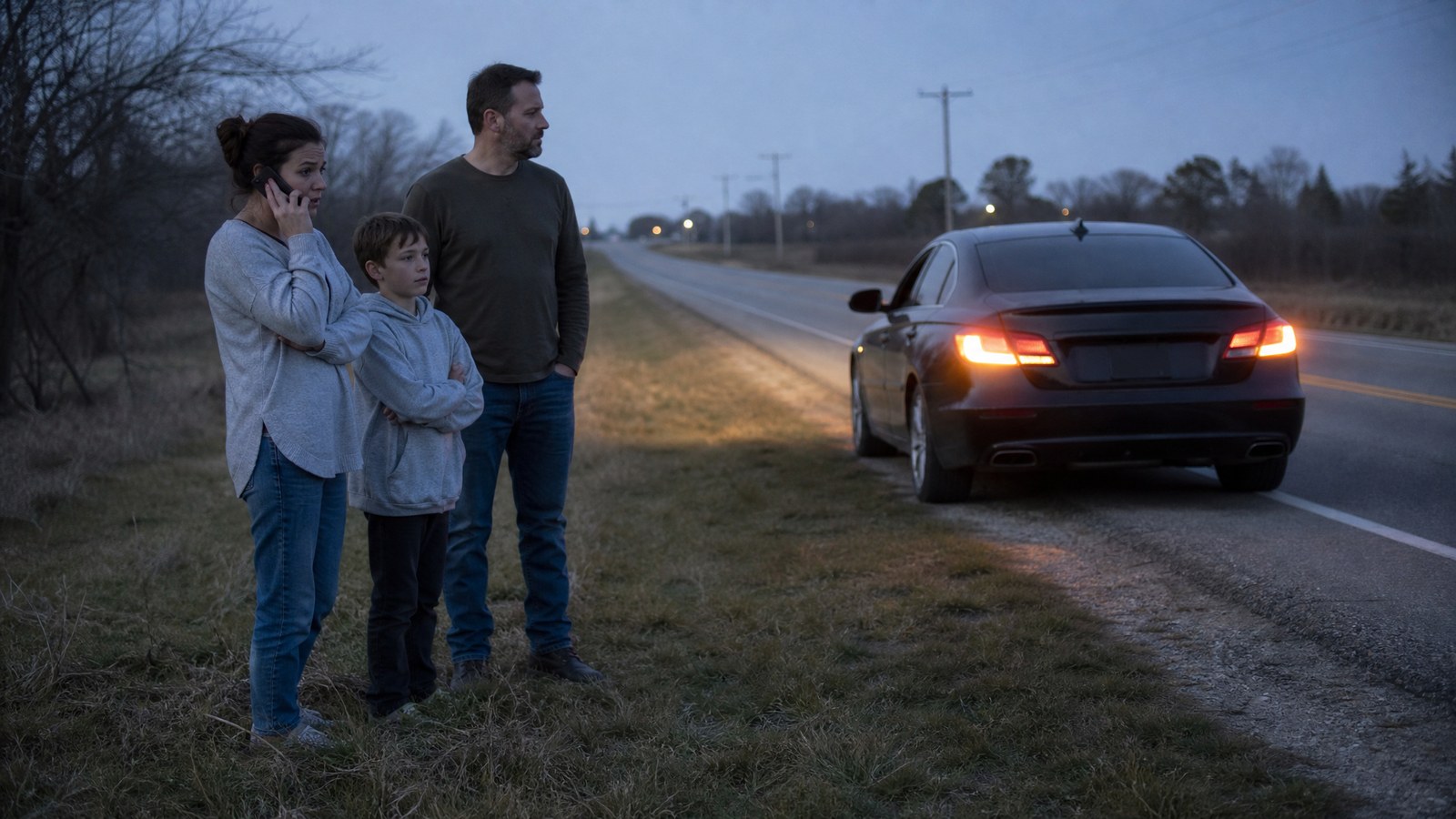
| 01 | Pull over as quickly as you can when it is safeThen turn off the engine. |
| 02 | Get everyone outNever return to a burning vehicle. |
| 03 | Do not try to put the fire out yourselfIf you think the fire is under the hood or in the trunk, do not open it. |
| 04 | Move everyone at least 100 feet awayKeep well away from traffic. |
| 05 | Call 911 |
The same page lists mechanical and electrical problems, along with crashes, as common causes of vehicle fires, and its prevention advice is simple: have the vehicle serviced regularly by a trained mechanic, keep gas cans and propane tanks away from passengers, seal them tightly and set them on a flat surface, and keep windows open if you must carry fuel containers inside. Our guide to winterizing your bug-out vehicle covers the maintenance side, which is the part that actually prevents most breakdowns.
So what does that mean for buying one for the car? It means the extinguisher you choose for the home is the one that matters, and the plan for the car is a rehearsed exit. If you carry a small unit in the vehicle anyway, that is a personal decision, but nothing in the Fire Administration's guidance changes the order of operations: get out, get 100 feet away, call 911.
Get The Extinguisher Field Card As A PDF
One page: what the class letters mean, the six questions to answer before you use one, Pull Aim Squeeze Sweep, the vehicle fire steps, and a monthly check log to post inside a cabinet door.
Download the Field Card (PDF)Build The Rest Of Your Kit While You're At It
Every month, TacticalBox members get hand-picked tactical, survival, and outdoor gear, sourced ourselves from makers all over the country and curated to be some of the best equipment on the market, worth $150 or more per box on the Standard plan. It's an easy way to keep building out a real emergency kit without hunting down every piece yourself. Backed by a money-back guarantee. Cancel, pause, or skip anytime.
Start Your TacticalBoxThis content is for informational purposes only and is not a substitute for training from your local fire department or the instructions printed on your extinguisher. If a fire is spreading, smoke is building, or you are unsure, leave immediately and call 911. Never put yourself between a fire and your only way out.