
How to Winterize Your Bug-Out Vehicle
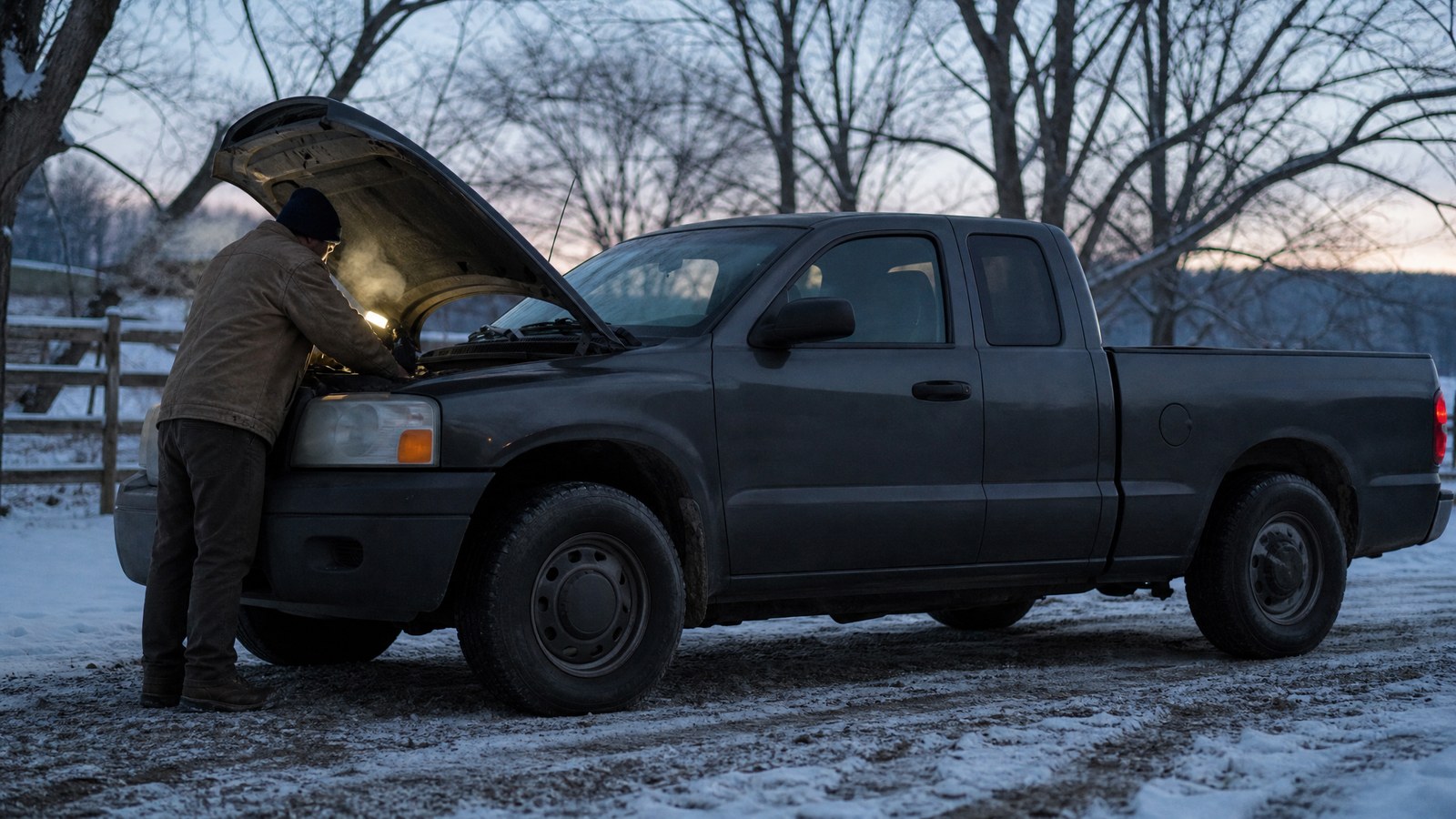
Winterizing a bug-out vehicle is three separate jobs that people tend to collapse into one. Keep it starting and running (battery, charging system, coolant, fuel). Keep it controllable and visible (tires, wipers, defroster, lights). Then stock it for the version of the trip where you do not arrive. Two published figures are worth anchoring to. In 2023 there were, per NHTSA, 320 fatal traffic crashes and an estimated 22,293 injury crashes when snow or sleet conditions were present at the time of the crash. And ordinary No. 2 diesel has a cloud point that Cooperative Extension puts anywhere between -18°F and +20°F, which means an untreated tank can start throwing wax before the thermometer reaches the freezing point of water.
A bug-out vehicle is a flattering name for what is usually just your truck. Same battery, same tires, same washer fluid you topped off in July. The plan assumes it starts on the coldest morning of the year, holds a road it has never held, and carries you somewhere you have possibly never driven. The vehicle does not know any of that. It only knows what condition you left it in.
Winter is the season that exposes the gap, because cold does not create new problems so much as it finds the ones already there. A battery that has been marginal since spring is fine in August and dead in January. A tire at 28 psi instead of 34 is a soft ride in warm weather and a handling problem on packed snow. A rusted-through exhaust hanger is an annoyance in the summer and a poisoning risk when you are idling in a drift.
What follows is organized by what the cold actually attacks, with the published guidance from the agencies that write it, plus the parts nobody publishes because they are just what goes wrong.
Cold Takes Your Starting Power First
Before anything else fails, the vehicle stops turning over. NHTSA puts the mechanism plainly on its Winter Weather Driving Tips page: when the temperature drops, so does battery power, and in cold weather gasoline and diesel engines take more battery power to start. Two curves moving the wrong way at the same time. Its instruction is to have a mechanic check your battery, charging system, belts, and for any other needed repairs or replacements.
Note that NHTSA names three things there, not one. The battery is the part people replace. The charging system is the part that let the battery get weak in the first place, and the belts are what drives it. A new battery on a failing alternator buys you a few weeks and a false sense of security.
Ready.gov's Car Safety page frames its own version as a pre-emergency mechanic's list rather than a winter list, and it is worth reading in that spirit, because a vehicle you are counting on for an evacuation is exactly what the page is written about. It asks a mechanic to check antifreeze levels, battery and ignition system, brakes, exhaust system, fuel and air filters, heater and defroster, lights and flashing hazard lights, oil, thermostat, and windshield wiper equipment and washer fluid level. That is not a list of winter-specific parts. It is the list of everything that leaves you sitting still.
If your bug-out vehicle is electric or hybrid, the cold hits the same system from a different angle. NHTSA notes that electric and hybrid-electric vehicles' driving range can be reduced in cold weather, and explains why: batteries with liquid electrolyte have reduced energy storage and delivery capabilities at lower temperatures, and most vehicle batteries use battery power for self-heating in low temperatures. Its stated fix is to keep the vehicle as warm as possible during freezing temperatures, and it names plugging in overnight during the winter as the common way to do that. For a vehicle whose whole job is departing on short notice, a reduced range is a planning input, not a footnote.
Our Own Rule, Not An Agency'sTest the battery under load before the first hard freeze, not after. A battery that reads a healthy voltage sitting still can still collapse the moment a cold starter pulls on it, and the parts-store test that takes four minutes in October is the same test you will be paying a tow truck to arrive for in January. If your vehicle sits between uses, that goes double.
Tires Are Most Of The Argument
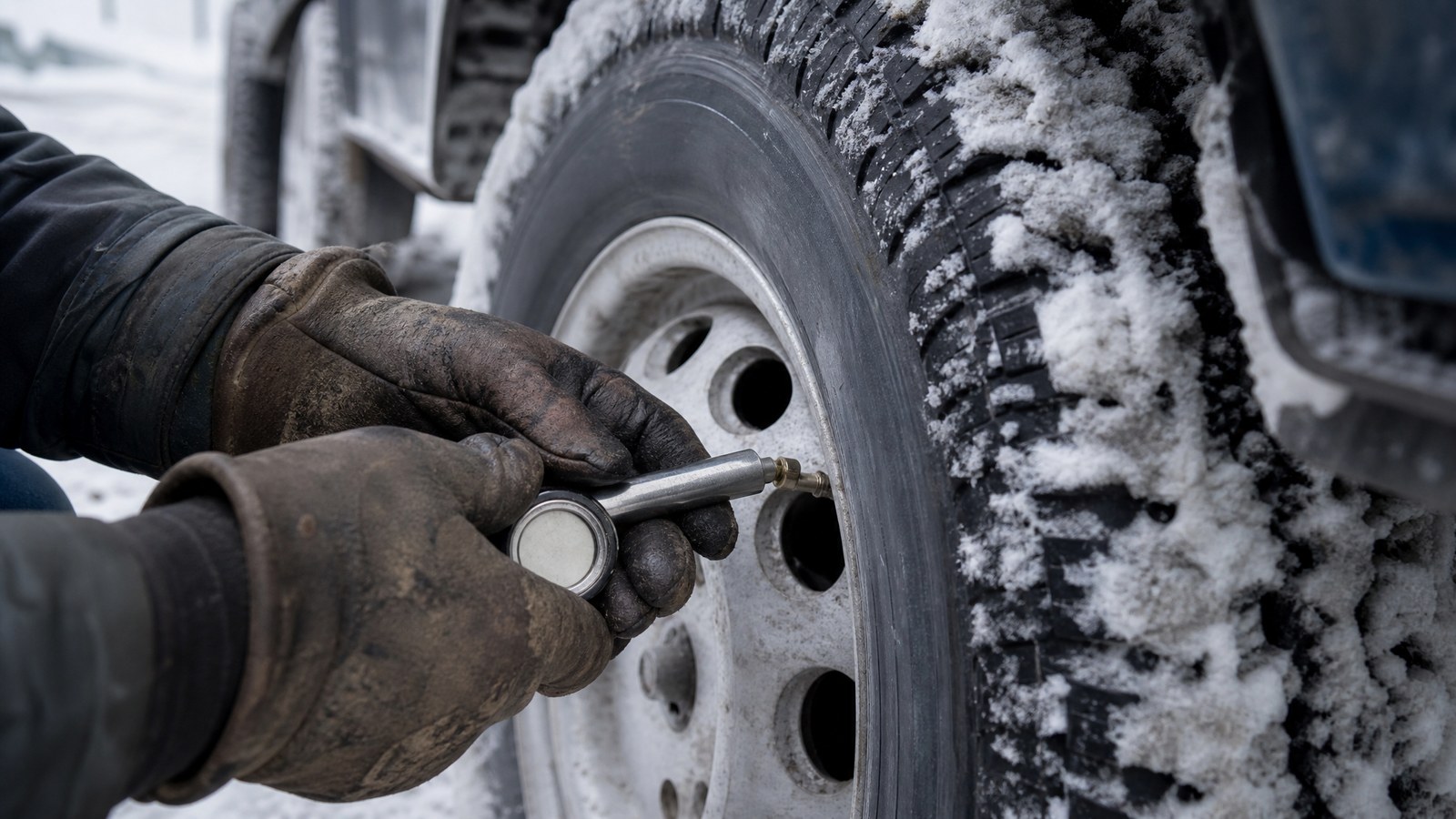
Every other system on this list determines whether the vehicle moves. The tires determine whether it goes where you point it. NHTSA's winter page leads its tire section with the sentence worth memorizing: as the outside temperature drops, so does tire inflation pressure.
There is a rough figure behind that. In NHTSA's own rulemaking on tire pressure monitoring systems, the agency records that tire manufacturers said seasonal climatic changes result in air pressure losses on the order of 1 psi for every 10 degree F decrease in the ambient temperature. That is NHTSA reporting what tire manufacturers told it, not an agency measurement, and the same passage separately notes tires typically lose air through natural leakage and permeation at a rate of about 1 psi per month. Stack a seasonal temperature swing on top of a few months of ordinary seepage and the number on your door frame stops describing your vehicle.
The rest of NHTSA's tire guidance is specific enough to act on directly. The items below are its list, not a ranking, and the numbers are only here so they are easy to refer back to.
| 01 | Use the door frame, never the sidewallFill each tire to the vehicle manufacturer's recommended inflation pressure, which NHTSA says is in your owner's manual and on a label located on the driver's side door frame. Its warning is explicit: do not inflate your tires to the pressure listed on the tire itself, because that number is the maximum pressure the tire can hold, not the recommended pressure for your vehicle. This is the single most common winter mistake, and it goes in the wrong direction, since sidewall maximums are usually well above placard pressure. |
| 02 | Check them cold, and check them monthlyNHTSA says it is best to check the tires when they are cold, meaning they have not been driven on for at least three hours, and to inspect them at least once a month and before long road trips. Our own note, not NHTSA's: a driveway check first thing in the morning satisfies both conditions at once, which makes it the one that actually gets done. |
| 03 | Tread depth has a published floorNHTSA's inspection list says the tread should be at least 2/32 of an inch or greater on all tires, and it asks you to check the tread and sidewalls for any cuts, punctures, bulges, scrapes, cracks, or bumps. Ready.gov's separate car page puts the winter version of the same point as installing good winter tires and making sure they have enough tread, along with any chains or studs required in your local area. Two things worth keeping straight: 2/32 is the legal-minimum end of the scale rather than a winter target, and chain and stud rules are set locally, so the requirement in your area is a thing to look up rather than assume. |
| 04 | Age is a separate question from wearNHTSA asks you to check each tire's age, and notes that some vehicle manufacturers recommend replacing tires every six years regardless of use. Read the qualifier honestly: it is some manufacturers, and the recommendation is theirs. But if your bug-out vehicle is the one that sits most of the year, this is the failure mode aimed straight at you, because low mileage is exactly what hides an old tire. |
| 05 | The spare countsNHTSA's inspection list names your spare tire alongside the four on the ground. A flat spare is the most common way a one-flat problem becomes a stranded-vehicle problem, and the spare is the one tire nobody checks in the fall. |
Fluids: Coolant, Washer, And The One Nobody Thinks About
Coolant first. NHTSA's instruction is to make sure you have enough coolant in your vehicle and that it meets the manufacturer's specifications, to see your owner's manual for recommendations, and to check the cooling system for leaks, test the coolant, and drain or replace the old coolant. Note what it does not do: it names no universal mix ratio, because the correct specification is the one in your manual. Anyone quoting you a single number for every vehicle is going past the source.
The washer reservoir is the one that is genuinely seasonal. NHTSA's guidance is to make sure the reservoir is full of high-quality winter fluid with de-icer before winter weather hits, on the stated reasoning that you can quickly go through a lot of windshield wiper fluid in a single snowstorm. Summer fluid in a January reservoir is worse than an empty one, because a slush-covered windshield and a frozen jet is a stop-on-the-shoulder situation rather than an inconvenience.
Then fuel, which splits by what you burn. For gasoline, Ready.gov's rule is short and has two reasons attached: keep your gas tank full in case of evacuation or power outages, and a full tank will also keep the fuel line from freezing. NHTSA's version of the same instruction is to keep your gas tank close to full whenever possible. The evacuation logic is the part that matters most for a bug-out vehicle, since pumps need grid power and the stations on your route may be the ones that lost it.
Diesel is the case with real numbers behind it, and they surprise people. A Cooperative Extension resource on cold-weather fuel behavior, supported in part by the USDA National Institute of Food and Agriculture and authored by specialists at North Dakota State University and the University of Idaho, lays out the three temperatures that describe a diesel fuel in the cold. The cloud point is the temperature at which small, solid crystals can be observed as the fuel cools. The cold filter plugging point is the temperature at which a fuel filter plugs due to fuel components that have crystallized or gelled. The pour point is the lowest temperature at which there is movement of the fuel when the container is tipped.
The consequence is stated directly: a fuel may still work in an engine even if the temperature is below the cloud point, but the fuel will definitely not work below the pour point, after it has gelled. So clouding is a warning and gelling is a stop. As for where those temperatures sit, the same resource gives the cloud point of No. 1 diesel as about -40°F and No. 2 diesel as between -18°F and +20°F. That upper end is the number worth sitting with, because it is above freezing.
Biodiesel changes the picture again. Soybean biodiesel has a cloud point of about 34°F, and about 80% of biodiesel in the United States is soy biodiesel. Low blends behave like straight diesel: studies funded by the National Biodiesel Board indicate that blends of B2 or B5 have minimal or no effect on cold-flow properties of diesel blends. Higher blends are where it bites, and there is a trap in the fix, because the same resource warns that fuel additives recommended for diesel may not be effective for biodiesel. One more property is worth knowing before you rely on a cloudy tank: while there may be a 20-degree difference between the cloud point and the pour point of petroleum diesel, biodiesel may have a difference of only a few degrees. The warning window is shorter.
What The Extension Resource Actually RecommendsFor lowering cloud and pour points, it names adding anti-gel additives or No. 1 diesel fuel when the fuel nears its cloud point, and separately lists fuel-line or in-tank fuel heaters, insulating fuel filters and fuel lines, and storing diesel-powered equipment in heated buildings. Its material on additive effectiveness is specifically about biodiesel, so treat the biodiesel caveat as a biodiesel caveat. And if your winter plan is a bottle of anti-gel in the toolbox, buy it before the cold snap, because the shelf it lives on empties in the first week of a real freeze.
Being Seen Is Half Of Being Safe
Winter shortens the day, dirties every lens on the vehicle, and puts a film of road salt over the exact surfaces other drivers need to see. NHTSA's preparation list is unglamorous and complete: check your headlights, brake lights, turn signals, emergency flashers and interior lights, and check your trailer brake lights and turn signals if necessary. Make sure defrosters and all windshield wipers work and replace any worn blades. Consider installing heavy-duty winter wipers if you live in an area that gets a lot of snow and ice.
The item most likely to be new to you is the sensor list. Before driving, NHTSA says to clean snow, ice or dirt from the windows, the forward sensors, headlights, tail lights, backup camera and other sensors around the vehicle. On a modern truck, a slab of frozen slush over a forward radar does not just blind a convenience feature, it can disable the automatic braking you have quietly started relying on. Clearing the windshield and leaving the grille packed is a habit from a decade of vehicles that no longer exist.
Floor mats get their own paragraph in NHTSA's guidance for a reason that is not about comfort. It suggests switching your usual mats for thicker or rubbery ones because of slushy winter conditions, and then states the hazard: improperly installed floor mats could interfere with the operation of the accelerator or brake pedal, increasing the risk of a crash. Its instruction is to follow the manufacturer's instructions for mat installation, use retention clips to secure the mats, and always use mats that are the correct size and fit for your vehicle. The winter version of this failure is a stacked second mat over the original, which is exactly the configuration that slides.
While you are in the cab, know your brakes. NHTSA asks you to know whether your vehicle has an antilock brake system and learn how to use it properly: if you have antilock brakes, apply firm, continuous pressure to the brake pedal, and if you do not have antilock brakes, you may need to pump your brakes if you feel your wheels starting to lock up. Two techniques, and the one that helps depends on which vehicle you are in.
The Exhaust System Is Winter Safety Equipment
This is the section that turns a maintenance article into a safety one, and it is the one most winterizing checklists leave out. A vehicle idling in the snow is a combustion appliance you are sitting inside.
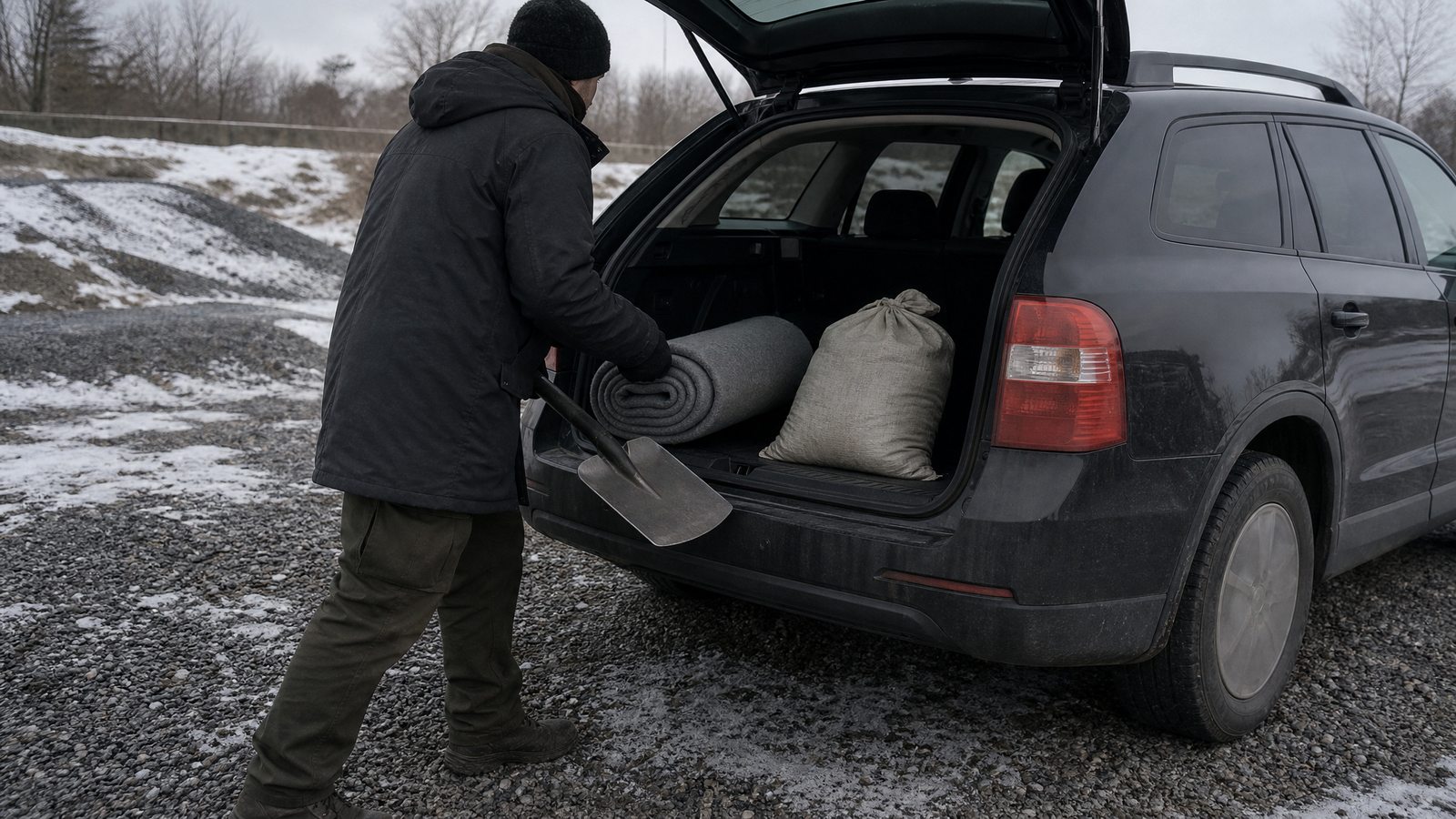
The CDC's carbon monoxide basics describe CO as an odorless, colorless gas that kills without warning, and put the annual toll at more than 400 Americans dead from unintentional CO poisoning not linked to fires, more than 100,000 emergency department visits, and more than 14,000 hospitalizations. Its automobile guidance is a yearly maintenance item: have a mechanic check the exhaust system of your car or truck every year, because a small leak in the exhaust system can lead to a buildup of CO inside the car. It also says never to run your car or truck inside a garage that is attached to a house, even with the garage door open, and to always open the door to a detached garage to let in fresh air when running a vehicle inside. One more that catches people loading gear: if you drive a car or SUV with a tailgate, open the vents or windows when you open the tailgate, because if only the tailgate is open, CO from the exhaust will be pulled into the vehicle.
The snow-specific half of this comes from NHTSA rather than the CDC, in its guidance for being stopped or stalled in wintry weather: be mindful of carbon monoxide poisoning, make sure your exhaust pipe is clear of any snow, and run your car only sporadically, just long enough to stay warm. It adds not to run your car for long periods of time with the windows up or in an enclosed space. A drift builds behind a stationary vehicle without anyone watching it happen, which is what makes this the rare hazard that arrives while you are doing nothing wrong.
Know the symptoms too, because they are easy to explain away in a cold vehicle. The CDC lists headache, dizziness, weakness, upset stomach, vomiting, chest pain, and confusion, and notes CO symptoms are often described as flu-like. It also warns that people who are sleeping or under the influence of substances can die from CO poisoning before they have symptoms, which is the reason nobody in the vehicle sleeps through an idle cycle unattended.
What Should Already Be In The Vehicle
Two agencies publish a car kit, and they are not identical. NHTSA's winter list is written for winter driving. Ready.gov's is written for being stranded in any emergency. Between them you get a complete load, and the honest way to read them is as two lists that overlap rather than one canonical one.
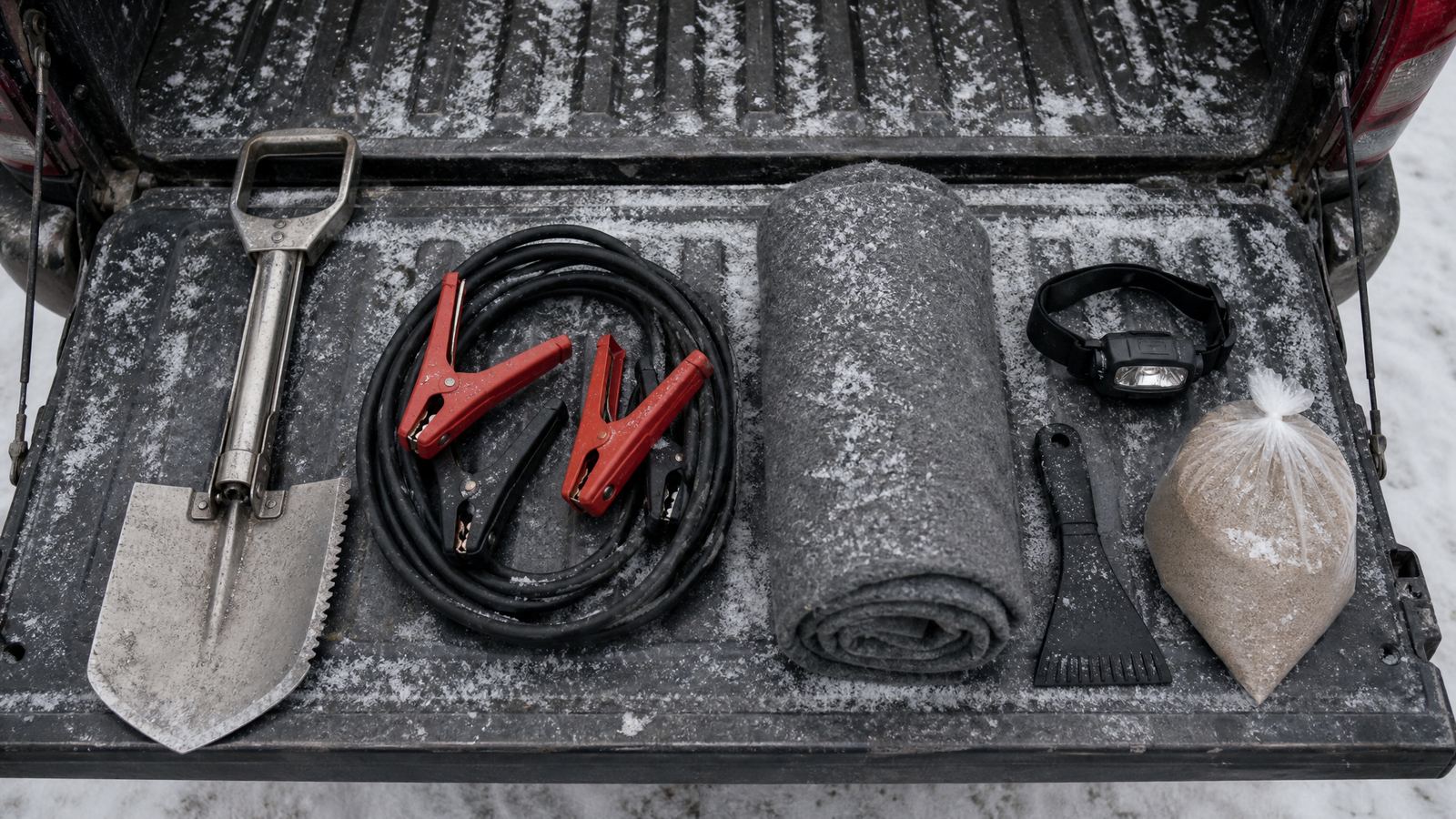
NHTSA's list, for handling common winter driving tasks and supplies you might need in an emergency: a snow shovel, broom, and ice scraper; abrasive material such as sand or kitty litter in case your vehicle gets stuck in the snow; jumper cables, flashlight, and warning devices including flares and emergency markers; a first aid kit, including a tourniquet; blankets for protection from the cold; and a cell phone and charger, water, food, and any necessary medicine.
Ready.gov's automobile extras, for the case where you are stranded: jumper cables, flares or a reflective triangle, an ice scraper, a car cell phone charger, a blanket, a map, and cat litter or sand for better tire traction. The map is the item worth noticing, because it is the only thing on either list that keeps working when the battery is dead and the towers are down.
A few additions of our own, which are not from either agency. Add a real tow strap rated for your vehicle's weight and a pair of gloves that survive being soaked, because both of those are decided at the moment you need them. Add a second light that is not your phone. And put the shovel where you can reach it without unloading the vehicle first, since the whole point of it is being buried.
If you are assembling this from scratch, our breakdown of how to build a winter car emergency kit goes item by item, and 1st Hour has a companion piece on the car kit items that matter most medically. What you wear in the vehicle is its own subject, and our guide to layering for cold-weather survival covers it, because a heater is not a clothing system.
The Trip You Do Not Complete
A winterized vehicle lowers the odds of this. It does not remove them. So the last part of winterizing is deciding in advance what you do when the vehicle stops being transportation and starts being shelter.
NHTSA's guidance for being stopped or stalled is short and specific. Stay with your car and do not overexert yourself. Let your car be seen, by putting bright markers on the antenna or windows and keeping the interior dome light on. Be mindful of carbon monoxide poisoning, keeping the exhaust pipe clear of snow and running the car only sporadically. The stay-with-the-vehicle instruction is the one people argue with and the one that keeps them alive, because a car is a large visible object and a person walking in a whiteout is neither.
Two of Ready.gov's driving rules belong here as well. If it becomes hard to control the car, pull over, stop the car and set the parking brake. And on water, which is a winter problem more often than people expect during a thaw or an ice-jam flood: do not drive through flooded areas, because six inches of water can cause a vehicle to lose control or possibly stall, and a foot of water will float many cars. It also warns to be aware of areas where floodwaters have receded, since roads may have weakened and could collapse under the weight of a car.
Before any of that, the decision that prevents most of it. Ready.gov's own framing is that in bad weather you should drive only if absolutely necessary, and to plan long trips carefully while listening to the radio or television for up-to-date weather forecasts and road conditions. NHTSA's version adds that if your roads are not in good shape you should consider postponing non-essential travel until the roads are cleared, and that you should let others know your route and anticipated arrival time. A bug-out is by definition the trip you cannot postpone, which is exactly why the route telling matters more, not less.
For the hours after the vehicle stops, 1st Hour's walkthrough on being stranded in your car in a snowstorm covers surviving until help arrives, and it is the natural companion to this one. If the question is where you were driving to in the first place, our piece on choosing a bug-out location includes the seasonal access problem, which is the one that ends most winter plans on paper.
What Turns This Into A Non-Event
The people who handle a bad winter well are almost never the ones with the most modified vehicle. They are the ones who did four boring things in October. Load-tested the battery. Set the tires to the door-frame number on a cold morning. Swapped the washer fluid and replaced the blades. Loaded the kit and left the shovel on top.
Every one of those is a twenty-minute job in a warm garage and an impossible job on a shoulder in the dark. That is the entire argument for doing it on a calendar instead of on demand. If you are building out the wider skill side of this, the survival skills worth learning first is where we would start, and preparing for a power outage covers the house side of the same storm.
Pick a date. Put it in the calendar before the first freeze. Then let the vehicle be the boring part of a bad week.
Get the Winterizing Field Card as a Printable PDF
The full pre-freeze walkaround, the published tire and fluid numbers, the two agency kit lists side by side, the stranded protocol, and blank lines for your door-frame pressure, coolant spec and target date, on one sheet for the glovebox.
Download the Field Card (PDF)Kit The Truck Before The First Freeze
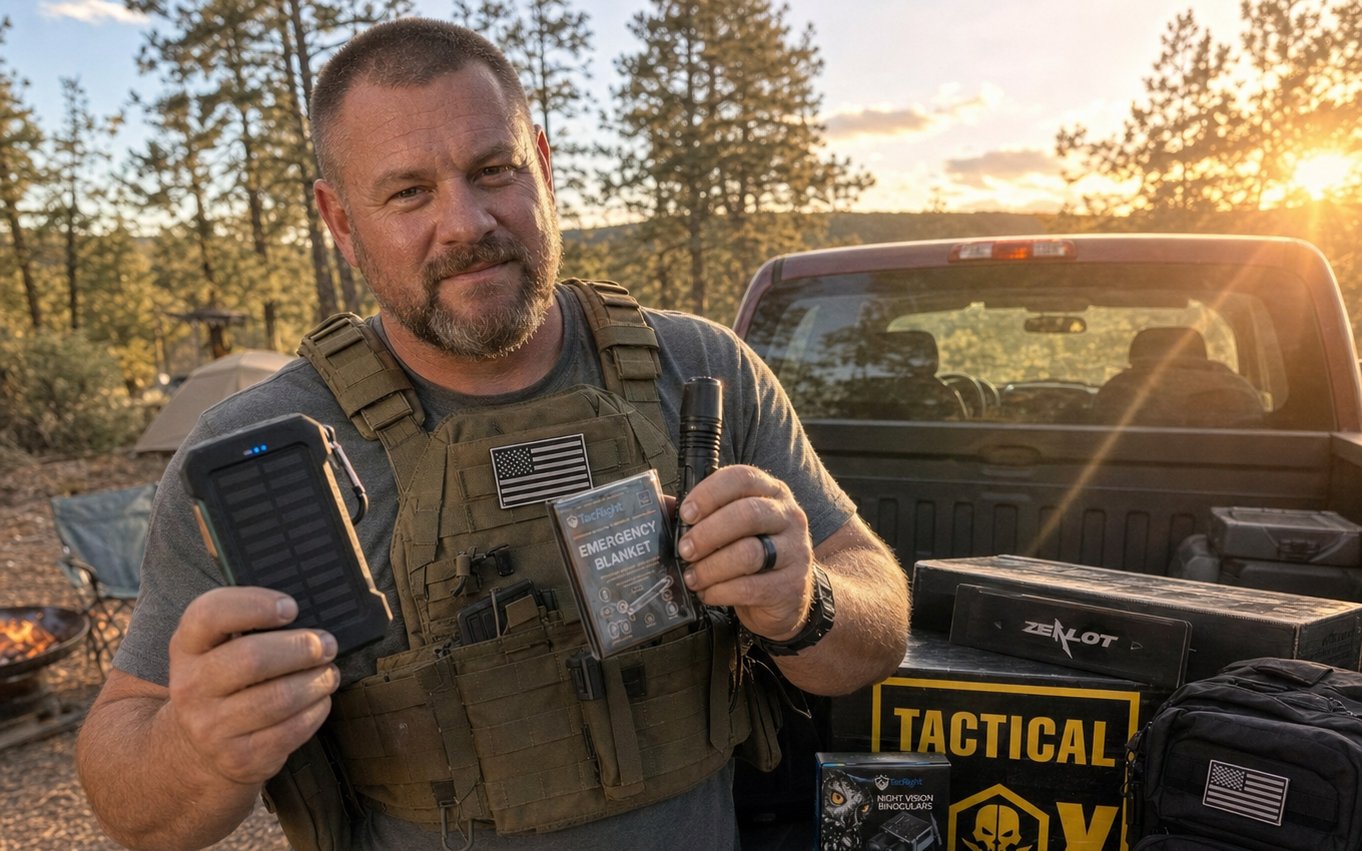
Every month, TacticalBox members get hand-picked tactical, survival, and outdoor gear, sourced ourselves from makers all over the country and curated to be some of the best equipment on the market, worth $150 or more per box on the Standard plan. Right now this link takes 25% off, so the gear that lives in the truck starts showing up before the weather does. Backed by a money-back guarantee. Cancel, pause, or skip anytime.
Get 25% Off Your TacticalBoxThis content is for informational and educational purposes only and is not a substitute for a qualified mechanic or your vehicle's own owner's manual, which is the authority on coolant specification, tire placard pressure and service intervals for your specific vehicle. Diesel and biodiesel cold-flow temperatures vary by fuel batch, blend and feedstock, and the figures cited here are typical values from a Cooperative Extension resource rather than a specification for the fuel in your tank. Chain, stud and winter-tire requirements are set locally and change, so confirm the current rules for your area. Carbon monoxide is odorless and can be lethal within minutes: never run a vehicle in an attached garage or any enclosed space, keep the exhaust pipe clear of snow, and treat flu-like symptoms in an idling vehicle as an emergency. In any emergency, follow the current instructions of your local emergency management and public safety authorities.