
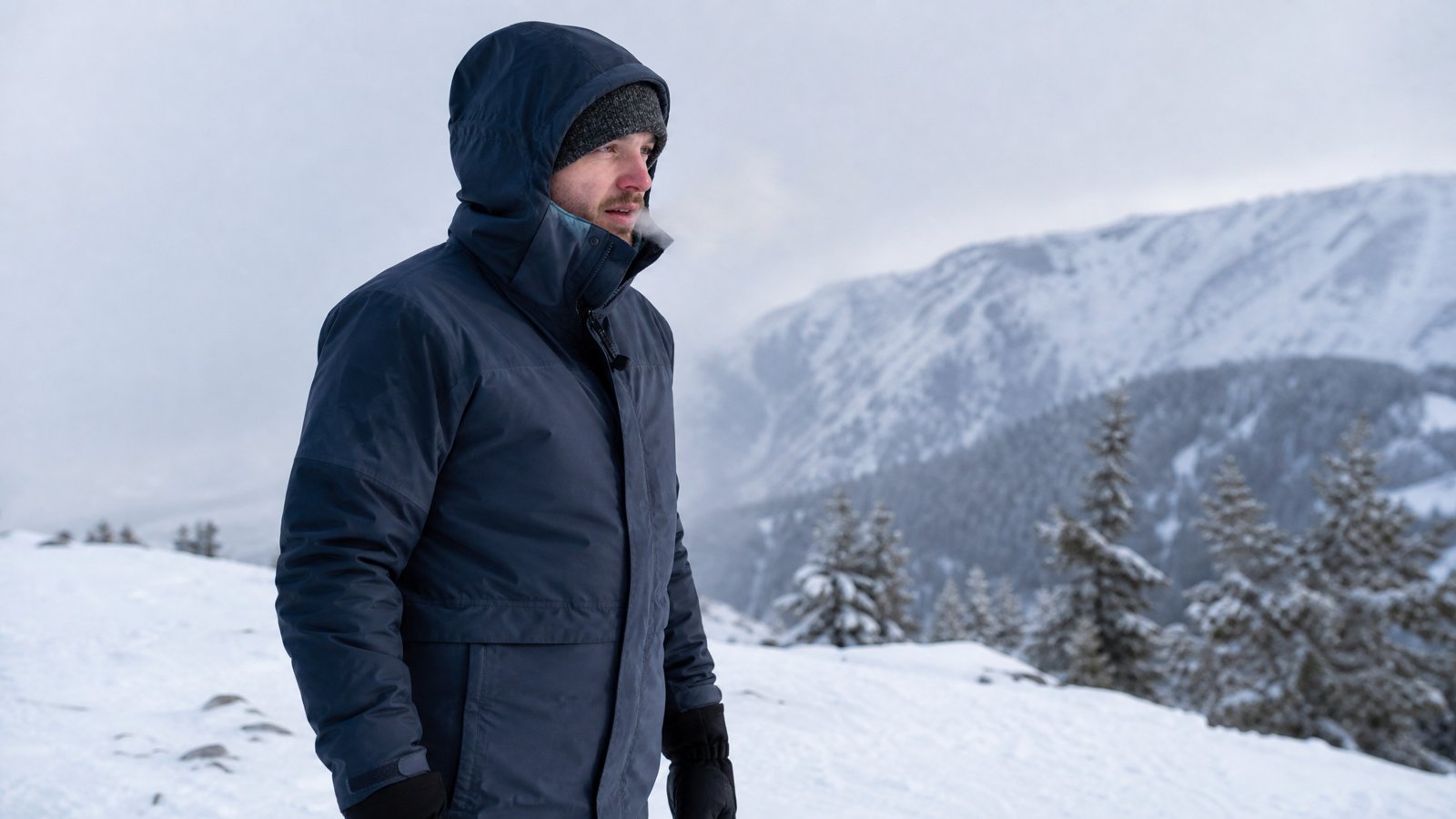
How to Layer Clothing for Cold-Weather Survival
Three layers, each with one job. A base layer against your skin that moves sweat off you, in merino wool or a synthetic, never cotton. A mid layer that traps warm air, like fleece or an insulated jacket, worn loose enough that air can sit in it. An outer shell that blocks wind and water so the first two layers can do their work. The whole system exists to keep you dry, not just warm. Wet is what actually kills you out there, whether it comes from the sky or from your own sweat. Vent or shed a layer before you start sweating, not after, and carry spare socks like they're a survival item, because they are.
Most people think staying warm in the cold is about how thick their coat is. It isn't. It's about moisture management and trapped air, and the reason a proper layering system works is that it gives you control over both. One heavy parka gives you exactly one setting: on. A three-layer system gives you a dial you can turn up and down as the weather changes and as your own body heat rises and falls with the work you're doing. That difference matters more than people expect. The CDC notes that hypothermia can set in even at cool temperatures above 40°F if a person gets chilled from rain, sweat, or a dunking in cold water. It is not a below-zero-only problem. It's a wet problem. Here's how to build a system that keeps you out of that situation.
Layer One: Get the Sweat Off Your Skin
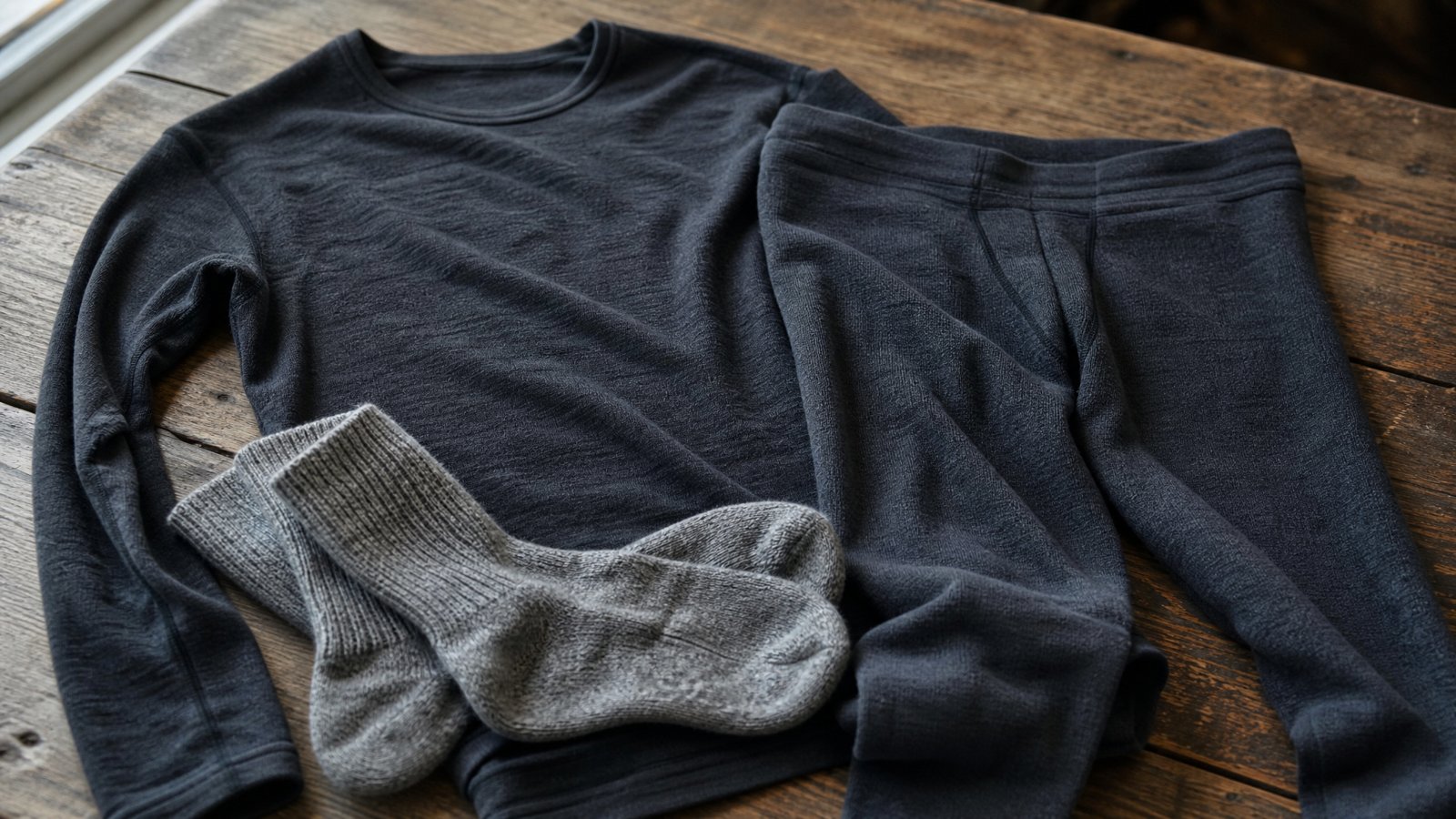
The base layer isn't for warmth. Its job is to pull moisture away from your skin and pass it outward, so a thin film of sweat isn't sitting against you turning into a heat sink every time you stop moving. Merino wool and synthetics like polyester or polypropylene both do this well. Merino holds its warmth reasonably even when damp and resists odor over multiple days; synthetics dry faster and cost less. Either is a defensible choice. What isn't defensible is cotton. Cotton absorbs water, holds onto it, and loses essentially all of its insulating value once it's wet, which is exactly the wrong behavior in a situation where your own body is producing moisture all day. A cotton t-shirt under a good jacket will undo the jacket. Fit matters too: the base layer should sit snug against your skin so it can actually wick, but not so tight that it restricts blood flow. Everything you put on over it should be looser.
Layer Two: Trap the Air, Not the Sweat
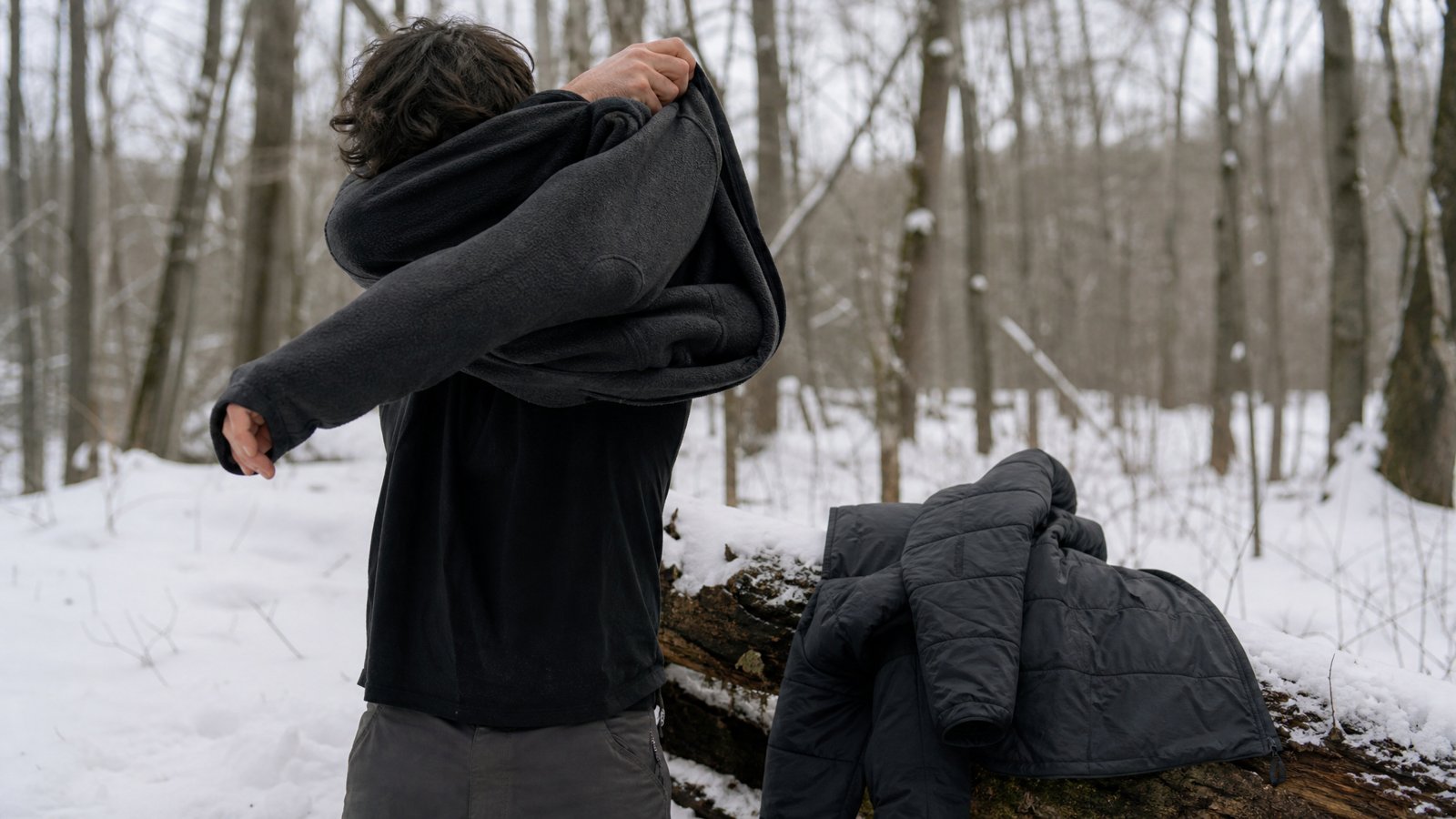
Insulation doesn't warm you. Your body does that. Insulation just slows down how fast that heat escapes, and the way it does that is by holding still pockets of air near your body. That's why loose layers beat one tight one: the dead air between and inside them is doing the actual work, and squeezing it out defeats the point. It's also why constricting clothing is a mistake in the cold, since it cuts down circulation right when you need warm blood reaching your fingers and toes. Fleece is the workhorse mid layer: cheap, breathable, and it keeps working when damp. Down packs down smaller and gives you the most warmth for the weight, but it collapses and stops insulating when it gets wet, so it belongs where you can keep it dry. Synthetic insulation splits the difference, bulkier than down but far more forgiving of moisture. In serious cold, two thinner mid layers beat one thick one, because that gives you something to take off when the work heats you up.
Layer Three: Beat the Wind Before It Beats You
Wind is the multiplier that turns manageable cold into a genuine emergency, because moving air strips warmth off your body far faster than still air does. OSHA's cold stress guidance gives a clean example of the math: an air temperature of 40°F with a 35 mph wind produces a wind chill of 28°F, which is what your exposed skin is actually experiencing. When the National Weather Service issues a Wind Chill Warning, it means conditions hazardous to life within several minutes of exposure. Your shell layer exists for this. It should block wind, shed water, and still let vapor escape, and it should be cut roomy enough to fit over everything else without compressing it. Pit zips and a two-way front zipper are worth more than they sound, because they let you dump heat without stripping off a layer and exposing yourself to the wind while you do it. Before you head out, check the NWS wind chill chart rather than just the thermometer. The number on the thermometer is not the number that's going to hurt you.
Extremities, Sweat, and the Spare Socks Rule
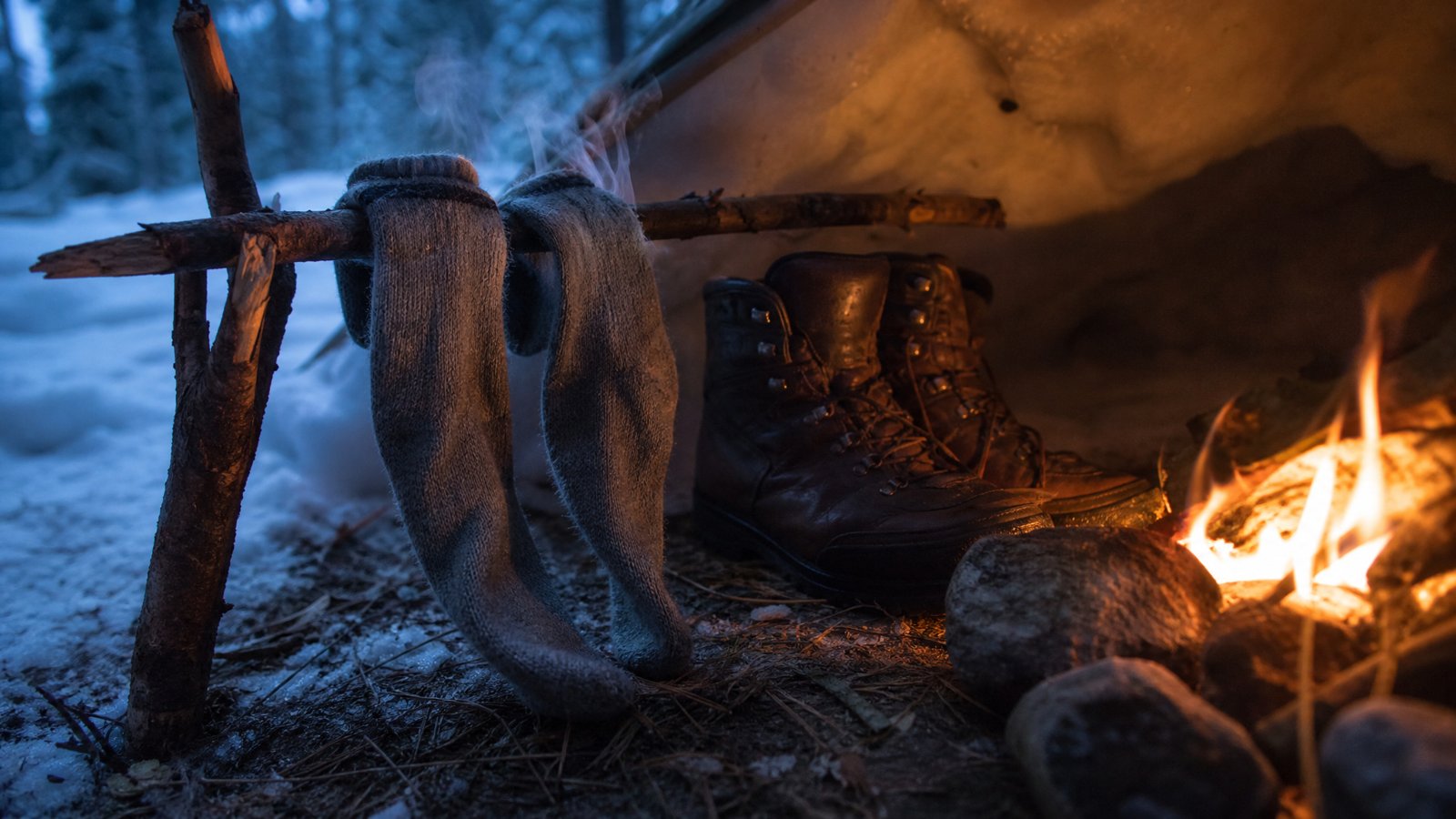
A perfect three-layer system on your torso doesn't matter much if your hands stop working and your feet are soaked. Cover the head, ears, face, hands, and feet, and treat boots as a part of the layering system rather than an afterthought: they need to be insulated and genuinely waterproof, with wool or synthetic socks and nothing cotton in there either. Wet feet are their own category of danger. OSHA points out that wet feet lose heat 25 times faster than dry feet, and trench foot can develop in temperatures as high as 60°F if your feet stay wet long enough. Carry spare socks and change into them the moment the pair you're wearing goes damp. The other half of this is discipline about your own output. Sweating in the cold is just slow-motion rain you're generating from the inside, and the fix is to start out slightly cold and vent early, opening the shell or dropping a mid layer as soon as you feel yourself heating up on the climb, then adding it back the second you stop moving. Watch each other, too. Uncontrollable shivering is the first real warning sign, and by the time confusion, fumbling hands, or slurred speech show up, the person can no longer be trusted to judge their own condition.
Layering isn't gear worship. It's a system that gives you control over your own temperature when the weather has none of your interests at heart, and it works whether you're on a ridgeline, stuck in a stalled vehicle, or riding out a grid-down week in a cold house. If the cold has already gotten ahead of someone and you're past prevention, our friends at 1st Hour wrote a solid field guide on treating hypothermia before help arrives. Get the layers right first, though. Almost every cold-weather emergency starts with somebody who got wet and kept going.
Get the Cold-Weather Layering Checklist as a Printable PDF
All three layers, the extremities, and the field rules for venting and staying dry, on one sheet you can tape inside a gear closet or drop in a pack.
Download the Checklist (PDF)Never Scramble For Gear Again
Every month, TacticalBox members get hand-picked tactical, survival, and outdoor gear, sourced ourselves from makers all over the country and curated to be some of the best equipment on the market, worth $150 or more per box. Subscribe once and the right gear keeps showing up before you need it, backed by a money-back guarantee.
Get Your TacticalBoxThis content is for informational purposes only and is not a substitute for medical advice or professional cold-weather training. Hypothermia is a medical emergency: if someone's body temperature is below 95°F, or they show confusion, slurred speech, or loss of coordination, get medical help immediately.