Choosing a Bug-Out Location: What to Consider
Judge a bug-out location in this order: can you reliably get there, is the site itself out of the hazards you are running from, does it have water you can actually use, how far is it from medical help, and do you have a legal right to be there. Reachability comes first because a site you cannot arrive at is worth nothing. Pick at least two destinations in different directions rather than one perfect spot, drive every route in bad weather before you need it, and check the site against public flood and wildfire hazard maps instead of trusting how it looks on a clear afternoon.
Most bug-out locations exist as a pin dropped on a map and a vague feeling of relief. The cabin a cousin owns. Forty acres somebody's father-in-law has in the hills. A campground three hours out that seemed remote enough. Nobody has driven it in February. Nobody has asked what happens if the one bridge in is closed. Nobody has tested the water.
That gap between the idea and the site is where plans fail. A bug-out location is not a destination so much as it is a set of assumptions, and every one of those assumptions is checkable in advance. This is how to check them.
First Decide Whether Leaving Is Even the Plan
Before you pick a location, be honest about how often you would actually use one. Ready.gov frames it plainly: depending on your circumstances and the nature of the hazard, the first important decision is whether you stay put or evacuate, and the guidance is to understand and plan for both possibilities. Leaving is one branch of a plan, not the plan itself.
That matters for site selection because it changes what you are optimizing for. If the realistic scenarios in your area are a multi-day power outage, a winter storm, or a water main failure, your home with a generator and stored water beats a cabin you have to drive to in the weather. If the realistic scenarios are wildfire, flooding, chemical release, or an evacuation order, then getting out is the whole point and the destination has to be genuinely reachable under pressure.
Write down the two or three hazards that are actually plausible where you live. Everything below gets easier once you know what you are running from, because a site that solves for wildfire is often a poor answer to flooding, and the reverse.
Reachability Beats Everything Else on the List
People shop for bug-out locations the way they shop for vacation property. Remote, defensible, pretty. Then they never test whether they can get there on the worst day of the year with a full vehicle and half the county moving in the same direction.
Ready.gov's evacuation guidance is specific on this and it is worth reading as site-selection criteria rather than driving tips. Become familiar with alternate routes and other means of transportation out of your area. Choose several destinations in different directions so you have options. Keep a full tank of gas if an evacuation seems likely, and a half tank at all times in case of an unexpected need to leave, since Ready.gov notes that gas stations may be closed during emergencies and unable to pump gas during power outages. And when you go, follow recommended evacuation routes, and do not take shortcuts, which may be blocked.
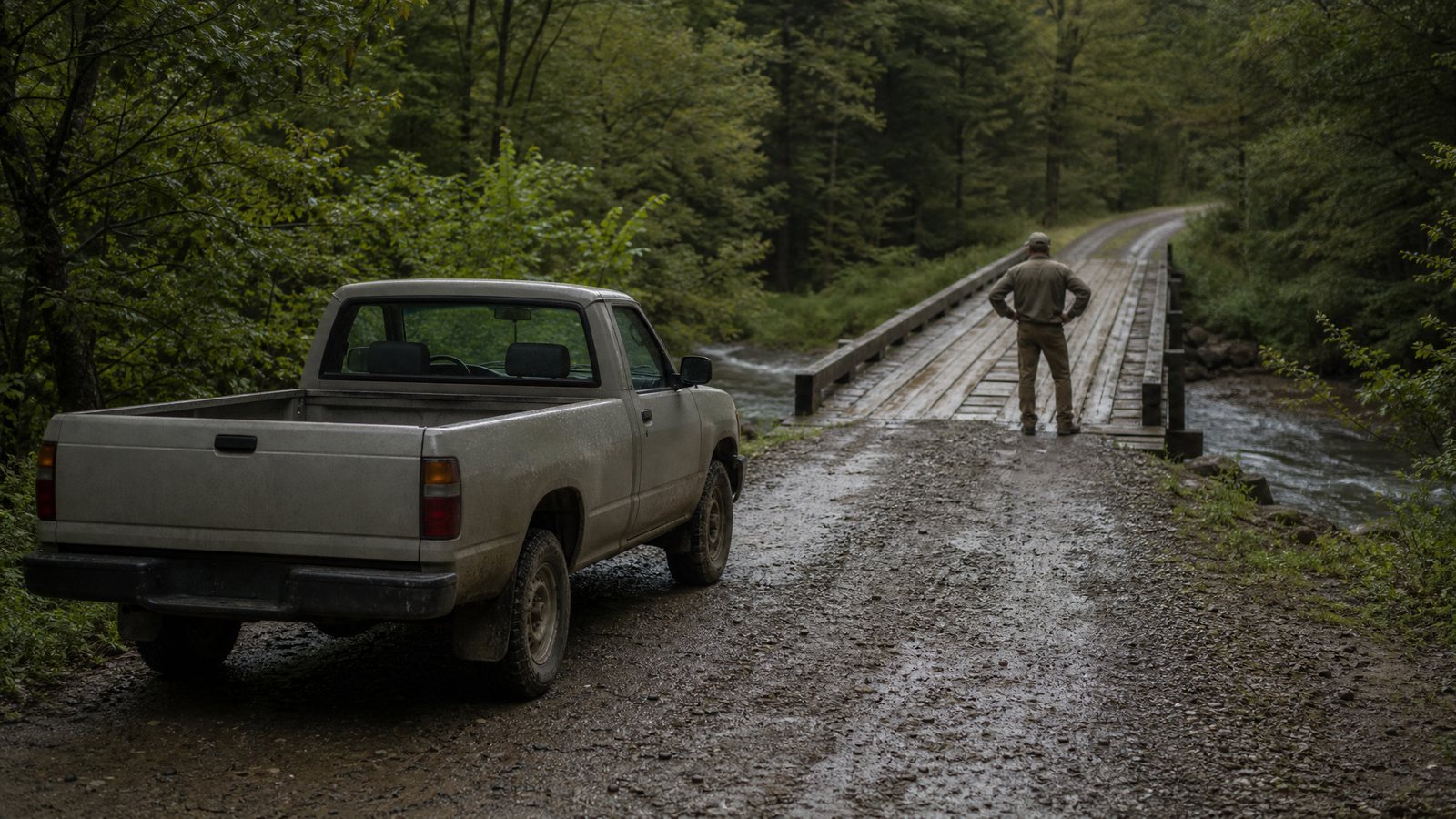
Notice that those two instructions are not in conflict, even though people treat them that way. Ready.gov wants you to know your alternates in advance, and it wants you to stay off improvised shortcuts once you are actually moving. The gap between those is preparation. A gravel cut-through you have never driven under load is a guess, and in our experience a guess is exactly the thing that turns out to be washed out, gated, or already full of people who had the same idea at the same moment. An alternate is only an alternate once you have driven it yourself, on a normal day, with time to turn around.
The last mile deserves its own attention. Long private drives, unmaintained forest roads, and steep dirt approaches are the parts that fail first in mud, snow, and washout, and they are the parts nobody tests because they are the fun part of the drive on a dry day in July.
Check the Hazard Maps Before You Fall in Love With the View
Ground that looks safe on a clear afternoon can sit inside a mapped hazard area, and the maps are free. Start with flooding, because water is the hazard people most consistently underestimate on rural land. FEMA's Flood Map Service Center lets you enter an address or coordinates and see the official flood map for that location. It is also blunt about how ordinary flooding is: FEMA notes that if you live in an area of low or moderate flood risk, you are five times more likely to experience a flood than a fire in your home over the next 30 years. Low or moderate risk is not the same as no risk, and it is worth knowing which one your site is.
Then look at fire. The U.S. Fire Administration, in its guidance for communities assessing wildfire risk, points to the U.S. Forest Service's Wildfire Risk to Communities site, which publishes interactive maps and charts covering risk to homes, wildfire likelihood, exposure types, and vulnerable populations, with geospatial and tabular data available for download. That guidance is written for fire departments and planners doing a community-wide inventory rather than for one buyer walking one parcel, but the risk factors it names translate directly. USFA tells communities to identify the components of risk in local home and infrastructure construction, specifically roofs, eaves, decks, and vents, and to identify landscaping elements such as dead and dry vegetation close to homes, overhanging limbs, and dried leaves and pine needles that accumulate on the roof and under decks. Those are the same things worth walking around and looking at on a property you are considering.
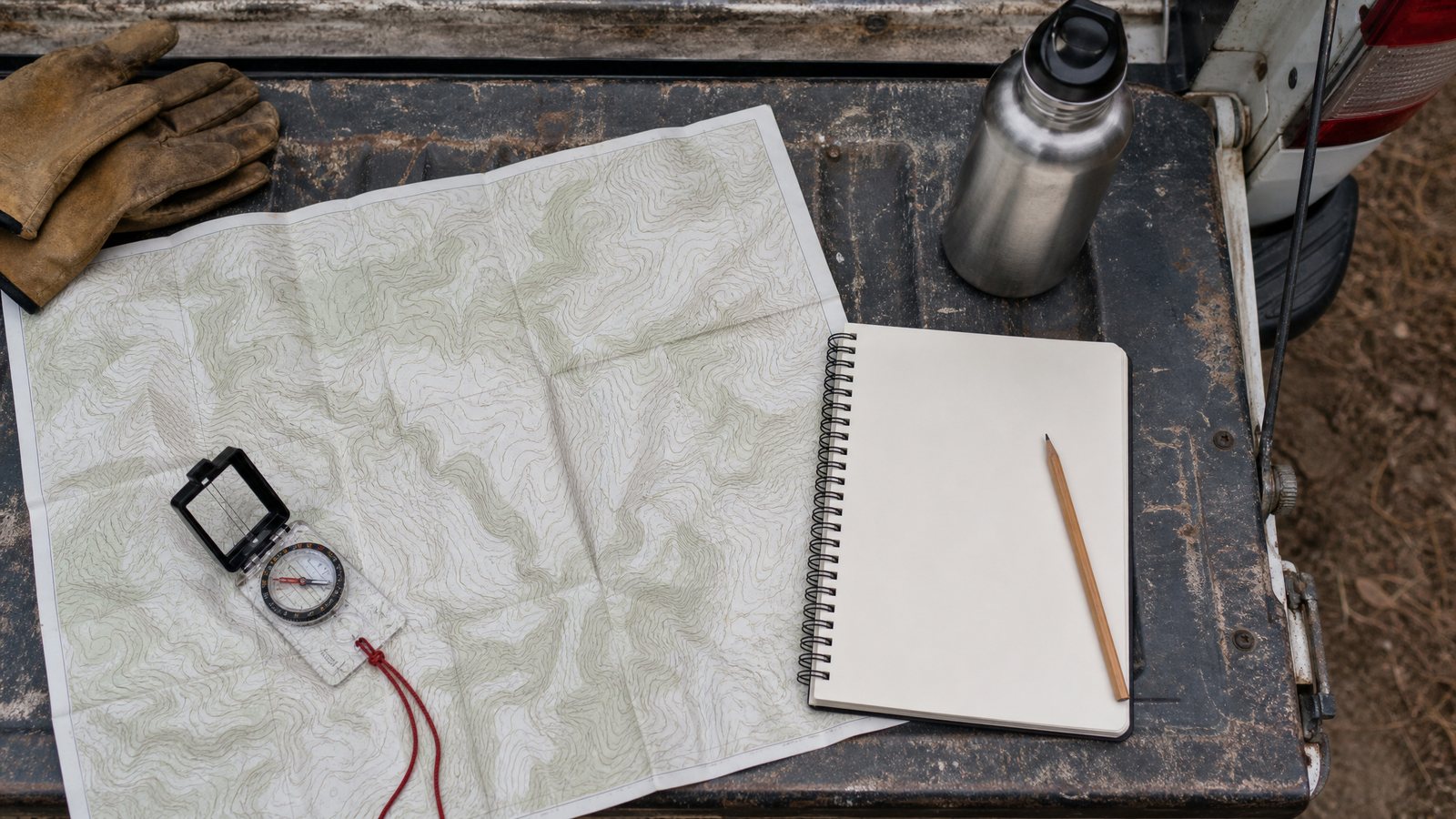
Terrain reading fills the rest of the picture, and a topographic map of the parcel costs nothing. Where does water go when it rains hard? A site in the bottom of a drainage collects everything upslope of it. A site on an exposed ridge gets weather and wind. Benches and gentle slopes above the valley floor tend to be the compromise. Look at what is uphill of you, what is upwind of you, and what is upstream of you, because all three eventually arrive.
Water Is the Constraint That Decides Everything
You can haul food. Hauling enough water for a family, repeatedly, is a different problem. A site with a reliable water source is a different category of place than a site without one, and this is where a lot of otherwise attractive land quietly fails.
Find out what the actual source is and whether it works without power. A drilled well with an electric pump and no backup is a water source only while the grid is up. Surface water from a creek or pond needs treatment before you drink it. A spring is excellent and worth verifying in the driest month of the year rather than in spring runoff, when everything looks abundant.
If there is a well, test it, and keep testing it. The EPA's guidance for private well owners is to test annually for total coliform bacteria, nitrates, total dissolved solids, and pH, and to test immediately if there are known problems with ground water or drinking water in the area, if conditions near the well have changed significantly through flooding, land disturbances, or new construction or industrial activity, if you replace or repair any part of the well system, or if the water changes in odor, color, or taste. The EPA also says to use only laboratories certified to do drinking water testing, and notes that your local health department may provide private well testing for free.
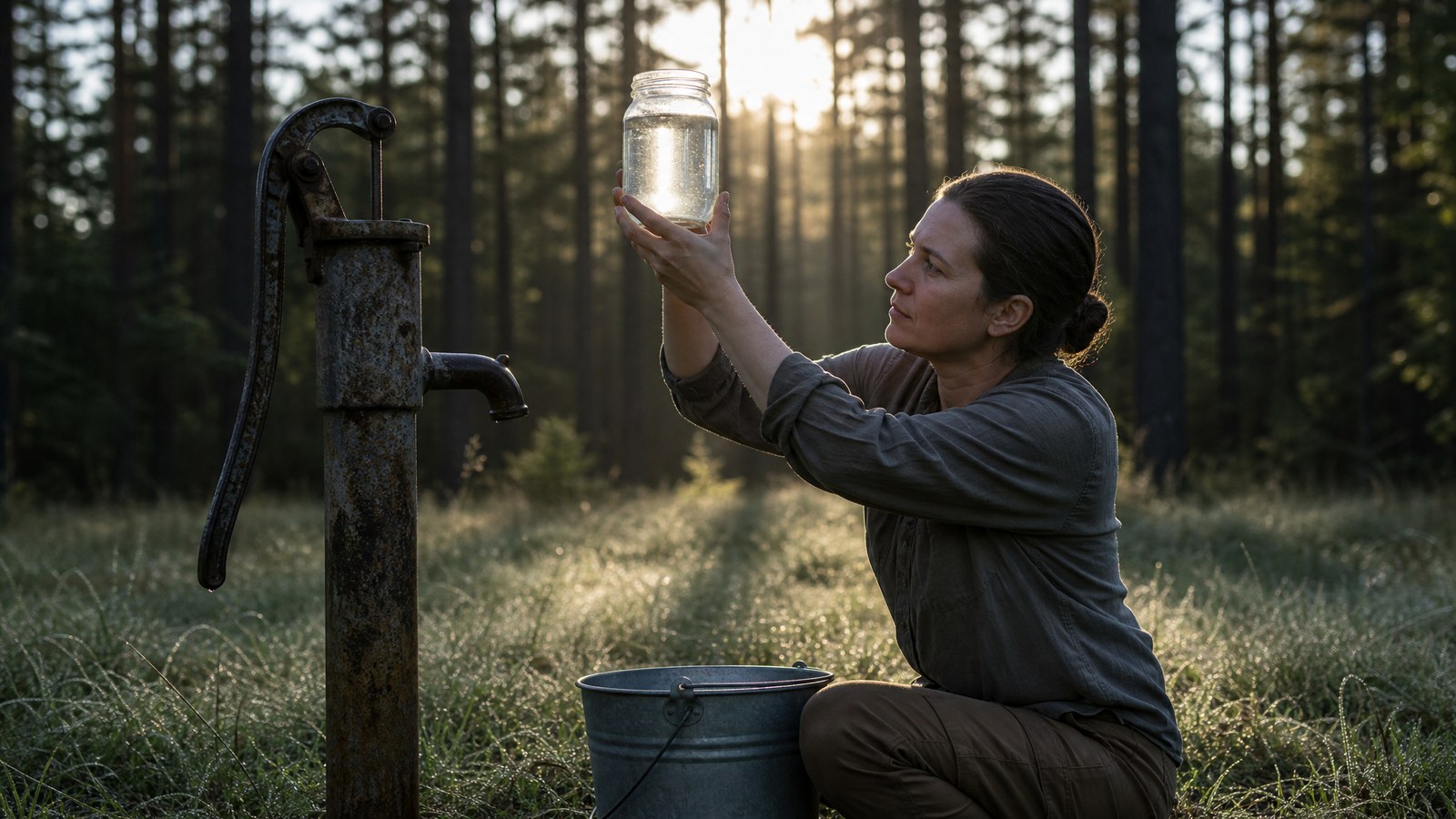
Flooding and wells deserve a specific warning, because this is one of the ways a bug-out location hurts the people who flee to it. The EPA's advice, if you suspect a well may be contaminated after a flood or other natural disaster, starts with contacting your local or state health department or environmental agency for guidance on inspecting and testing it, and using a contractor experienced with drinking water wells to do that inspection and testing if you can. Its flood response steps for wells are to stay away from the pump while it is flooded to avoid electric shock, to not drink or wash from a flooded well, to get help from a well or pump contractor to clean and disinfect the well before turning the pump back on, and then, once the pump is back on, to pump until the water runs clear. If it does not run clear, the EPA says to get advice from the county or state health department or extension service. A well that has been underwater is not a water source until somebody has actually dealt with it.
Count How Far You Are From Everything Else
Remoteness is the feature people buy a bug-out location for, and it is also the cost. The same distance that keeps a site quiet keeps an ambulance an hour away, keeps a fire crew from arriving in time, and keeps a hardware store from being an option when something breaks.
Before committing to a site, find out concretely: which hospital is closest and how long the drive really takes, whether the fire response is a career department or a volunteer one, whether there is any cell coverage on the property or only at the road, and what the nearest town of any size actually stocks. None of these are reasons not to choose a remote site. They are reasons to equip it differently than you would equip a house in a suburb.
The medical piece is the one that bites hardest, because the further out you are, the more of the first hour falls to whoever is standing there. Our friends at 1st Hour have a solid field guide on how to splint a broken bone when help is far away, which is the kind of skill that stops being academic the moment your nearest emergency room is 50 minutes of gravel road away. A trauma kit and the training to use it are not optional gear at a remote site. They are the compensation for the distance you chose.
The Legal and Human Parts People Skip
A surprising number of bug-out plans depend on land somebody else owns, and the arrangement has never been said out loud. Have the conversation now. Get a yes from the actual owner, be specific about who is coming and for how long, and offer something real in return, because a plan that requires a favor from a person who has not agreed to it is not a plan.
If you own the land, know the rules that come with it. Zoning and county building codes decide what you can put up. Septic and well permitting decide what you can install and where. Some counties limit how long you can occupy a structure that is not a permitted dwelling, and some restrict RV or camper occupancy on undeveloped parcels. Property taxes and insurance keep coming due whether you visit or not, and an unoccupied structure is a target for theft and for slow damage nobody notices until it is expensive.
Then there is the part no map shows you. A remote site with no relationship to the people around it is a stranger's cabin in a small community during a bad week. The most useful thing you can do for a bug-out location is show up at it regularly, in normal times, and be a known quantity. Meet the neighbors. Buy fuel and feed locally. Learn who plows the road and who owns the tractor. In a genuinely bad situation, the people within a few miles of you are the closest thing to infrastructure you will have.
Run any candidate site through the same five questions and most of them sort themselves out quickly. Can you get there, reliably, on the bad day. Is the site itself outside the hazards you are leaving. Is there water you can use without the grid. What does the distance from help cost you, and how do you make that up. Do you have a legal right to be there and a relationship with the place. A site that answers all five is worth building around. A site that answers three is worth knowing about, so long as you are honest with yourself about which two are missing.
Whatever you pick, go there. Sleep a night. Cook a meal. Find out what does not work while the stakes are still zero.
Get the Bug-Out Location Site Survey as a Printable PDF
The route test, the hazard-map checks, the water questions, and the distance-from-help worksheet on one sheet you can carry to a property walkthrough.
Download the Site Survey (PDF)Never Scramble For Gear Again
Every month, TacticalBox members get hand-picked tactical, survival, and outdoor gear, sourced ourselves from makers all over the country and curated to be some of the best equipment on the market, worth $150 or more per box. Subscribe once and the right gear keeps showing up before you need it, backed by a money-back guarantee. Cancel, pause, or skip anytime.
Get Your TacticalBoxThis content is for informational purposes only and is not legal, real estate, engineering, or medical advice. Zoning, building, septic, well, and occupancy rules vary by state and county, so confirm requirements with the local authority having jurisdiction before buying land or building on it. Flood and wildfire hazard maps are updated over time and describe mapped risk rather than a guarantee, so check a current source for any specific property. In an emergency, follow the instructions of local officials and recommended evacuation routes.