How to Build a Winter Car Emergency Kit
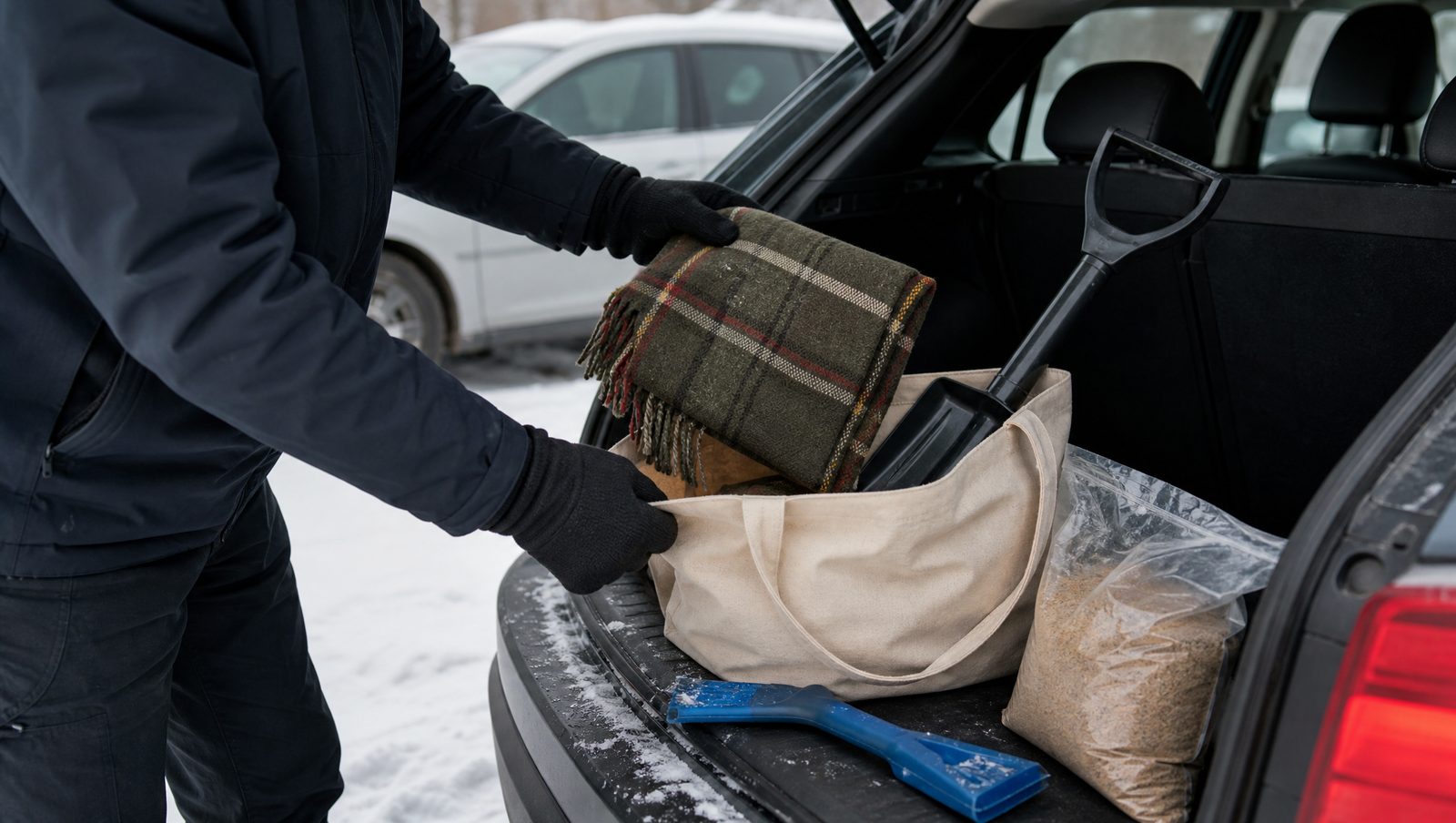
Pack an ice scraper, jumper cables, a bag of sand or cat litter for traction, a flashlight and flares or reflective triangles to be seen, a blanket and extra layers to stay warm, and enough food, water, and a phone charger to sit through a stranded night. Keep the tank close to full all winter and check the kit every six months.
Getting stuck on a winter road isn't rare, and it isn't just an inconvenience. In 2023, NHTSA recorded 320 fatal crashes and an estimated 22,293 injury crashes during snow and sleet conditions, with roughly 101,390 police-reported crashes on those same slick roads. A stalled engine or a slide into a ditch can turn into hours of waiting in the cold, and what's in the trunk decides how those hours go.
Traction and Getting Unstuck
Spinning tires on ice or packed snow rarely fix themselves. Keep a small folding shovel and a bag of sand or cat litter in the trunk; a scoop of either under a stuck tire is often enough to get moving again. Add an ice scraper and snow brush for the windshield and windows, and jumper cables in case the cold has drained the battery. Ready.gov lists these same basics as standard equipment for any winter car kit, along with a map in case GPS signal drops.
Staying Warm and Staying Safe If You're Stuck
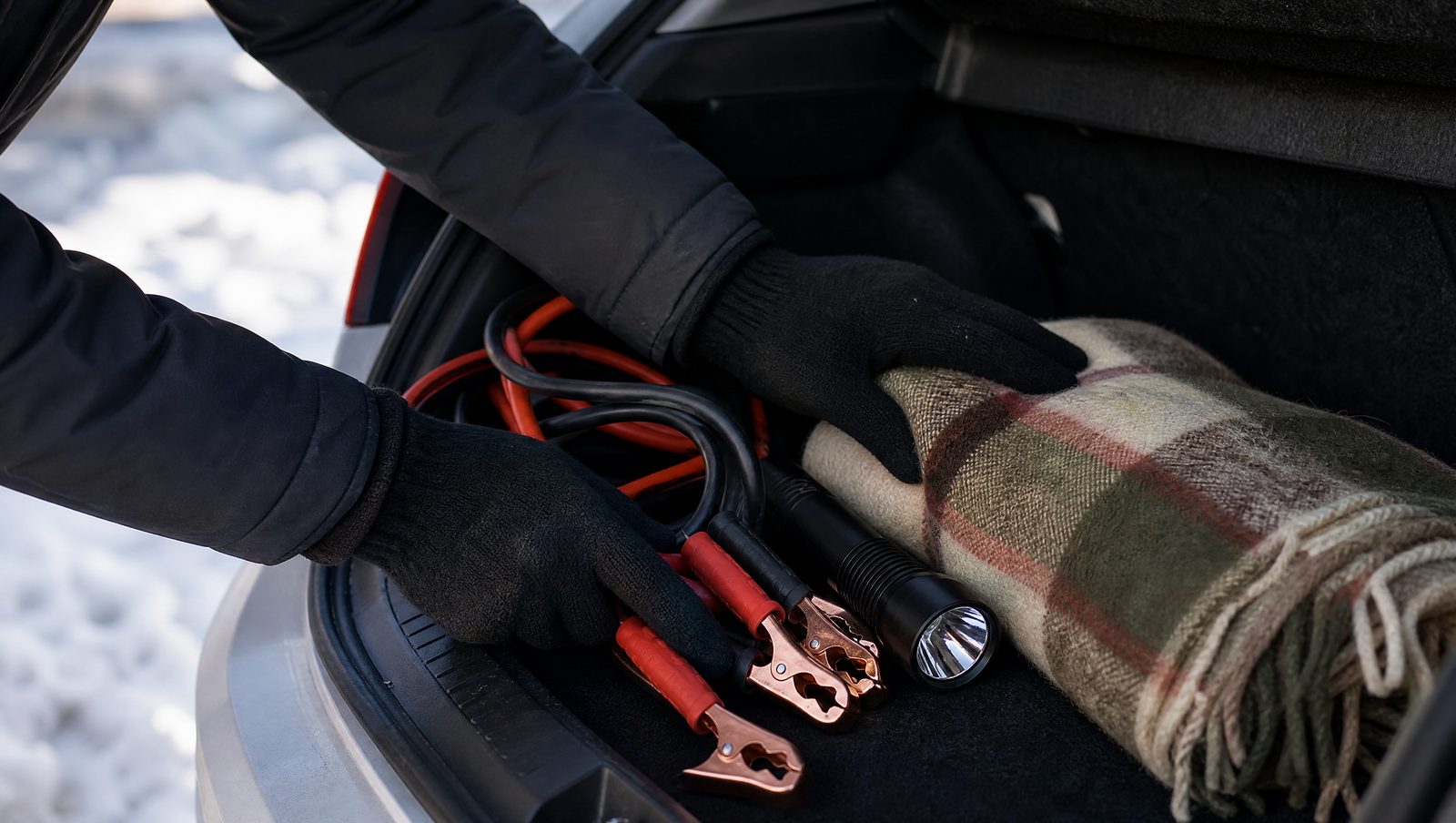
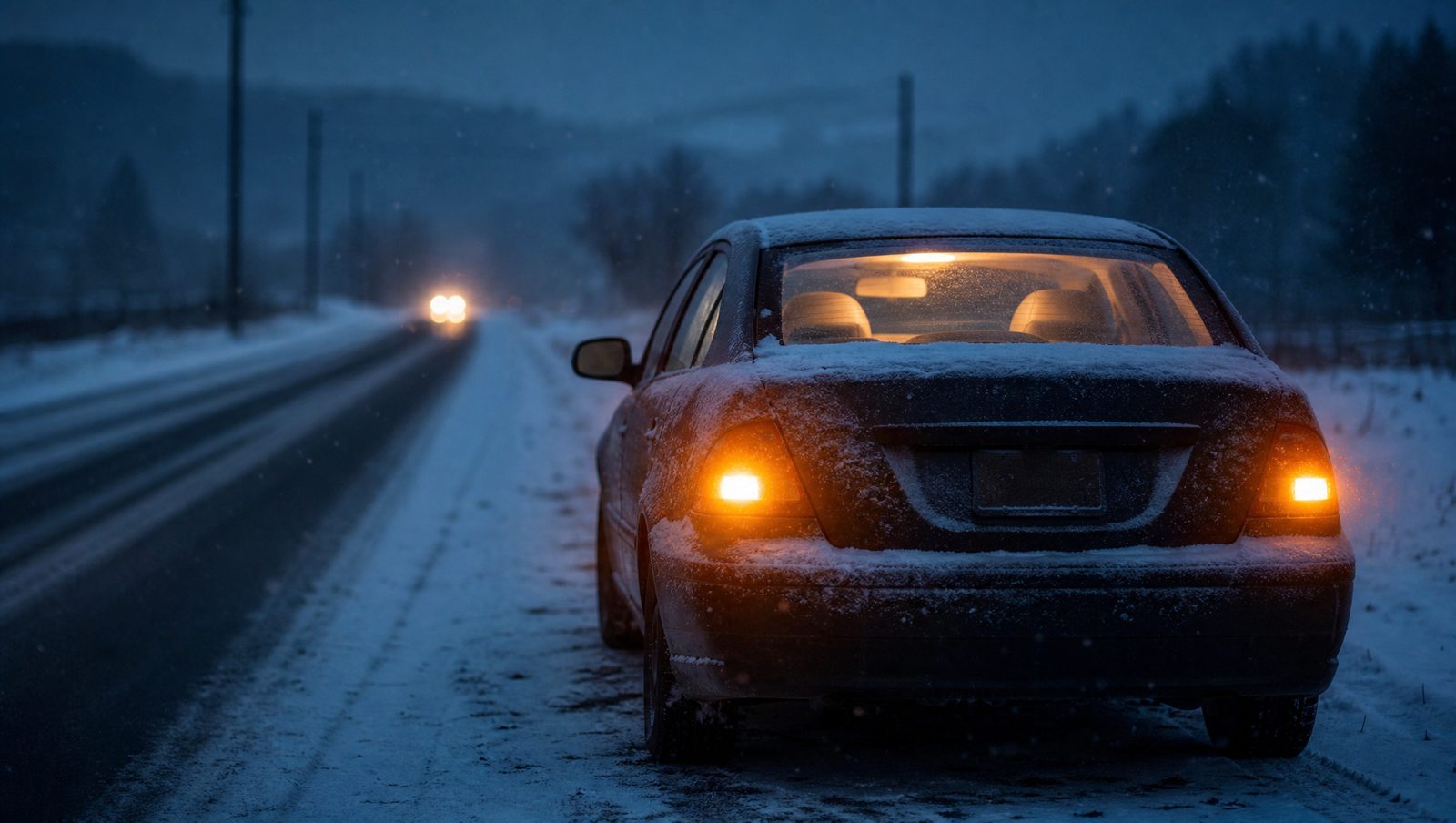
If the car won't move, the single most important rule is to stay with it. A vehicle is far easier for rescuers to spot than a person walking along a snowy shoulder, and NHTSA advises putting bright markers on the antenna or windows and keeping the interior dome light on so you're seen. Pack a wool blanket or sleeping bag, an extra hat and gloves, and a set of hand warmers, since body heat fades fast once the engine's off. If you do run the engine to stay warm, run it only in short stretches and make sure the exhaust pipe stays clear of snow; carbon monoxide from a blocked tailpipe is a real risk in a running, parked car, and it's an easy thing to miss when you're focused on the cold.
Food, Water, and Staying Connected
Waiting for a tow or a plow to clear the road can take longer than expected, especially in a bad storm. Keep bottled water and a few non-perishable snacks in the trunk year-round, along with any daily medication anyone in the car depends on. A phone charger or small power bank matters just as much; a dead phone means no way to call for help or check the forecast. None of this needs to be fancy or take up much space, it just needs to already be there before the storm hits.
Before Winter Hits: Prepping the Vehicle
A good kit doesn't make up for a car that isn't ready for the season. Ready.gov recommends keeping the gas tank close to full all winter, since it helps in an evacuation and also keeps the fuel line from freezing. Install winter tires with real tread if your area sees regular snow, and swap in wiper fluid rated for sub-zero temperatures so it doesn't just freeze on the glass. NHTSA also recommends having a mechanic check the battery and charging system before the cold sets in, since starting an engine takes noticeably more battery power once temperatures drop.
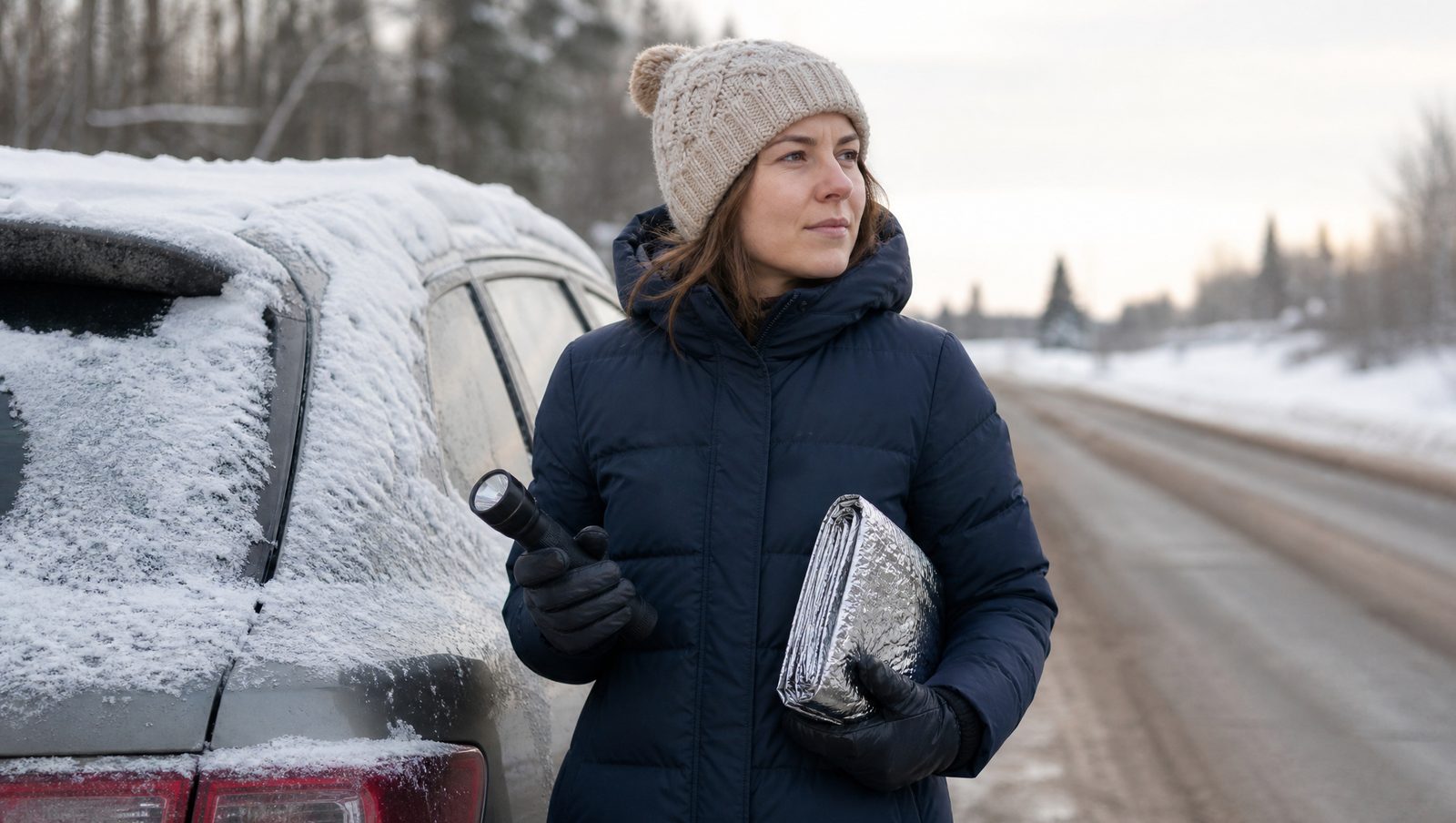
None of this requires a garage full of gear, just the basics packed in the trunk before the first real cold front: traction, a way to stay warm, a way to be seen, and enough food, water, and charge to wait it out. That's the kind of gear TacticalBox members already have on hand every month, so a good chunk of the kit is sitting in the closet long before the forecast turns.
If the cold sets in before help arrives, it's worth knowing the early signs of trouble too. Check out 1st Hour's guide to hypothermia first aid for what to watch for and how to respond before it gets serious.
Get This Checklist as a Printable PDF
Everything above, condensed to one page you can print and tuck into the glovebox — check items off as you pack.
Download the Checklist (PDF)Never Scramble For Gear Again
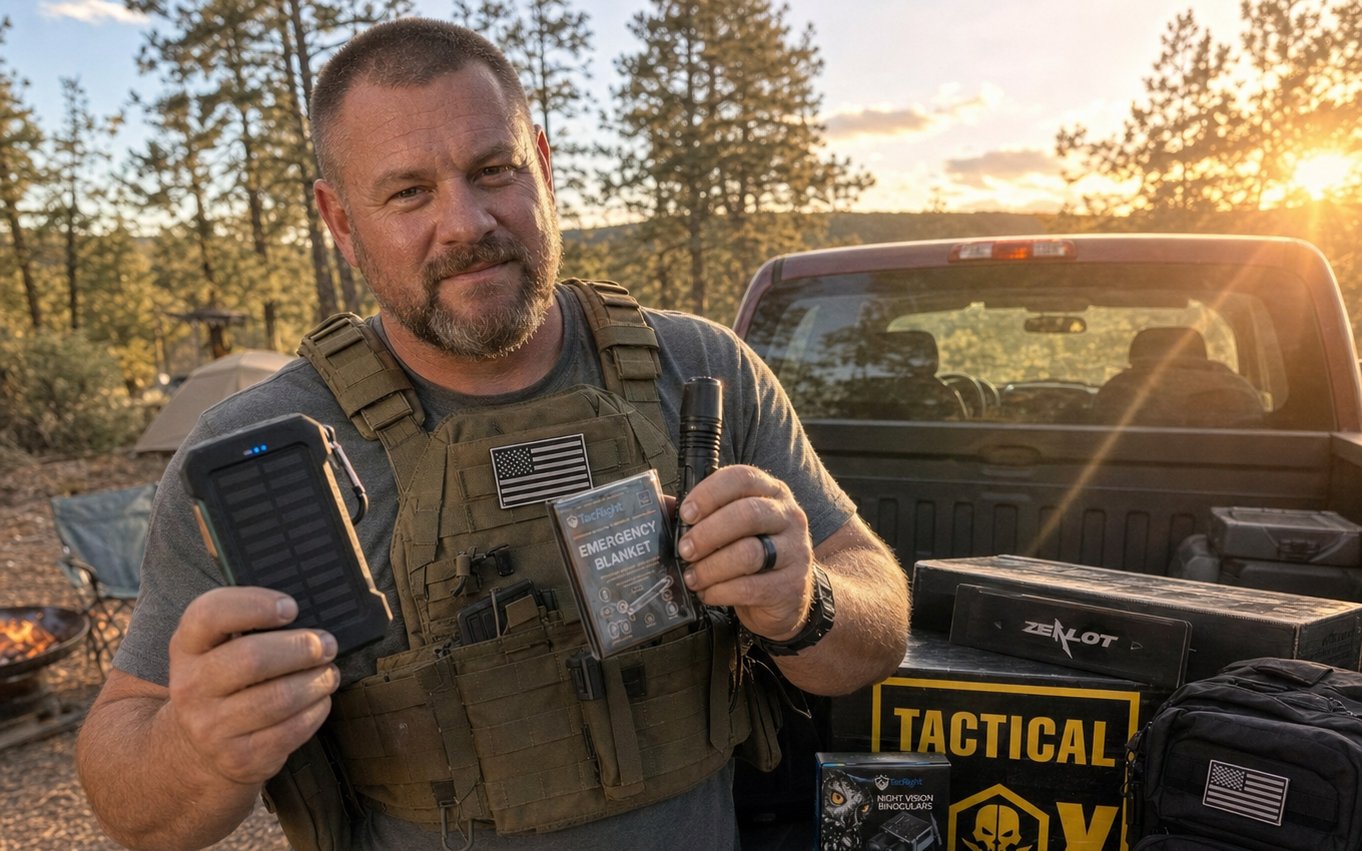
Every month, TacticalBox members get hand-picked tactical, survival, and outdoor gear, sourced ourselves from makers all over the country and curated to be some of the best equipment on the market, worth $150 or more per box. Subscribe once and the right gear keeps showing up before you need it, backed by a money-back guarantee.
Get Your TacticalBoxThis content is for informational purposes only and is not a substitute for guidance from local emergency management or roadside assistance officials during an actual winter weather event.