
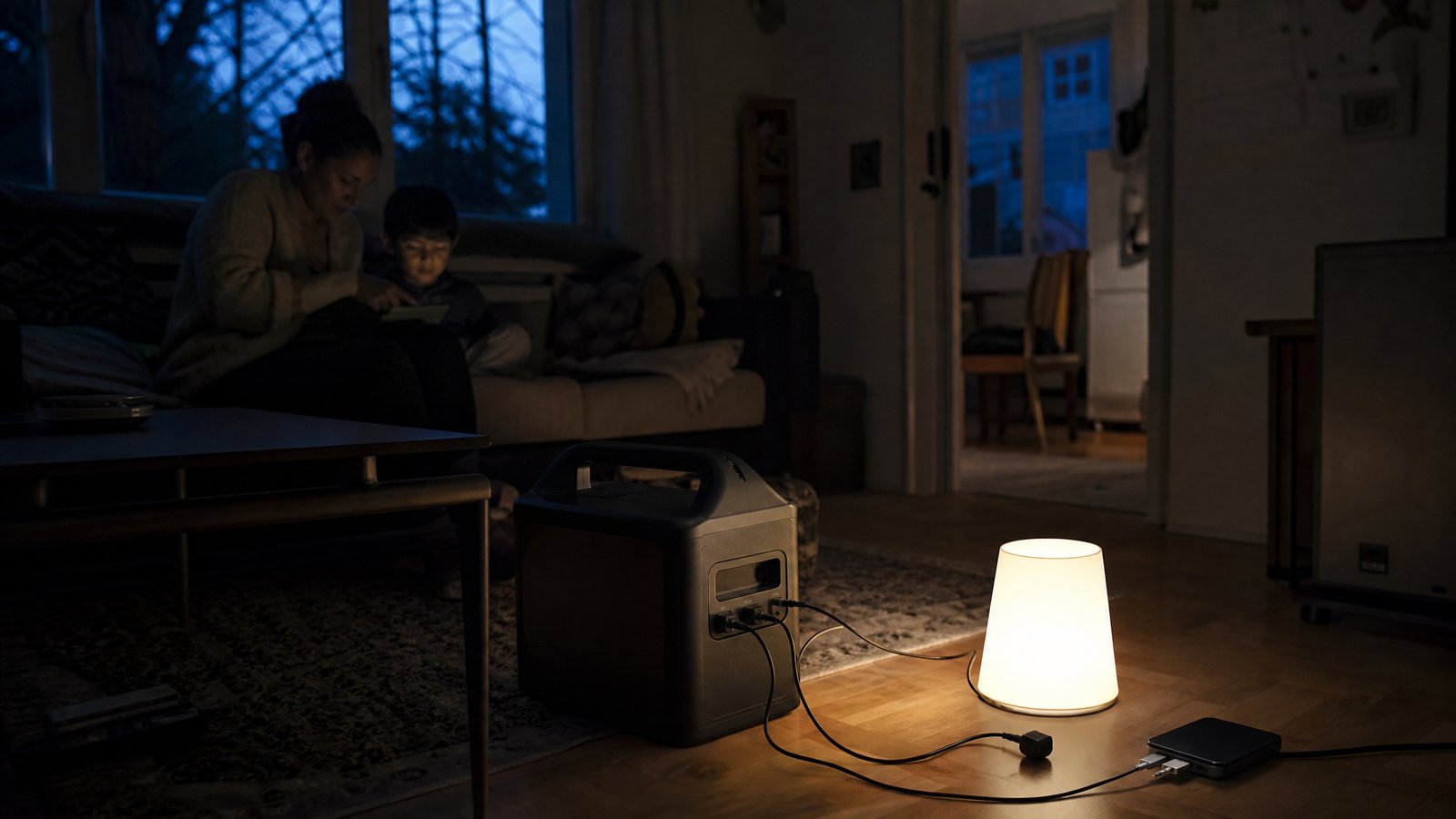
Choosing a Portable Power Station or Battery Backup for Emergencies
Size a power station with two numbers: watts, which tell you what it can run at the same time, and watt-hours, which tell you how long it can run it. Multiply the watts of each device by the hours you need, add them up, and buy for that total instead of for the biggest number on the box. A battery unit burns no fuel, so it is the backup you can keep indoors, unlike the generators the CDC says never to run inside your home, in a garage or carport, or near doors, windows and vents. Charge it before the storm, store it away from anything that can burn, and treat it like the lithium-ion battery it is.
When the lights go out, most of what people actually miss is small: a phone that still works, a lamp, a router, a laptop, maybe a medical device that has to stay on. None of that needs a fuel generator in the driveway.
A portable power station is a big battery with outlets on it. This guide covers how to size one honestly, where it fits next to a simple power bank, how to store and charge it safely, and what it will not do.
Two Numbers: Watts And Watt-Hours
Every power station label comes down to two figures. They answer different questions, and mixing them up is the most common way to buy the wrong unit.
| 01 | Watts: how much at onceThis is the load. Add up everything you plan to run at the same time. If the total is more than the unit can deliver, it shuts off no matter how full the battery is. |
| 02 | Watt-hours: how longThis is the tank. Watts times hours gives watt-hours, so a 50-watt load for 8 hours needs about 400 watt-hours. |
| 03 | Starting surgeMotors draw more to start than to run. Virginia Cooperative Extension notes that a meter will show about three times more current in starting a motor than when it is running smoothly, which is why a refrigerator is harder on a small unit than its running number suggests. |
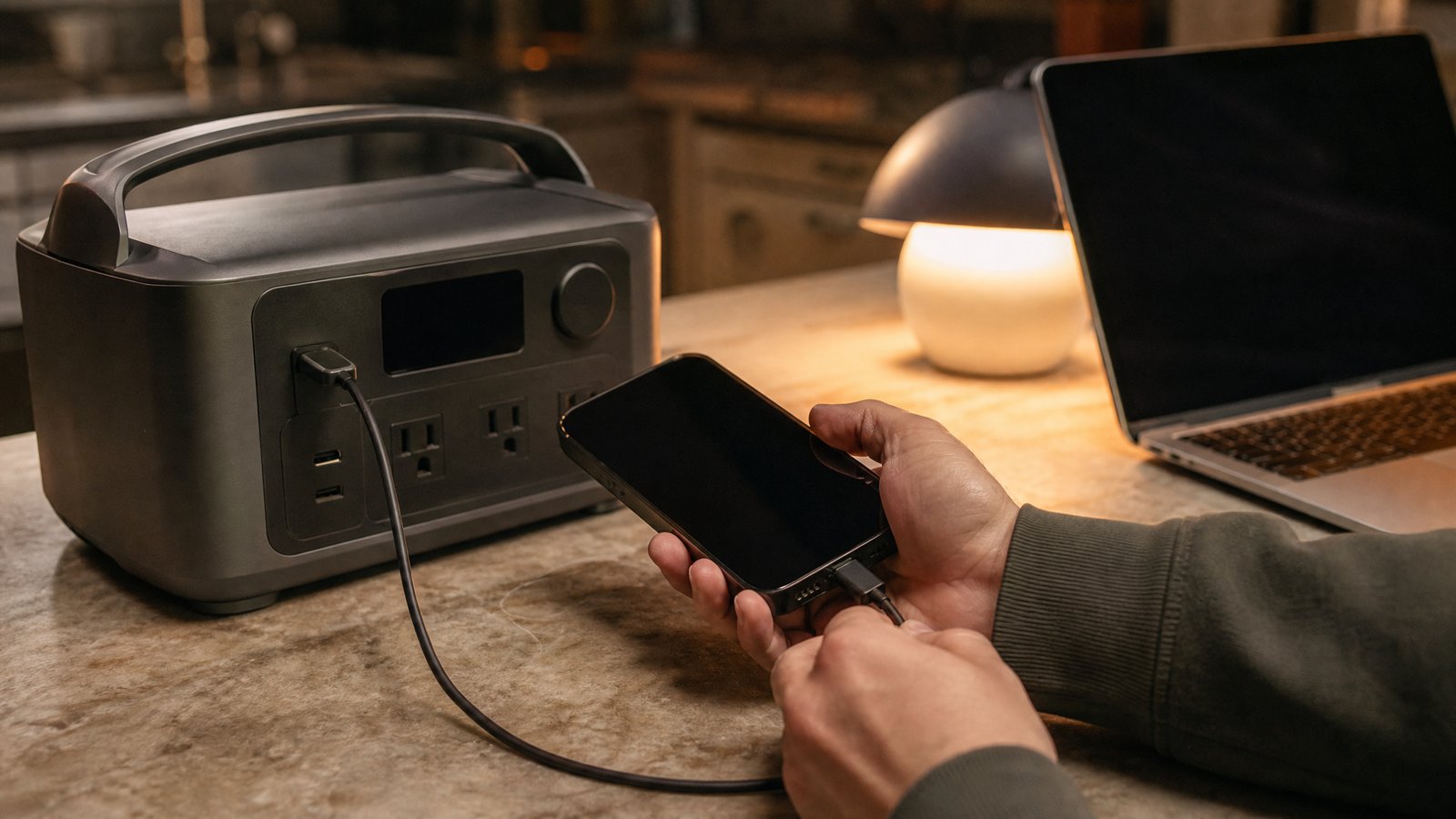
The wattage figures below come from Virginia Tech's Cooperative Extension table of typical appliance wattages, which gives the formula as wattage times hours used, divided by 1,000 for kilowatt-hours. Your own devices will differ, so read the label or plug-in rating on each one.
A Worked Example With Real Wattages
The arithmetic below is ours, built on the Extension's typical wattages. It is a way to think, not a prediction for your house.
| 01 | A laptopTypical draw is 50 watts. Eight hours is 50 times 8, or about 400 watt-hours. |
| 02 | A flat-screen TVTypical draw is 120 watts. Four hours is about 480 watt-hours. |
| 03 | A coffee makerTypical draw is 900 to 1,200 watts. It only runs for minutes, so it uses little energy, but it asks a lot of the unit at once. This is a watts problem, not a watt-hours problem. |
| 04 | A microwaveTypical draw is 750 to 1,100 watts, for the same reason. |
| 05 | A refrigeratorA frost-free 16 cubic foot model is listed at 725 watts. Running nonstop for a day would be 17,400 watt-hours, though a fridge cycles on and off, so real use is lower. Either way, it shows why a small unit is not a whole-day refrigerator plan. |
Add up the watt-hours for the devices and hours you want, then buy above that total, not at it. As far as we can tell from how these units work, the usable energy you get is less than the number on the label because of conversion losses and because you should not plan to run a battery to zero. We are not giving a percentage, because it varies by model.
If your whole need is a phone and a light, you may not need a station at all. Pennsylvania's Ready PA outage guidance suggests having an alternative way to charge devices, such as a portable charger, ready before an outage, and our guides to emergency lighting and the home blackout kit cover the low-power end of the plan.
Where To Keep It, And How To Charge It
A power station is a large lithium-ion battery, so the U.S. Fire Administration's battery fire safety guidance applies. These are the points it makes.
| 01 | Choose certified productsThe Fire Administration recommends picking products that meet safety standards. |
| 02 | Mind the temperatureIt says to store batteries at room temperature when possible, and to avoid charging below 32°F or above 105°F. |
| 03 | Store it away from anything that can burnSpare lithium-ion batteries should be kept away from anything that can burn, out of direct sunlight, and not left in hot vehicles. |
| 04 | Know the stop signsStop using a lithium-ion battery if you notice an odor, a change in color, too much heat, a change in shape, leaking or odd noises. |
| 05 | Recycle it properlyDo not put lithium-ion batteries in the trash. Take them to a local battery recycling location. |
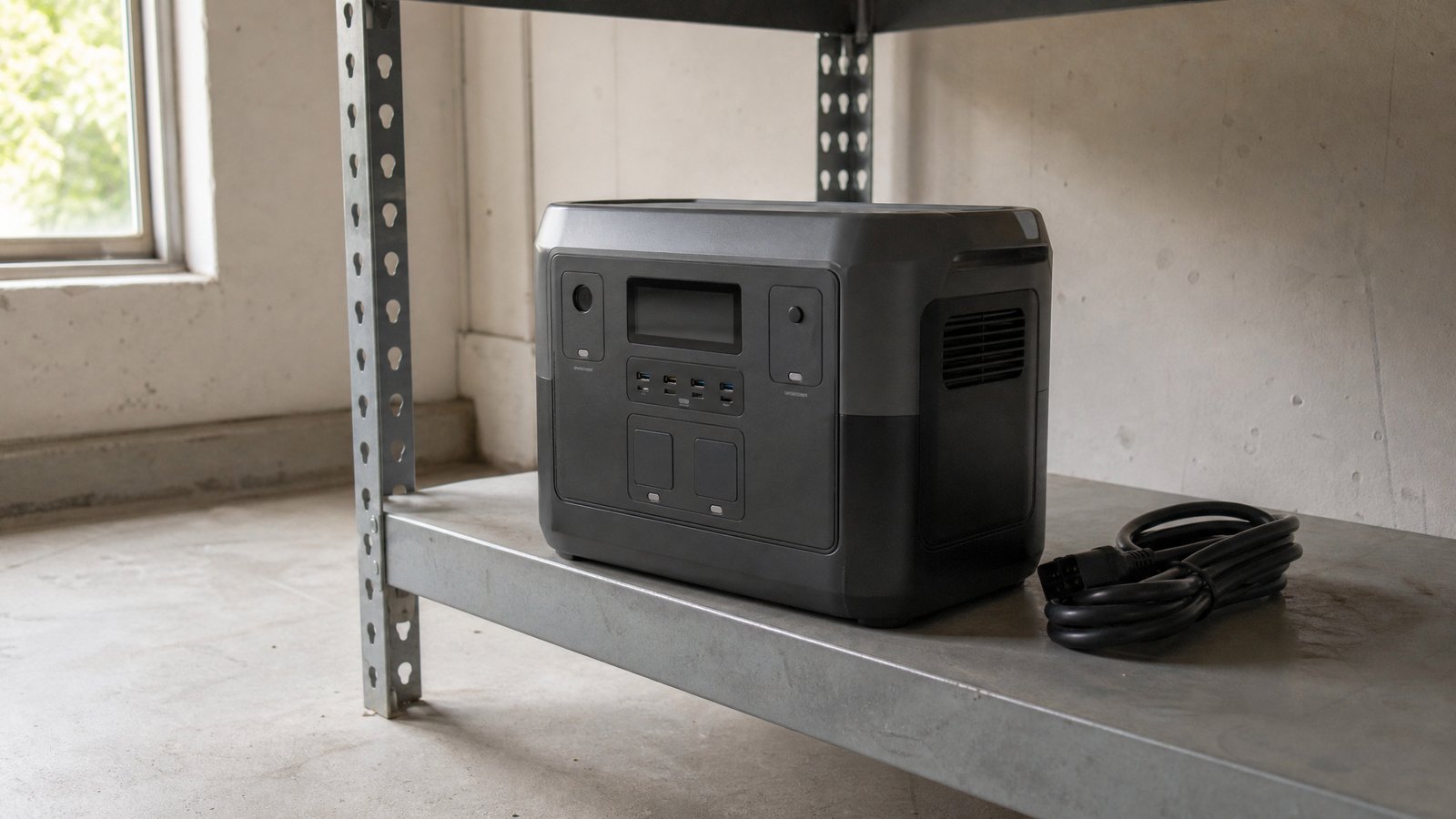
Charge it before the storm rather than during it. Ready PA's advice is to charge cell phones and battery-powered devices in advance when bad weather threatens, and a power station is the same idea at a larger scale. Put a repeat reminder on your calendar to check its charge a few times a year, because a battery that has been sitting in a closet may not be full when you need it.
The Other Power Source Rules Still Apply
A battery unit does not burn fuel, so it does not make carbon monoxide itself. That is our reasoning, and it is the main reason it is the backup people keep indoors. The CDC's carbon monoxide guidance describes the opposite case: never use generators, grills, or other gasoline-, propane-, or charcoal-burning devices inside your home, garage, or carport or near doors, windows, or vents, and keep generators at least 20 feet from doors and windows. It calls carbon monoxide an odorless, colorless gas that kills more than 500 Americans each year.
Two Rules For RechargingIf you recharge the station from a generator, the generator stays outside, at least 20 feet from doors and windows, under the CDC's rules. If you recharge devices from your car, Ready PA says not to keep the car running in a garage, a partially enclosed space, or close to a home, because it can cause carbon monoxide poisoning.
Also keep the station out of any home wiring. Ready PA says never to connect a generator to your home's electrical system, and we would apply the same caution to a battery unit: if you want to power circuits in your house, ask a licensed electrician what equipment is safe and legal where you live.
Be Honest About The Limits
| 01 | It will not run a whole houseA unit sized for phones and lights will not run a furnace, an electric range or central air. |
| 02 | It will not power heatRunning a space heater from a small unit uses watts quickly. For safe warmth, see our guide to staying warm at home when the power goes out. |
| 03 | It is not a medical-device guaranteeReady PA tells people to plan for power-dependent medical devices before an outage. If you rely on one, ask your doctor or the equipment maker what backup is appropriate. Do not assume a general-purpose unit will do. |
| 04 | It does not replace the basicsFood, water, light and a plan still come first. Our original power outage prep guide covers them. |
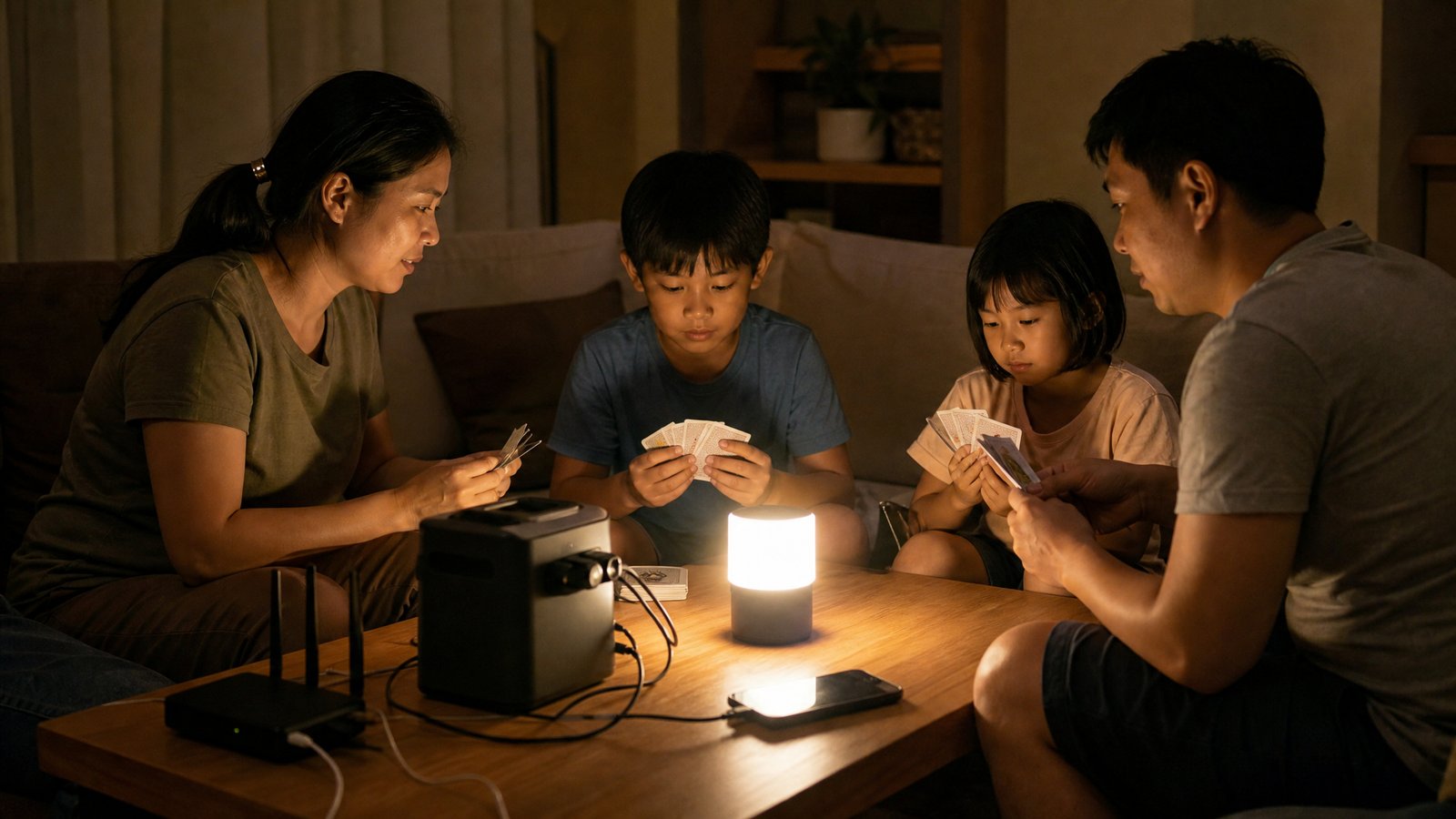
The best use of a unit is the boring one: a few small loads you chose in advance, run for as long as the outage lasts.
Get The Power Station Field Card As A PDF
One page: the watt-hour worksheet, the safe-storage checklist, and the recharging rules to keep with the unit.
Download the Field Card (PDF)Build The Rest Of Your Kit While You're At It
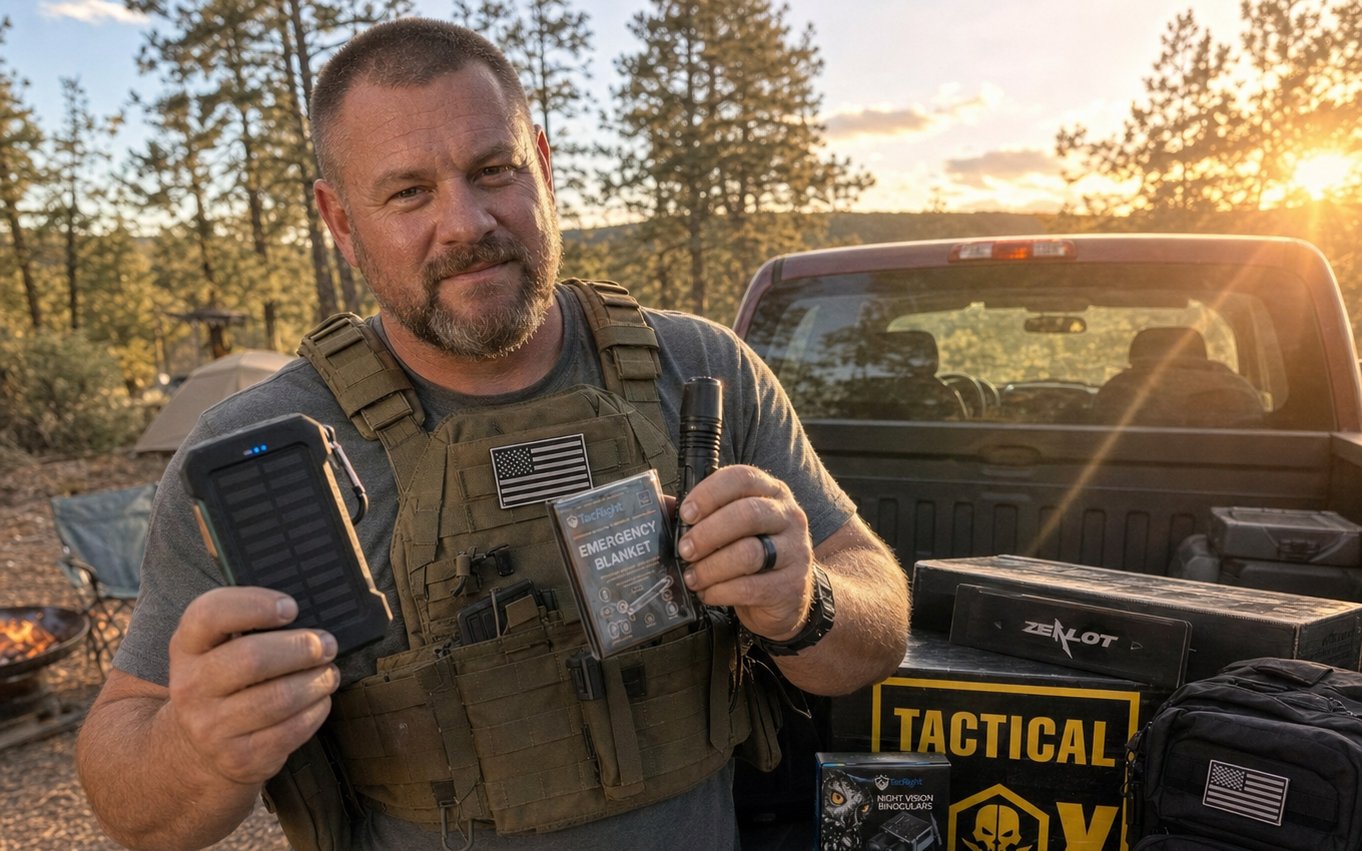
Every month, TacticalBox members get hand-picked tactical, survival, and outdoor gear, sourced ourselves from makers all over the country and curated to be some of the best equipment on the market, worth $150 or more per box on the Standard plan. It's an easy way to keep building out a real emergency kit without hunting down every piece yourself. Backed by a money-back guarantee. Cancel, pause, or skip anytime.
Start Your TacticalBoxThis content is for informational purposes only and is not a substitute for the instructions for your equipment, advice from a licensed electrician, or medical advice. Wattage figures are typical values and your devices will differ. Stop using any lithium-ion battery that smells, overheats, swells or leaks. Never run fuel-burning generators indoors, and install a working carbon monoxide detector. If you suspect carbon monoxide poisoning or a fire, get to safety and call 911.