
How to Prepare Your Pets for an Emergency
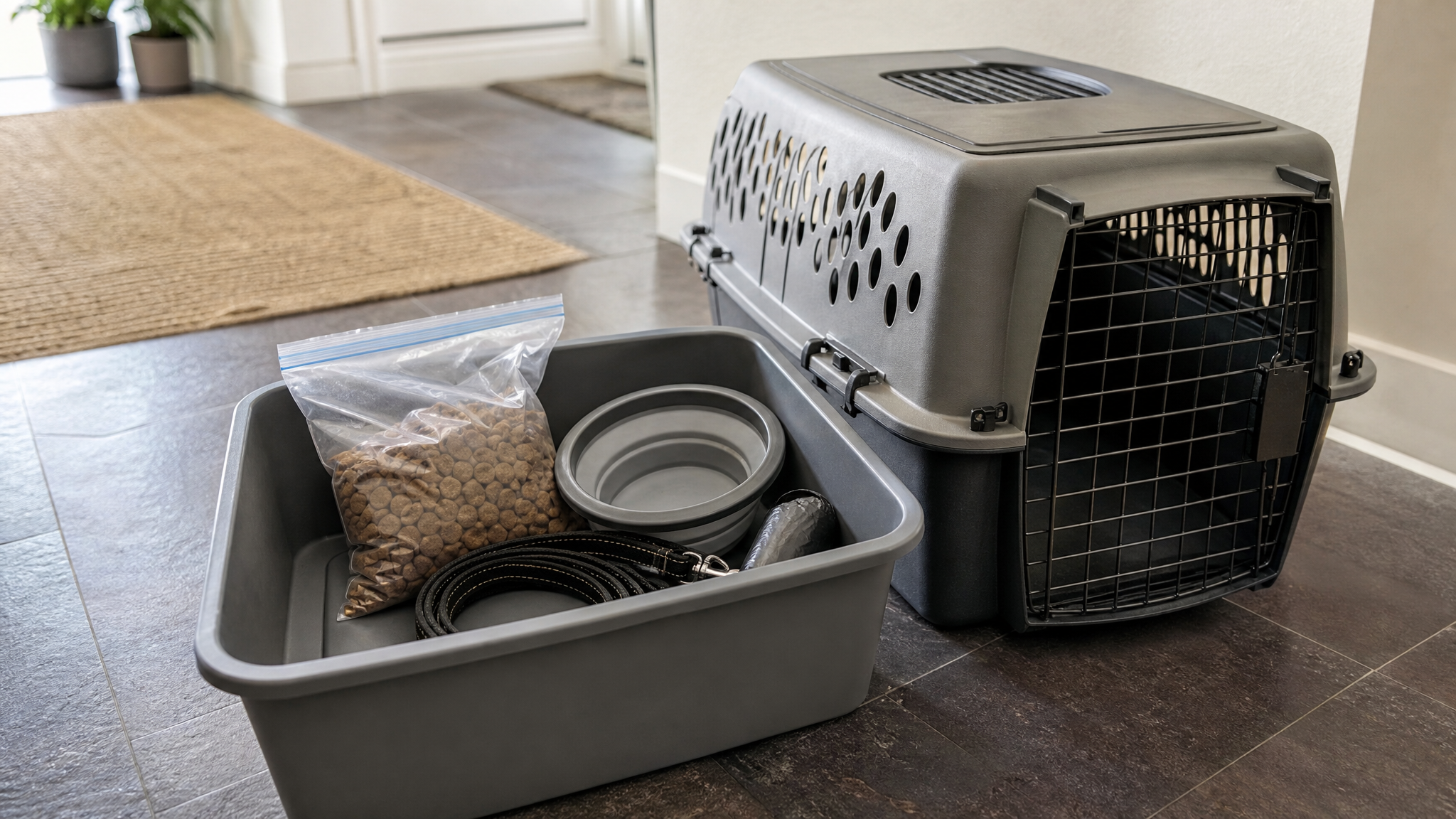
The CDC says to put current contact information on your pet's collar and tags, microchip your pet, and keep a leash or carrier near the exit. Its kit page lists a 2-week supply of food and water for each animal, medications, vaccination records and a carrier. It also warns that many evacuation centers do not allow pets, so find a place for your animals before anything happens. Build the kit and the plan now, because the worst time to learn where your carrier is stored is with a storm already on the way.
Most emergency plans are written for people. The dog is asleep by the door, the cat is under the bed, and nobody has packed a bowl. Pets cannot tell you what they need, and a frightened animal is harder to move than a duffel bag.
This guide follows the CDC and its two linked pages on the CDC's pet disaster kit page and pets in evacuation centers. Where we add advice of our own, we say so.
Why Pets Need Their Own Plan
The CDC puts it plainly: if you leave your pets behind, they may be lost, injured, or worse, and you should never leave a pet chained outdoors. The simplest way to avoid that choice is to treat your animals as part of the household plan from the start.
CDC's page on pets in evacuation centers adds the part many owners miss: many evacuation centers, such as Red Cross evacuation centers, do not allow pets and other animals. It says to make plans that include your pets before an emergency so you can identify shelters that will accept animals or alternatives, and it names family members, local relief organizations and rescue groups as alternatives to look into.
Identification And Equipment
The CDC lists these before-the-emergency steps. The page does not number them, so treat the order below as ours.
| 01 | Put current contact information on the collar and tagsThe CDC says pets should wear collars and tags with up-to-date contact information. |
| 02 | Microchip your pet and keep the registration currentThe CDC calls microchipping one of the best ways to be reunited with a lost pet, and says to register the chip with the manufacturer and keep your contact details up to date. |
| 03 | Keep a leash or carrier near the exitThe CDC says to keep a leash and/or carrier near the exit, and to get proper car safety equipment such as carriers, harnesses and seatbelts. |
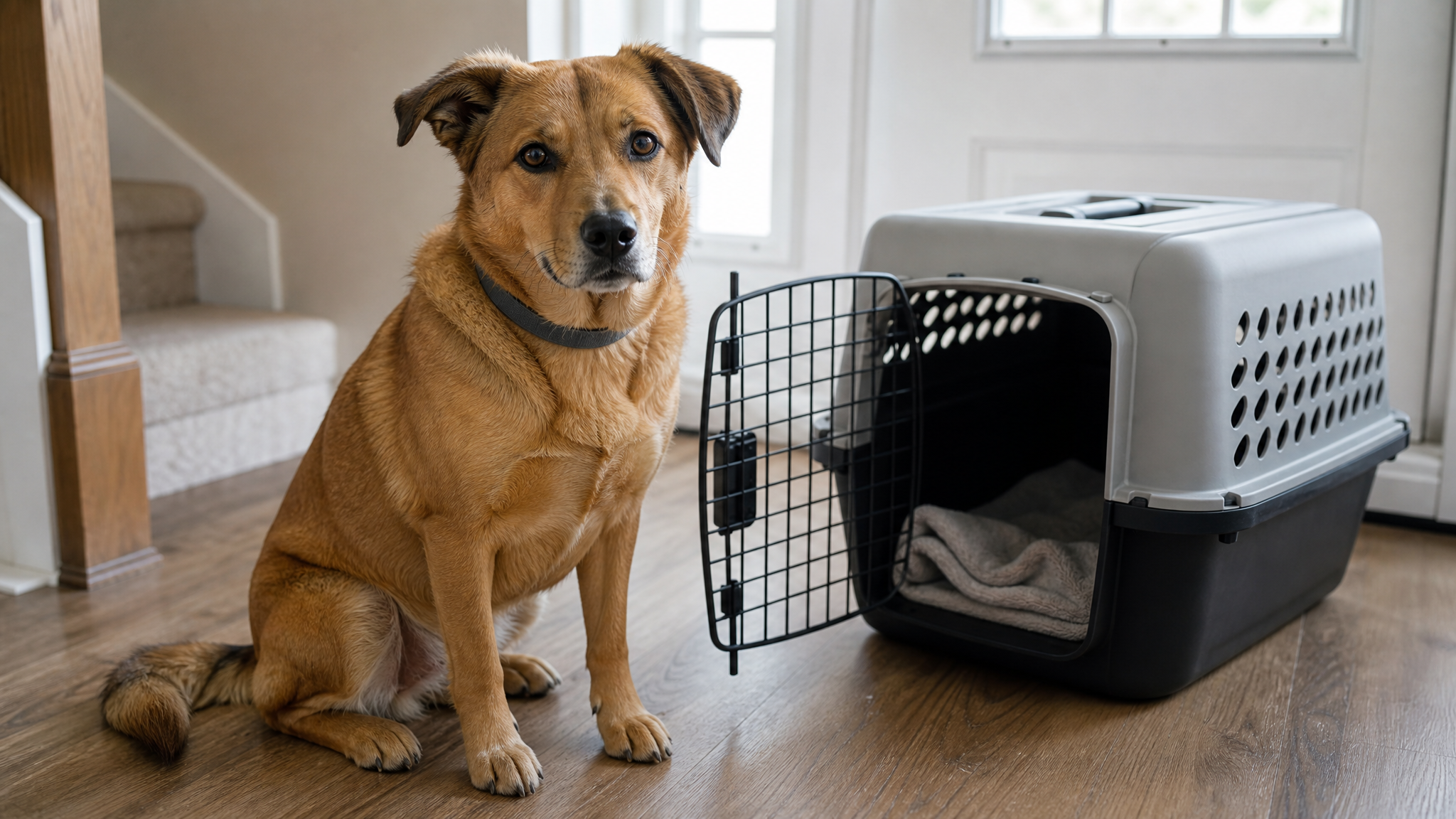
| 04 | Practice loading your pet into the carrierThe CDC says to train your pet to get in and stay in the carrier by making it a comfortable place. Our own advice: practice on a calm day with a treat, and leave the door open between sessions so the carrier is not only associated with trips to the vet. |
| 05 | Get the paperwork from your veterinarianThe CDC says to ask your veterinarian for help putting together your pet's veterinary records, which should include vaccination records, prescriptions and medical history. |
What Goes In The Kit
CDC's pet disaster kit page lists the items below, and says to ask your veterinarian for help putting it together. We group them by purpose. The CDC page does not present them as a ranked list.
| 01 | Documents, in a waterproof containerThe CDC lists photocopied veterinary records, including the rabies certificate, vaccinations, a medical summary, medication prescriptions, and the most recent heartworm test result (dogs) or FeLV/FIV test result (cats), plus registration information and proof of ownership, a description of each pet, recent photographs, microchip information, your contact information, including phone numbers and addresses for family, friends or relatives you may be staying with, and pet boarding instructions. |
| 02 | Food and waterThe CDC lists a 2-week supply of food for each animal in waterproof containers and a 2-week supply of water for each animal, plus non-spill dishes, a manual can opener and feeding instructions. |
| 03 | Medications and preventativesThe CDC lists medication for 2 weeks, with instructions, if your pet takes any, and a 1-month supply of flea, tick and heartworm preventative. |
| 04 | Leash, collar, ID tag and harnessAlso on the CDC list, along with an appropriately sized carrier with bedding. |
| 05 | Sanitation and first aidThe CDC lists a litter box and litter for cats, cleaning supplies such as paper towels, plastic bags and disinfectant, and a pet first aid book and kit. |
| 06 | Comfort itemsThe CDC lists toys. |
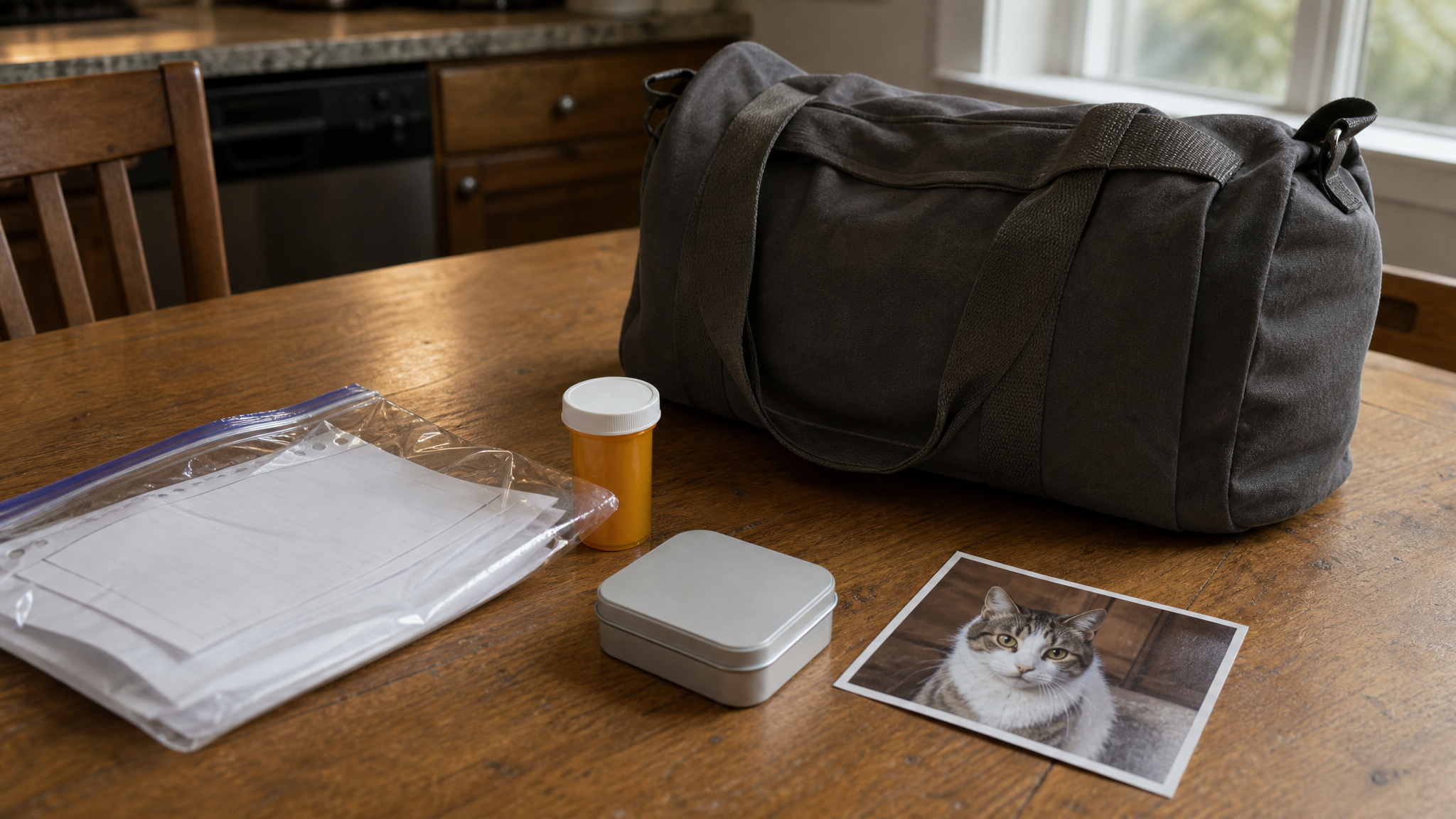
Our own advice, not the CDC's: keep food in rotation, using the oldest bag first and replacing it with fresh stock, and check that medication has not expired. The CDC page gives no figure for how much water per day a pet needs, so ask your veterinarian for your animal's number before you pack.
Where Will Your Pet Go?
The CDC says to work this out ahead of time. It lists these as planning steps:
| 01 | Find out-of-town friends or relatives who will take petsThe CDC names out-of-town friends or relatives among the places your pets can stay. It also names shelters, with the caveat above that many do not accept pets. |
| 02 | Locate boarding facilities or animal hospitals near your evacuation shelterThe CDC says to do this in case you are unable to return home right away. |
| 03 | Set up a neighbor buddy systemThe CDC says to ask a trusted neighbor who can check on your animals and evacuate them if necessary. |
| 04 | Know a veterinarian in the area you would evacuate toThe CDC says to find veterinarian contact information in the destination area. |
| 05 | Look at pet-friendly lodging in advanceThe CDC page lists several pet-friendly travel sites. Our own advice: check that a hotel's pet rules cover your animal's size and species before you need the room. |
CDC's page on pets in evacuation centers also says owners of dogs, cats and ferrets should provide proof of rabies vaccination when entering the shelter, and that dogs and cats should be treated for intestinal parasites (especially under 6 months old) and for fleas and ticks while at the shelter. It adds a hygiene reminder worth keeping: wash your hands regularly, and always after touching pets, pet food or pet supplies, and after cleaning up their waste.
Sheltering In Place With Animals
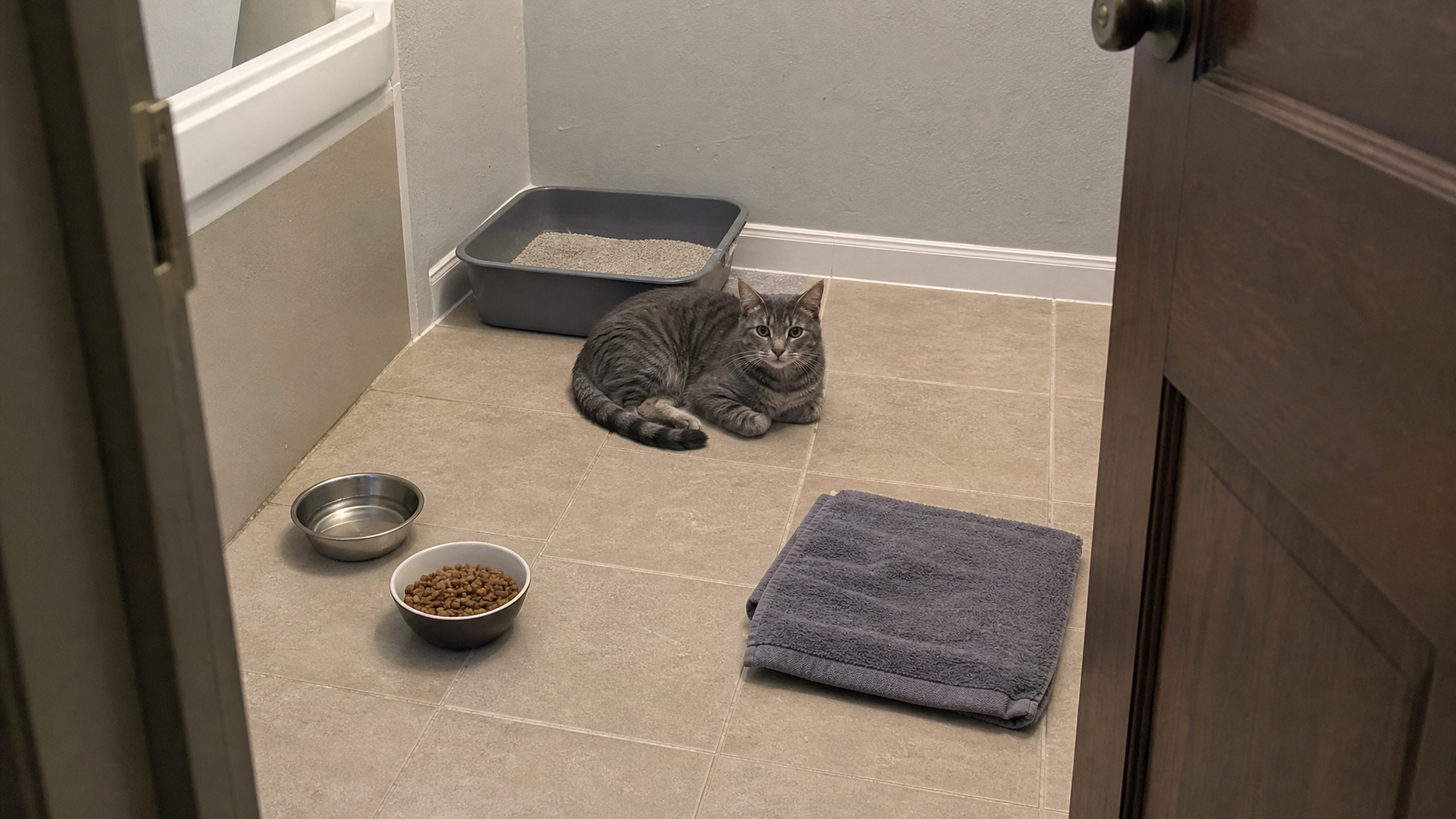
The CDC says to select a safe room, preferably an interior room with few or no windows, remove toxic chemicals and plants, and close off small areas where frightened cats could get stuck. The photo below is our own illustration of that kind of room, with food, water, a litter box and a towel, and those items are our suggestion, not the CDC's.
If the power is out, our guide to preparing for a power outage covers the household side, and the 72-hour kit for apartments and renters is a good base to add the pet kit to. Our water storage guide covers containers and rotation, and our friends at 1stHour show how to build a family emergency plan that your pet plan can slot into.
Get The Pet Emergency Field Card As A PDF
One page: the kit list, the plan questions and what to bring to a shelter, with a checklist to tick off.
Download the Field Card (PDF)Build The Rest Of Your Kit While You're At It

Every month, TacticalBox members get hand-picked tactical, survival, and outdoor gear, sourced ourselves from makers all over the country and curated to be some of the best equipment on the market, worth $150 or more per box on the Standard plan. It's an easy way to keep building out a real emergency kit without hunting down every piece yourself. Backed by a money-back guarantee. Cancel, pause, or skip anytime.
Start Your TacticalBoxThis content is for informational purposes only and is not veterinary advice. Ask your veterinarian about your own animal's food, water and medication needs, and follow the instructions of local emergency management officials, including any evacuation orders and shelter rules.