
Earthquake Prep: Securing Your Home and Building a Kit
The CDC's Preparing for Earthquakes page puts earthquake preparation in three parts: plan and practice, build a supply kit, and secure your home. When the shaking starts, it says to drop onto your hands and knees, cover your head and neck, and hold on until the shaking stops. Securing bookcases, large appliances and heavy items is the part you can do ahead of time, and the Earthquake Country Alliance's Seven Steps to Earthquake Safety lists it first.
An earthquake gives you little or no time to gather anything. That is why nearly all of the useful work happens beforehand: which furniture could fall, where you would take cover, and what is already in the kit.
This guide follows the CDC's Preparing for Earthquakes page and the Earthquake Country Alliance's Seven Steps to Earthquake Safety. Where we add a suggestion of our own, we say so.
What To Do When The Shaking Starts
The CDC gives a three-part response: drop, cover, and hold on.
| 01 | DropGet down onto your hands and knees immediately. |
| 02 | CoverCover your head and neck, and your whole body if possible, under a sturdy table or desk. If there is no shelter nearby, the CDC says to get down near an interior wall or next to low furniture that will not fall on you, and cover your head and neck with your arms and hands. |
| 03 | Hold onHold on to your shelter, or to your head and neck, until the shaking stops. The CDC adds that you should move with your shelter if the shaking shifts it. |

The CDC also lists where to be in a few common situations. Indoors, stay clear of windows, glass and objects that could fall on you. In bed, stay under your covers with a pillow over your head. Outdoors, stay outside and move away from buildings, utility wires, sinkholes, and fuel and gas lines, then get down low until the shaking stops. In a vehicle, stop quickly and safely, set the parking brake, and stay in the car until the shaking stops, avoiding utility poles, overhead wires, and under- or overpasses.
Make Your Home Less Likely To Hurt You
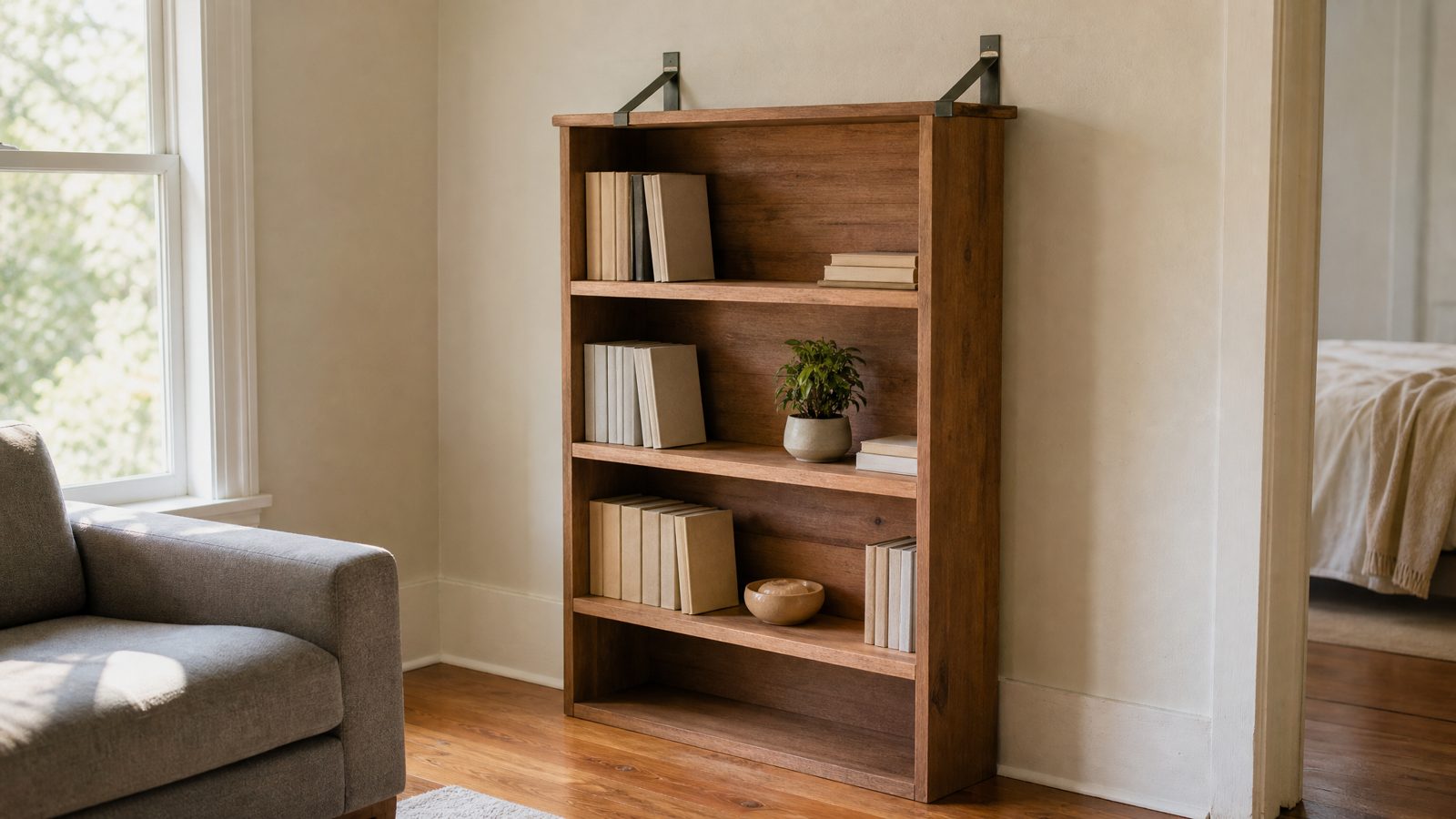
The CDC's Preparing for Earthquakes page has a whole section on preparing your home, and the Earthquake Country Alliance's Seven Steps to Earthquake Safety makes securing your space step one: identify hazards and fasten movable items, such as heavy objects on high shelves and water heaters. These are the CDC's specific items.
| 01 | Anchor unsecured bookcases and furnitureThe CDC also lists securing windows and glass, and locking cabinet doors with sliding bolts or childproof latches. |
| 02 | Secure large appliancesRefrigerators, water heaters and stoves, using flexible cable, braided wire or metal strapping, according to the CDC. |
| 03 | Move heavy mirrors and pictures away from beds and seatsOr anchor them to wall studs. The CDC also says to replace heavy hanging planters with lightweight ones. |
| 04 | Secure shelves and put heavy objects lowGuardrails or fishing line on shelves, heavy objects on lower shelves, and Velcro-type fastenings on some items. |
| 05 | Store hazardous materials safelyThe CDC says to store poisons, solvents and toxic materials in breakable containers in a safe, ventilated area, away from water storage and out of reach of children and pets. |
| 06 | Learn how to shut off gas, electricity and waterAt the main switches or valves, and teach every family member how and when, per the CDC. |
The CDC also covers the structure itself: strengthening connections between beams, posts, joists and plates, checking the chimney and roof for loose tiles and bricks, and contacting your local building code or community development office for structural safety standards and qualified contractors. That is work for a professional, not a weekend shortcut.
Our own suggestion, not the CDC's: start with the room where you sleep. Whatever is above or beside the bed is the first thing worth moving or anchoring.
The Plan Part
The CDC suggests practicing an earthquake drill as a family, especially with children. It says to learn the signs of an earthquake (a roaring or rumbling that grows louder, a rolling motion that turns violent within a second or two, or a violent jolt followed by shaking) and to learn the safe spots in each room, which it gives as under a sturdy table away from walls, or under your covers with a pillow over your head if you are in bed.
It also suggests a home evacuation plan: sketch a floor plan, plan a second exit from each room, and mark your emergency kit, fire extinguishers, utility switches or valves and your outdoor meeting place. The Earthquake Country Alliance adds that your plan should cover how your household or workplace will communicate, and that you should organize important documents and consider earthquake insurance.
What The CDC Says To Stock
The CDC's Preparing for Earthquakes page says to stock supplies for at least 3 days, including a first aid kit, water and food, for both your home and your car. Beyond that basic list it names a few items and documents:
| 01 | Contacts and recordsA list of emergency contacts, insurance information and medical information. |
| 02 | Important documentsMedical records, birth certificates and passports, stored in a fireproof or waterproof safe. |
| 03 | Tools and gearAn ax, shovel, broom, rope, sturdy shoes, durable gloves, a multipurpose dry chemical fire extinguisher and a whistle. |
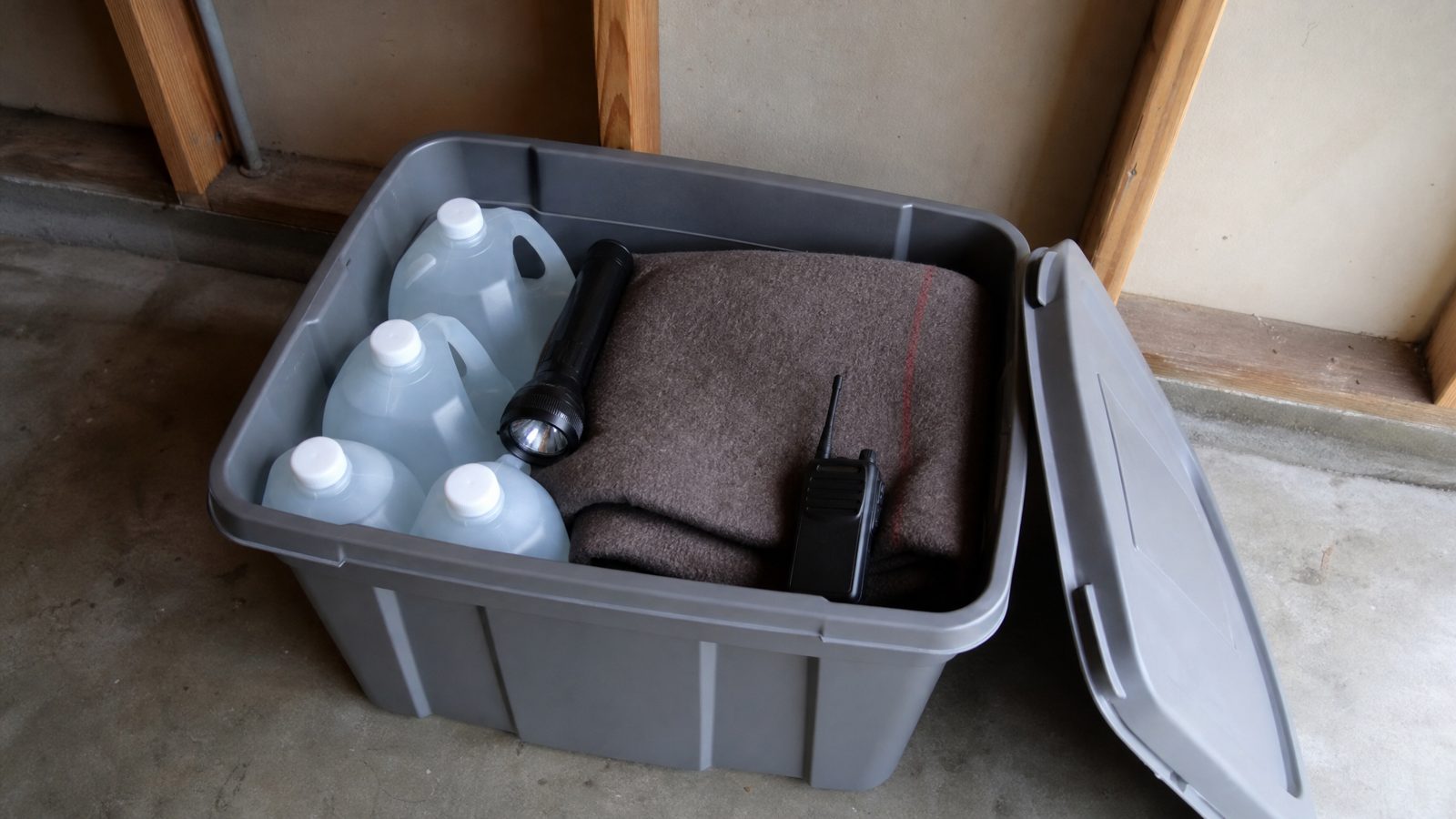
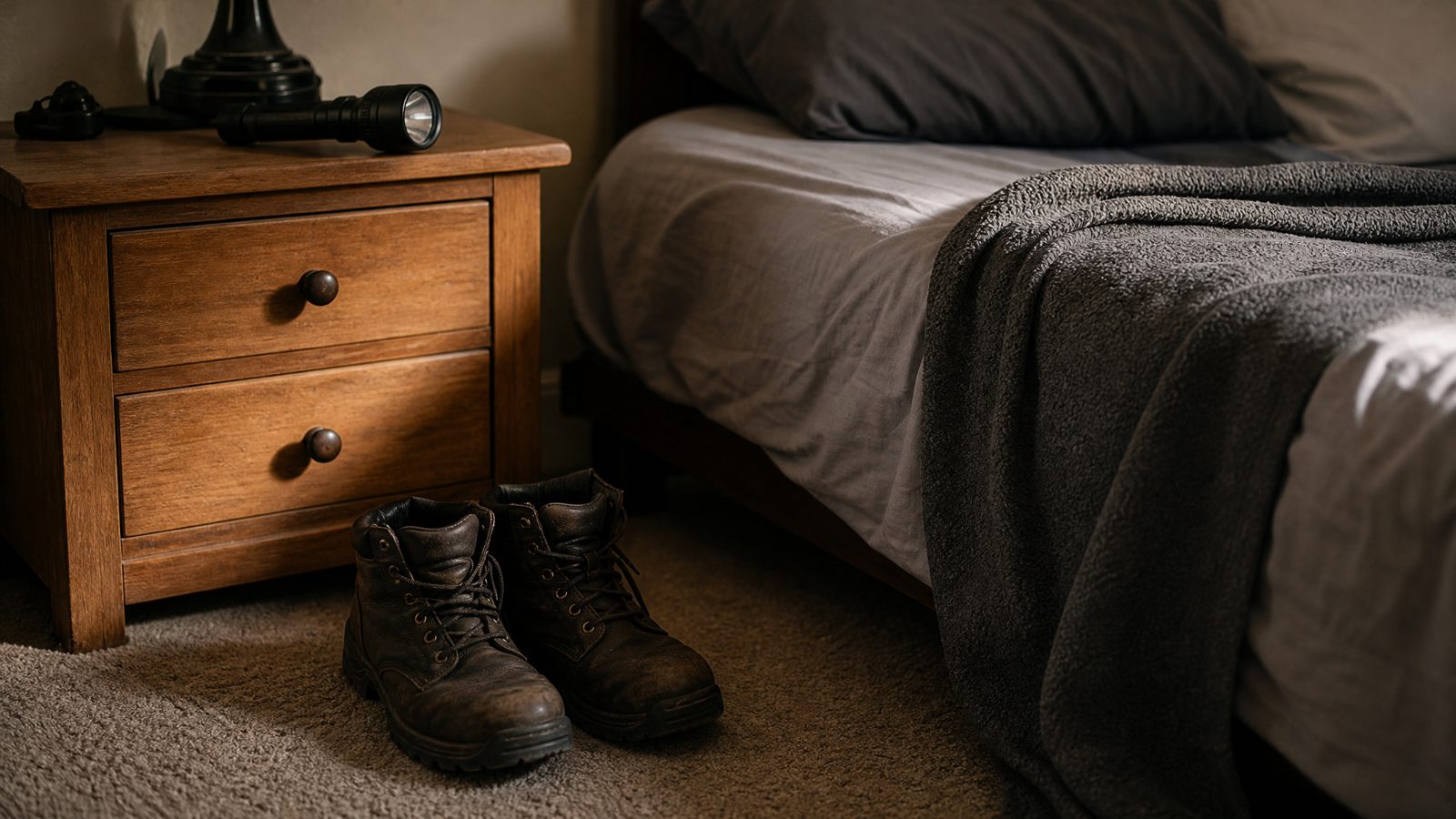
Our own suggestions, not the CDC's: store the kit where you can reach it even if a room is damaged, keep a pair of shoes and a flashlight at the bed, and check water and batteries twice a year. Our guides to building a 72-hour kit, water storage, emergency lighting and preparing for a power outage cover the details, and our tornado shelter guide shows how a different hazard changes the plan. Our friends at 1stHour cover how to build a family emergency plan.
Afterward
The CDC page has no dedicated after-the-earthquake section. It says only that you may need to evacuate a damaged area, following signs of danger or directions from civil authorities, and that your family should know how to reunite. The Earthquake Country Alliance covers more here: its sixth step is to improve safety after earthquakes by evacuating if necessary, helping the injured, and preventing further injuries or damage, and its seventh is to reconnect and restore by reuniting with others and repairing damage.
Get The Earthquake Prep Field Card As A PDF
One page: drop, cover and hold on, where to be, home-securing items, and a kit checklist to tick off.
Download the Field Card (PDF)Build The Rest Of Your Kit While You're At It
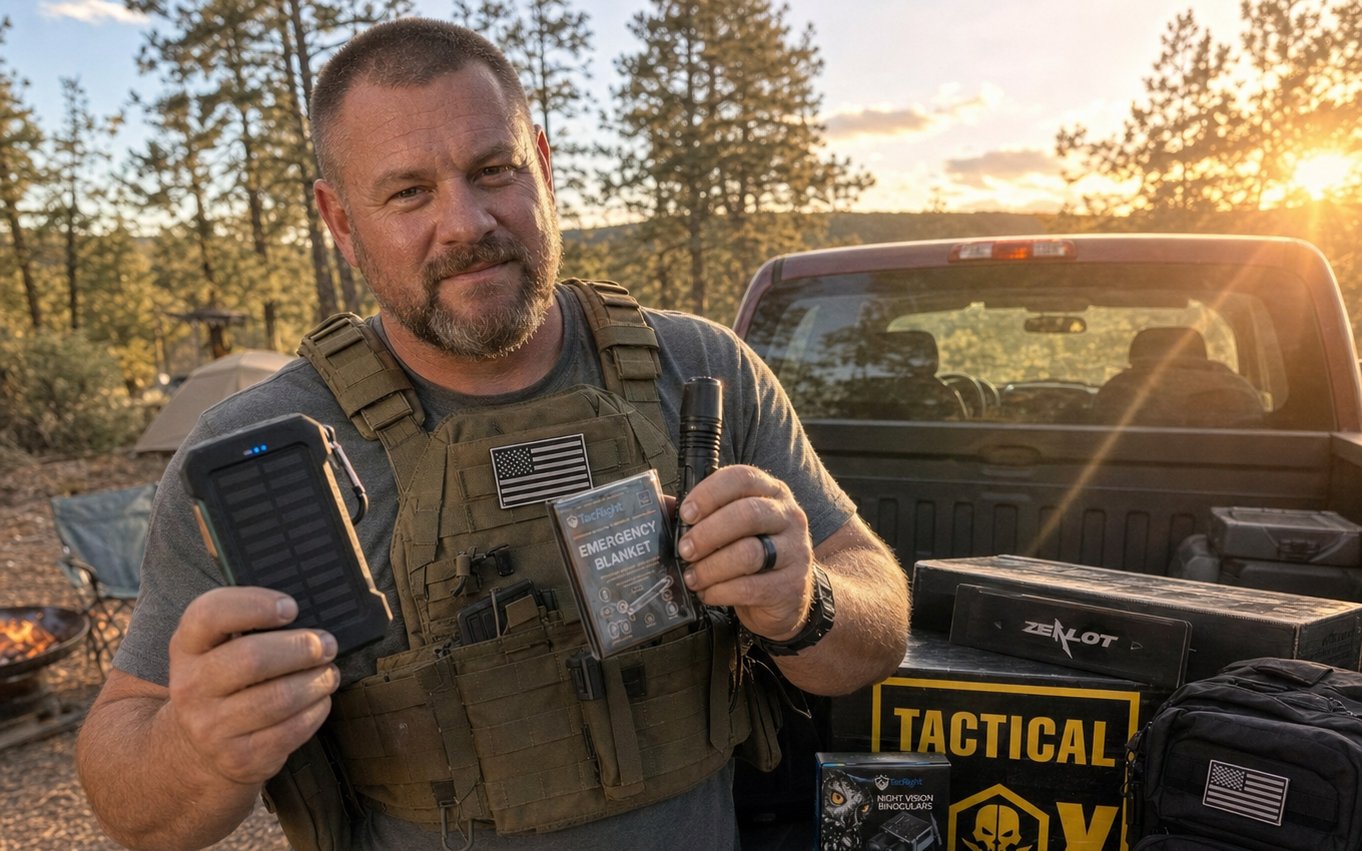
Every month, TacticalBox members get hand-picked tactical, survival, and outdoor gear, sourced ourselves from makers all over the country and curated to be some of the best equipment on the market, worth $150 or more per box on the Standard plan. It's an easy way to keep building out a real emergency kit without hunting down every piece yourself. Backed by a money-back guarantee. Cancel, pause, or skip anytime.
Start Your TacticalBoxThis content is for informational purposes only. Earthquake risk and building conditions vary by location, so follow the instructions of local emergency management officials, and consult a qualified professional before making structural changes to your home.