
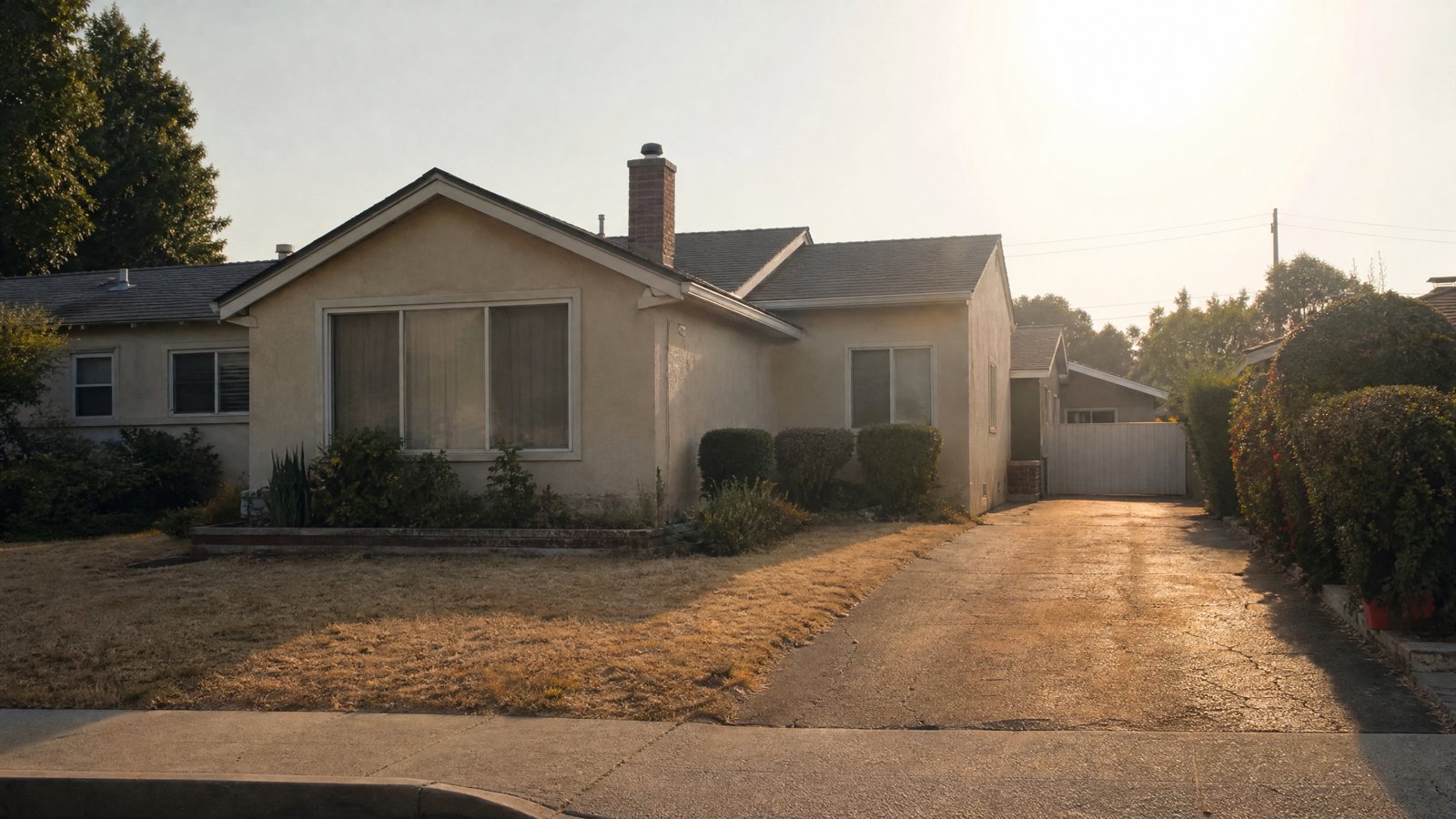
Heat Wave Safety When the Power Is Out
The National Weather Service's heat illness page says heat illness can follow when the body heats too fast or loses too much fluid or salt, and that heat stroke, with a body temperature above 103°F, means calling 911 or getting the person to a hospital immediately. The CDC's extreme heat page says to stay cool, stay hydrated and know the symptoms, and the National Weather Service's heat safety page says it is never safe to leave a child, disabled person or pet locked in a car.
When the power goes out in cold weather, you can add layers. In a heat wave, the fan and the air conditioner are the plan, and without electricity both are gone. Heat can turn from uncomfortable to dangerous faster than most people expect.
This guide follows the National Weather Service's heat pages and the CDC's extreme heat page. Where we add a suggestion of our own, we say so. For local heat warnings and cooling center locations, your local forecast and emergency officials are the authority.
Know Who Is Most At Risk
The CDC's extreme heat page says hot days can affect anyone, and names these higher-risk groups: infants and young children, people 65 and older, pregnant women, people with heart disease, and children with asthma. It also lists people who work or exercise outdoors in the heat. The National Weather Service's heat safety page adds that older adults who live alone, have limited mobility or take certain medications can face several adverse effects at once, and asks you to check on friends and relatives in these groups, especially those without air conditioning.
That matters in an outage. A neighbor who relies on a window unit has no cooling the moment the power fails, and may not call anyone. Our own suggestion, not the Weather Service's: decide now whose door you will knock on, and tell someone to knock on yours.
Cooling A House Without Power
The CDC and Weather Service pages give a few moves that do not need electricity, plus a warning about one that does.
| 01 | Stay out of the sunWhen it is hot outdoors, the CDC says to stay in the shade as much as possible and take breaks. |
| 02 | Cover the windows (our suggestion)This one is ours, not the agencies': close drapes or blinds on the sunny side of the house before the day heats up, and open them after dark if the air outside is cooler. |
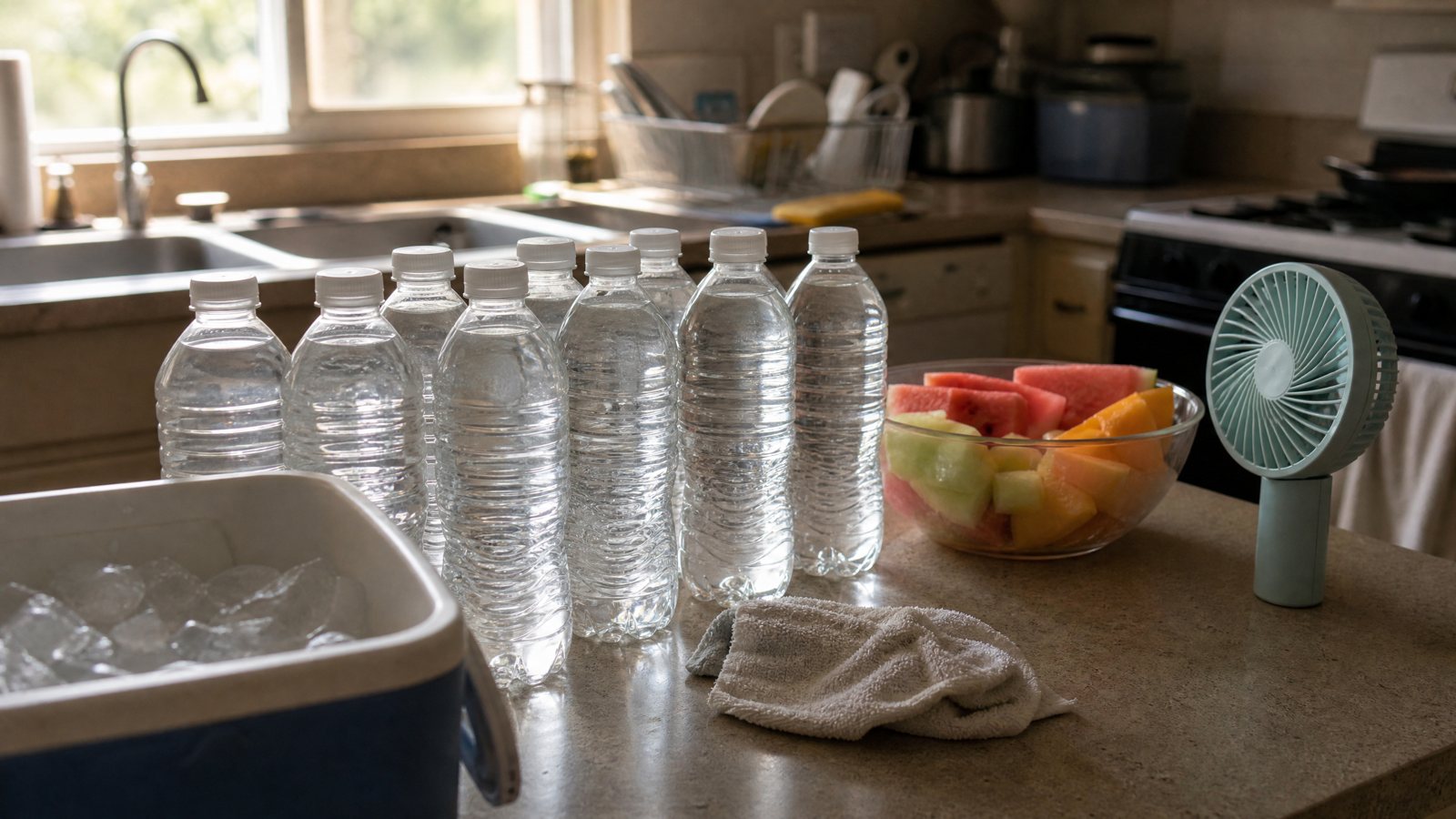
| 03 | Drink water through the dayThe CDC says to carry water and drink it throughout the day. |
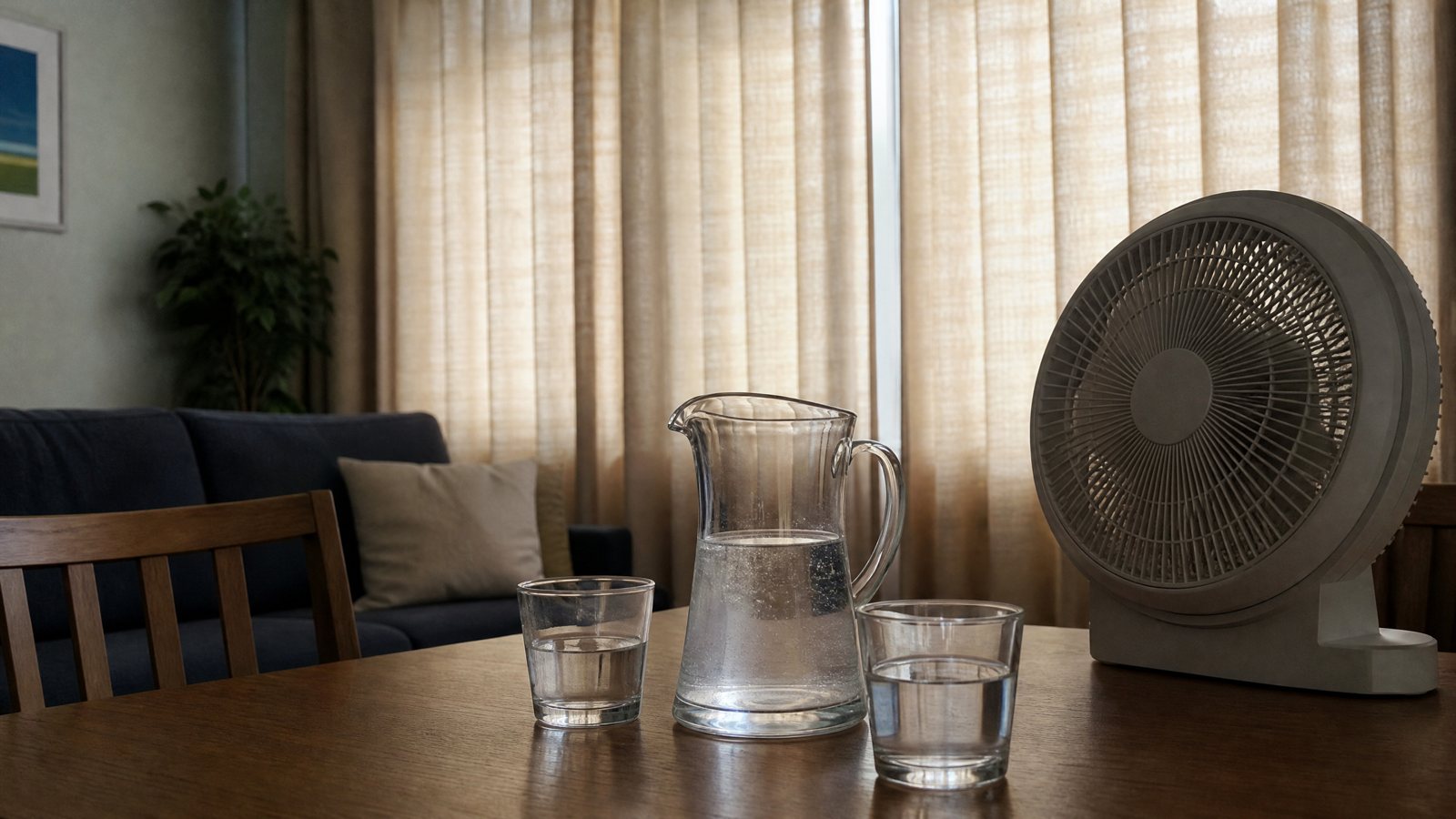
| 04 | Know the fan limitThe CDC's extreme heat page says to use fans only if indoor temperatures are less than 90°F. The National Weather Service's heat illness page says a fan can make you hotter at higher temperatures, and that fans are appropriate only when heat index values are below the high 90s. |
| 05 | Go somewhere cooler if the house cannot stay coolThe Weather Service says that for heat exhaustion the person should be moved to a cooler environment, preferably a well air-conditioned room. If your home has no cooling, our own suggestion is to find a public cooling space before you need one. |
| 06 | Check on people and petsThe CDC says to check on family, friends and neighbors, especially those who live alone or have chronic conditions, and to check on pets too. |
The National Weather Service's heat index page adds a reminder about the number on the forecast: heat index values were devised for shady, light-wind conditions, and exposure to full sunshine can increase them by up to 15°F. A forecast of 95 can feel far worse standing in a driveway.
Heat Illness: What To Watch For
The National Weather Service's heat illness page describes three stages. Each one has its own signs and its own first aid.
| 01 | Heat crampsThe page lists painful muscle cramps and spasms, usually in the legs and abdomen, with heavy sweating. For first aid it says to apply firm pressure to cramping muscles or gently massage them, and to offer small sips of water unless the person feels nauseous. It says to seek immediate medical attention if cramps last longer than 1 hour. |
| 02 | Heat exhaustionThe page lists heavy sweating; weakness or tiredness; cool, pale, clammy skin; and a fast, weak pulse, plus muscle cramps, dizziness, nausea or vomiting, headache and fainting. It says to move the person to a cooler environment, loosen clothing, apply cool wet cloths or have them sit in a cool bath, and offer small sips of water. It says to seek immediate medical attention if the person vomits, symptoms worsen, or symptoms last longer than 1 hour. |
| 03 | Heat strokeThe page lists a throbbing headache, confusion, slurred speech, nausea, dizziness, a body temperature above 103°F, hot red skin that may be dry or damp, a rapid and strong pulse, fainting or loss of consciousness. It says: “Call 911 or get the victim to a hospital immediately.” While waiting, it says to move the person to a cooler area and lower their body temperature with cool cloths or a bath, and not to give fluids. |
Our friends at 1stHour have a fuller guide to telling heat exhaustion from heat stroke. In an outage, the practical point is simple: stroke symptoms mean 911, not waiting to see if the power comes back.
The Vehicle Rule That Never Changes
The National Weather Service's heat safety page says it is “NEVER safe to leave a child, disabled person or pet locked in a car, even in the winter.” It says children can get into unlocked cars and die in about 10 minutes, so you should lock your cars even in your own driveway if a toddler lives in your household. It reports that 31 children died in hot cars in 2025.
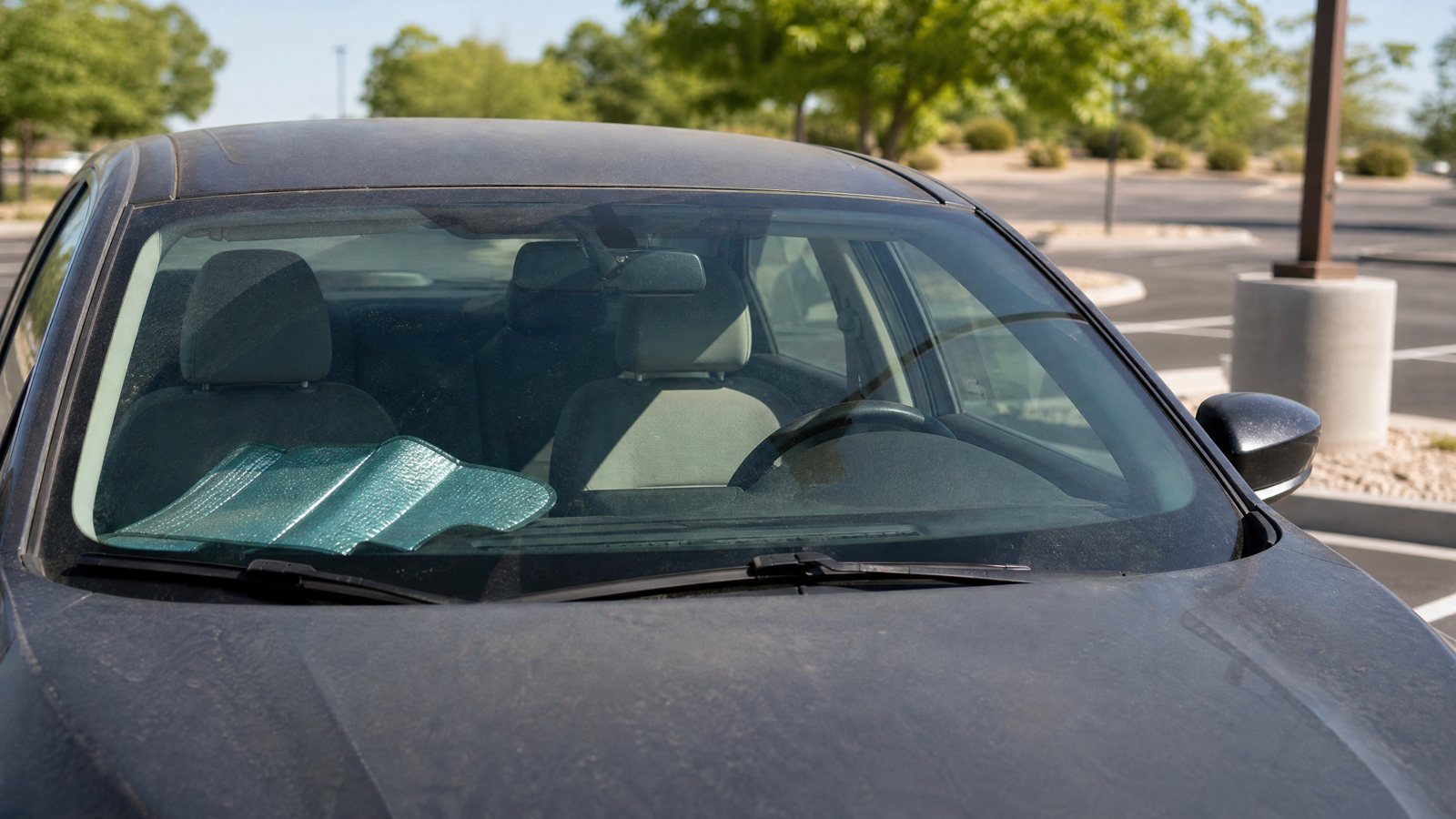
Our own suggestion, not the Weather Service's: during an outage it is tempting to sit in a parked car to cool off with the air conditioner running. Treat any parked car as unsafe for a person or pet to be left alone in, and never leave anyone behind while you go back inside. Our guides to preparing for a power outage, water storage basics, choosing a portable power station and preparing your pets for an emergency cover the rest of the outage plan.
Get The Heat Wave Field Card As A PDF
One page: who to check on, cooling steps, the three stages of heat illness and the vehicle rule, with a box to tick for each.
Download the Field Card (PDF)Build Out Your Outage Kit
Every month, TacticalBox members get hand-picked tactical, survival, and outdoor gear, sourced ourselves from makers all over the country and curated to be some of the best equipment on the market, worth $150 or more per box on the Standard plan. It's an easy way to keep building out a real emergency kit without hunting down every piece yourself. Backed by a money-back guarantee. Cancel, pause, or skip anytime.
Join TacticalBoxThis content is for informational purposes only and is not medical advice. Heat conditions and individual risk vary: follow your local forecasts and emergency officials, and call 911 in an emergency.