
Five Knots Worth Knowing for Camp and Emergencies
Five knots cover most of what camp and an emergency ask of a piece of rope. Use the square knot to join two ropes, the grapevine knot to join two ropes of equal diameter securely, the bowline to make a loop, the taut-line hitch to keep a tent guyline tight and adjustable, and the clove hitch to start or finish a lashing or hang a line off a tree. Leave No Trace and Scouting magazine both describe them in plain steps. Practice each one before you need it, and keep knots that carry real weight, such as climbing or rescue, for hands-on instruction.
A knot is one of the cheapest pieces of gear you will ever carry, because it weighs nothing and you cannot lose it. The catch is that it only helps if your hands already know it. Tying a knot for the first time in the rain, with cold fingers, is a poor way to learn.
This guide covers five knots, what each one is for, and the steps to tie it, drawn from Leave No Trace and Scouting magazine. Where we add our own practice advice, we say so.
Joining Two Ropes: Square Knot And Grapevine Knot
When one rope is too short, you tie it to another. These are the two joining knots on our list.
| 01 | Square knot: the basic joinLeave No Trace says it is most commonly used to tie two ropes together. Cross the two ropes to form a half knot, cross them a second time, and pull the ends tight. |
| 02 | Square knot: the fortified versionScouting magazine describes the steps as right over left and under, left over right and under, then pull. For the fortified version, it adds an overhand knot to each end, which makes the knot less likely to slip. |
| 03 | Grapevine knot: equal-diameter ropesScouting magazine says it ties two ropes of equal diameter securely together. Lay the two ropes parallel. With the end of the lower rope, tie two overhand knots around the upper rope. With the end of the upper rope, tie one overhand knot around the lower rope. Pull both sets tight. |
One practical point, and it is ours: pick the join to fit the job. A plain square knot is the quick, easy one. If the join matters, take the extra seconds to fortify it, the way Scouting magazine describes, so the ends are less likely to work loose.
The Bowline
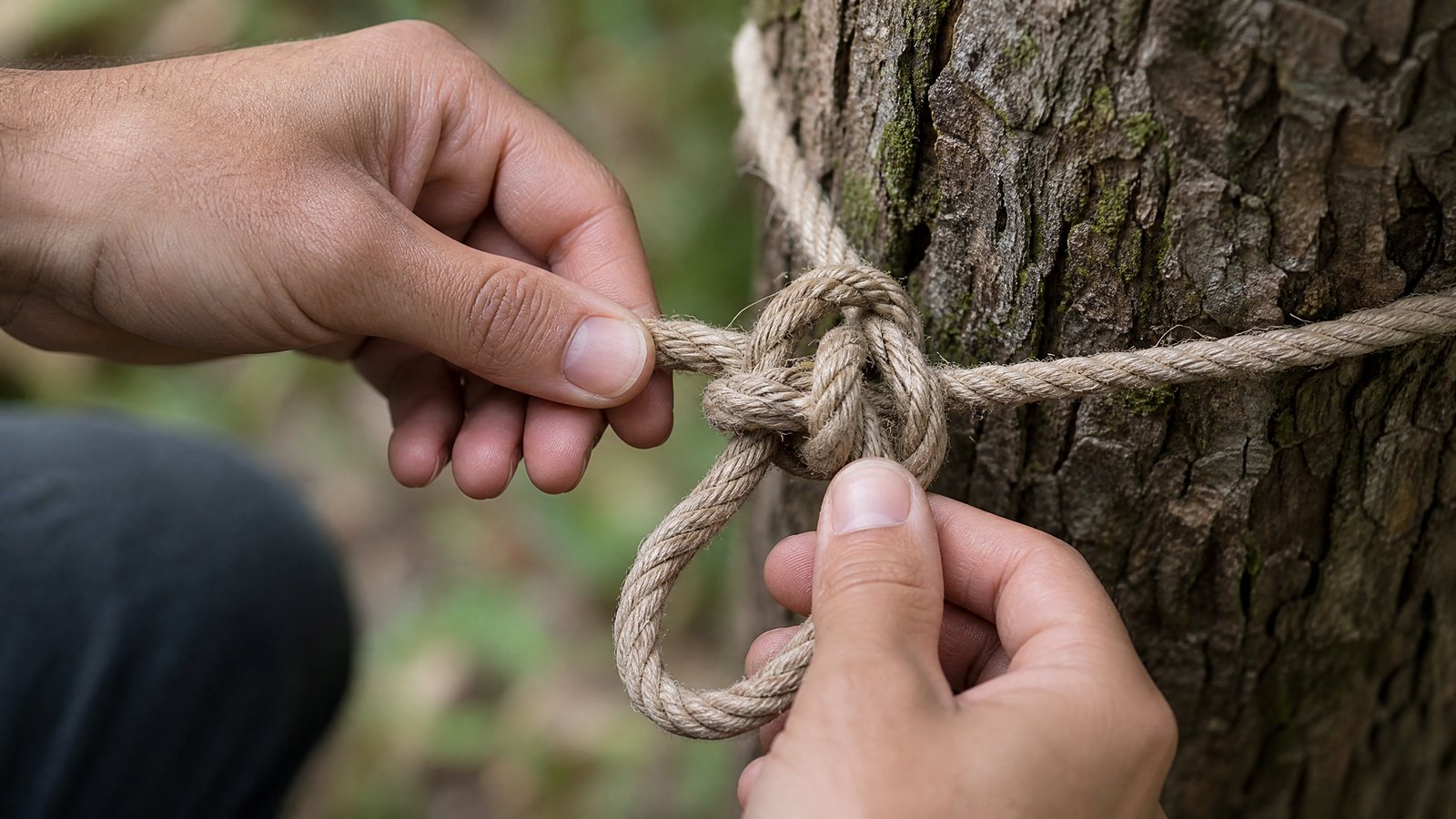
Leave No Trace says the bowline is most commonly used to make a loop. Scouting magazine calls it a loop knot popular among climbers and sailors, and describes it as a secure knot that will not slip or loosen.
| 01 | Make the small loopForm a small loop, leaving enough rope for the size of loop you want. Scouting magazine calls this the rabbit's hole. |
| 02 | Bring the end throughPass the end up through the loop, as though starting an overhand knot. |
| 03 | Go around the standing lineTake the end around the standing part of the rope. In Scouting magazine's version, the rabbit runs around the tree. |
| 04 | Back down the hole and pullPass the end back down through the small loop, then pull everything tight. |
Knowing the steps is not the same as being cleared to trust it with a person's weight. The sources describe how to tie the knot, not how to rig a rescue, so for any line that will hold a person, get instruction from a qualified teacher first.
Taut-Line Hitch And Clove Hitch
These two are the camp workhorses. One keeps a line tight and lets you adjust it, and the other starts a lashing or hangs a line off a post or tree.
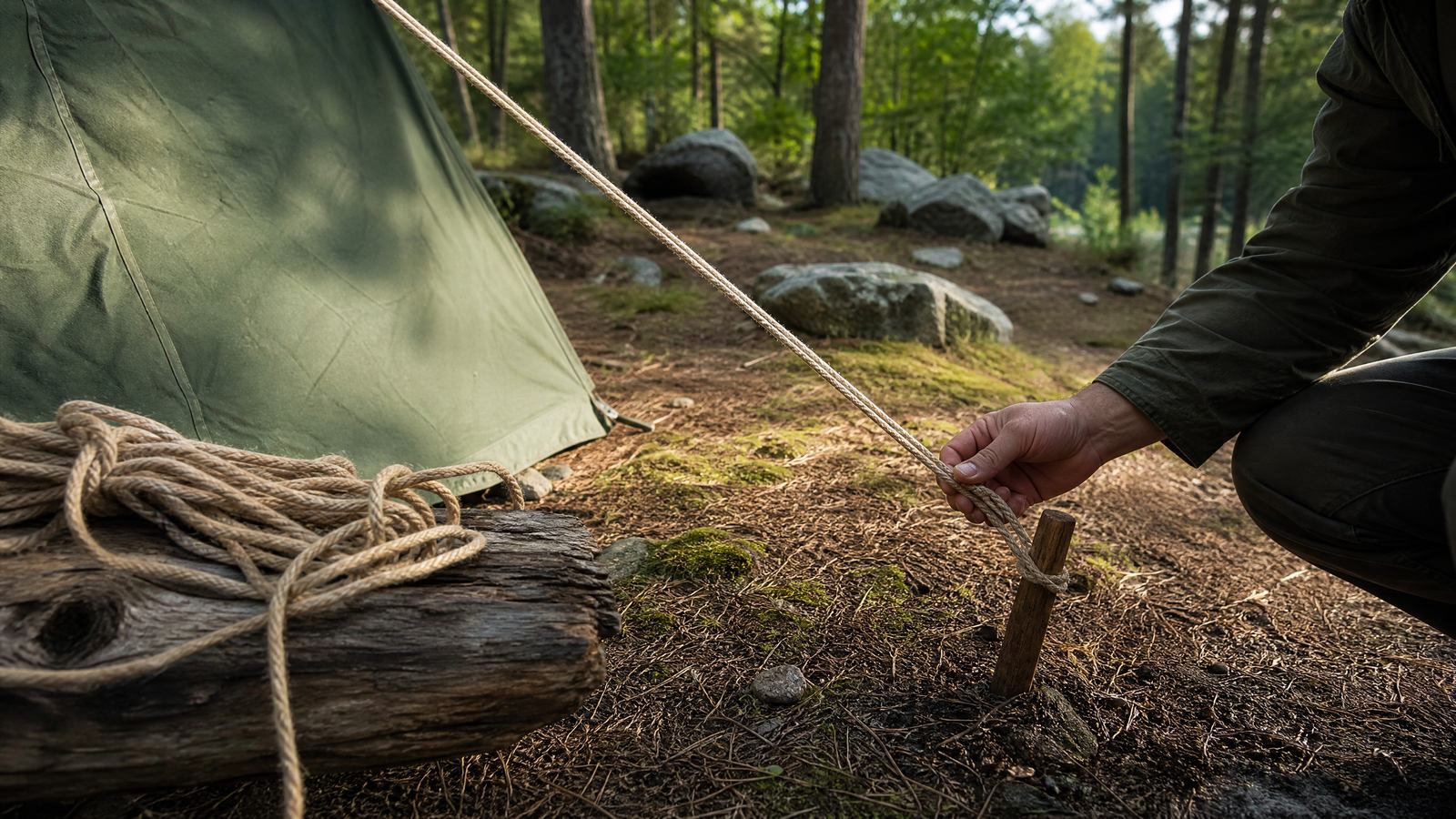
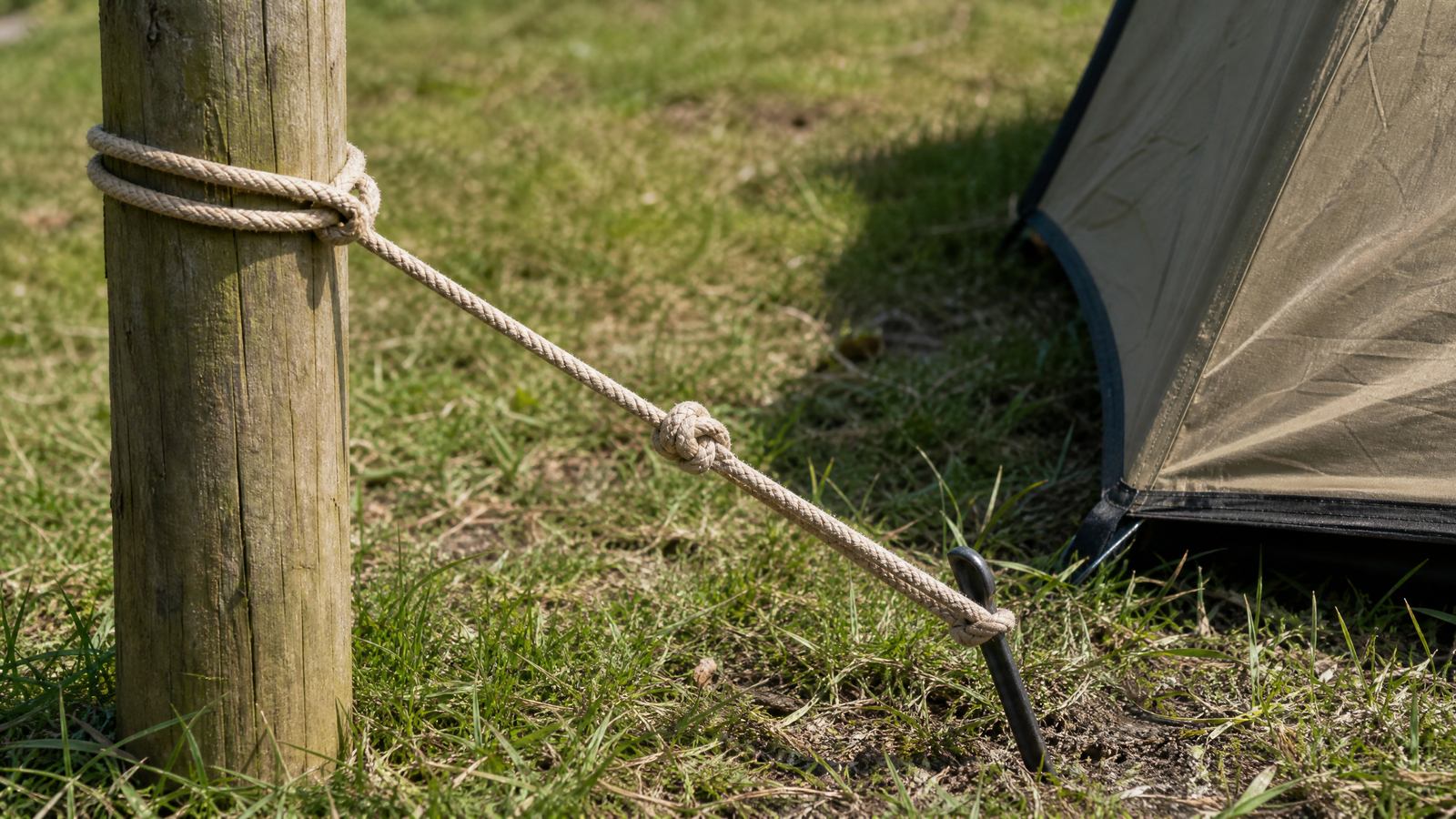
| 01 | Taut-line hitch: the adjustable guylineLeave No Trace says it makes a taut, adjustable line, which is particularly useful when staking out tent guylines. Scouting magazine says campers use it to adjust tension in a tent's guyline. |
| 02 | Taut-line hitch: the stepsWrap the rope around a secure object such as a tent stake. Bring the end under the standing rope and wrap it around the standing part two times. Then bring the end above the two loops, finish with a half hitch, and pull tight. |
| 03 | Clove hitch: the anchorLeave No Trace says it is most commonly used to tie a bear bag hang off to a tree. Scouting magazine calls it an easy knot and says it can be used to tie a horse to a post. |
| 04 | Clove hitch: the stepsWrap the rope around the post and cross over the standing part. Wrap the end around the post a second time and tuck it under itself below the cross. Pull tight. |
If you hang food with a bear bag, check the rules for the area you are camping in. The knot is only one part of food storage, and the local requirements decide the rest.
How To Actually Learn Them
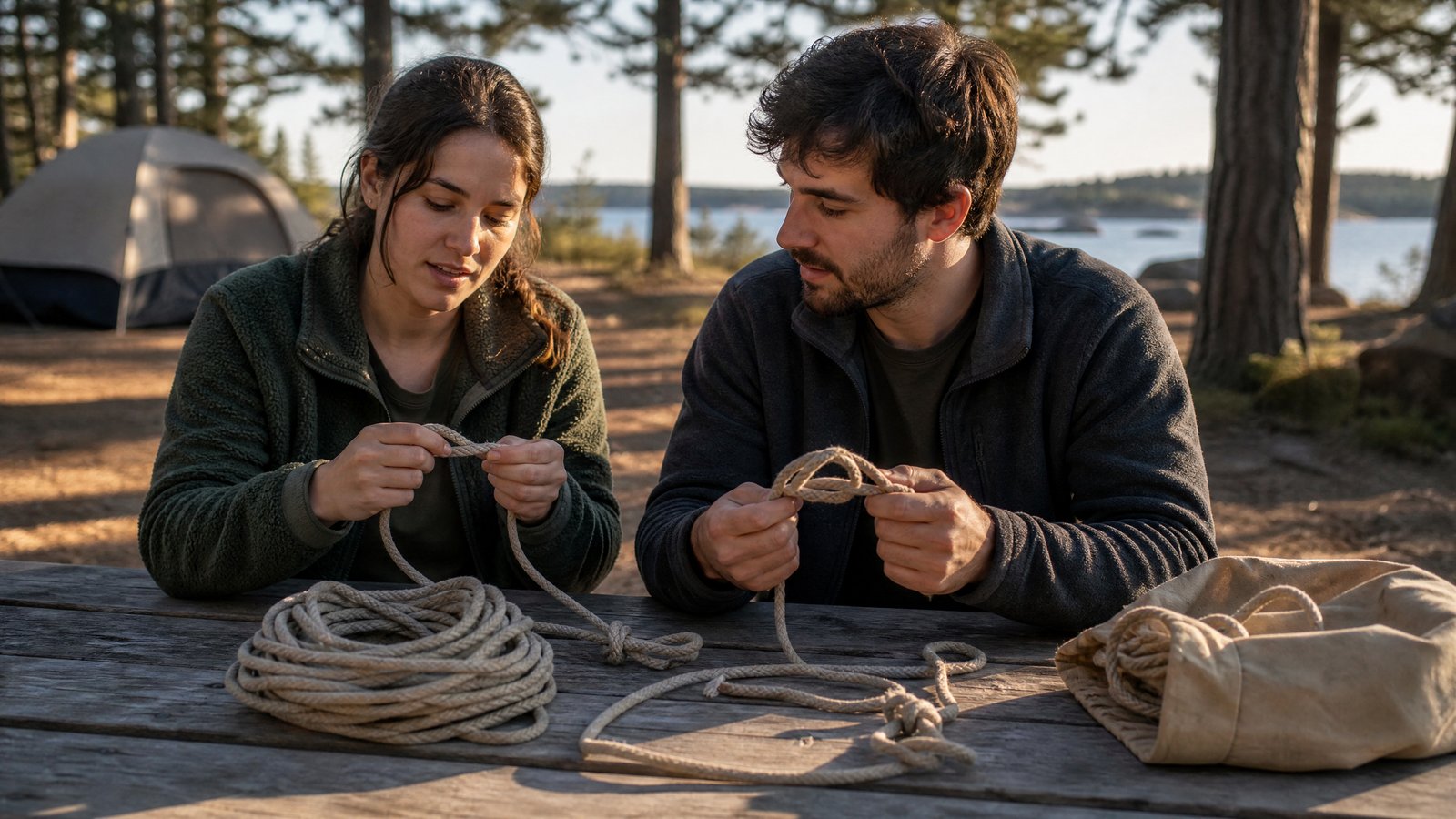
The rest of this section is our own advice, not a cited rule. A knot you have tied a dozen times is one you can tie at dusk with cold hands, and a knot you only read about is not.
| 01 | Keep a short length of cord in your kitA few feet is enough to practice. Our guide to bug-out bag essentials covers what else to carry with it. |
| 02 | Learn one knot a dayTie it ten times at the kitchen table, then once with your eyes closed. Five knots is five days. |
| 03 | Test it before you trust itTie it on a post or stake and tug it hard before you depend on it. If it slips, retie it and find out why. |
| 04 | Use it on a real tripA taut-line hitch on a real tent guyline teaches more than any diagram. See our guides to building a first-night shelter and the top survival skills for beginners for places to use them. |
Five knots is a short list, and that is the point. Learn these well and you can handle most of what a camp or a bad night will ask of a rope.
Get The Five Knots Field Card As A PDF
One page: what each knot is for and the steps to tie it, plus a practice log to tick off as you learn them.
Download the Field Card (PDF)Build The Rest Of Your Kit While You're At It
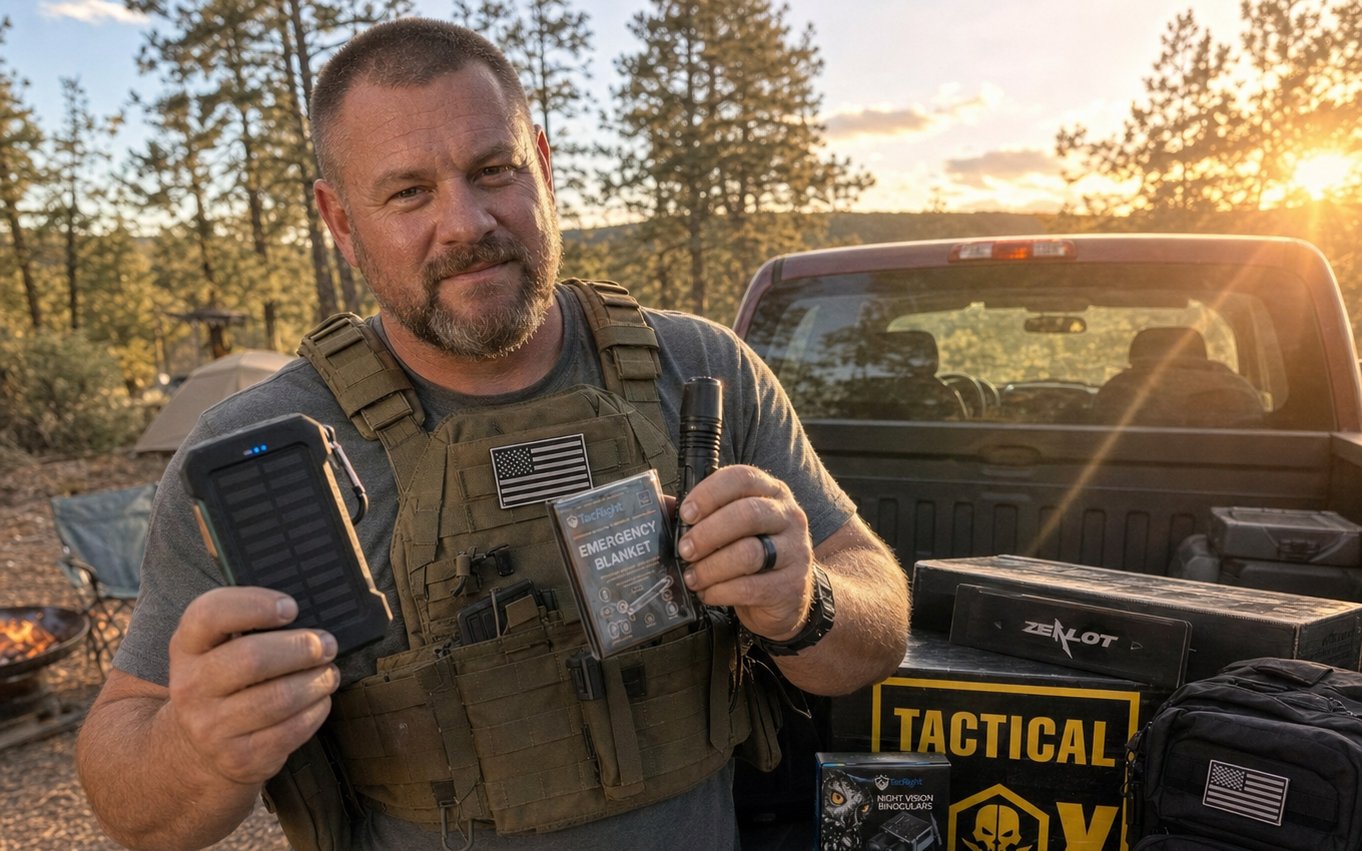
Every month, TacticalBox members get hand-picked tactical, survival, and outdoor gear, sourced ourselves from makers all over the country and curated to be some of the best equipment on the market, worth $150 or more per box on the Standard plan. It's an easy way to keep building out a real emergency kit without hunting down every piece yourself. Backed by a money-back guarantee. Cancel, pause, or skip anytime.
Start Your TacticalBoxThis content is for informational purposes only. Knot descriptions summarize the cited sources and are not a substitute for hands-on instruction. Do not trust any knot with a person's weight, or use it for climbing, rappelling, hoisting or rescue, without qualified training and properly rated equipment. Inspect rope for wear before use, and follow the food-storage rules of the area where you camp.