
Emergency Sanitation: What to Do When the Toilets Stop Working
Both Oregon State University Extension and Be Ready Utah describe the same basic fix: a two-bucket toilet, with one bucket for urine and one for solid waste, the solid bucket lined with a heavy-duty bag and covered after each use. Keep urine out of the solid bucket. Oregon State says to store sealed waste far away from your food and water and never to put it in the normal garbage. Then wash your hands with soap and water for at least 20 seconds, per the CDC, because the real danger in a long outage is disease. Build the setup before you need it, since a bucket and a few bags cost very little.
When the water stops or the sewer backs up, the toilet is the first thing most people miss, and the one they have not planned for. A flush uses clean water to carry waste away. Without that, waste has to be contained, covered and stored, and your hands have to stay clean.
This guide covers how to set up a two-bucket toilet, how to handle and store the waste, and how to keep a handwashing station running. The rules come from Oregon State University Extension, Be Ready Utah and the CDC. Where we add practical advice of our own, we say so.
Why Sanitation Matters More Than It Sounds
Be Ready Utah calls disease outbreak the second emergency after an initial disaster, and says improper hygiene and sanitation lead to diseases such as typhoid, dysentery and cholera. Oregon State University Extension makes the same point: without a safe way to dispose of human waste, fecal-oral diseases such as cholera and salmonella can spread and cause a secondary disaster. Its guide uses a planning example of Oregonians being without services for two weeks or longer after an earthquake, so it is not written for a one-night outage.
That is why this is worth sorting out before the next storm. Our own advice: if the power is out but the water still runs, check with your local utility before you rely on it, because some systems stop working when the power does.
Setting It Up
Be Ready Utah calls a two-bucket system, which separates liquid and solid waste, an effective and sanitary way to handle human waste in an emergency. Oregon State University Extension gives the same layout, and the steps below follow what the two guides say.
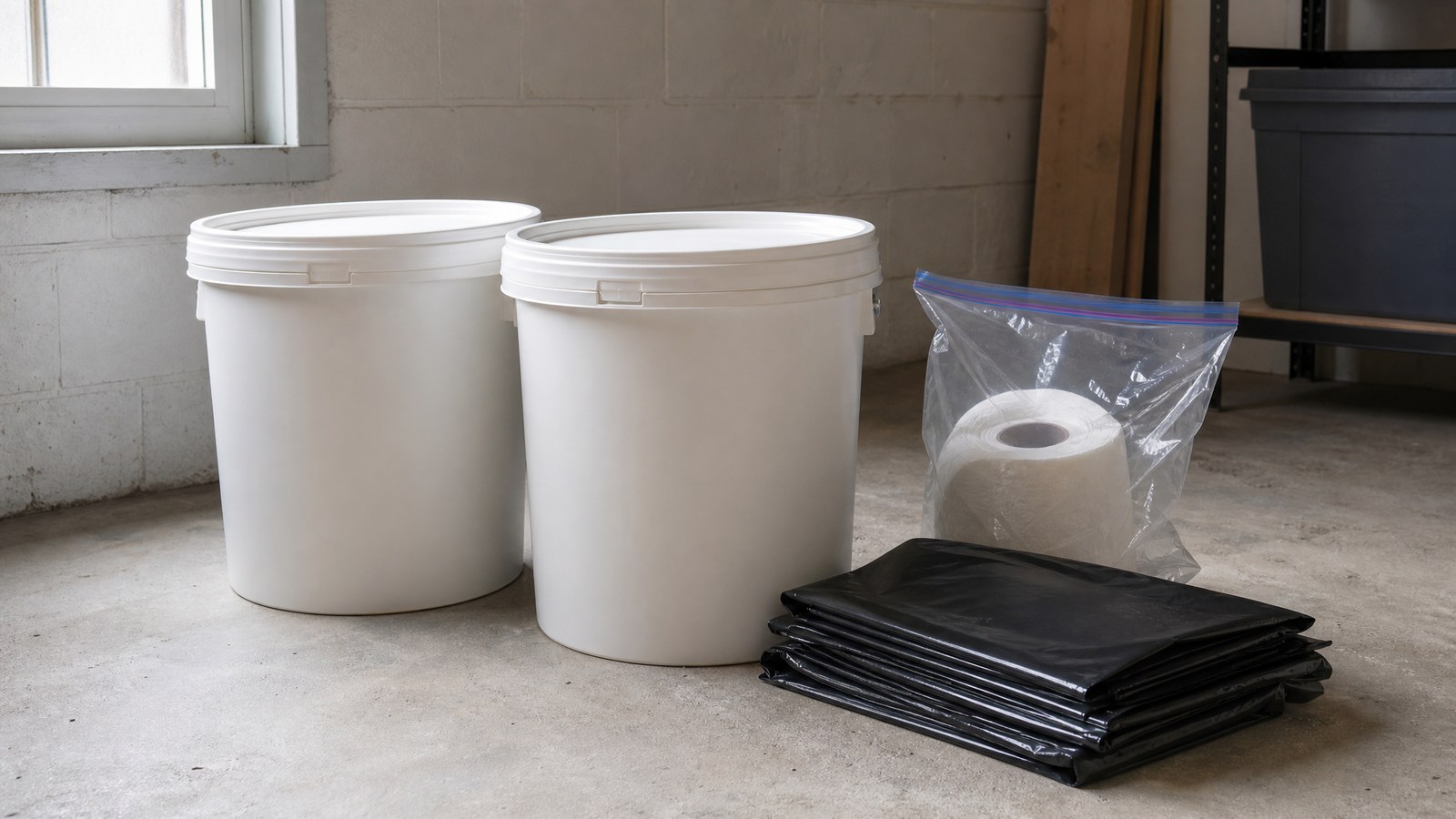
| 01 | Get two 5-gallon buckets and mark themOregon State University Extension says to mark one for urine and one for feces, for example with the words pee and poo. It adds that the seat or lid over the solid bucket should not be airtight, because waste dries out and shrinks when it gets some air. |
| 02 | Leave the urine bucket unlinedBe Ready Utah says the urine bucket does not need a bag and is used only for liquid urine. |
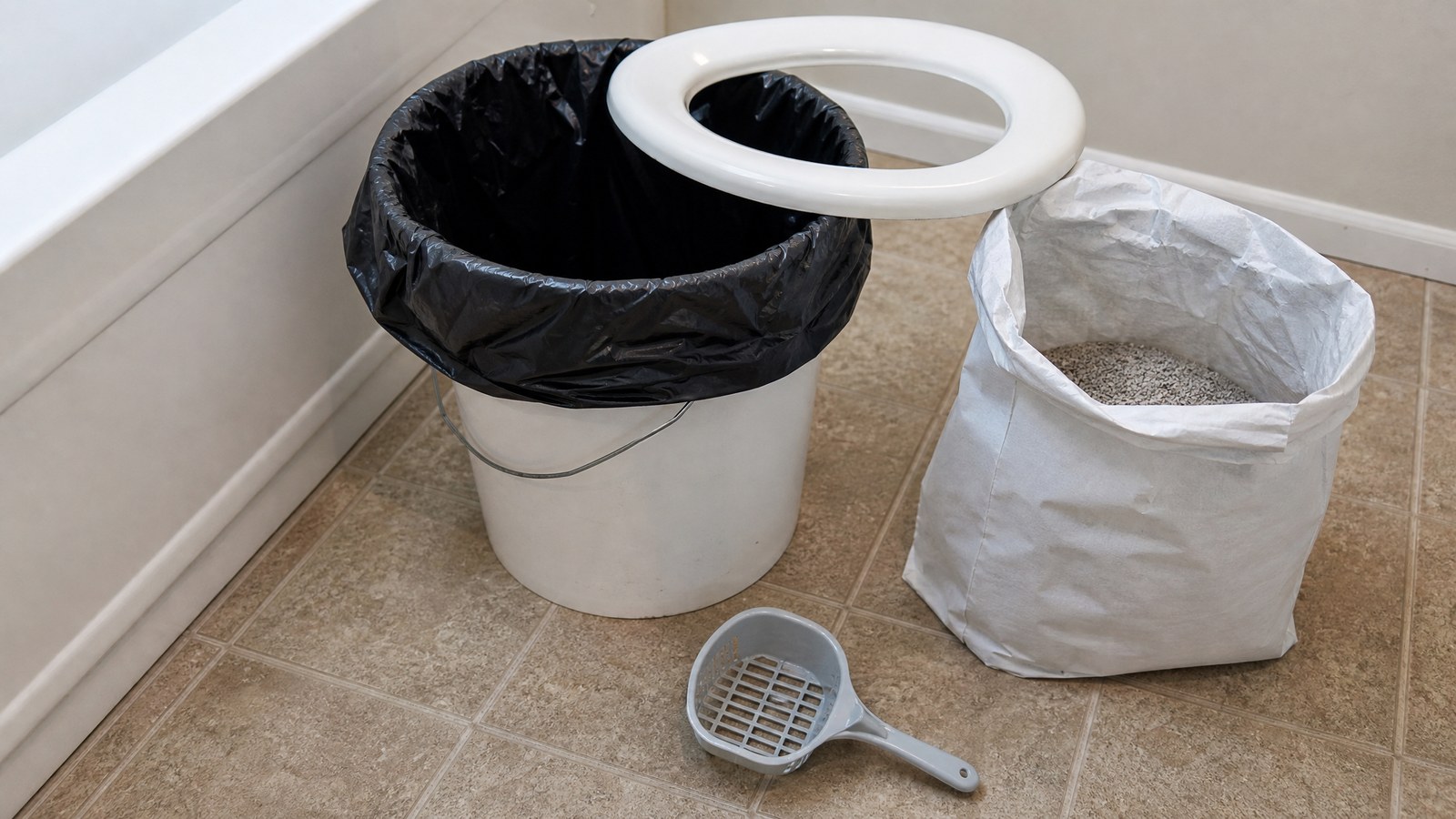
| 03 | Line the solid bucket with heavy-duty bagsOregon State University Extension says to line it with a heavy-duty 13-gallon black plastic garbage bag. Be Ready Utah says to use two heavy-duty bags. The sources differ, so we would use two. |
| 04 | Add a seatOregon State University Extension notes that the camping and outdoor sections of stores carry seat and lid combinations for buckets, and that half a pool noodle, sliced down its length, can be attached to the rim for padding if you have no seat. |
| 05 | Keep urine out of the solid bucketOregon State University Extension says to try not to urinate in the solid bucket, because urine is what produces the strong smell in toilets that mix the two. |
After Each Use And When The Bucket Fills
The two guides give different covering materials, so we list both. Either way the idea is the same: dry the waste out and cut the smell.
| 01 | Cover the waste after each useBe Ready Utah says to put a one-inch layer of kitty litter in the bottom of the solid bucket, then cover waste with about two cups more after each deposit, or use dry material such as crushed leaves, shredded paper or cardboard, sawdust or small wood chips if you run out. Oregon State University Extension says to sprinkle about a half cup of carbon material, such as wood shavings, sawdust, shredded paper, bark chips or peat moss. |
| 02 | Put used toilet paper in the solid bagOregon State University Extension says toilet paper goes in the solid-waste bag or a separate plastic bag, not in the urine bucket. |
| 03 | Empty the urine bucket before it gets heavyOregon State University Extension says to do it when the bucket is about one-quarter full or before it gets too heavy to carry safely, adding some water to dilute it if possible, and pouring it on the lawn or ground. Be Ready Utah says to empty it after each use in the yard, spread over the lawn or over gravel, so the two guides differ on how often. |
| 04 | Stop at half fullOregon State University Extension says to fill the solid bucket no more than half full. When it is time to empty it, put on disposable gloves, double-bag the waste, seal it tightly, and store it away from other garbage and far from your food and water. Be Ready Utah also lists eye protection and a mask for handling a full bucket. |
| 05 | Store bagged waste in a lidded canBe Ready Utah says to use a large garbage can with a tight lid, no more than 30 gallons, strapped down with rope or bungee cords, double-bagged with heavy-duty bags and kept outside in a concealed spot such as behind a fence or in a garage. It also says to spray the outside of the can with disinfectant after closing the lid, and describes this temporary storage as a short-term option until normal service resumes or until the ground can be dug. |
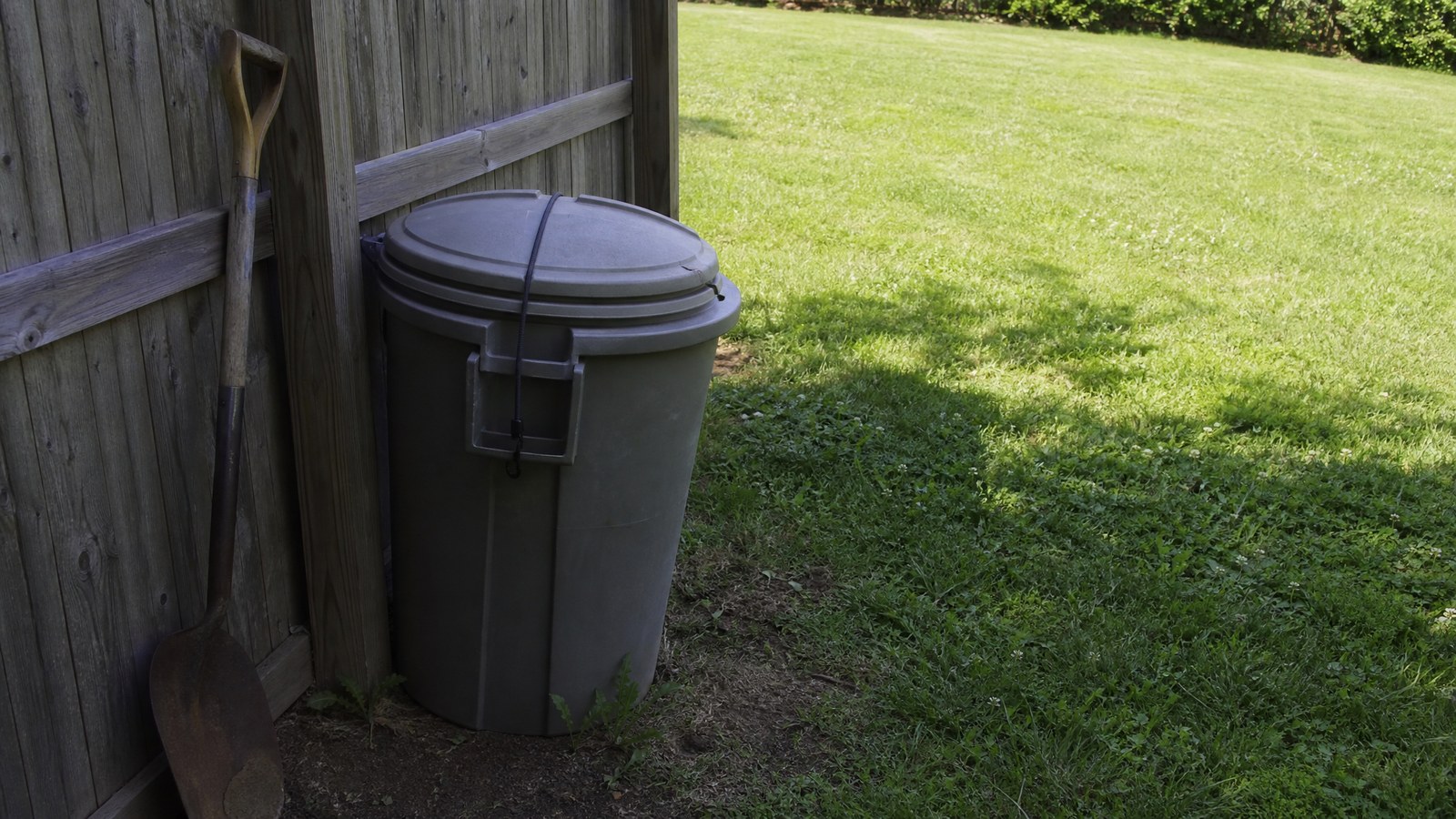
One rule shows up in Oregon State University Extension and is worth repeating: do not put human waste in the normal garbage. It says the waste has to be specially treated and should not go to a landfill with other household waste.
Burying Or Waiting For Service To Return
Oregon State University Extension says you will likely have to store the waste until the public sanitary system is fixed. It adds that if you live in a more rural area, you can consider digging a latrine or hole and burying it, but not within 100 feet of a water source or anywhere contaminants can leach downhill into one. Be Ready Utah calls burying the best option if you have a safe location at least 200 feet from any water supply or living area, in a hole 2.5 to 3 feet deep, with a shovel left behind to backfill, and treats the lidded storage can as the short-term option.
The two distances differ: 100 feet from a water source in one guide, 200 feet from any water supply or living area in the other. Our own advice, not from either guide: use the larger distance, and ask your county or city emergency management office what is allowed where you live before you ever dig, since local rules vary and a hole near a well, stream or neighbor's property can cause real problems. If you rent or live in an apartment, our guide to the 72-hour kit for apartments and renters covers planning for a space with no yard.
A Handwashing Station That Works Without Taps
Be Ready Utah's list of times to wash includes before eating or preparing food, after using the toilet, after handling trash, garbage or other waste, after coughing, sneezing or blowing your nose, after handling an animal, and after contact with flood or other contaminated water. The CDC says to wash with soap and water for at least 20 seconds.
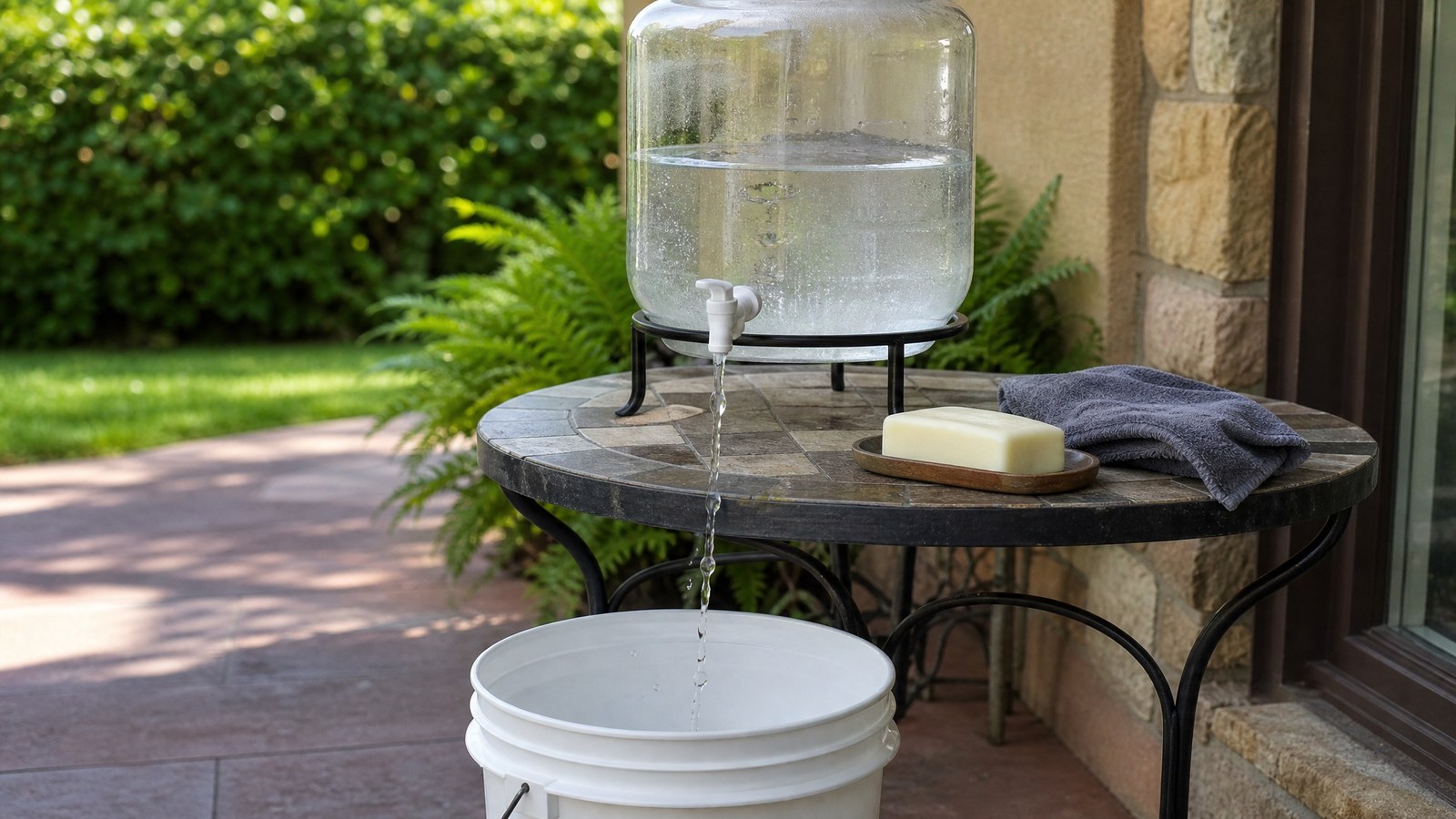
| 01 | Set up a stationOregon State University Extension says all you need is a jug of clean drinking water with an on/off spigot, soap, towels and a catch bucket for the used water. The CDC also suggests a large water jug if clean tap water is not available. |
| 02 | Use sanitizer only as a backupThe CDC says to use an alcohol-based hand sanitizer with at least 60% alcohol if you have no soap and water, and adds that sanitizers are not as effective on visibly dirty or greasy hands and do not remove all germs. |
| 03 | Follow local advice on water qualityThe CDC says that during a boil water advisory tap water may be safe for handwashing, but to use soap and water that has been boiled or disinfected if local authorities or your doctor recommend extra caution. |
| 04 | Budget water for itCDC's emergency water guidance is to store at least 1 gallon per person per day for 3 days, and says the water can be used for drinking, cooking, brushing teeth and other uses. It also says to try to store a 2-week supply if possible. It does not give a handwashing figure, so extra is our own advice. Our water storage guide covers containers and rotation. |
For the rest of the outage plan, see our guide to preparing for a power outage, and our friends at 1stHour cover how to build a family emergency plan.
Stock It Before You Need It
This list is our own, built from the setups above, not a cited rule. Keep it together in one bin: two 5-gallon buckets with lids, a seat, heavy-duty bags (a full box, since you use two per change), kitty litter or sawdust, disposable gloves, soap, a spigot jug, towels, toilet paper kept dry in a sealed bag, and disinfectant for the outside of the storage can, plus eye protection and a mask for emptying a full bucket. The CDC's water guidance also lists unscented liquid household chlorine bleach (the label should say 5% to 9% sodium hypochlorite) for disinfecting water if necessary and for general cleaning and sanitizing.
Get The Emergency Bathroom Field Card As A PDF
One page: the two-bucket setup, what to do when it fills, and the handwashing rules, with a checklist to tick off.
Download the Field Card (PDF)Build The Rest Of Your Kit While You're At It
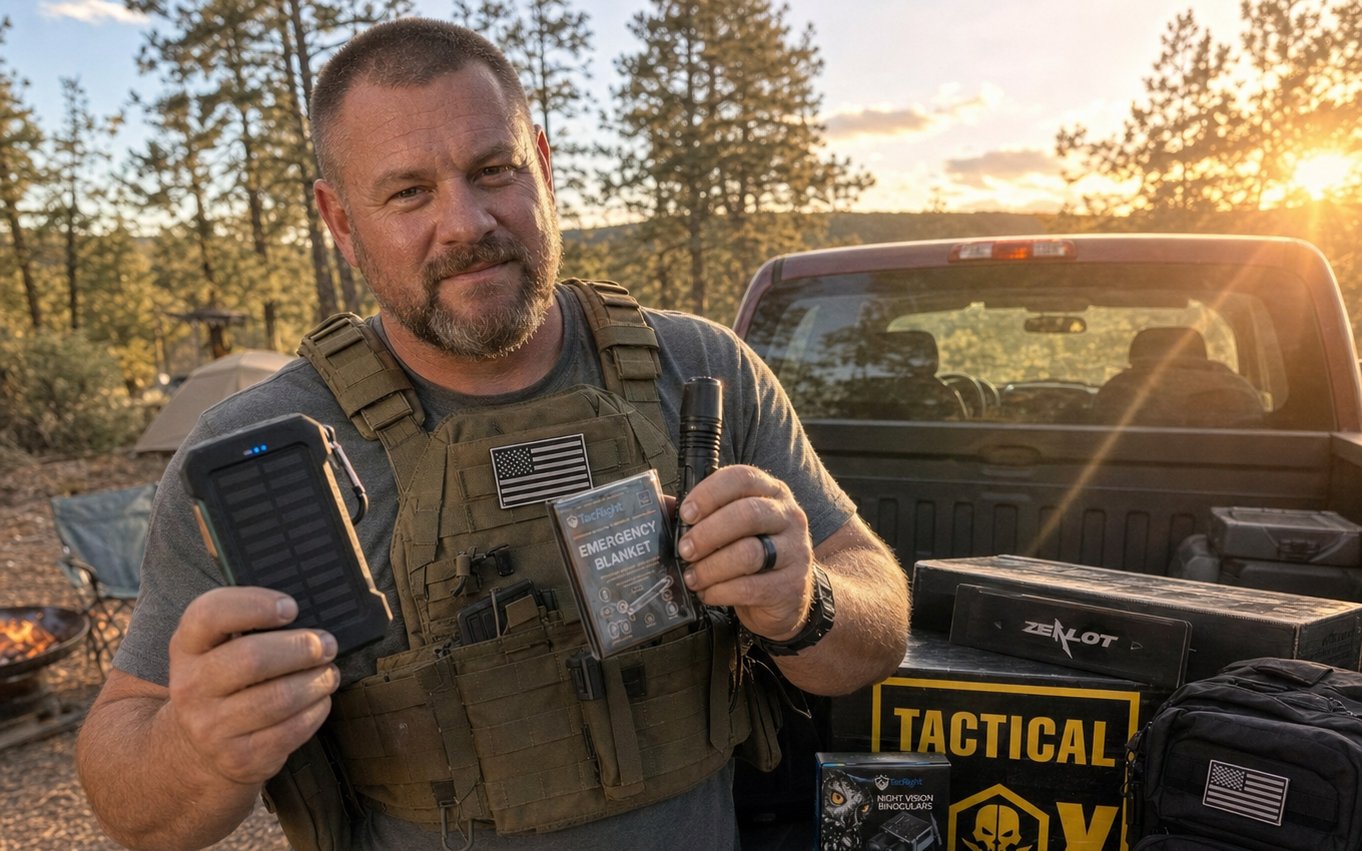
Every month, TacticalBox members get hand-picked tactical, survival, and outdoor gear, sourced ourselves from makers all over the country and curated to be some of the best equipment on the market, worth $150 or more per box on the Standard plan. It's an easy way to keep building out a real emergency kit without hunting down every piece yourself. Backed by a money-back guarantee. Cancel, pause, or skip anytime.
Start Your TacticalBoxThis content is for informational purposes only. Human waste can carry disease: wear disposable gloves, wash your hands thoroughly, keep waste away from food and water, and follow the guidance of your local health and emergency management officials, including any rules on disposal and burial. If someone has severe or lasting vomiting or diarrhea, seek medical care.