
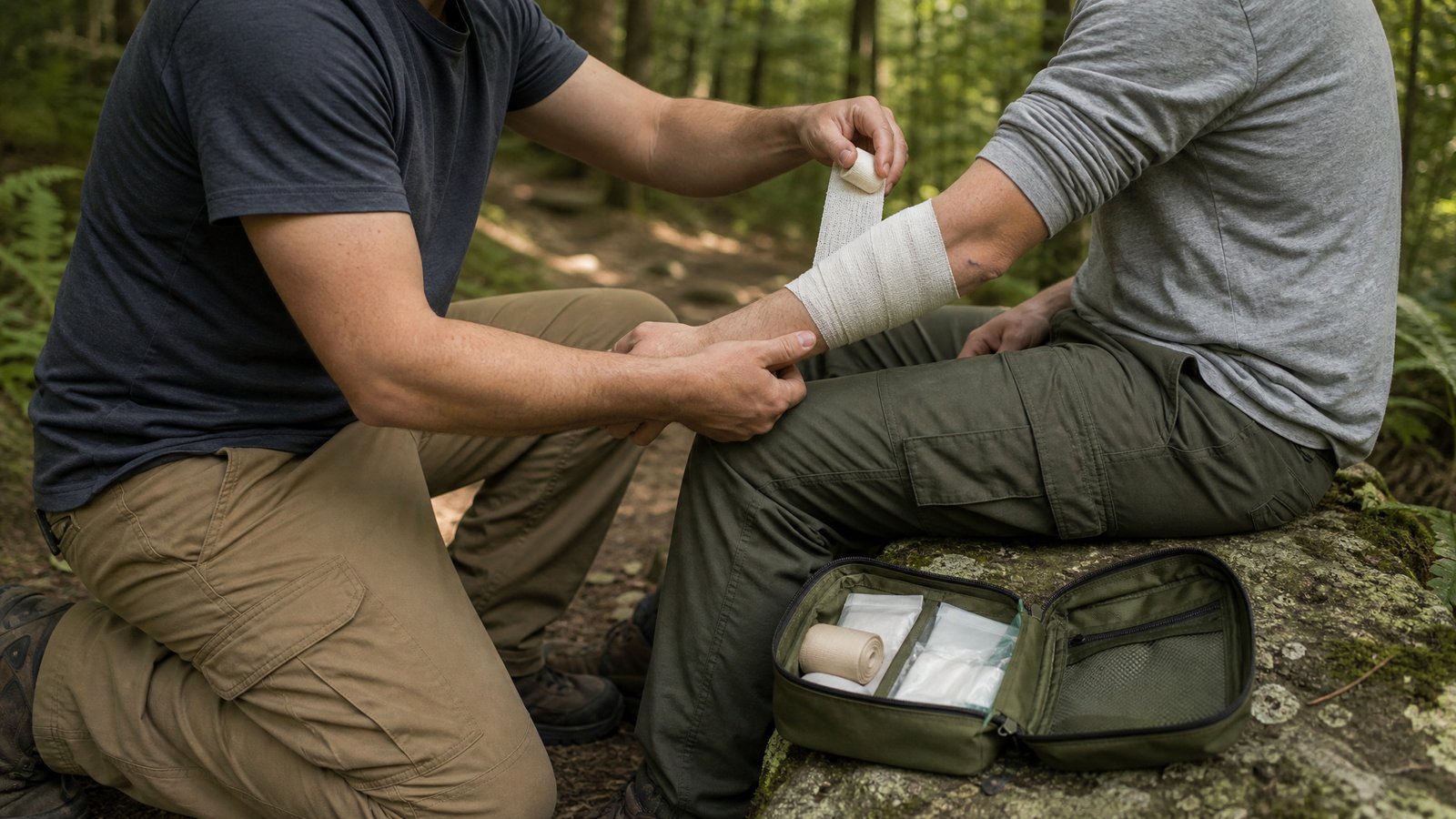
How To Treat Basic Injuries When Help Is Far Away
Bleeding gets treated before anything else, every time, regardless of what else looks wrong. After a fatal crash, NHTSA's own crash data shows EMS reaches the scene in an average of 13.3 minutes in a rural area versus 7.6 minutes in an urban one, and a full high-acuity call in a rural area runs about 97 minutes start to finish against roughly 69 minutes nationally. That gap is the entire reason this article exists. For a stretch of minutes, sometimes a lot longer, whoever is standing there is the whole medical system.
Most people's first aid knowledge stops at "call 911." That instruction is correct and it is also incomplete, because it assumes the ambulance is close. It often is not. Rural response researchers pulling from the National Emergency Medical Services Information System found the average complete EMS call, from dispatch to hospital drop-off, runs about 92.8 minutes in rural communities against 74.1 minutes nationally, and for the highest-acuity calls that gap widens further.
None of what follows requires a medical degree. It requires knowing the order things get done in, because the order is where people go wrong even when they know the individual steps. Bleeding before splinting. Cooling before covering. Watching a wound for two days before deciding it is fine.
What's below draws directly from the American Red Cross's own first aid guidance and the CDC's clinical guidance on wounds and tetanus, the same organizations that write the courses EMTs and everyday responders actually train on.
The One Decision That Comes Before Any Bandage
Before you clean a wound, splint a limb, or cool a burn, decide whether this is a call-911-now situation. The Red Cross's own emergency steps put this decision first for a reason: some signs mean the clock that matters is measured in minutes, not the time it takes to find the first aid kit.
Call 911 Immediately If You SeeBlood flowing continuously or spurting, or a volume that looks like half a soda can or more (less in a small child). Signs of shock: rapid weak pulse, rapid breathing, pale or gray or cool moist skin, confusion, excessive thirst. A bone that is visibly deformed or protruding, or a limb that is cold, numb, or tingling below an injury. A burn to the face, hands, feet, joints, or groin, or one larger than the person's palm. Any suspected head, neck, spine, or pelvic injury. None of these wait for a second opinion.
If none of those apply, you still have work to do, just not against that particular clock. Check the scene is safe before you approach, form an impression of what happened, and get consent if the person is conscious. Then work the priorities in order: bleeding, then breathing and shock, then fractures, then burns, then everything else.
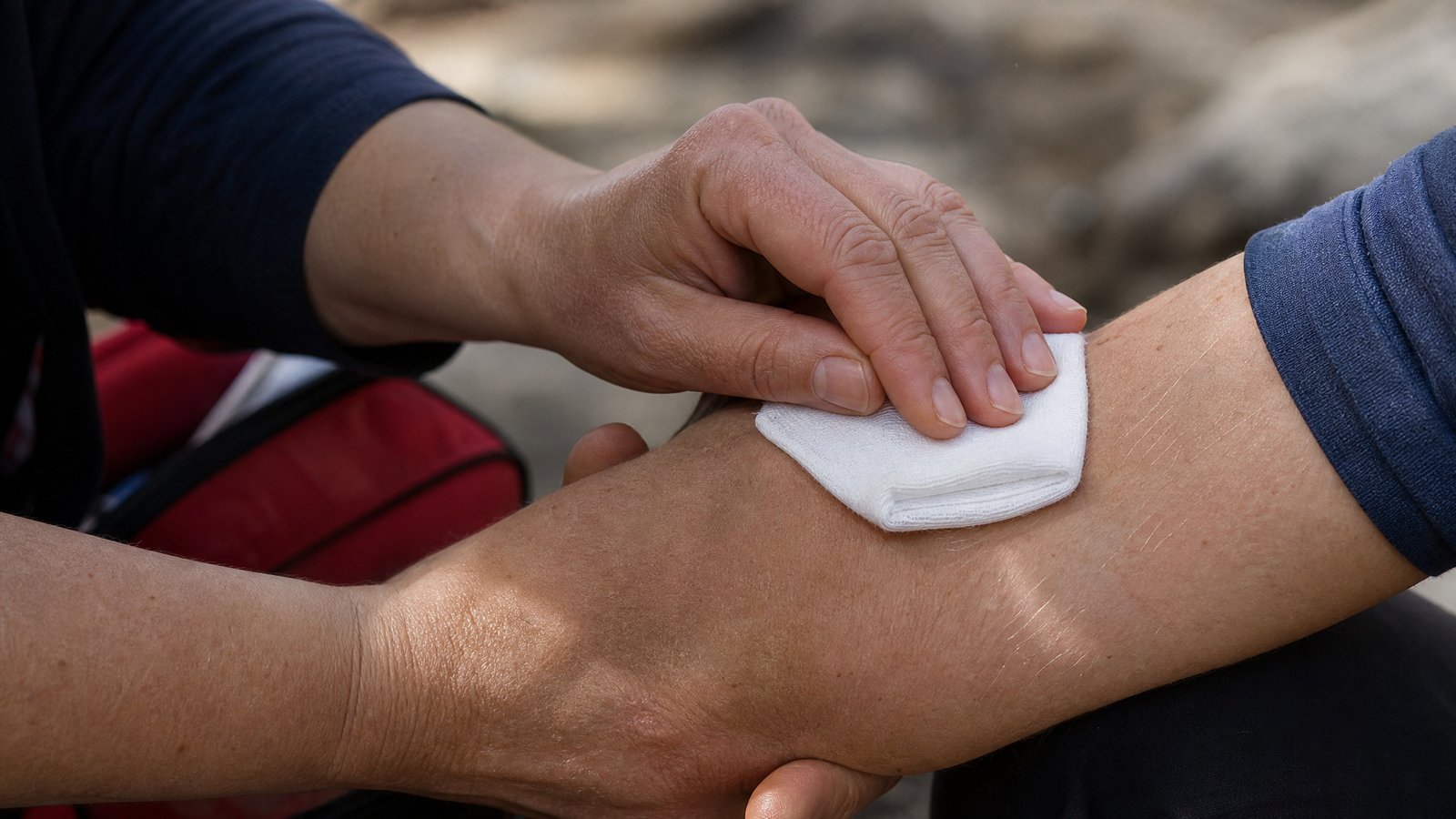
Stopping Bleeding Always Comes First
The Red Cross is specific about this because it is the step people rush past to get to something that feels more like "treatment." Pressure on the wound is the treatment. Everything else is secondary until it works.
| 01 | Find the source and place a dressingUse a hemostatic dressing if you carry one, or sterile gauze, or any clean absorbent cloth. Red Cross is specific that the injured body part needs to be on a firm, flat surface for pressure to actually work. |
| 02 | Press steady and firm, and hold itKeep direct pressure on until the bleeding stops, a tourniquet is applied and working, someone relieves you, you are too exhausted to continue, or the scene becomes unsafe. Those are the Red Cross's own stopping conditions, not a suggestion to check back in a minute. |
| 03 | Blood soaks through? Add, don't replaceIf the original dressing soaks through, put another pad directly on top of it. Do not remove the first dressing and do not stack more than you need. Pulling the original pad off restarts the clot you were building. |
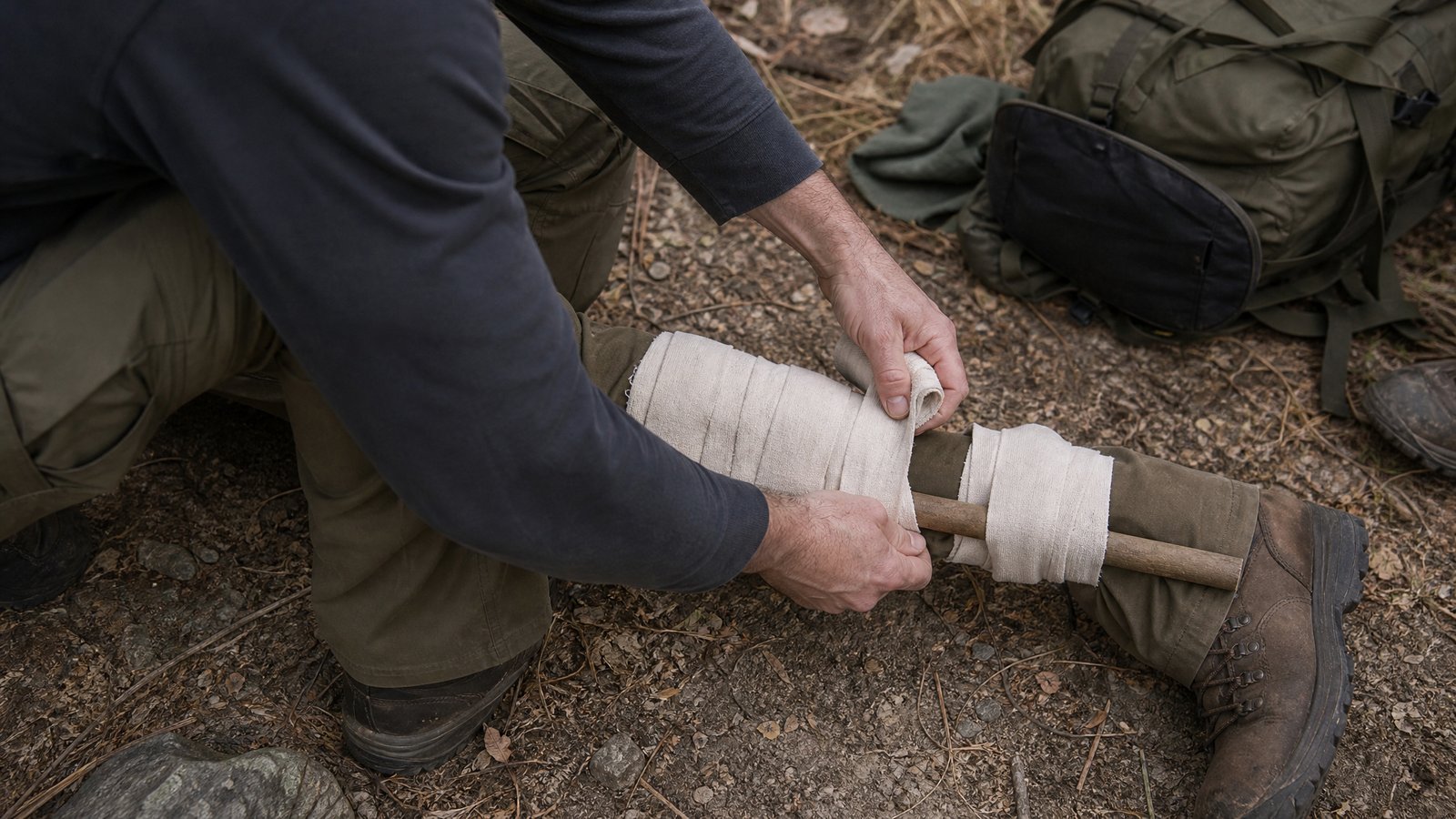
| 04 | Limb bleeding that pressure alone won't stop: tourniquetUse a manufactured tourniquet if you are trained and have one. An improvised tourniquet, a stick and a triangular bandage or wide strip of clothing, is a real Red Cross-documented option when nothing else is available. Note the time it went on; medical responders will ask. |
| 05 | Bleeding from the scalp, neck, shoulder, groin, or back: pack itThese locations do not accept a tourniquet. If trained, pack the wound with gauze (hemostatic gauze if available) and hold firm pressure over the packed area. |
| 06 | An object is embedded in the wound: leave it aloneDo not pull it out. Removing an embedded object can tear open vessels it was partially blocking. Build dressings up around it, then bandage bulk dressings in place around the object rather than over it. |
While you hold pressure, watch for shock: rapid weak pulse, rapid breathing, pale or clammy skin, confusion. Keep the person from getting cold or overheated, and reassure them that help is coming. That reassurance is not just kindness, panic raises heart rate and can worsen bleeding.
Fractures, Sprains, And Strains: One Rule Covers All Three
A sprain is a torn or stretched ligament. A strain is the same thing happening to a muscle or tendon. A fracture is a break, chip, or crack in a bone, open if it breaks the skin, closed if it doesn't. In the field, without an X-ray, you often cannot tell which one you are looking at, and the Red Cross's guidance solves that problem by not asking you to.
Treat Every One Of Them As A Possible FractureHave the person rest without moving or straightening the injured part. If the wound is closed, apply a cold pack wrapped in a thin dry towel for no more than 20 minutes, then wait 20 minutes before reapplying. If the wound is open and bleeding, direct pressure comes first, ahead of any splint. Support the limb in the position you found it rather than trying to straighten it back into place.
Rib fractures get their own note because the instinct to wrap the chest tightly is wrong. The Red Cross's guidance is to give the person a pillow or folded blanket to hold against the injured area and let them find a position that eases breathing, not to bind the ribs. Call 911 if they show signs of shock, have trouble breathing, or cannot be moved safely for transport. If a head, neck, or back injury is also suspected, leave the person in the position found unless you have to move them for safety, to control bleeding, or to perform CPR.
Pelvic injuries deserve extra caution even though they look survivable. The Red Cross classifies them as life-threatening because of the risk of damage to major arteries and internal organs, and they carry a real risk of death in older adults specifically. Treat any suspected pelvic injury as a 911 call, not a wait-and-see.
Burns: What Actually Helps, And What Makes It Worse
Burns get more home-remedy advice than almost any other injury, and most of it is wrong. The Red Cross's Scientific Advisory Council is blunt about the two questions that matter: how much of the body is burned, and does it need an emergency department.
The correct first move is water, not ice, not grease. Move the person to clean running water if you can, remove clothing or jewelry near the burn unless it is stuck to the skin, then place the burn under clean, cool, running water for 5 to 20 minutes. Lukewarm water is fine if cool water isn't available. Do not attempt to scrub or clean a severe burn, that alone can cause more damage to already-injured skin.
| 01 | Never butter, cream, or petroleum jellyAny greasy substance seals in heat instead of releasing it and makes the burn worse. This is one of the most common and most wrong pieces of folk advice out there. |
| 02 | Never ice directly on the burnIce can cause further tissue damage on top of the burn itself. If there's no clean water, use a cool or cold, not freezing, compress instead. |
| 03 | Leave it uncovered, or cover looselySkip adhesive bandages entirely, they stick to burned skin and cause more damage on removal. If EMS is delayed, a clean, loose, non-adhesive dressing or even plastic wrap is the Red Cross's own stated option. |
| 04 | Chemical and electrical burns need longer coolingFor a chemical burn, brush off dry powder first, then flush with water for at least 15 minutes; if it's in an eye, flush continuously until EMS arrives. For an electrical burn, make sure the power source is off before you touch the person, then cool for at least 15 minutes. Even a small-looking electrical burn can mean serious internal injury, since electricity travels through the body, not just across the skin. |
Send the person to the hospital if a child is burned, the burn blisters, it affects more than one body area, it covers hands, feet, joints, face, neck, or genitals, or a larger surface area like the trunk or a limb is involved. Any burn deeper than superficial needs medical evaluation, not just the ones that look dramatic.
The Part People Skip: Infection And Tetanus
Getting the bleeding stopped and the wound covered feels like the finish line. It's the midpoint. What happens over the next 48 hours, and what you do about your own tetanus vaccination status, decides whether a treated wound stays a non-event or turns into a second emergency days later.
Some redness, mild swelling, warmth, and tenderness in the first day or two after an injury is normal. The signal to watch for is direction, not presence: a healthy wound improves a little every day. Worsening after 48 hours, increasing pain, spreading redness, unusual drainage, or a fever are the signs that say get it evaluated rather than wait it out. Red streaks spreading from a wound, rapidly spreading redness, fever with confusion, or skin that turns gray, purple, or black are not wait-and-see signs at all, that combination points to a fast-moving infection and needs care immediately.
What The CDC Actually Says About Tetanus TimingThe CDC's clinical guidance splits wounds into two categories. Clean, minor wounds carry low risk: if your last tetanus dose was under 5 years ago and you completed the primary series, no booster is needed, and the standard interval is 10 years. Dirty or major wounds shorten that window to 5 years. The CDC specifically lists penetrating or puncture wounds, wounds with dirt, soil, feces, or saliva in them (animal or human bites included), and wounds with devitalized tissue, which explicitly includes burns, compound fractures, crush injuries, and frostbite, as dirty or major. In other words, the exact injuries this article covers are the ones the CDC treats as the higher-risk category. Know your last tetanus date before you need this information, not after.
One more CDC point worth carrying: antibiotics, topical or oral, are not recommended as a way to prevent tetanus after a wound. The prevention is vaccination status and proper wound cleaning, not medicating around the problem. Clean the wound, remove dirt and foreign material, and get evaluated if it is a dirty or major wound and your tetanus status is out of date.
What "Help Is Far Away" Actually Means In Minutes
The rural EMS numbers cited above are not there to alarm anyone, they are there to set a realistic expectation. An analysis of NHTSA's Fatality Analysis Reporting System found that after a fatal crash, EMS response averaged 13.3 minutes in rural areas against 7.6 minutes in urban ones, and nearly 1 in 10 rural responses took close to 30 minutes for EMS to arrive at all. A separate look at more than 69 million EMS calls found rural high-acuity calls, the ones involving life-threatening injuries, running a full 97.1 minutes on average from dispatch to hospital, compared with 69 minutes nationally.
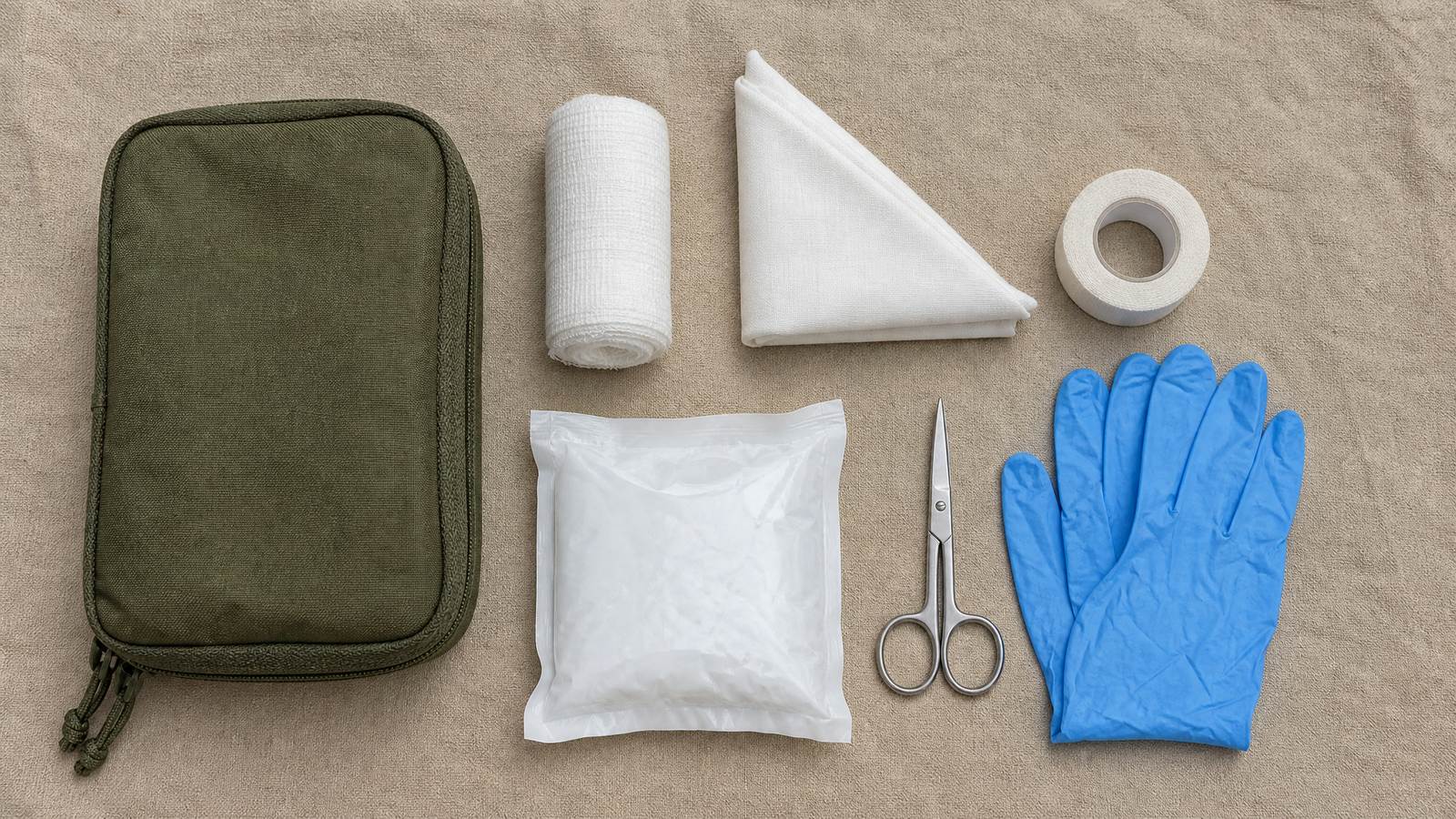
Translate that into what it means standing over an injured person: the care you provide in the first several minutes is very likely the only care that person gets until well past the point most people assume help arrives. That is true whether the injury happened on a trail, at a rural property, or anywhere outside a city's ambulance coverage. It's also the same logic behind carrying real supplies rather than assuming a phone call solves the problem, and it's worth reading alongside our bug-out bag essentials guide, since a proper trauma and wound-care kit is one of the categories people underpack.
If the injury happens somewhere with no cell signal at all, treating it correctly is only half of the plan. 1st Hour's guide on how to stop severe bleeding goes deeper on tourniquet technique and wound packing specifically, and is worth reading before you need either one.
What Turns This Into A Non-Event
The people who handle these situations well are rarely the ones who own the most gear. They're the ones who know the order: stop the bleeding, treat every bone or joint injury as a fracture until proven otherwise, cool a burn with water and nothing else, then watch the wound for two days and know their own tetanus date. None of that requires certification. It requires having decided, before the moment arrives, what you'll do first.
If you're building out the wider skill set, our rundown of the survival skills worth learning first covers where bleeding control and basic first aid sit alongside everything else worth practicing before you need it.
Pressure first. Then the rest, in order.
Get The Basic Injuries Field Card As A Printable PDF
The 911 red flags, the bleeding-control sequence, the one rule for fractures and sprains, the burn dos and don'ts, and the CDC's clean-versus-dirty tetanus timeline, all on one sheet with a blank line for your own last tetanus date.
Download the Field Card (PDF)Carry Real Supplies, Not Just Good Intentions
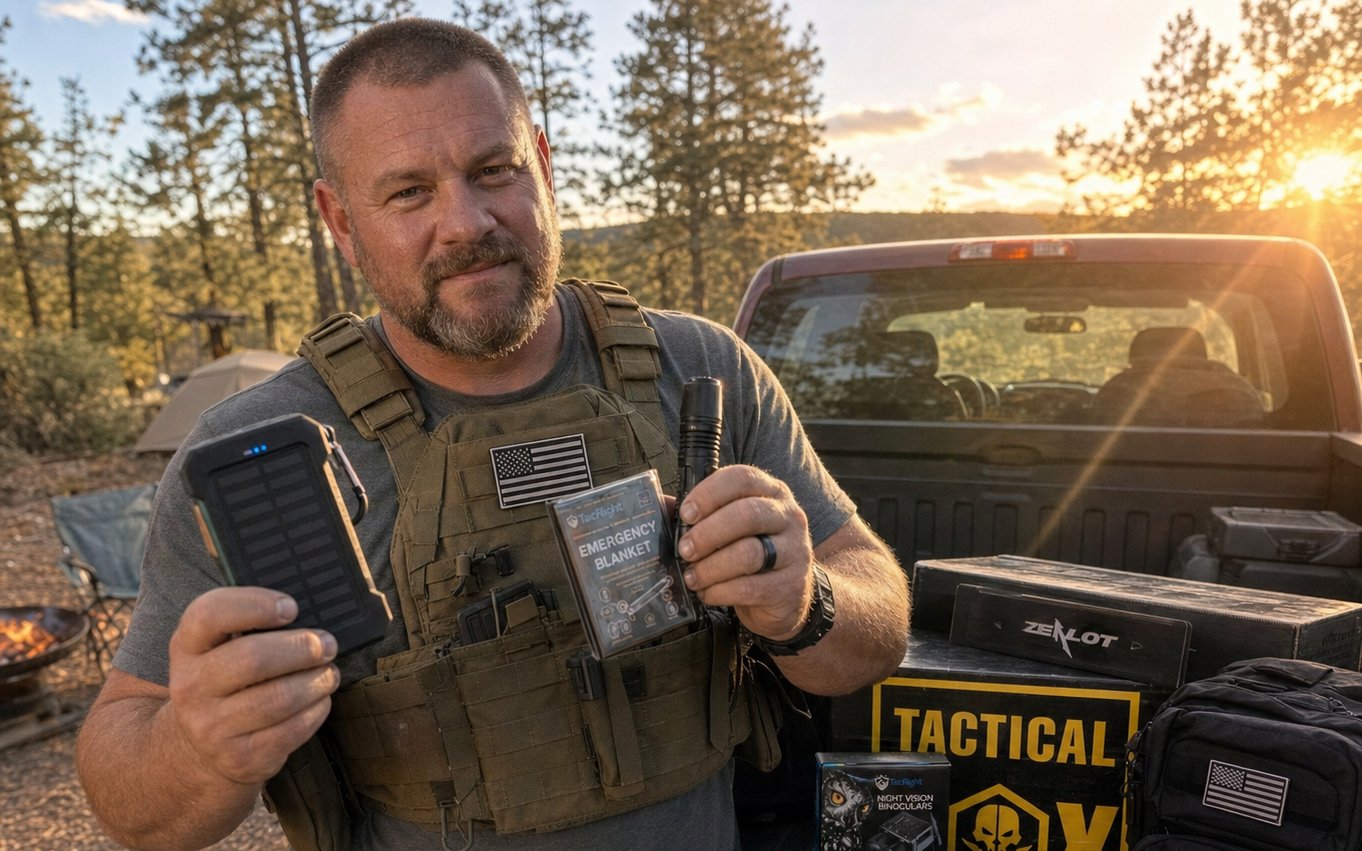
Every month, TacticalBox members get hand-picked tactical, survival, and outdoor gear, sourced ourselves from makers all over the country and curated to be some of the best equipment on the market, worth $150 or more per box on the Standard plan. Knowing the steps matters most, but the right supplies in reach are what let you actually do them. Backed by a money-back guarantee. Cancel, pause, or skip anytime.
Get Your TacticalBoxThis content is for informational and educational purposes only and is not a substitute for professional medical training, certified first aid or CPR instruction, or the judgment of emergency medical personnel. Always call 911 or your local emergency number for any life-threatening injury. Tourniquet application, wound packing, and other advanced bleeding-control techniques should only be performed by someone trained to use them; seek a certified course such as those offered by the American Red Cross before relying on this information in an emergency. Tetanus vaccination recommendations depend on individual medical history; consult a healthcare provider about your own vaccination status. In any emergency, follow the current instructions of your local emergency management and public safety authorities.