
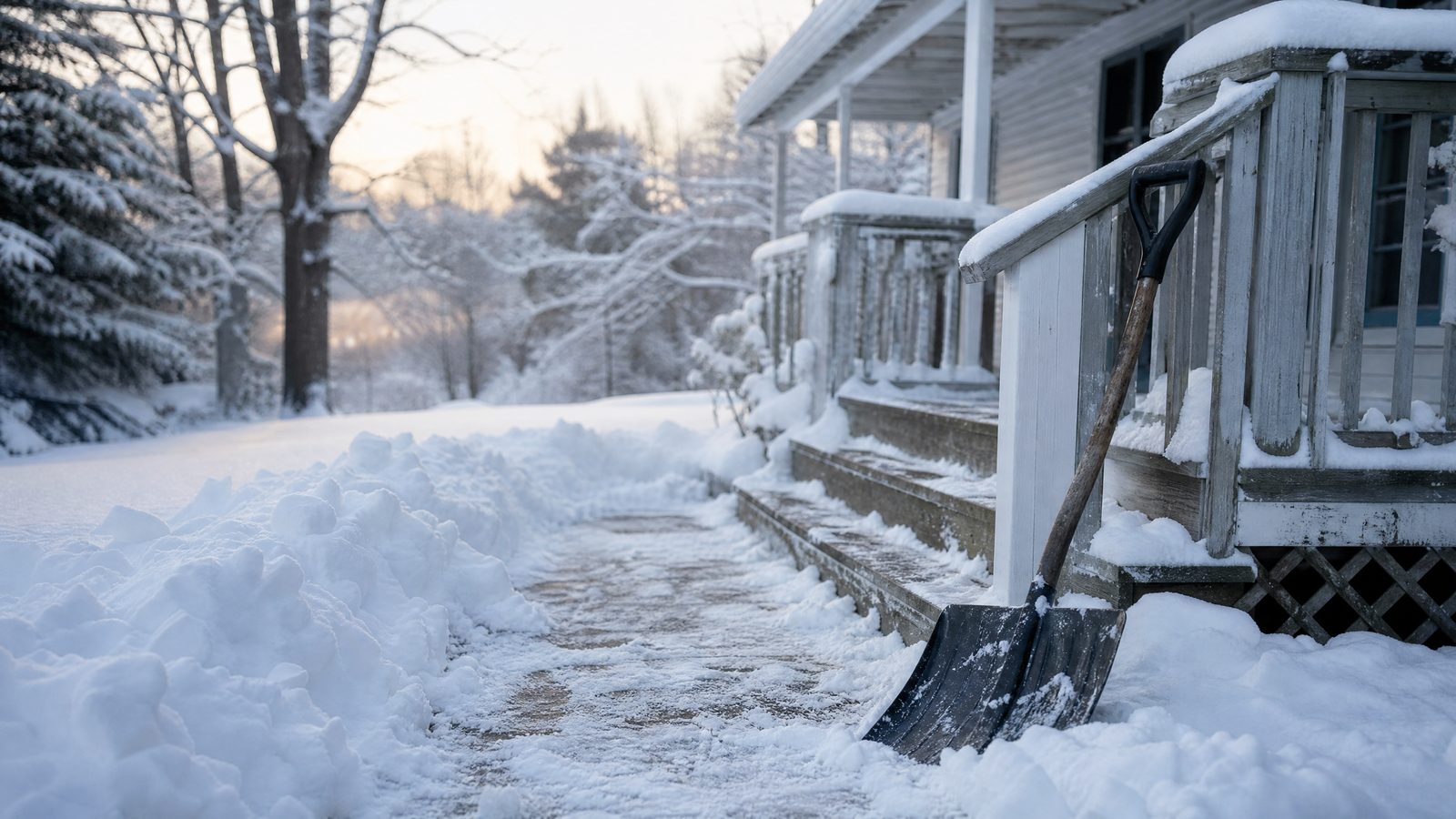
Snow Shoveling and Roof Snow Load: Clearing Snow Without Getting Hurt
If you have known or suspected heart disease or risk factors for it, the American Heart Association says to get someone else to do your snow removal. Everyone else: start gradually and pace yourself, and, as OSHA advises, warm up, take small amounts, push the snow instead of lifting it, and keep your back straight without twisting. Clear snow several times through the day rather than all at once. For roofs, stay on the ground: use a roof rake from the edge, leave 2 or 3 inches on the roof, stay away from power lines, and skip the ladder, per Maine Emergency Management Agency guidance. Sagging, creaking or doors that suddenly stick mean get out and get the building inspected.
Snow does not hurt most people while it is falling. It hurts them afterward, at the end of a shovel. A study from the Center for Injury Research and Policy at Nationwide Children's Hospital found an average of 11,500 snow shoveling-related injuries and medical emergencies were treated in U.S. emergency departments each year from 1990 to 2006. The lower back was the most frequently injured region (34 percent). Cardiac-related cases were only 7 percent of the total, but they accounted for more than half of the hospitalizations and 100 percent of the 1,647 deaths in the study.
Then there is the snow you cannot see from the driveway: the weight piling up on the house, the barn and the shed roof. That weight is easy to underestimate, and the usual fix, climbing up there with a shovel, is its own hazard.
This guide covers both: how to shovel without wrecking your back or your heart, how to run a snow blower safely, how to judge when roof snow is getting heavy, and how to clear it without getting on the roof. Before the storm, our winter storm and blizzard prep guide covers supplies, and dressing for cold chores covers what to wear while you do this work.
Here is what we drew on: OSHA's winter weather hazards page, the American Heart Association's December 2025 snow shoveling guidance, the National Weather Service's winter storm safety page, the Nationwide Children's Hospital study release, the Maine Emergency Management Agency's roof snow removal page (which uses Insurance Institute for Business and Home Safety estimates), West Virginia University Extension's snow and roof overload page, and the Alaska Department of Labor's snow removal hazards page. Where we add our own thinking, we label it as our judgment.
Before You Pick Up the Shovel
Shoveling is harder work than it looks. The American Heart Association says research shows the exertion of shoveling snow may lead to an increased risk of a heart attack or sudden cardiac arrest.
| 01 | Know why it strains the heartThe AHA says: "Shoveling is primarily arm work, which is harder on the heart than leg work." It adds that lifting heavy loads often causes people to hold their breath without realizing it, and that "Cold air constricts blood vessels throughout the body, raising blood pressure and tightening coronary arteries." |
| 02 | Know whether you should skip itThe AHA's first tip: if you have known or suspected heart disease or risk factors for heart disease, "get someone else to do your snow removal for you!" It lists risk factors including a sedentary lifestyle, obesity, smoking history, diabetes, high cholesterol, high blood pressure, or a prior heart attack, stroke or other cardiac condition. |
| 03 | Not in good health? Don't push itThe National Weather Service says: "Avoid overexertion such as shoveling heavy snow, pushing a car or walking in deep snow if you are not in good health." |
| 04 | Talk to your doctor firstThe Nationwide Children's study's senior author recommended talking to your doctor before you shovel snow, "especially if you do not exercise regularly, have a medical condition or are in a high risk group." |
| 05 | Know the stop signsThe AHA says that if you experience chest pain or pressure, lightheadedness or heart palpitations or irregular heart rhythms, stop the activity immediately, and call 911 if symptoms don't subside shortly after you stop. If someone collapses and is unresponsive with no pulse, it says to call for help and start Hands-Only CPR. 1st Hour has a Hands-Only CPR guide and a guide to snow shoveling heart attack risk. |
Our judgment: if there is any doubt about the heart, the cheapest piece of snow gear you will ever buy is a neighbor kid with a shovel. Line that person up in the fall, not during the storm.
How to Shovel Without Hurting Yourself
Most shoveling injuries in the Nationwide Children's study were not cardiac. Acute musculoskeletal exertion (54 percent), slips or falls (20 percent) and being struck by a snow shovel (15 percent) were the most frequent mechanisms. Technique fixes most of that.
| 01 | Warm up and pace yourselfOSHA says to warm up before the activity and take frequent breaks in warm areas. The AHA says to start gradually and pace yourself. |
| 02 | Push, don't liftOSHA says to "scoop small amounts of snow at a time and where possible, push the snow instead of lifting it." The AHA says the same: "Ideally, push or sweep the snow rather than lifting and throwing it." |
| 03 | When you do lift, lift rightOSHA's technique: "keep the back straight, lift with the legs and do not turn or twist the body." |
| 04 | Clear it in roundsThe Nationwide Children's release says: "When possible, avoid large shoveling jobs by clearing snow several times throughout the day." It also suggests ergonomically designed shovels to reduce bending and heavy lifting. |
| 05 | Dress for it and watch your footingThe same release recommends warm clothing, including a hat, gloves and slip-resistant, high-traction footwear. The AHA adds to cover your mouth and nose and wear layered clothing. The NWS warns that "Sweating could lead to a chill and hypothermia." |
| 06 | Shovels are not toysThe study found more than 1,750 children and adolescents under 19 injured each year while shoveling. They were almost 15 times more likely than other age groups to be hurt by being struck by a snow shovel, and two-thirds of their injuries were head injuries. Its author said to teach kids the correct way to shovel and remind them that shovels are not toys. |
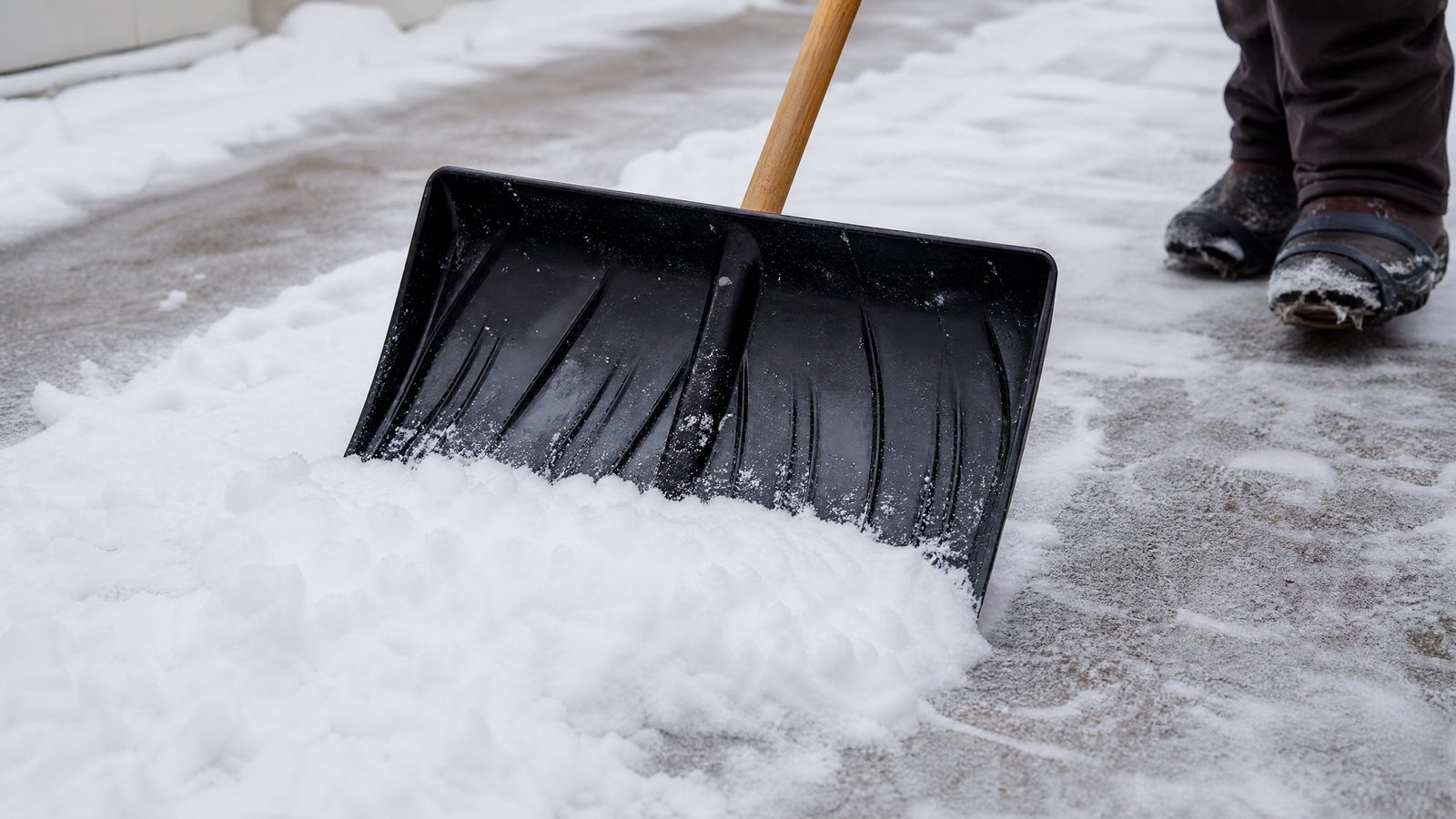
Our judgment: a wet, heavy snow is a different job from a dry, fluffy one. On a wet snow day, cut every shovelful in half and take twice as many breaks.
If You Use a Snow Blower
The AHA says research shows a snow blower doesn't raise your heart rate quite as high as shoveling, though you should still proceed with caution. The machine brings its own hazards, and OSHA lists them plainly.
| 01 | Never clear a jam by handOSHA says snow blowers commonly cause lacerations or amputations when operators attempt to clear jams with the equipment turned on. "Never attempt to clear a jam by hand." Turn it off, wait for all moving parts to stop, then use a long stick. |
| 02 | Keep clear of moving partsOSHA says to keep your hands and feet away from moving parts. |
| 03 | Fuel it coldOSHA says to refuel before starting the machine: "do not add fuel when the equipment is running or when the engine is hot." |
| 04 | Electric modelsOSHA says powered equipment such as snow blowers should be properly grounded to protect against electric shocks, and disconnected from power sources during maintenance or cleaning. |
Our judgment: keep a dedicated clearing stick hung on a nail by wherever the snow blower lives, so you never have a reason to reach in with a glove.
How Heavy Is the Snow on Your Roof?
The Maine Emergency Management Agency says flat and low-pitched roofs are at the greatest risk of buckling under heavy snow and ice. It passes on estimates from the Insurance Institute for Business and Home Safety (IBHS).
| 01 | The rough limitIBHS estimates the typical roof can handle 20 pounds per square foot of additional weight. For an older home or older roof, especially one that has had problems before, Maine says you might want to figure on less than 20 pounds. |
| 02 | Fresh snow10 to 12 inches of new snow is about 5 pounds per square foot, so Maine says you could have up to 4 feet of new snow before the typical roof will become stressed. |
| 03 | Packed snow3 to 5 inches of old snow is also about 5 pounds per square foot, so "anything more than 2 feet of old snow could be too much for your roof to handle." |
| 04 | IceOne inch of ice equals one foot of fresh snow, about 5 pounds per square foot. |
| 05 | Wet versus dryWest Virginia University Extension says two feet of a typical dry snow exerts just under 10 pounds per square foot on a flat surface, while the same depth of wet snow can exert over 40. |
| 06 | Slope and drifts help and hurtWVU says the roof load is often less than the ground load because wind blows some snow off, but drifts on the roof can significantly increase it. It adds that, typically, as roof slope increases, the snow load decreases because snow tends to slide off. |
| 07 | Time matters tooWVU says buildings are typically only designed to hold their design loads for about a month before structural fatigue weakens the roof. |
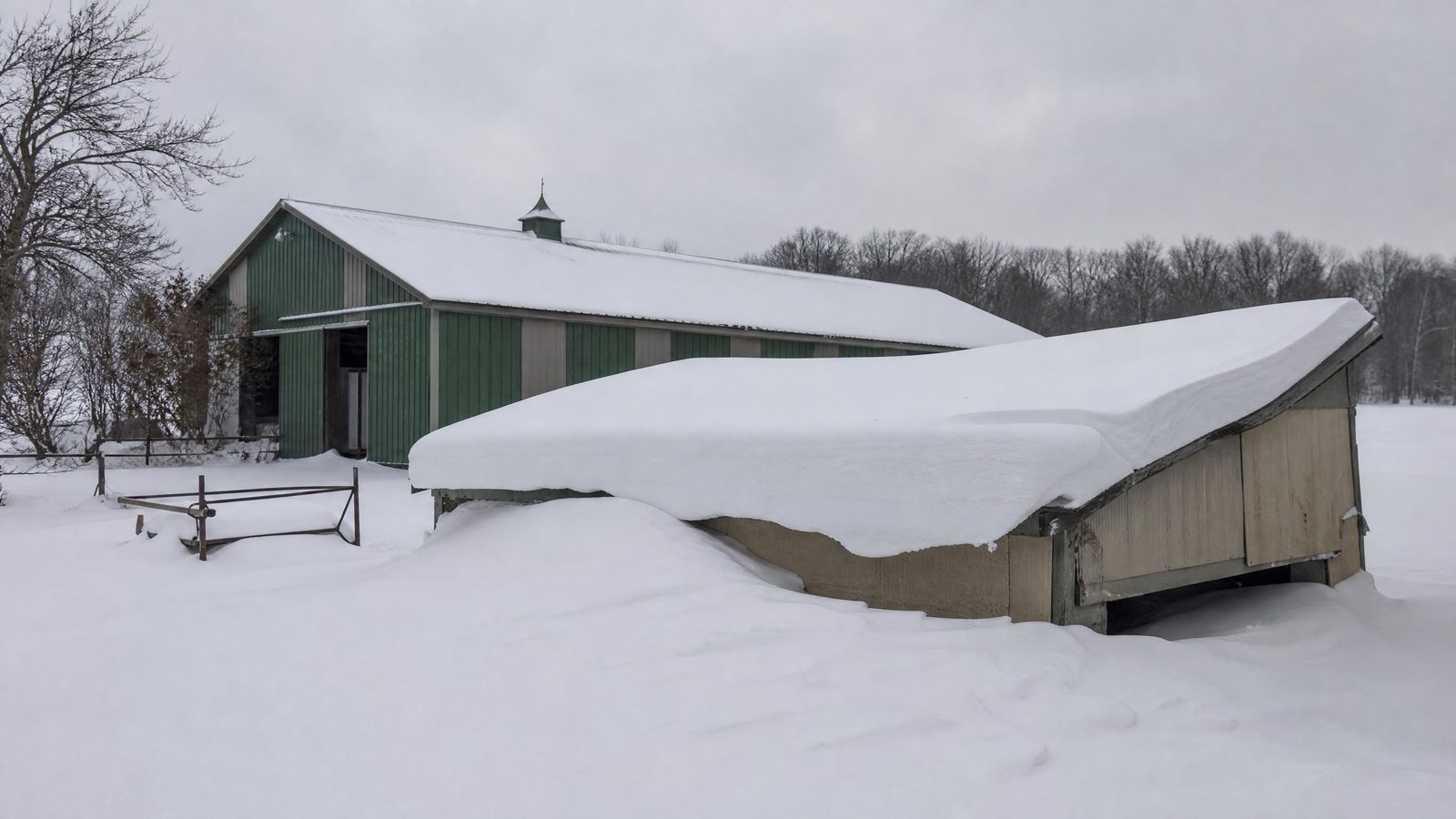
Our judgment: on a property with outbuildings, the house is often not the roof to worry about first. Low-pitched barns, sheds, carports and lean-tos tend to hold snow and get checked last. Walk them after every big storm.
Clearing Roof Snow From the Ground
Both state sources say removing roof snow carries its own risk. The Alaska Department of Labor, writing about workers, says "Falls cause the most worker fatalities and injuries during rooftop snow removal," including falls off roof edges, through skylights and from ladders. OSHA notes that snow-covered rooftops can hide skylights. That guidance is aimed at employers, but the hazards are the same on a farmhouse.
| 01 | Stay off the roofMaine says that, as a rule, anything that would require getting onto your roof may be too dangerous for anyone except a professional with the proper training and safety gear. WVU says unless you are a professional roofer with the proper safety equipment, do not go on your roof and shovel off the snow. |
| 02 | Use a roof rake from the groundMaine says to use a snow rake for pitched roofs, "Start from the edge and work your way up onto the roof with the rake," and "stand well back and rake small amounts at a time," because any snow that comes down can come down on you. |
| 03 | Leave a layerMaine says to "shave the snow down to 2 or 3 inches on the roof instead of scraping the roof clean," which risks damage to shingles. |
| 04 | Look up for power linesMaine says "An aluminum rake will conduct electricity," so check where the power lines enter your house and stay well away from that area. WVU calls staying away from overhead service entrances extremely important. |
| 05 | No ladders, no heat, no flameMaine says to say no to climbing on ladders, because ice and snow build up on the rungs and your boot soles. It also says no to hair dryers or heat guns and no to open-flame devices. |
| 06 | Bring a second personMaine says that if you do it yourself, have someone outside with you to assist, "and to remind you not to take dangerous risks." It also says to wear protective headgear and goggles. |
| 07 | Mind the iciclesMaine says to remove large icicles carefully if they hang over doorways and walkways, noting that a cubic foot of ice weighs about 62 pounds. |
| 08 | Line up help earlyWVU says that if a roof rake is not feasible, start scouting reputable companies in the fall so you are not scrambling to hire one at the last minute. |
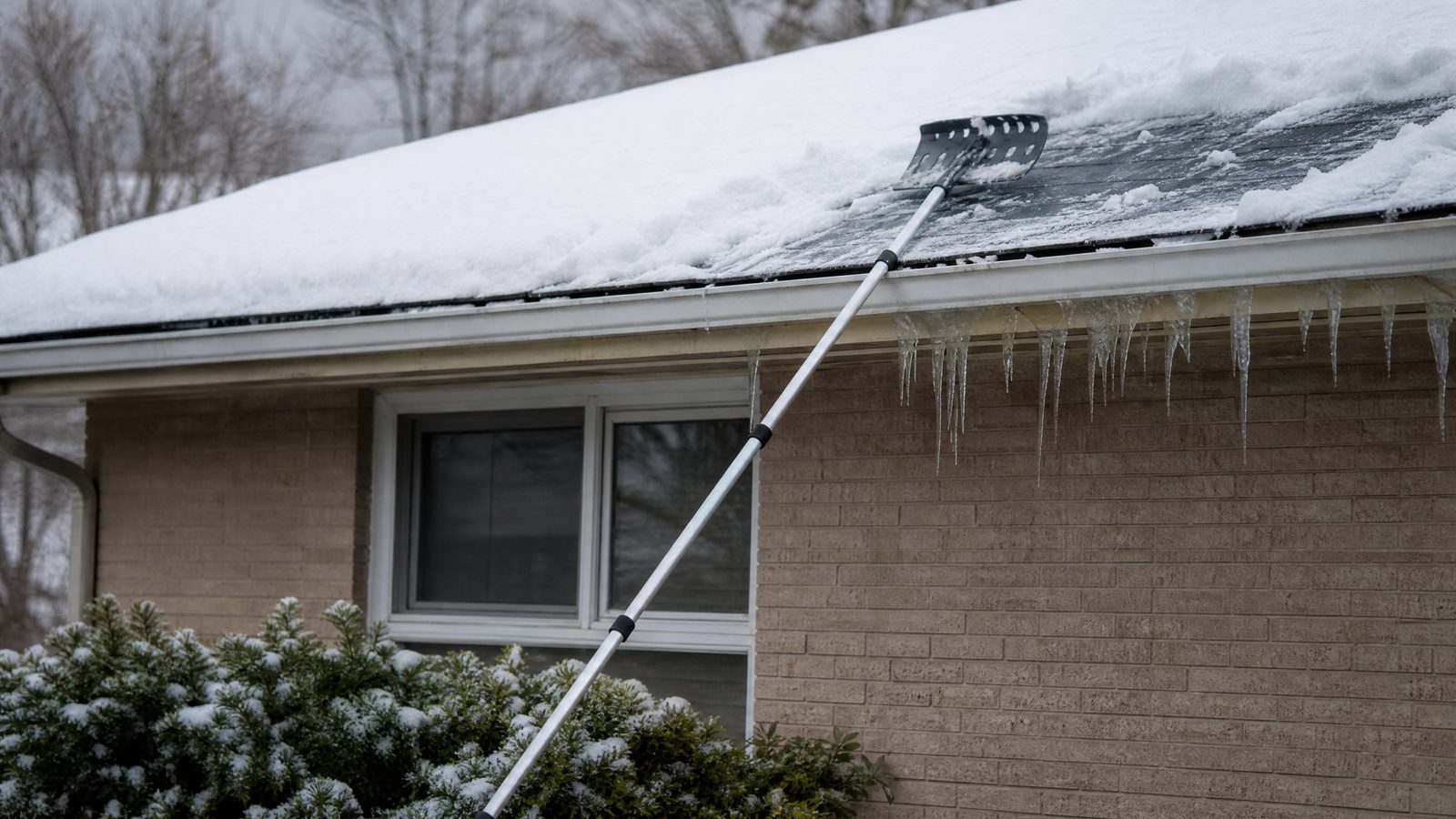
Our judgment: if the only way to reach the snow is a ladder, the answer is a professional, not a ladder. If someone in your house does fall from a roof or ladder, 1st Hour's fall from height first aid guide covers what to do first.
Should you clear the roof at all? The Maine Emergency Management Agency says "Often the risks can be mitigated by removing snow from roofs," and gives the IBHS rule of thumb for how much is too much. West Virginia University Extension takes a more cautious line: because of the risk of injury and roof damage, "the safest option is to remove snow only when absolutely necessary." Our read: both agree that nobody but a professional should be on the roof. Use the weight numbers to decide whether a ground-level roof rake job is worth it, and if the roof is showing any warning sign below, skip the rake and get people out.
When the Roof Is Telling You to Leave
The Maine Emergency Management Agency lists signs that a roof might be stressed. WVU Extension says wood buildings often show signs before they fail.
| 01 | LookMaine lists sagging roof sections, severe roof leaks, cracked or split wood members, bends or ripples in supports, cracks in walls or masonry, and bowed utility pipes or conduit attached at the ceiling. WVU says any bowing of structural members should be viewed as a warning sign. |
| 02 | FeelMaine lists doors that pop open and doors or windows that are difficult to open. |
| 03 | ListenMaine lists creaking, cracking or popping sounds. WVU lists creaking, cracking and moaning of building components. |
| 04 | ActMaine says that if any of these signs are observed, "evacuate the building immediately and get the building inspected." WVU says to safely and quickly evacuate the building. |
Our judgment: after a heavy snow, make a quick round of every building: try the doors, look up at the ceiling lines, and stand quietly for a minute and listen. It takes five minutes and it is the cheapest inspection you will ever do.
Get The Snow Clearing Safety Card As A PDF
One page for the mudroom or the garage wall: who should skip shoveling, how to shovel and run a snow blower safely, the roof snow weight numbers, how to rake a roof from the ground, and the warning signs that mean get out.
Download the Card (PDF)Keep Your Winter Kit Growing
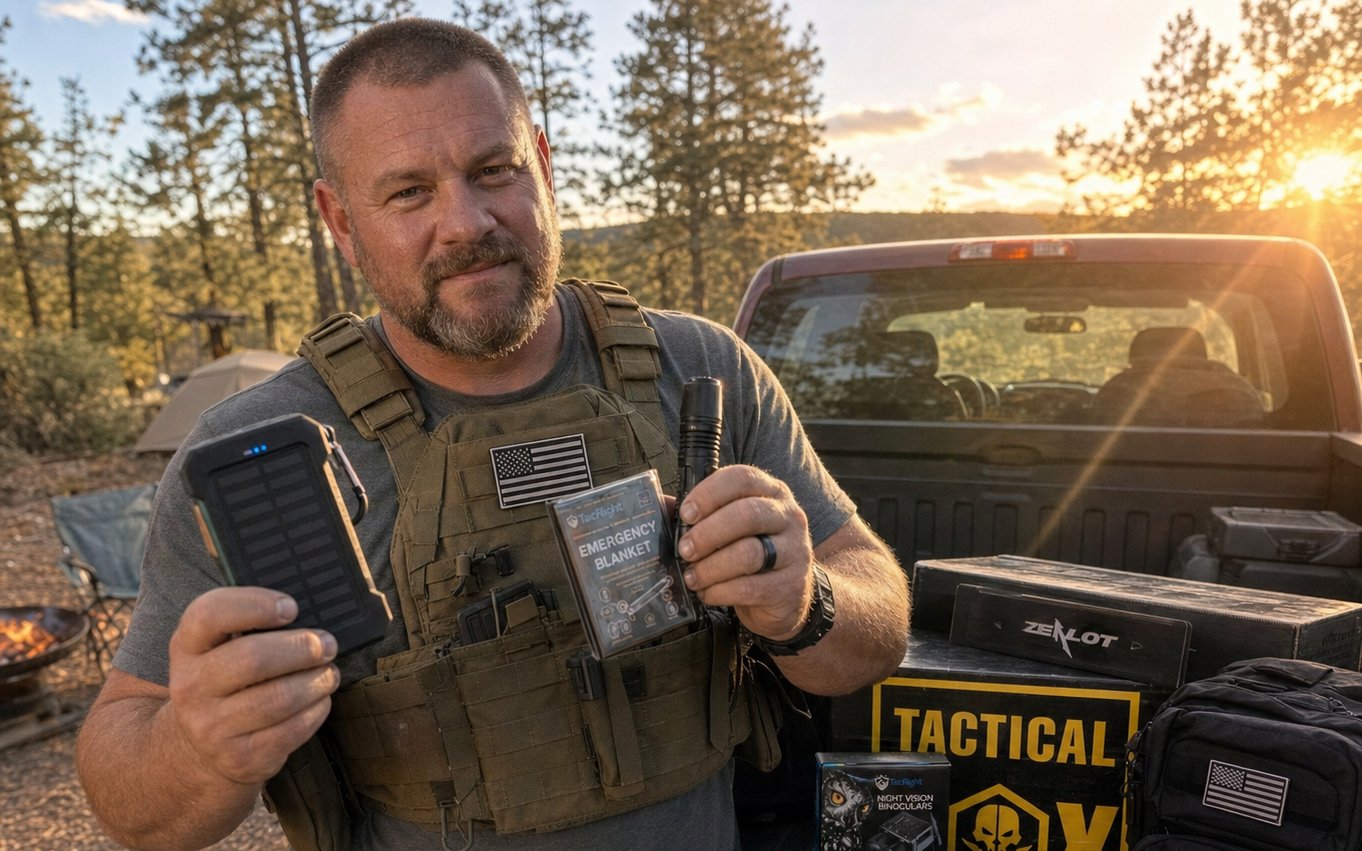
Every month, TacticalBox members get hand-picked tactical, survival, and outdoor gear, sourced ourselves from makers all over the country and curated to be some of the best equipment on the market, worth $150 or more per box on the Standard plan. It's an easy way to keep building out a real preparedness kit without hunting down every piece yourself. Backed by a money-back guarantee. Cancel, pause, or skip anytime.
Start Your MembershipThis content is for informational purposes only and is not medical, engineering or structural advice. If you have a heart condition or risk factors, ask your doctor before shoveling snow. Chest pain or pressure during snow removal is an emergency: stop and call 911. For roof load questions, consult a qualified contractor or structural engineer.