
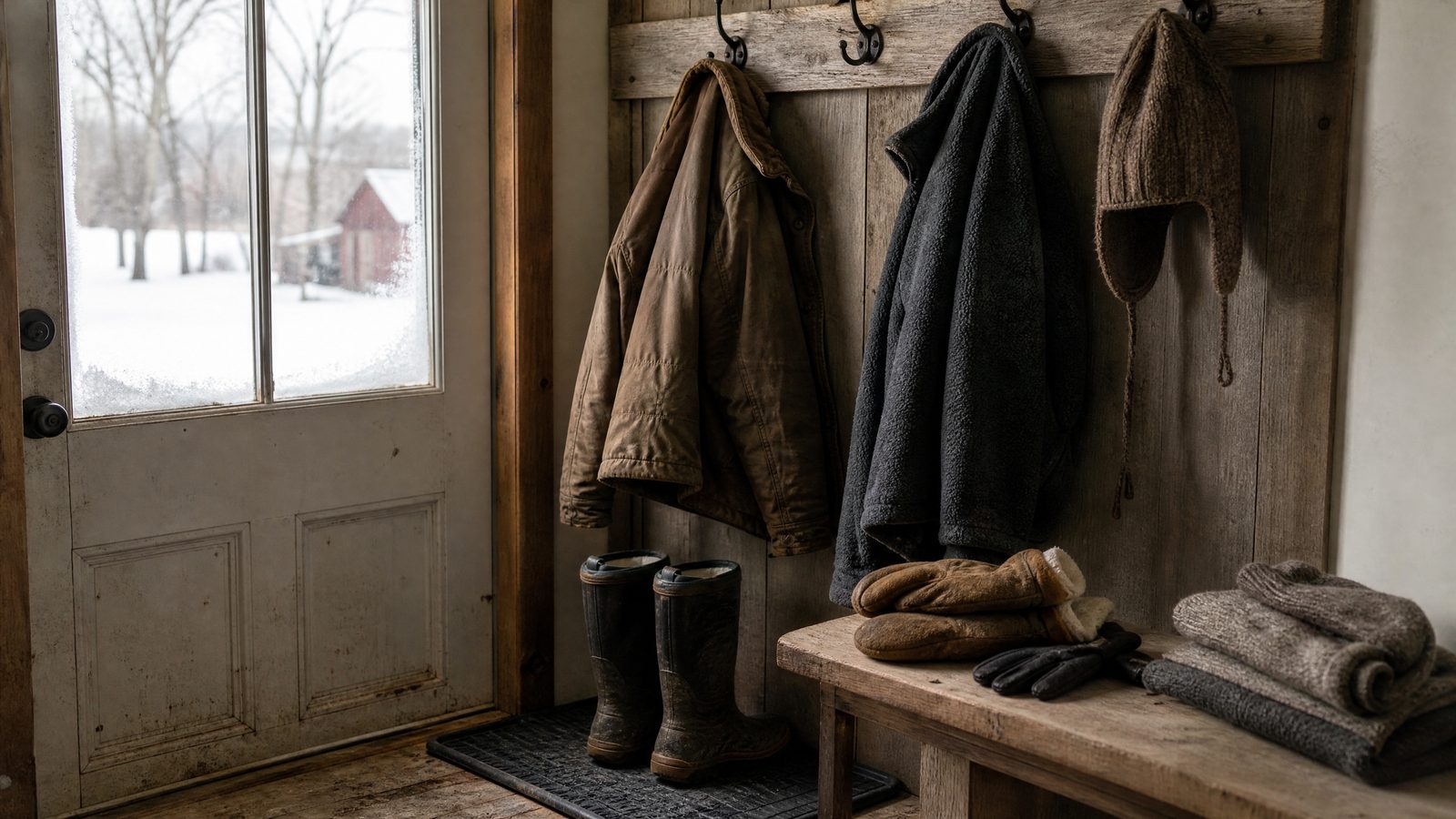
Dressing for Cold: Layering for Work, Chores and Emergencies at Home
Dress for the outdoors even for a quick trip outside, as the National Weather Service advises. Wear at least three loose layers, per OSHA: a wool, silk or synthetic layer against the skin, a wool or synthetic middle layer, and a wind and rain layer on the outside, plus a hat that covers your ears, insulated gloves and waterproof boots. Skip cotton. Shed a layer before you sweat, keep dry spares by the door, and check the wind chill before you go. If the heat is out, keep dressing warmly indoors, and wear long underwear and a head covering to bed, as the National Institute on Aging suggests.
Most cold-weather trouble at home does not start on a long hike. It starts with "I'll only be out a minute." You step out in a T-shirt and a hoodie to break the ice on the water trough, clear the steps or check the generator, and the minute turns into twenty. Or you go the other way: bundle up, split wood hard for half an hour, soak your base layer, then stand still at the woodpile while it chills you from the inside.
The National Weather Service has a one-line rule for this: "Dress for the outdoors even if you don't think you'll be out much." And the cold does not need to be extreme to matter. The National Institute on Aging says hypothermia "can also occur at cool temperatures (above 40°F) if you become chilled from rain, sweat, or being in cold water."
This guide is about dressing for real life around the house and property: short chores, heavy chores, standing-still chores, and the days when the power is out and the cold is inside too. The layering system itself is covered in more depth in our guide to layering clothing for cold-weather survival, trail clothing is in winter hiking basics, and setting up a warm room during an outage is in staying warm when the power goes out.
Here is what we drew on: OSHA's winter weather preparedness page, three National Weather Service pages (preparing for cold, during extreme cold, and understanding wind chill), the National Institute on Aging's cold weather safety page, and farm safety guidance from the University of Minnesota's Upper Midwest Agricultural Safety and Health Center (UMASH), Penn State Extension and two Ohio State University Extension articles. Where we add our own thinking, we label it as our judgment.
The Basic Kit: Three Layers and the Extremities
Every source we used recommends layers. OSHA's advice is direct: "Wear at least three layers of loose fitting clothing. Layering provides better insulation."
| 01 | Against the skin: wool, silk or syntheticOSHA describes an inner layer of wool, silk or synthetic (polypropylene) to keep moisture away from the body. UMASH says to avoid cotton as the first layer and to use sweat-wicking material like synthetic, wool, silk or bamboo fibers for socks, underwear and base layers. |
| 02 | Middle: insulation that still works when dampOSHA calls for a middle layer of wool or synthetic "to provide insulation even when wet." UMASH suggests a lightweight insulating layer such as a thin wool sweater or light fleece, then a heavier fleece or wool sweater on top of it. |
| 03 | Outside: wind and waterOSHA's outer layer is wind and rain protection that "allows some ventilation to prevent overheating." That last part matters for chores, where you heat up fast. |
| 04 | Keep it looseOSHA's warning: "Tight clothing reduces blood circulation." The Ohio State University Agricultural Safety and Health program adds that footwear should not fit too tightly, which could reduce blood flow to the feet. |
| 05 | Hat that covers the earsOSHA says a hat "will help keep your whole body warmer." UMASH says to cover the head with a warm hat that fully covers your ears and to consider a neck gaiter or face mask. |
| 06 | Liner gloves inside mittensUMASH says mittens are warmer than gloves but not always practical for detailed work, and suggests a thin synthetic glove inside a mitten, so you can pull the mitten off for fiddly work without exposing bare skin. |
| 07 | Two socks and room to wiggleUMASH suggests a thin synthetic sock with a wool sock over it, a spare pair ready in case they get damp, and enough room in an insulated boot for your toes to wiggle. |
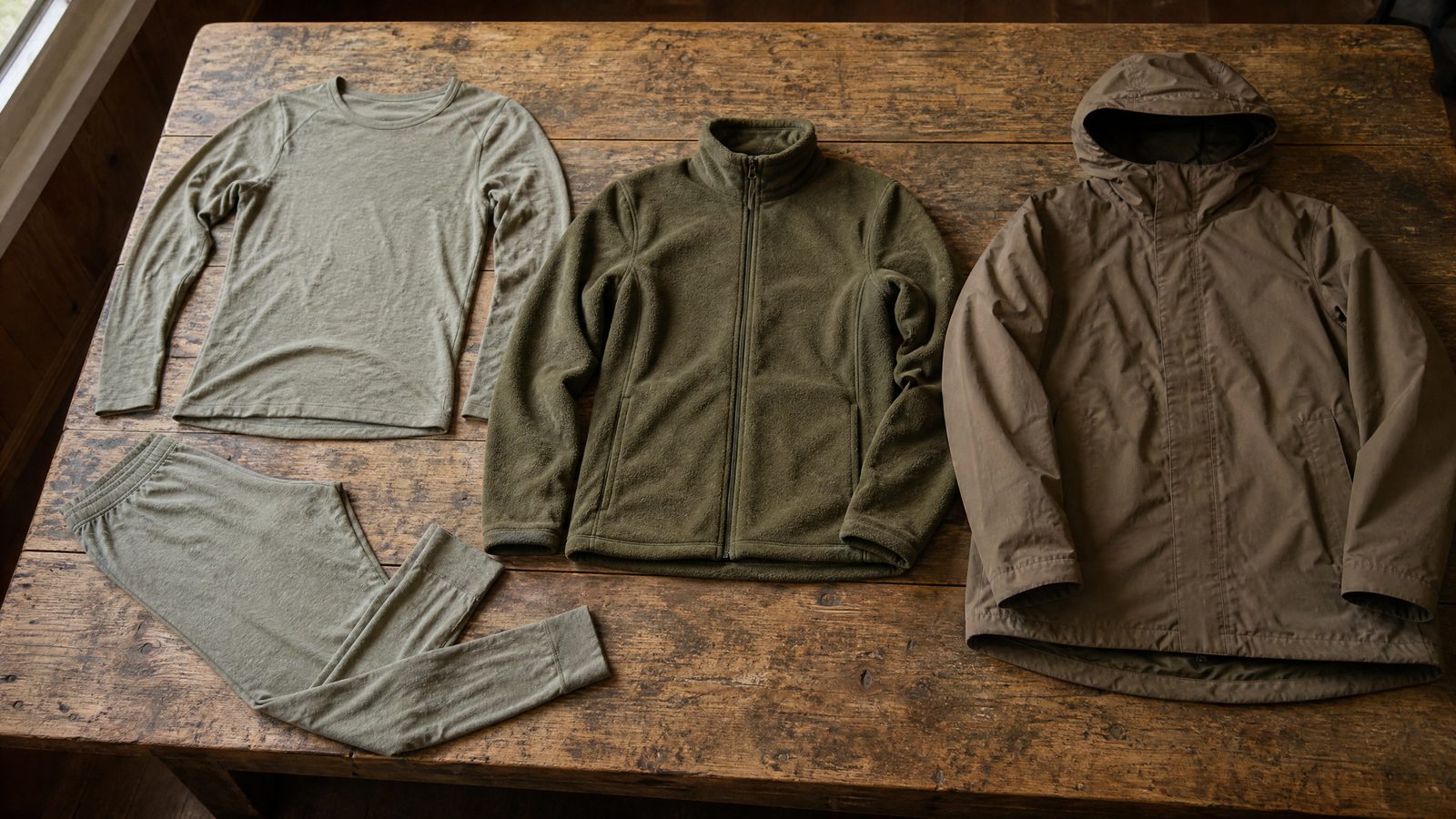
Our judgment: you probably already own most of this. The gap for most households is the base layer and the socks, because those are the pieces people fill with cotton. If you are building a kit on a budget, start there.
Heavy Chores, Standing Chores and Staying Dry
The Ohio State program says clothing should be selected to suit the temperature, weather conditions, "the level and duration of activity." Shoveling and feeding animals are not the same job, so they are not the same outfit.
| 01 | Dress to shedPenn State Extension says dressing in layers "allows you to shed layers as you warm up. You can also add layers if you get cold." Our note: for heavy work like shoveling or splitting wood, open or drop the middle layer before you start sweating, not after. |
| 02 | Sweat is the enemyOSHA says to stay dry in the cold because moisture or dampness, "e.g. from sweating," can increase the rate of heat loss from the body. Penn State says to avoid cotton as much as possible because it holds moisture and "once wet, it is no longer insulating." |
| 03 | Keep dry spares by the doorOSHA says to keep extra clothing, including underwear, handy in case you get wet and need to change. UMASH says to carry an extra pair of mittens and socks, and the Ohio State C.O.R.N. newsletter says to keep extra dry clothes, gloves and shoes or boots nearby. |
| 04 | Change as soon as you come inThe National Weather Service says that once you are inside again, change into dry clothing immediately if you are wet. |
| 05 | Pick the warmer part of the dayThe National Weather Service says to avoid being outside during the coldest part of the day, "typically the early morning," if possible. OSHA's list for employers says the same: schedule cold exposure in the warmer part of the day. |
| 06 | Breaks, food and waterThe Ohio State program says to take short, frequent breaks in sheltered areas, avoid exhaustion, and eat warm, high-calorie food. Penn State says to stay hydrated, even in winter. |
| 07 | Footing and a check-inPenn State suggests cleats or ice grips on your boots for traction. The Ohio State C.O.R.N. newsletter says to let others know where you will be working and when you will return. |
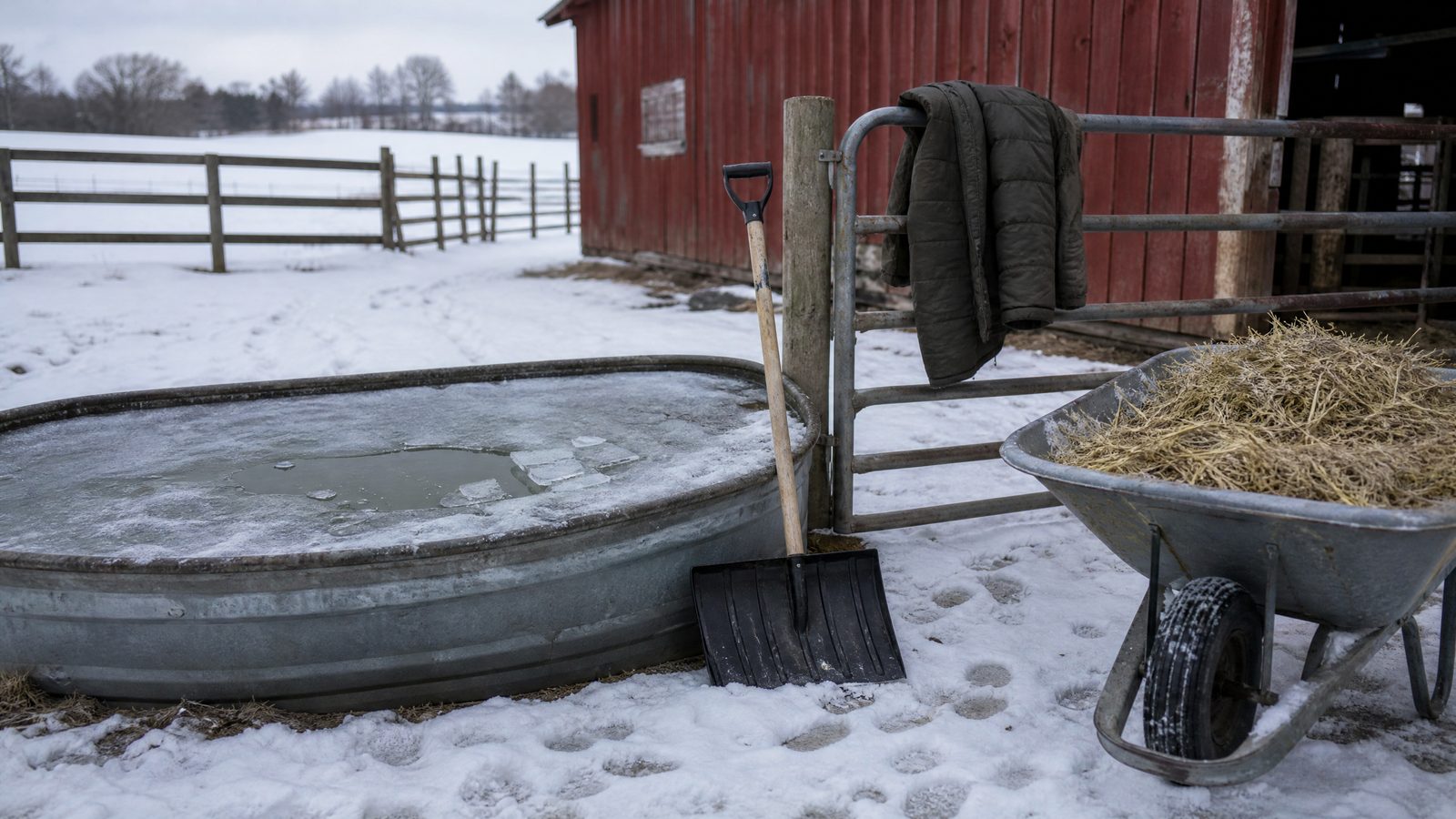
Our judgment: a standing chore like feeding animals or watching a generator needs more insulation than a moving one. A heavy chore needs a layer you can take off and somewhere dry to put it.
Check the Wind Before You Go
The National Weather Service says wind chill is "how cold people and animals feel when outside," based on the rate of heat loss from exposed skin caused by wind and cold.
| 01 | Know what the numbers meanThe NWS example: if the temperature is 0°F and the wind is blowing at 15 mph, the wind chill is -19°F, and at that wind chill "exposed skin can freeze in 30 minutes." |
| 02 | Above freezing is not automatically safeThe NWS says frostbite needs the actual air temperature near your skin to be below freezing, but when it is above freezing "you might get hypothermia from exposure to cold." |
| 03 | Cover everythingThe NWS says that if you must go out, try to cover every part of your body, including ears, nose, toes and fingers. It says mittens are better than gloves, to keep your skin dry, and to stay out of the wind when possible. |
| 04 | Know when to stay inThe NWS says to stay inside during severe cold, "especially when the windchill is -50°F or below." |
| 05 | Know the first signThe NWS says redness or pain in any skin area may be the first sign of frostbite. For what to do next, our sister site 1st Hour has a frostbite first aid guide. |
Our judgment: make the wind chill check part of the morning, the same as the weather radio. If the number is low, the chore list gets shorter and the outfit gets bigger.
Dressing Indoors During an Outage
When the furnace stops, the house becomes the cold environment. The National Weather Service gives this advice for power outages: "Wear layers of loose-fitting, lightweight, warm clothing as well as hats, mittens, and blankets."
| 01 | Keep dressing for it insideThe National Institute on Aging says to dress warmly on cold days, "even if you are staying inside," and to wear socks and slippers and use throw blankets. |
| 02 | Dress for bed tooThe NIA says to use extra covers when you go to sleep, wear long underwear under your pajamas and consider wearing a head covering. |
| 03 | A cool house is not a safe house for everyoneThe NIA says even mildly cool homes with temperatures from 60 to 65°F can lead to hypothermia in older adults. If a power outage leaves you without heat, it says to try to stay with a relative or friend. |
| 04 | Know the warning signsThe NIA lists early hypothermia signs, including cold feet and hands, pale skin, shivering, slowed or slurred speech, and feeling sleepy, angry or confused. It says hypothermia is a medical emergency and to call 911 right away. 1st Hour has a hypothermia first aid guide for the steps while you wait. |
| 05 | Change out of damp clothesThe NIA says to change out of damp or wet clothes as soon as you can. In an outage that includes the base layer you sweated through while hauling wood. |
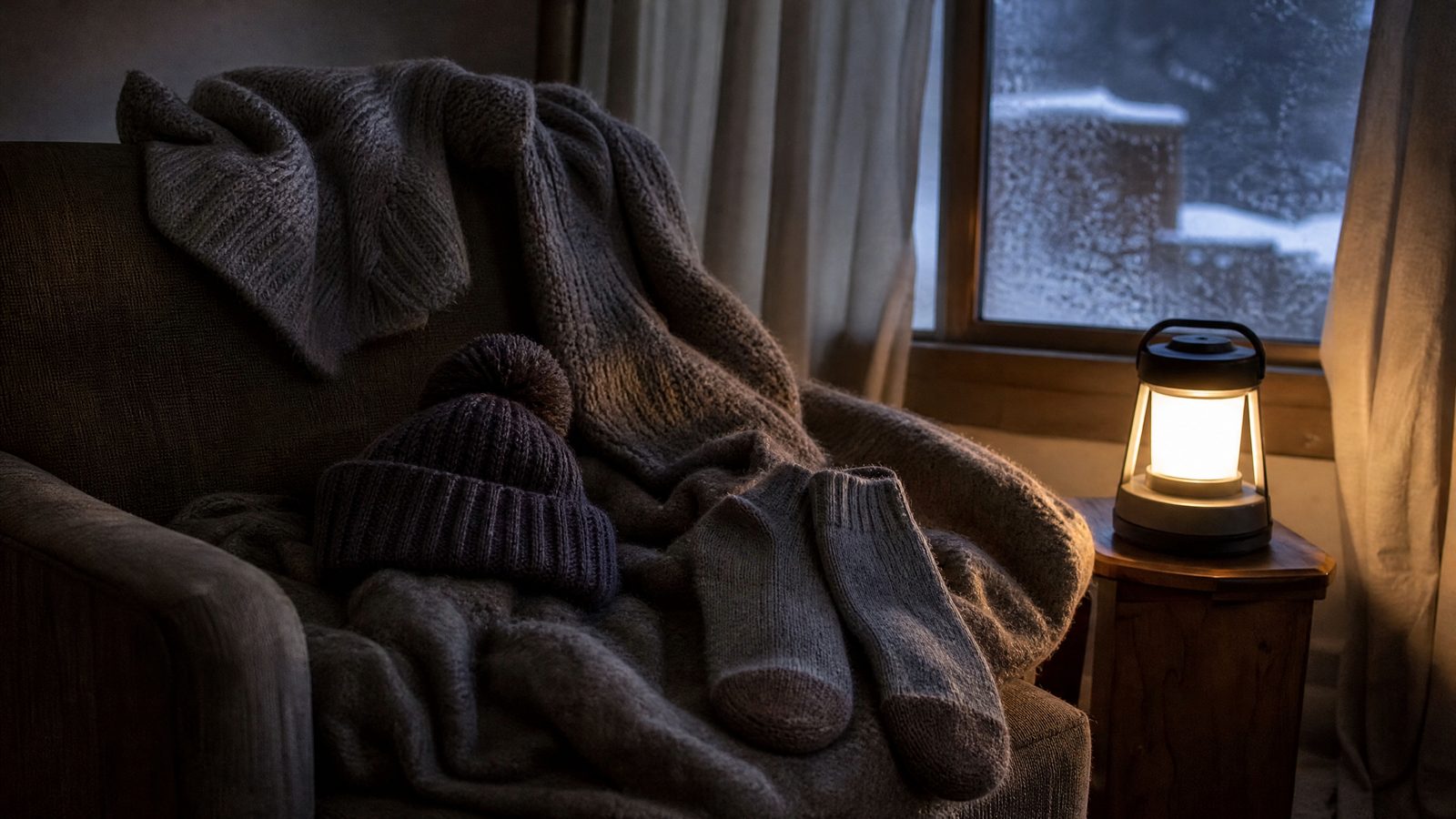
Our judgment: lay out a full set of outage clothes for everyone in the house before the storm hits, including a hat and wool socks for sleeping. Then follow our warm room plan so the clothing and the room work together.
Get The Dress-By-The-Door Card As A PDF
One page for the mudroom wall: the three-layer basics, what to wear for heavy and standing chores, the dry spares to keep by the door, and how to dress indoors when the heat is out.
Download the Card (PDF)Keep Your Winter Kit Growing
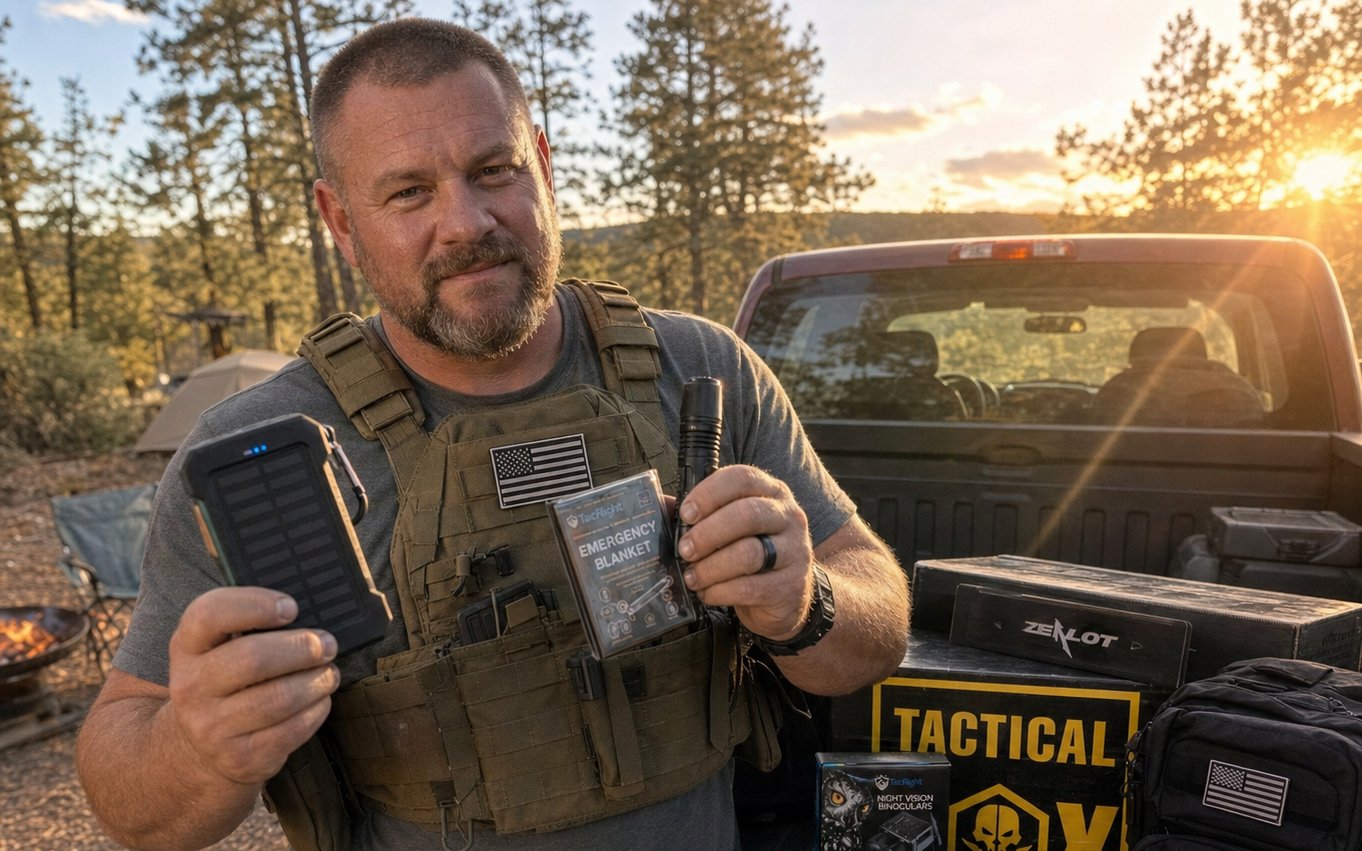
Every month, TacticalBox members get hand-picked tactical, survival, and outdoor gear, sourced ourselves from makers all over the country and curated to be some of the best equipment on the market, worth $150 or more per box on the Standard plan. It's an easy way to keep building out a real preparedness kit without hunting down every piece yourself. Backed by a money-back guarantee. Cancel, pause, or skip anytime.
Start Your MembershipThis content is for informational purposes only and is not medical advice. If you take medications or have a medical condition, ask your doctor whether it affects how your body handles cold. Hypothermia and severe frostbite are emergencies: call 911.