
Storing Emergency Heating Fuel: Propane, Kerosene and Firewood
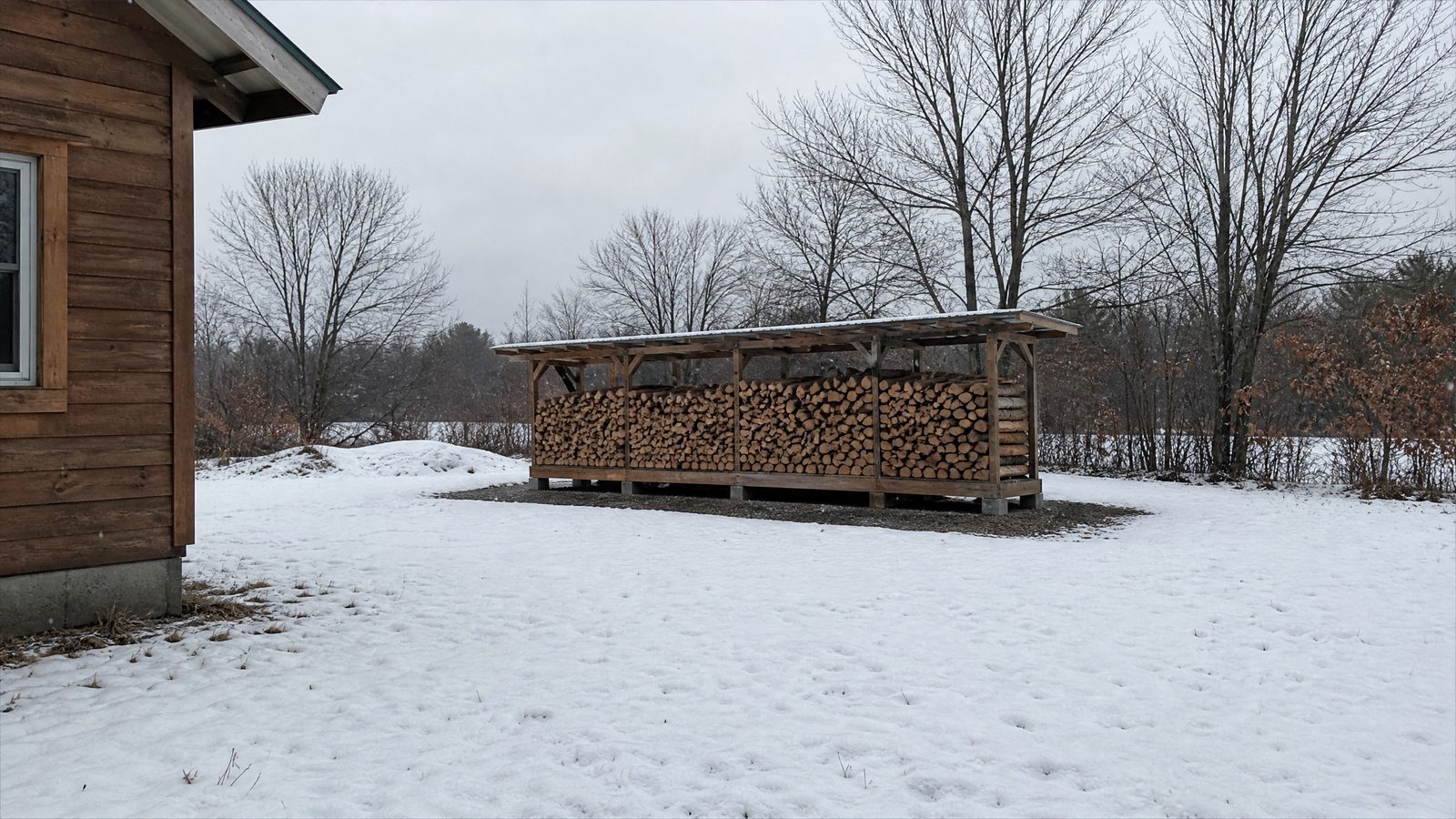
Propane cylinders live outdoors, upright, valve closed, out of the sun and away from anything that could light them, per North Carolina's propane storage guidance. Kerosene goes in its own blue container, kept away from other fuel cans and outside the home, and only water-clear 1-K kerosene goes in a heater, according to the CPSC. Firewood gets stacked outdoors, off the ground, with only the top covered, says the EPA, and wildfire programs want the pile 25 to 30 feet from the house. Ashes go in a covered metal can, outside, on a surface that can't burn.
Stocking up on heating fuel before a storm is smart. Where you put it afterward is the part that gets skipped. A spare propane cylinder ends up in the garage because it is cold out, a kerosene can lands next to the gas can, and the woodpile creeps up against the back wall so it is closer to the door. Each one feels harmless. None of them are.
The stakes are real. The U.S. Fire Administration says heating was still the second leading cause of home fires in 2021, with an estimated 32,200 home heating fires, 190 deaths and 625 injuries. And South Carolina's State Fire office, citing NFPA, says nearly half of all home heating fires happen in December, January and February, which is exactly when you are leaning hardest on stored fuel.
This guide covers storage, not running the heater. For that side, see our guides to space heater safety and carbon monoxide during outages. Gasoline for a generator is covered in our generator safety guide.
Here is what we drew on: the North Carolina Department of Agriculture's page on storing propane containers, a propane do's and don'ts sheet from the National Propane Gas Association published by New Jersey's Division of Codes and Standards, the CPSC's kerosene heater safety publication, the Manchester, New Hampshire Fire Department's space heater tips, South Carolina's winter heating safety sheet, the EPA's Burn Wise wood-burning practices page, the Minnesota DNR's defensible space page, Fire Safe Marin's firewood guidance, and the U.S. Fire Administration's heating fire page. Where we add our own thinking, we label it as our judgment.
Propane Cylinders: Outside and Upright
North Carolina’s page covers the containers most people handle themselves: grill bottles, travel trailer tanks, and the 100-pound cylinders used for home heating tasks. The items it marks as requirements come from state law, which references the national LP-Gas code, NFPA 58.
| 01 | Store it outdoorsNorth Carolina's rule is short: tanks containing propane, "or that ever had propane in them, are to be stored outdoors." That includes the empty one waiting for a refill. The NPGA sheet New Jersey publishes says not to bring cylinders indoors or into an enclosed space such as a garage or basement. |
| 02 | Not under the houseNorth Carolina lists "Under the house, such as in a crawl space" as a place not to store tanks, right next to indoors. |
| 03 | Upright on its foot ringNever on its side or upside down. The NPGA sheet says the same: always use or store cylinders in an upright, vertical position. |
| 04 | Away from heat and out of the sunNorth Carolina explains why. The pressure inside the tank rises with temperature, and a relief valve vents the extra. That discharge is flammable, which is why tanks must be kept away from fire and flame. It specifically says not to store tanks in hot sun beside a south-facing masonry or dark wall. |
| 05 | Valve closed, and plugged if it's the old typeCheck that the valve closes completely, then close it. If the tank has a POL valve, the kind with only internal, backwards threads, North Carolina says a plug must be in the outlet whenever it's disconnected. Do not plug an Acme valve, the type with external threads, because that disables a safety feature. |
| 06 | Where it can't be knocked overNorth Carolina says to keep tanks in an out-of-the-way spot, especially if kids could tip one, and to keep spares away from a grill that's running. It also says to check for heavy corrosion, and for a loose collar or foot ring, before storing. |
| 07 | Don't leave it in the carAfter a refill, the NPGA sheet says to take the cylinder home immediately, keep the vehicle ventilated with the valve closed and plugged or capped, and not leave the cylinder in your car. |
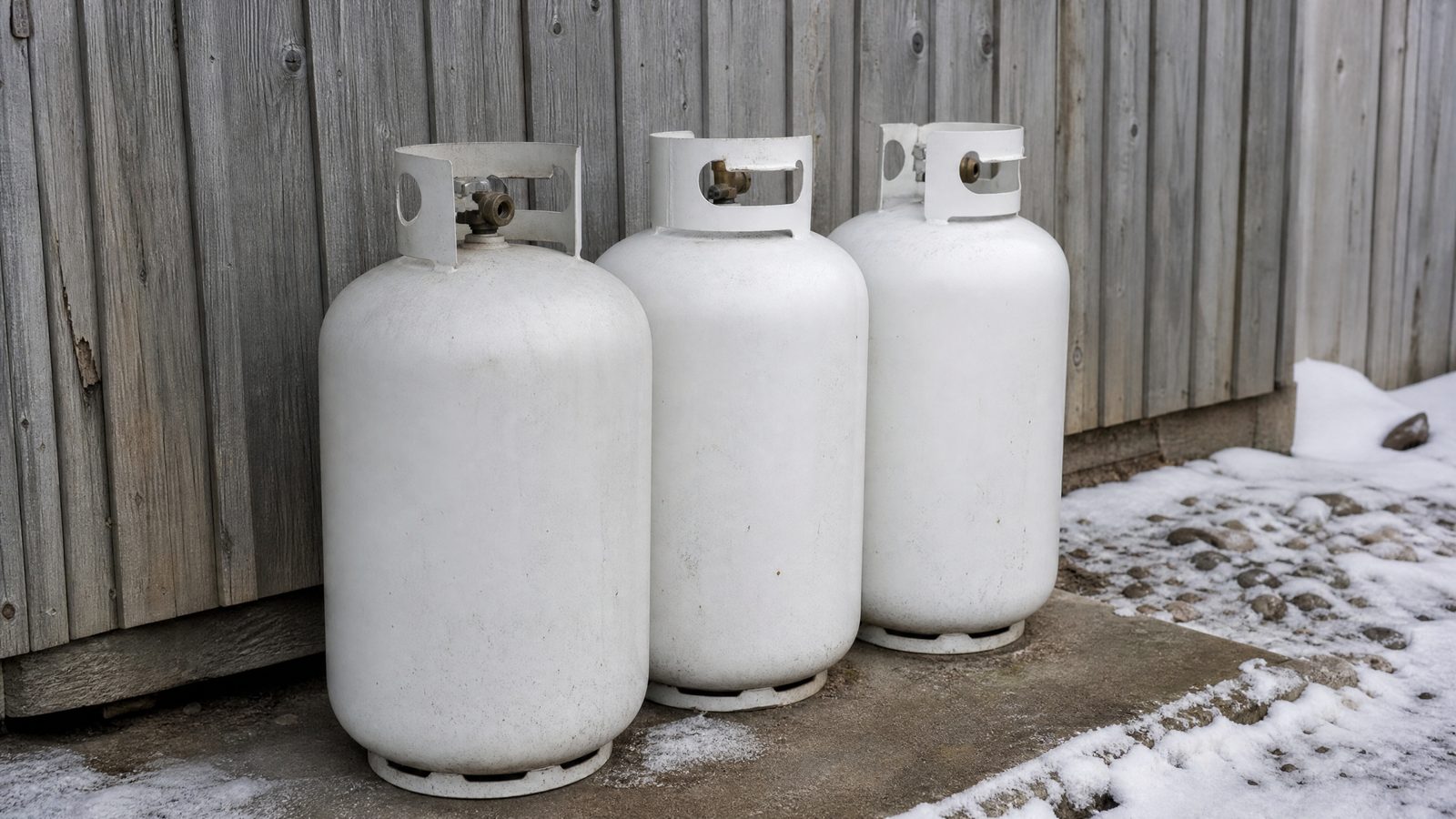
Our judgment: a cold snap is when the garage starts to look tempting for a spare cylinder. Don't. If you want it protected from snow, give it a spot outdoors that is shaded, level and out of the way, and leave it there.
Kerosene: The Right Can, the Right Spot
Most kerosene trouble comes from fuel mix-ups. The CPSC says even small amounts of gasoline or other volatile fuels mixed with kerosene "can substantially increase the risk of a fire or an explosion." Storage is where you prevent that.
| 01 | Blue for kerosene, never redThe CPSC's heater warning label reads: "Use Blue 'Kerosene' Container; Never Use Red for Kerosene." Its guidance says to always store kerosene in a separate container intended for kerosene, "not in a gasoline can or a can that previously has contained gasoline." Kerosene containers usually are blue and gasoline containers usually are red. |
| 02 | Keep it apart from other fuelThe same CPSC label says to always store kerosene away from other fuel containers. Our note: that makes it much harder to grab the wrong can by accident. |
| 03 | Outside the homeThe Manchester, New Hampshire Fire Department says to store kerosene, gasoline or other flammable liquids outside the home at all times, and to use an approved safety can. |
| 04 | Use a safety-approved containerSouth Carolina’s sheet lists what those have in common: a spring-loaded cap that closes on its own to prevent leaks and lifts slightly to vent vapor pressure, and a spout with a flame-arrester screen. |
| 05 | Buy 1-K, and know your sellerThe CPSC says to use only water-clear 1-K grade kerosene, bought from a dealer who can certify it, because different grades can look the same. At the pump, make sure you're at the kerosene pump, not the gasoline pump. |
| 06 | Fill the heater outdoors, never to the brimThe CPSC says never to refuel inside the home. Fill outdoors, away from combustibles, only after the heater is off and cool, and not above the full mark. Manchester Fire adds why: cold kerosene expands as it warms up indoors and may cause burner flooding and flare-ups. |
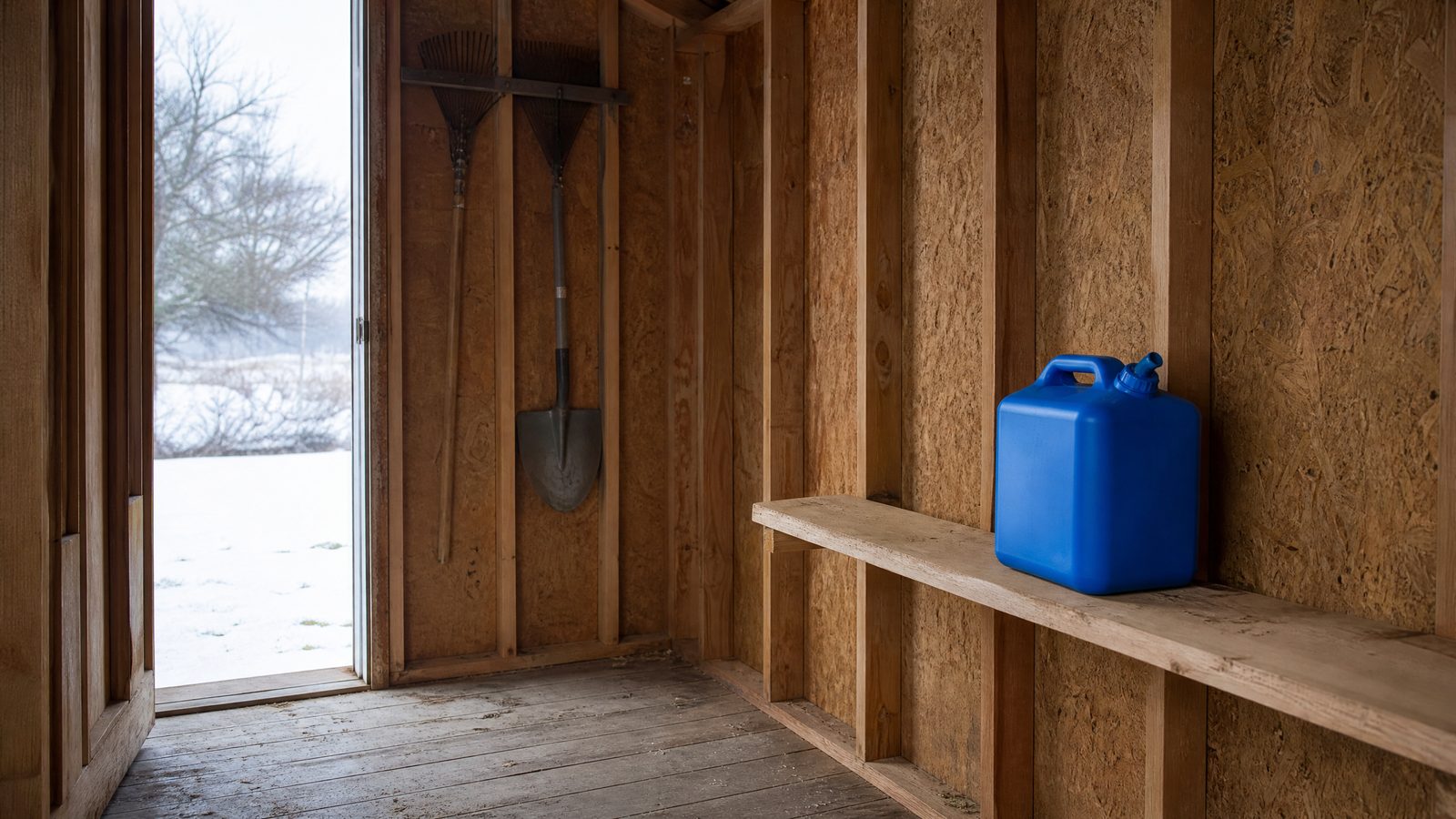
Our judgment: if anyone else in the house might refill the heater, make the system foolproof. One blue can, kept in one spot, with nothing else on that shelf. Mix-ups happen at night and in a hurry, so take the choice out of it.
Firewood: Off the Ground, Top Covered
Firewood has two storage jobs. It needs to dry out, and it can't be in a position to carry fire to the house. The EPA’s Burn Wise page, kept online as a historic record since the program ended in 2025, covers the first.
| 01 | Season it at least six monthsThe EPA says to season wood for at least six months and burn only dry, split, well-seasoned wood. Properly seasoned wood is darker, weighs less, and sounds hollow when hit against another piece. |
| 02 | Store it outdoors, off the groundIn the EPA's words: "Be sure to store wood outdoors, off the ground, with only the top covered -- covering the sides traps in moisture." |
| 03 | Check the moistureThe EPA says wood burns best at a moisture content under 20 percent and suggests testing it with a wood moisture meter before you burn it. |
| 04 | Keep the pile away from the houseThe Minnesota DNR says to stack firewood and woodpiles at least 25 feet away and to clear flammable plants within 10 feet of them. "Do not stack wood against your house or on or under your deck, even in winter." |
| 05 | Buy it localThe EPA says buying and burning locally cut firewood decreases the risk of moving invasive forest pests to your property. |
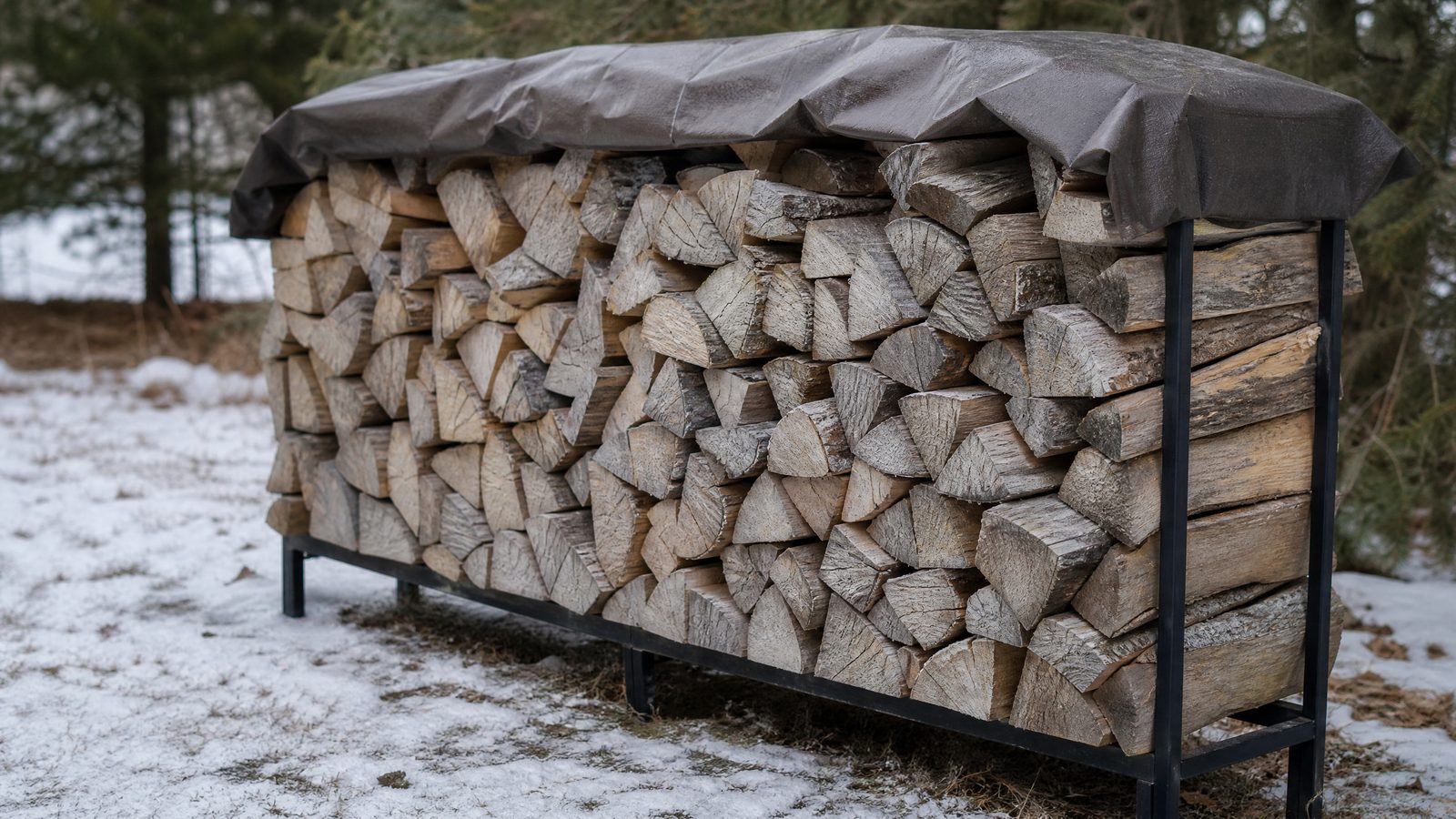
Our judgment: bring in only what you will burn in the next day or so, and keep the main stack where the wildfire programs want it. A small wood carrier by the door is fine. A cord against the siding is not.
How far from the house? The Minnesota DNR says at least 25 feet. Fire Safe Marin, a California wildfire program, says more than 30 feet, or inside a fully enclosed, ember-resistant shed or container, with the grass and weeds cleared around the pile. Both numbers come from wildfire defensible-space guidance, where the worry is flying embers lighting the pile and the pile lighting the house. Your local fire code or fire department may set its own number. Our read: if you have the room, use the larger figure, and if you don't, ask your fire department what applies where you live.
Ashes, Clearances and Alarms
Storage doesn't stop once the fuel is burned.
| 01 | Ashes go in a covered metal can, outsideThe EPA says to regularly remove ashes into a covered metal container and store the container outdoors on a nonflammable surface. |
| 02 | Never start a fire with stored liquid fuelThe EPA says never to start a fire with gasoline, kerosene or charcoal starter. Use newspaper, dry kindling or all-natural fire starters. |
| 03 | Three feet around every heat sourceThe U.S. Fire Administration says to keep anything that can burn at least 3 feet from heat sources, including fireplaces, wood stoves, space heaters and candles. Our note: that goes for the wood basket and any fuel you bring inside, too. |
| 04 | Smoke and CO alarmsThe CPSC says to install smoke alarms on every level of the home, outside sleeping areas and inside bedrooms. South Carolina’s sheet says to install and maintain carbon monoxide alarms when using fuel-burning heat. |
| 05 | If you smell gas, leaveSouth Carolina says if you smell gas at a gas heater, leave the building and call 911. Don't try to light the appliance. |
Our judgment: once a month through the winter, walk your storage spots with fresh eyes: cylinders upright and outdoors, one blue can on its own, the woodpile still where it belongs, the ash can closed. If someone does get hurt, our sister site 1st Hour has a burn first aid guide.
Get The Heating Fuel Storage Card As A PDF
One page for the garage wall or the shed door: where propane, kerosene, firewood and ashes belong, and a quick monthly walkaround so nothing drifts back toward the house.
Download the Card (PDF)Build Out Your Winter Kit, 25% Off
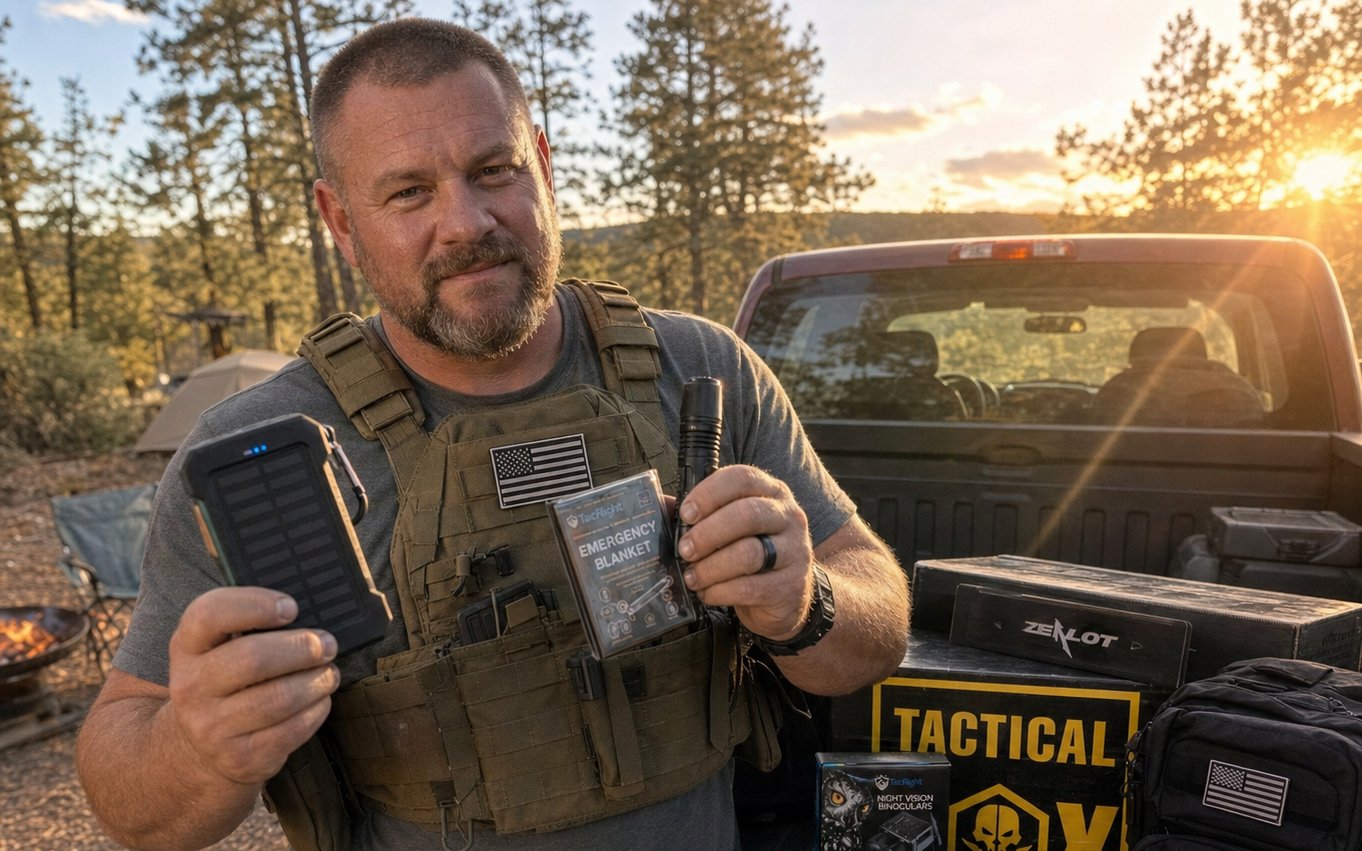
Every month, TacticalBox members get hand-picked tactical, survival, and outdoor gear, sourced ourselves from makers all over the country and curated to be some of the best equipment on the market, worth $150 or more per box on the Standard plan. It's an easy way to keep building out a real preparedness kit without hunting down every piece yourself. Use code 25OFF for 25% off, applied automatically through the button below. Backed by a money-back guarantee. Cancel, pause, or skip anytime.
Claim 25% OffThis content is for informational purposes only. Fuel storage rules vary by state and local code; follow your appliance and container manufacturers' instructions and your local fire department's guidance. If you smell gas, leave and call 911.