
Knife Sharpening And Field Maintenance Basics
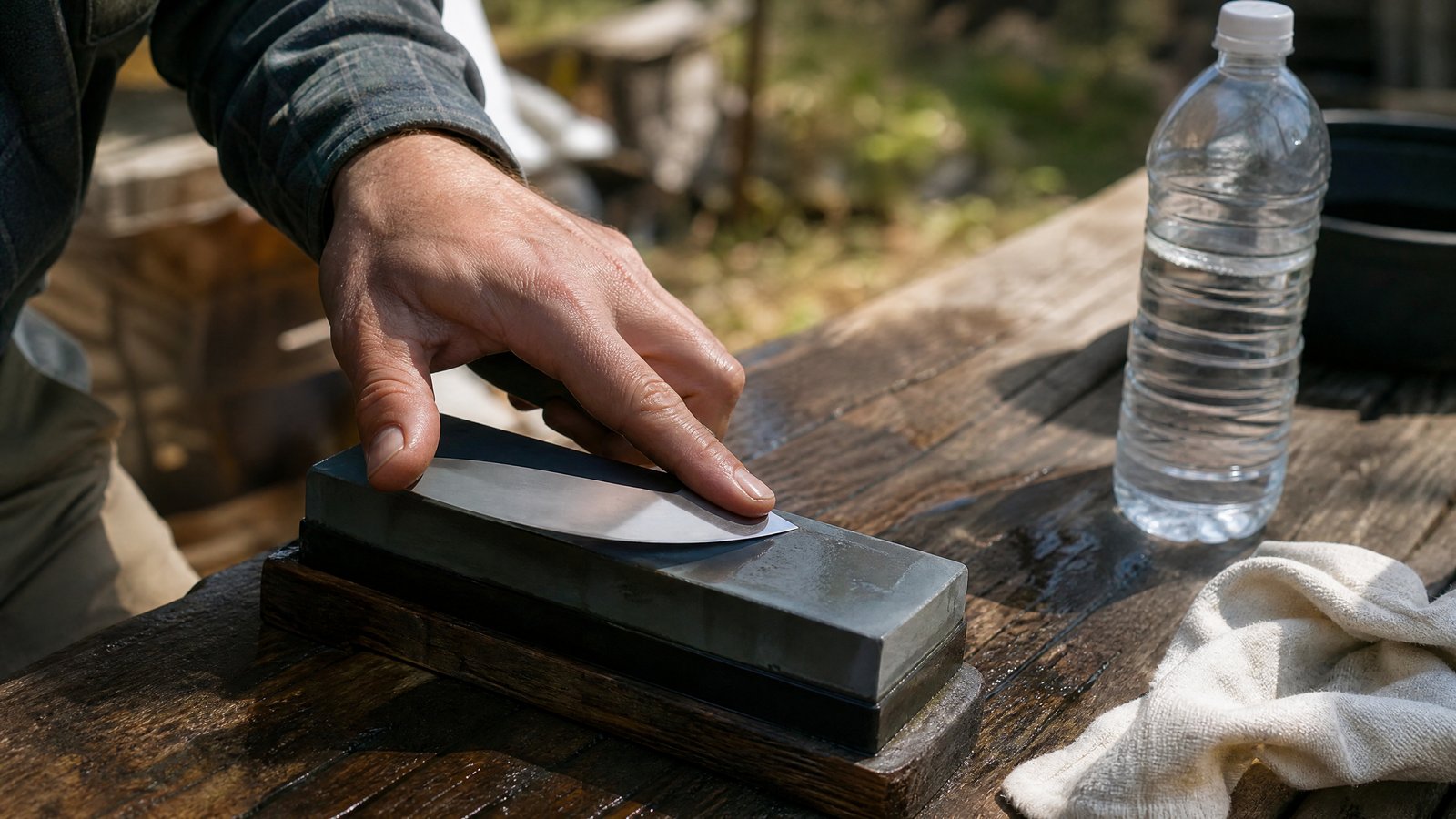
A dull knife is more dangerous than a sharp one, because a stuck blade invites more force, and more force is what causes slips. Hold a 10 to 15 degree angle on each side of the edge, work from a coarse stone to a fine one until you feel a burr the full length of the blade, then strip that burr off on the fine side. In the field, a small pocket stone or ceramic rod keeps that edge alive between real sharpenings. After any real use, wipe the blade dry, run a light coat of oil down it, and store it somewhere dry. That's the whole job.
Most people only think about their knife's edge on the day it stops cutting. By then, restoring it takes real work: multiple grits, a lot of strokes, sometimes a trip to someone who does this for a living. The easier path is treating sharpening and cleaning as routine, not repair, the same way you'd rotate tires before they're bald instead of after.
None of this requires a workshop. A stone, a few minutes, and consistency get a blade further than an expensive sharpening system used twice a year.
Why A Sharp Knife Is Actually The Safe One
It takes less force to cut with a sharp blade, and a sharp blade is less likely to stick in whatever you're cutting. When a blade does stick, the natural instinct is to push harder, and that added force is exactly when a slip happens and the cut lands somewhere it shouldn't. The American Knife and Tool Institute puts it plainly: sharper blades are actually the safer ones. A dull edge carries a second risk too. Enough force behind a blade that's stuck in a hard object can chip or bend the edge, and a chipped blade needs a heavier regrind to fix, not a light touch-up.
That's also why a knife left in a drawer for months and grabbed for a task without a second thought is often the one that draws blood. Check the edge before you rely on it, not after it's already let you down.
The Angle And Grit That Actually Matter
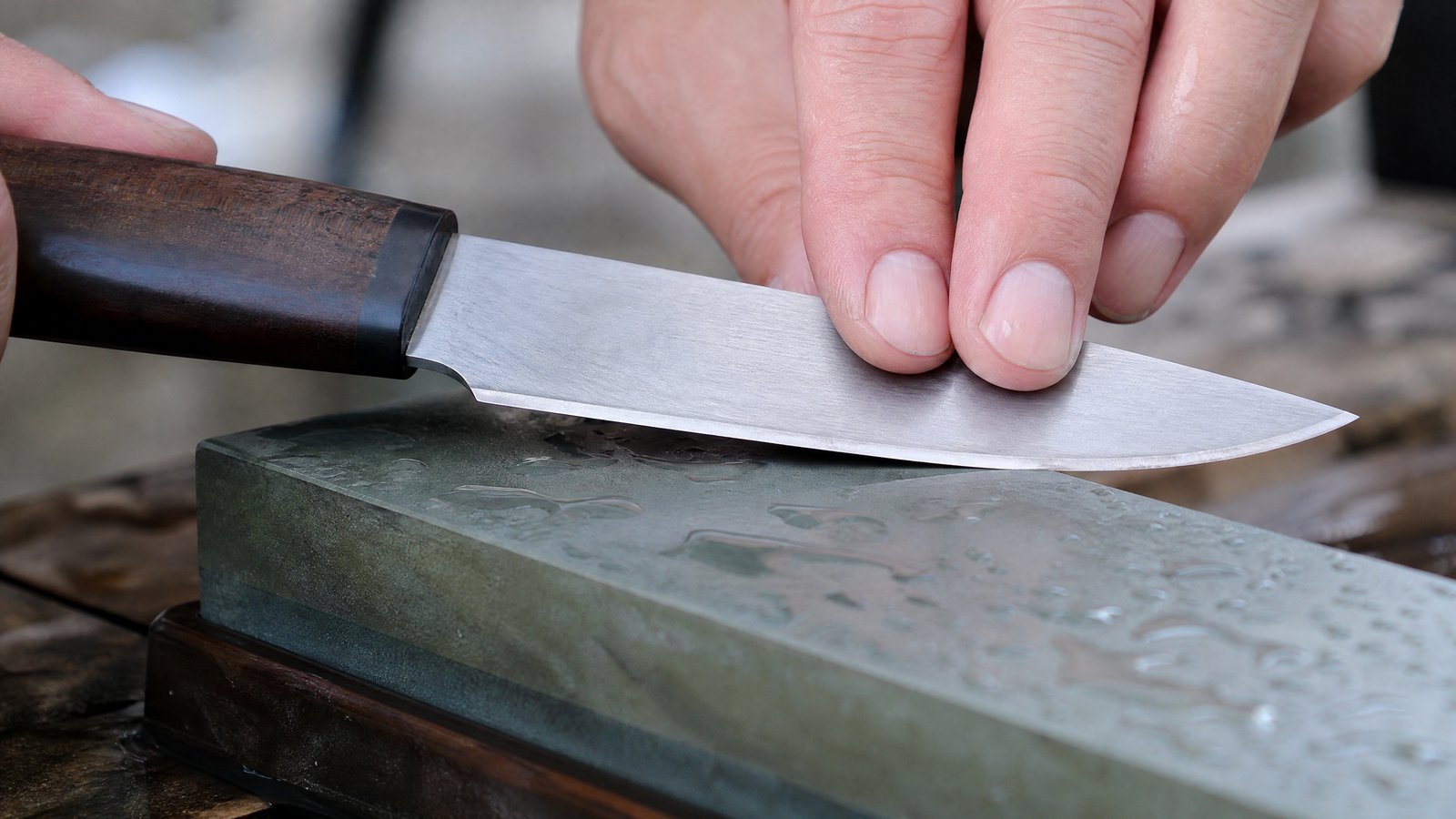
For most fixed-blade survival and tactical knives, AKTI's guidance lands at a 10 to 15 degree angle per side, though the exact number shifts slightly depending on whether the blade is ground flat, convex, or hollow. What matters more than hitting an exact figure is holding whatever angle you pick steady for the entire stroke, on both sides, at equal pressure. Grit does the rest of the work. Anything under roughly 800 is coarse enough to rebuild a genuinely dull or damaged edge, 800 to 2000 is a working middle ground, and anything above 2000 is for polishing an edge that's already there. A basic two-sided stone, something like 1000 grit on one face and a finer grit on the other, covers the large majority of what a knife owner will ever need.
| 01 | Wet or oil the stone firstMost stones need lubrication so steel filings don't clog the surface as you work. Check what the specific stone you own actually calls for. |
| 02 | Set the angle and hold itRest the spine at roughly your chosen angle above the stone and keep your wrist locked through the whole stroke, not just at the start. |
| 03 | Push the edge away from youAKTI's rule for sharpening matches its rule for cutting. Always push the blade away from your body, never toward it. |
| 04 | Match the strokes on both sidesFive strokes on one face means five strokes at the same angle and pressure on the other. Uneven strokes build an uneven edge. |
| 05 | Feel for the burr, then switch to the fine gritA thin ridge of metal along the full edge means the coarse grit has done its job. The fine side removes that burr and polishes the edge. |
Field Touch-Ups Without A Full Stone Set
A full sharpening session isn't always practical mid-trip, and it doesn't need to be. A pocket-sized stone or a short ceramic rod handles most of what a knife needs between real sharpenings. A handful of light passes per side, same angle, same direction, restores enough edge to keep working instead of fighting a blade that's gone dull halfway through a task. This isn't a substitute for a proper sharpening at home. It's what keeps you from needing one on day two of a trip.
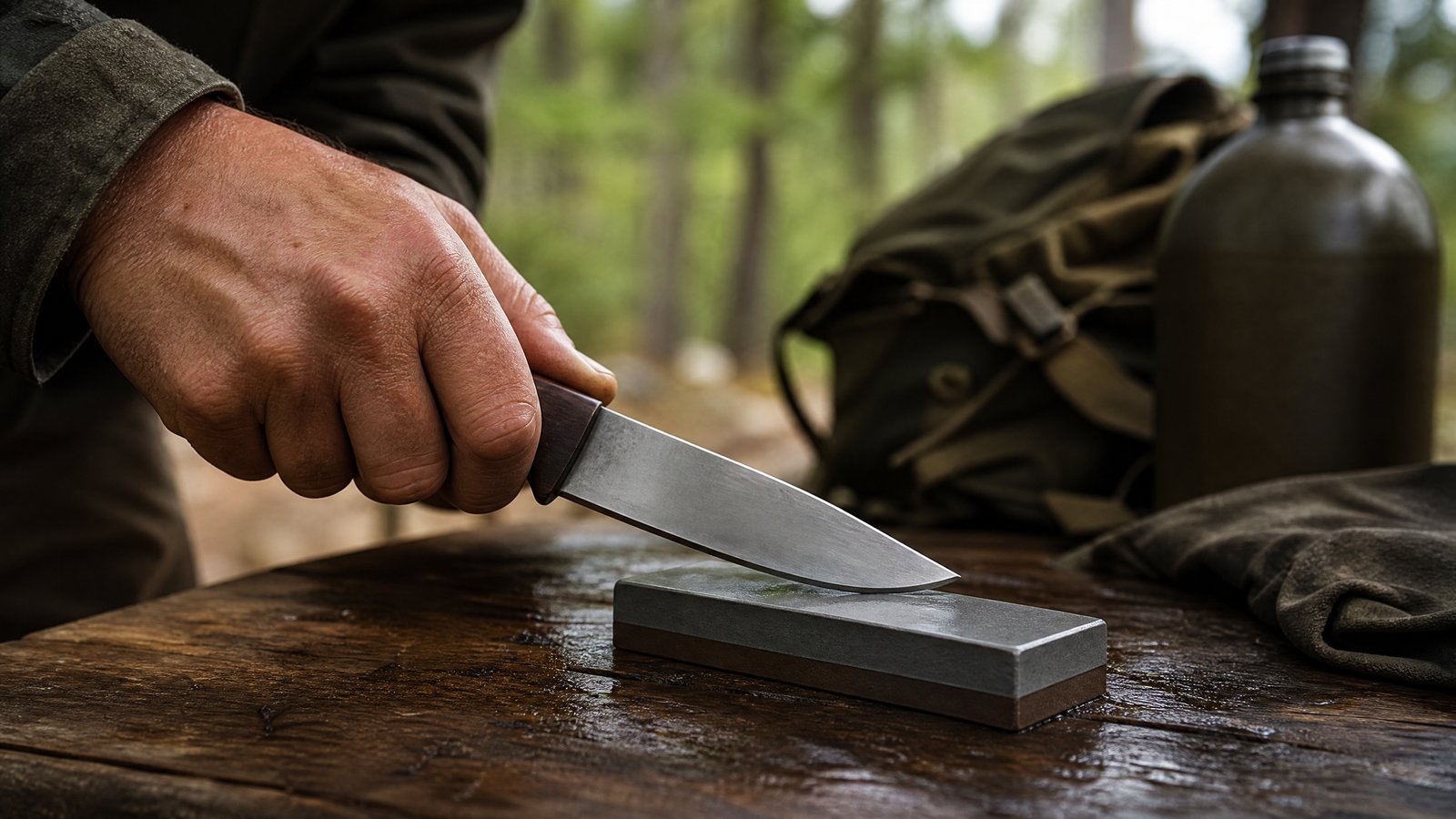
Cut Away From You, Every TimeAKTI's first rule of knife safety applies just as much at the sharpening bench as it does everywhere else: always cut, and always sharpen, away from your body. Secure whatever you're cutting on a firm surface instead of holding it in your hand, and keep your fingers clear of a folding blade's closing arc when you fold it shut. If a slip does happen and the cut is deep, won't stop bleeding, or looks like it might need more than a bandage, 1st Hour's guide on deciding whether a cut needs stitches walks through what to check before you decide.
After The Cut: Cleaning, Oiling, And Storage
The maintenance side of a knife matters as much as the edge. Wipe the blade down after any use involving sweat, rain, food acid, or salt air, since high-carbon steel can start showing flash rust in as little as 10 to 15 minutes if it's left wet. Warm water and a soft cloth handle most of it, and a toothpick works for grime caught in a handle seam without scratching the metal. Once the blade is dry, a light coat of oil, a basic mineral oil works fine and it's food-safe and inexpensive, keeps moisture and body oils off the steel between uses. AKTI's own maintenance guidance lines up with that exactly: keep it oiled, and store it dry, somewhere that isn't a damp basement, a garage, or a leather sheath for the long term, since a sheath can trap moisture against the blade instead of keeping it off.
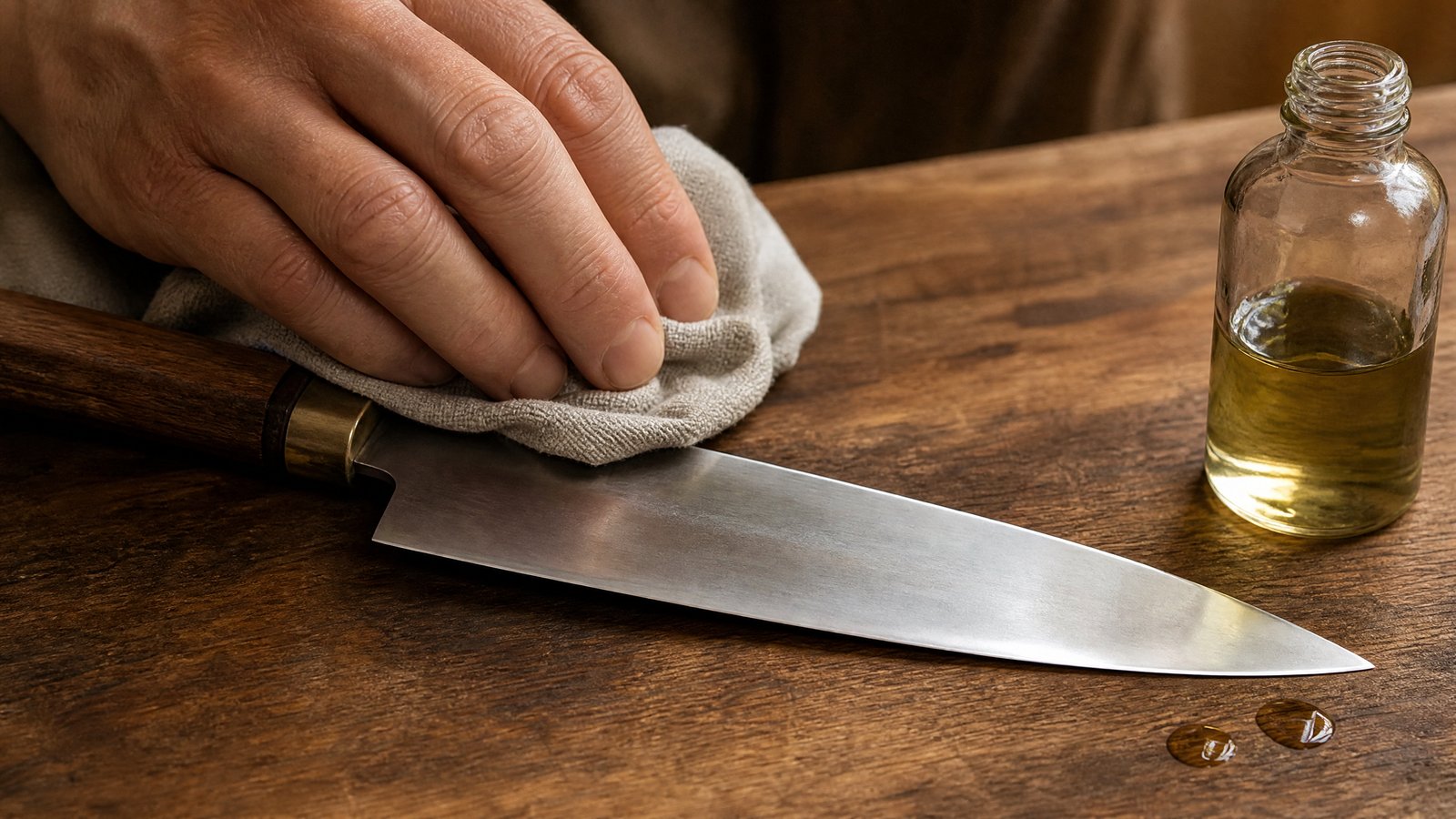
None of this is complicated, and none of it takes long. Five minutes after you put the knife away and a couple of minutes with a stone every so often keep a blade doing its job instead of turning into the tool you avoid reaching for.
Get The Knife Sharpening & Field Maintenance Card As A PDF
The angle, the grit progression, the step-by-step, and the after-use cleaning routine from above, condensed to one printable card for the workbench or the pack.
Download the Card (PDF)A Sharp Blade Is Just The Start
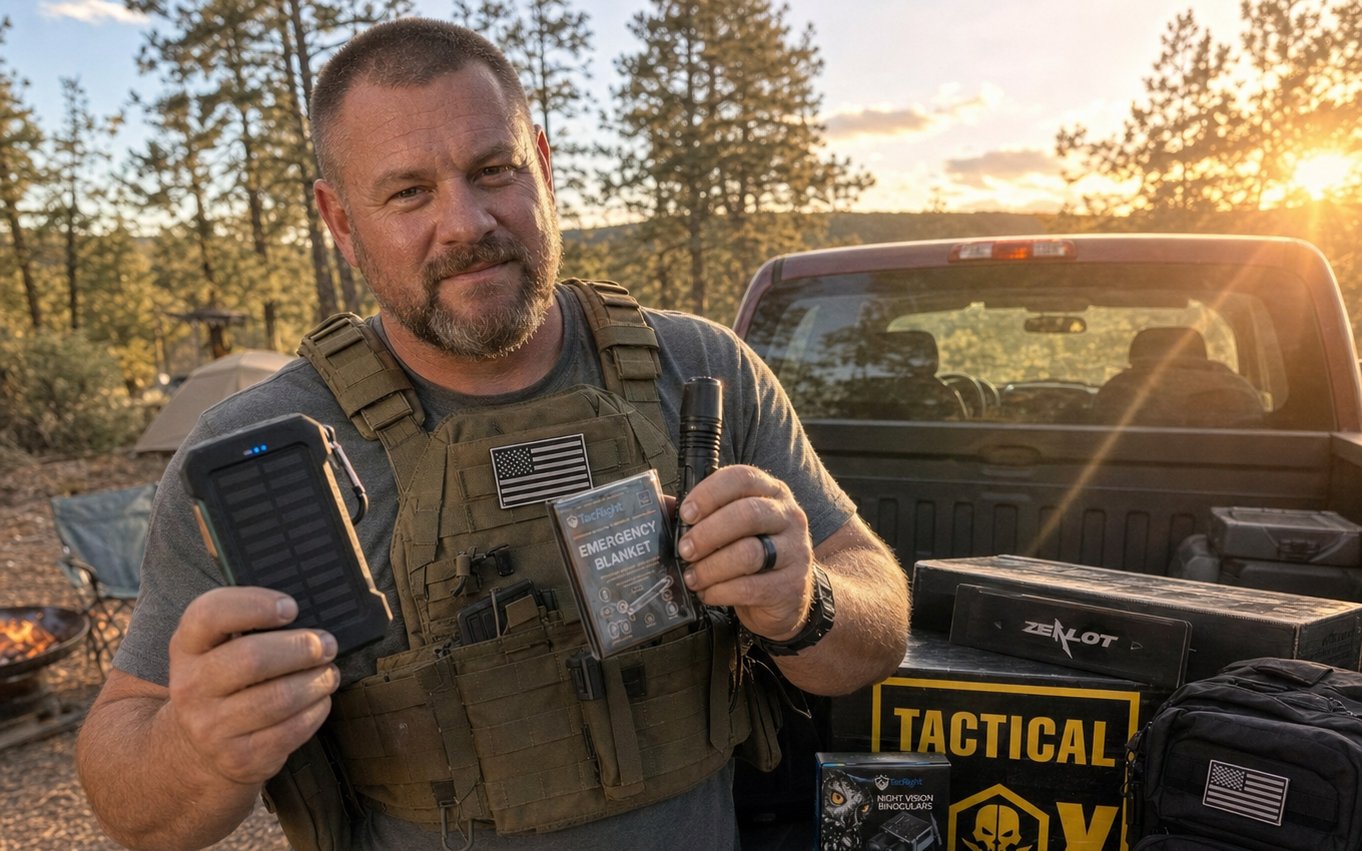
Every month, TacticalBox members get hand-picked tactical, survival, and outdoor gear, sourced ourselves from makers all over the country and curated to be some of the best equipment on the market, worth $150 or more per box on the Standard plan. It's an easy way to keep your kit sharp, stocked, and ready without hunting down every piece yourself. Backed by a money-back guarantee. Cancel, pause, or skip anytime.
Get Your TacticalBoxThis content is for informational purposes only and is not a substitute for the care instructions specific to your knife's steel and construction. Always cut and sharpen away from your body, and seek medical care for any cut that is deep, won't stop bleeding, or shows signs of infection.