
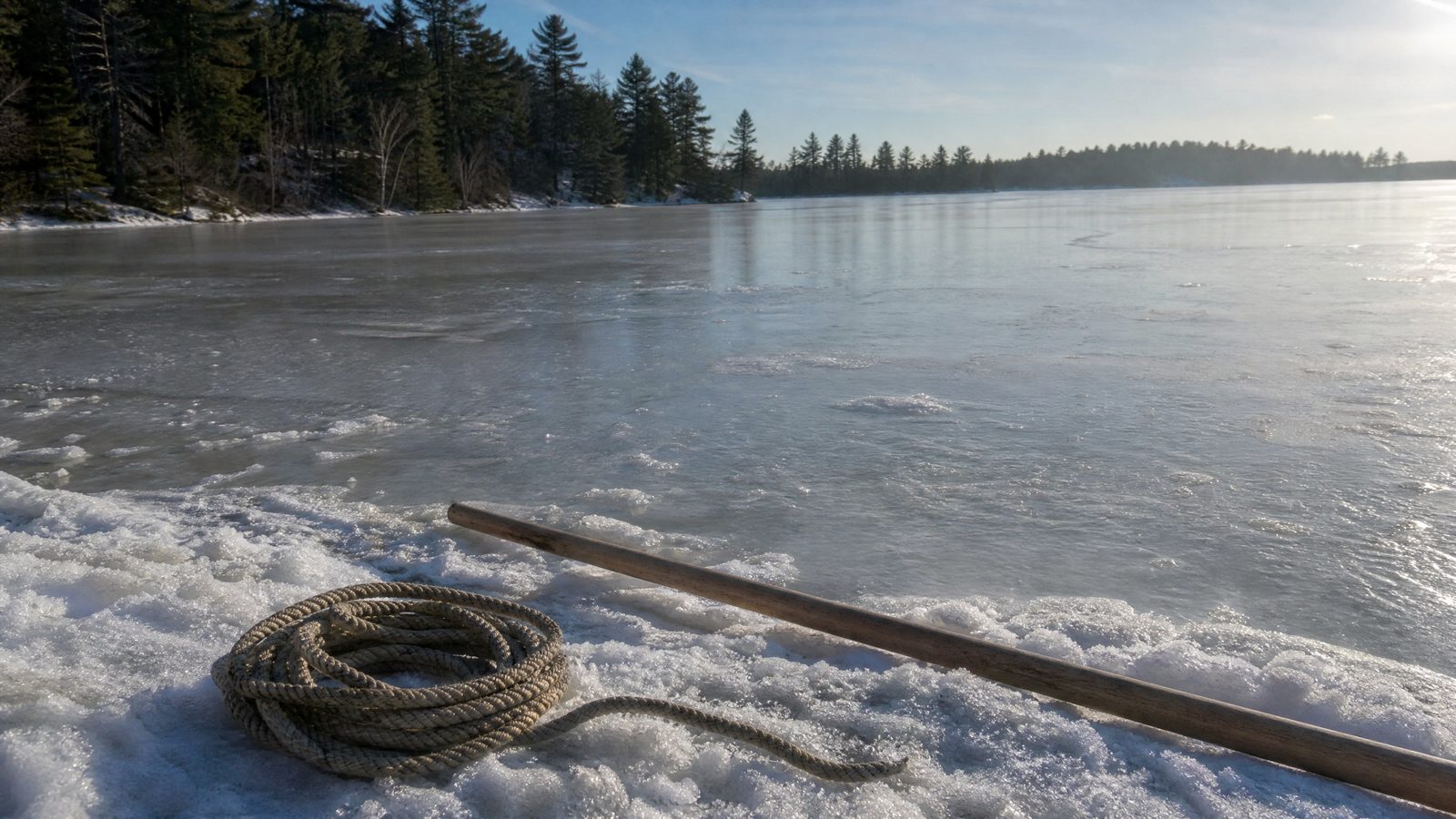
Ice Safety on Frozen Lakes and Ponds
The Minnesota DNR puts it plainly: "There is no such thing as 100 percent safe ice." Its guideline is to stay off anything under 4 inches of new, clear ice, and to double that on white, cloudy ice. The Michigan DNR goes further and says there is no reliable inch-thickness at all. Measure the ice yourself, keep away from inlets, current, docks and anything sticking out of the ice, wear a foam life jacket, and carry ice picks around your neck. If someone falls in, call 911 and reach or throw from where you are. Don't run to the hole.
A frozen pond looks like a floor. That is exactly why it fools people. The ice by the dock can be a different animal from the ice twenty feet out, the snow on top hides all of it, and the most dangerous spots, where a creek runs in or the ice sits over current, often look just like the rest.
This guide is about getting on and off the ice safely, whether you are fishing, skating, walking the dog or crossing a pond on snowshoes. If you are heading out on snowshoes, our snowshoeing safety guide covers the trail side, and our water crossings guide covers moving water in warmer months.
Here is what we drew on: the Minnesota Department of Natural Resources ice safety pages (ice thickness guidelines, ice formations and conditions, safety gear, how to check thickness, traveling on ice, self-rescue, helping someone else and its ice fatality statistics), the Michigan DNR's ice safety page, and the National Weather Service's cold water safety page. Where we add our own thinking, we label it as our judgment.
Reading the Ice Before You Step On
The Minnesota DNR says you can't judge the strength of ice just by its appearance, age, thickness, temperature, or whether it is covered with snow. It is all of those together. Still, some signs are worth knowing.
| 01 | Clear ice is the strong iceMinnesota says the strongest and safest ice is clear ice, sometimes called blue ice, which can look blue or black when you look down into the water. Michigan agrees: "Strongest ice: clear with bluish tint." |
| 02 | White ice is about half as strongWhen snow melts on top of the ice and refreezes, it makes white ice. Minnesota says it is "only about half as strong as new, clear ice" because it is full of air bubbles. Michigan calls it milky, weak ice, and says to stay off ice with slush on top. |
| 03 | Snow hides and weakensSnow insulates the ice and slows freezing, and its weight reduces how much the ice can carry, according to Minnesota. Michigan is stricter: ice covered by snow "should always be considered unsafe." |
| 04 | Ice is rarely evenMinnesota's thickness page says the ice can be two feet thick in one place and one inch thick a few yards away. Its main page adds that new ice is usually stronger than old ice. |
| 05 | Cracking noise is not the warning signMinnesota says booming and cracking ice "isn't necessarily dangerous." It only means the ice is expanding and contracting as the temperature changes. Our note: the warnings worth acting on are the ones the agencies list below, like slush on top, open water at the edges, and current. |
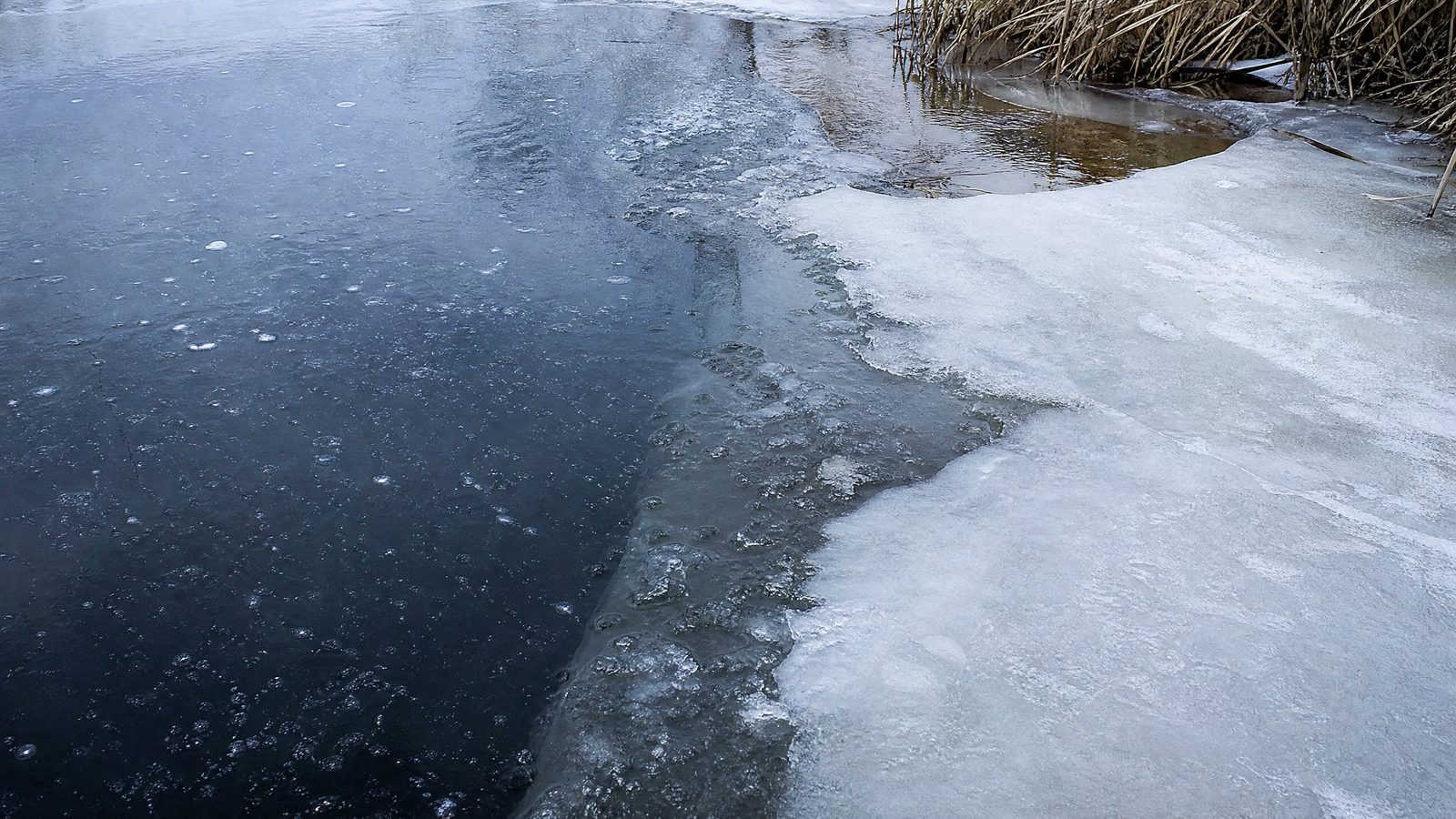
Our judgment: look down before you look out. If you can't tell what kind of ice you are standing on, treat it as white ice and use the doubled numbers, or stay on shore.
Where Ice Is Thinnest
Some places on a lake or pond are almost always weaker. The Minnesota DNR lists areas with flowing water (streams, under bridges, culverts, close to shore in late season) and areas near logs, rocks, bridges and docks, which can absorb heat from the sun.
| 01 | Inlets, outlets and currentMinnesota says ice formed over flowing water and currents is often dangerous, especially near streams, bridges and culverts. Michigan says the stronger the current, the more likely the ice will give way to open water. |
| 02 | Anything sticking out of the iceMichigan says to avoid areas of ice with protruding debris like logs or brush, and to watch for dock bubblers or de-icers, because the ice near them will be unsafe. |
| 03 | Water at the shorelineMichigan's warning is short: "If there's ice on the lake but water around the shoreline, be extra cautious." |
| 04 | Gas holes and wildlifeMinnesota describes gas holes, bell-shaped holes melted by gas from decaying plants, that can be several feet across under the surface and only a few inches across on top, often hidden by thin ice or snow. They tend to form near stream inlets and in shallow, weedy water. Flocks of geese sitting on the ice and schools of fish moving underneath can also thin it. |
| 05 | Pressure ridgesOn bigger lakes, Minnesota says pressure ridges "are always dangerous." The ice next to a ridge can be flooded, thin, or open water, and a ridge can form in a matter of hours, so it may not have been there when you walked out. If you meet one, Minnesota says to follow it at a safe distance until you find a safe place to cross. |
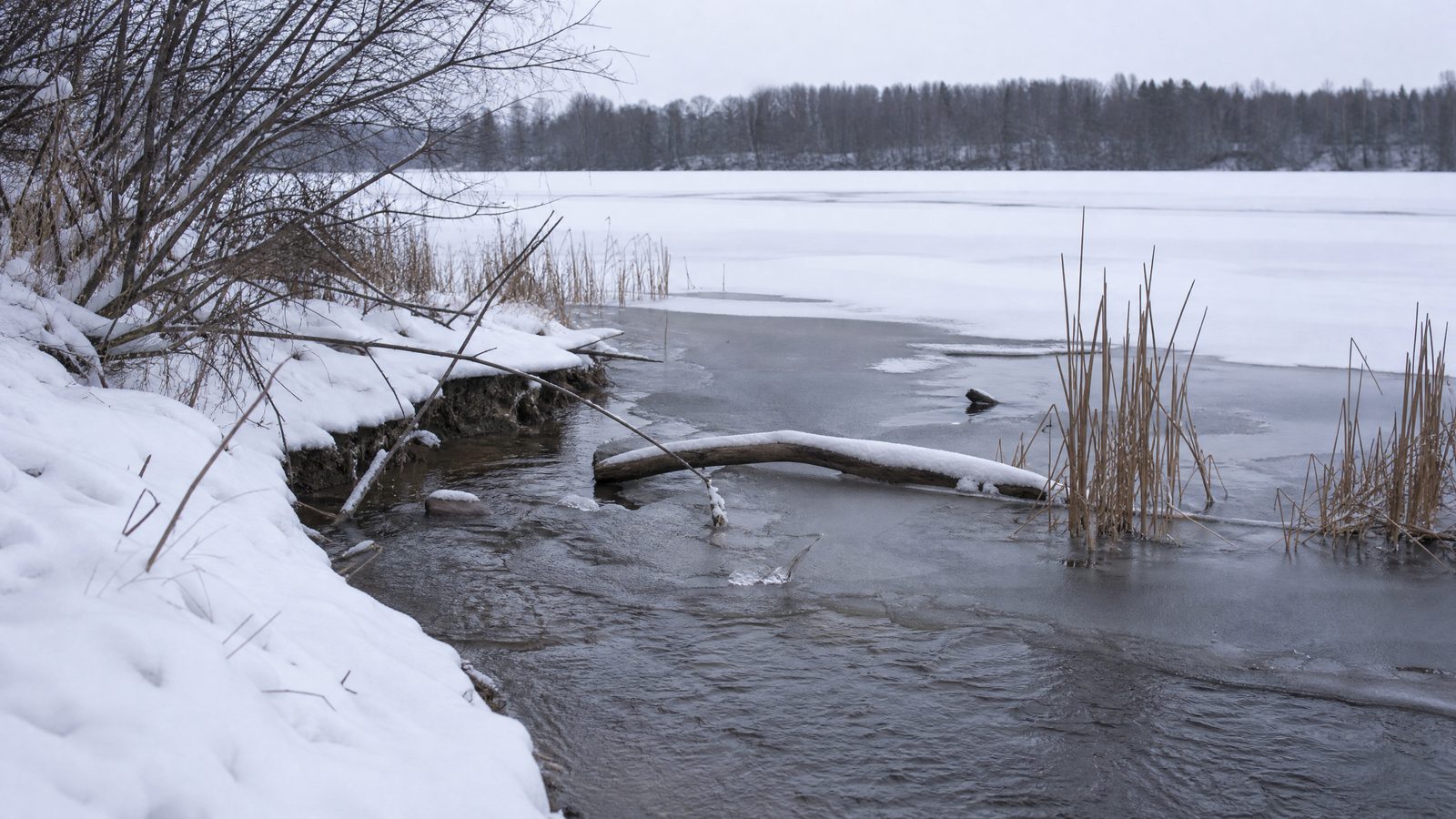
Our judgment: on a pond you don't know, ask someone who does. Minnesota makes the same point: never assume ice is safe because someone else was out before you, but local experts may know problem spots that you don't.
How Thick Is Thick Enough
The Minnesota DNR publishes thickness guidelines "for new, clear ice only." They are a floor, not a promise, and the DNR is clear that it does not measure ice for you: "Your safety is your responsibility."
| 01 | Under 4 inches: stay offMinnesota's table starts there. Under 4 inches of new, clear ice, stay off. |
| 02 | 4 inches: on footIce fishing or other activities on foot. The DNR's main page notes that 4 inches of clear, newly formed ice "may support one person on foot, while a foot or more of old, partially-thawed ice may not." |
| 03 | 5 to 8 inches: snowmobiles and ATVs5 to 7 inches for a snowmobile or small ATV, 7 to 8 inches for a side-by-side ATV. |
| 04 | 9 inches and up: cars and trucks9 to 10 inches for a small car or SUV, 11 to 12 for a medium SUV or small truck, 13 for a medium truck, and 16 to 17 for a heavy-duty truck. Minnesota says those recommendations assume solid, clear ice and average equipment weight, and that you are responsible for knowing the weight of your vehicle, equipment and bodies. |
| 05 | Double it on white iceMinnesota says to double the guidelines when traveling on white ice. And it says thickness guidelines "do not apply" to honeycomb ice, the rotten, columned ice of late season: "If ice is honeycombed, stay off." |
Our judgment: these numbers are where Minnesota starts, not where your margin ends. We would want more than the minimum under every person, and we would treat any ice we had not measured that day as unknown.
Is there a safe thickness at all? Minnesota publishes a thickness table and says to wait for at least 4 inches of new, clear ice before walking out. Michigan takes a harder line: "There is not a reliable "inch-thickness" to determine if ice is safe." The two are closer than they sound. Minnesota's table comes with the same warning, that many factors other than thickness affect ice strength and that there is no such thing as 100 percent safe ice. Our read: use Minnesota's numbers as the minimum you need before you even consider stepping out, and Michigan's warning as the reason to keep checking once you do.
Checking the Ice Yourself
Minnesota says to have your safety gear on before you start measuring, then grab a tape measure and a tool to make a hole.
| 01 | Start near shore and keep checkingIn its auger advice, Minnesota says to start by checking thickness near shore and to frequently stop and check as you go. And on the same lake, if you are walking on 4 to 6 inches of ice, it says you will likely find areas under 4 inches. |
| 02 | Ice chisel (spud bar)A heavy metal rod with a flat blade on one end. Drive it into the ice with a stabbing motion to make a hole, then measure. Minnesota says a chisel is especially important early and late in the season, because you can stab the ice in front of you with each step. |
| 03 | Auger or cordless drillAn auger works the same way. Minnesota also describes using a cordless drill with a long 5/8-inch wood auger bit, which it says can get through 8 inches of ice in less than 30 seconds. A wood bit matters, because its spiral pulls the ice chips out of the hole. |
| 04 | Measure, don't guessHook the tape measure on the bottom edge of the ice and read it at the surface. Minnesota warns: "Don't judge ice thickness by how easily a chisel or drill breaks the surface." It happens fast enough to fool you into thinking the ice is thicker than it is. |
| 05 | Check what kind of ice it isWhile you are looking into the hole, look at the layers. Minnesota gives the example of a hole with 10 inches of clear ice and 5 inches of white ice on top. The white layer counts for about half. |
Our judgment: measure every trip, not once a season. Conditions change with every warm afternoon and every snowfall, and the hole you drilled last weekend tells you nothing about today.
Gear to Carry Every Time
The Minnesota DNR says to bring the same short list every time you go on the ice, and to let someone know where you are going and when you expect to return.
| 01 | A foam life jacket or flotation suitMinnesota calls flotation possibly the No. 1 item that will keep you alive, because "Most people who fall through the ice die of drowning" and not hypothermia. Its fatality statistics page says that since 1976 there have been 269 ice-related fatalities in Minnesota, and only 5 were a result of hypothermia. It recommends foam over inflatable life jackets for cold water, since inflatables may not inflate properly in low temperatures. |
| 02 | Ice picks around your neckMinnesota calls them the second most important item. Pulling yourself out onto smooth, wet ice with numb fingers is extremely difficult, and picks give you something to dig in with. Keep them where you can reach them in the water, not in a pack. |
| 03 | A whistleAn emergency whistle lets you call for help without burning energy yelling. Minnesota notes some people have trouble calling out at all because of the cold shock response. |
| 04 | Chisel or drill and a tape measureFor checking thickness as you go, as above. |
| 05 | Ice cleatsMinnesota points out that a fall on thick ice can break a tailbone or wrist, and "a fall on thin ice can cause you to break through the ice." |
| 06 | A phone in a waterproof case, and a ropeMinnesota says it is best to go with a buddy. If you go alone, bring a phone in a waterproof case and consider a personal locator beacon, since phones do not always have service. A rope lets you help someone else from a distance. |
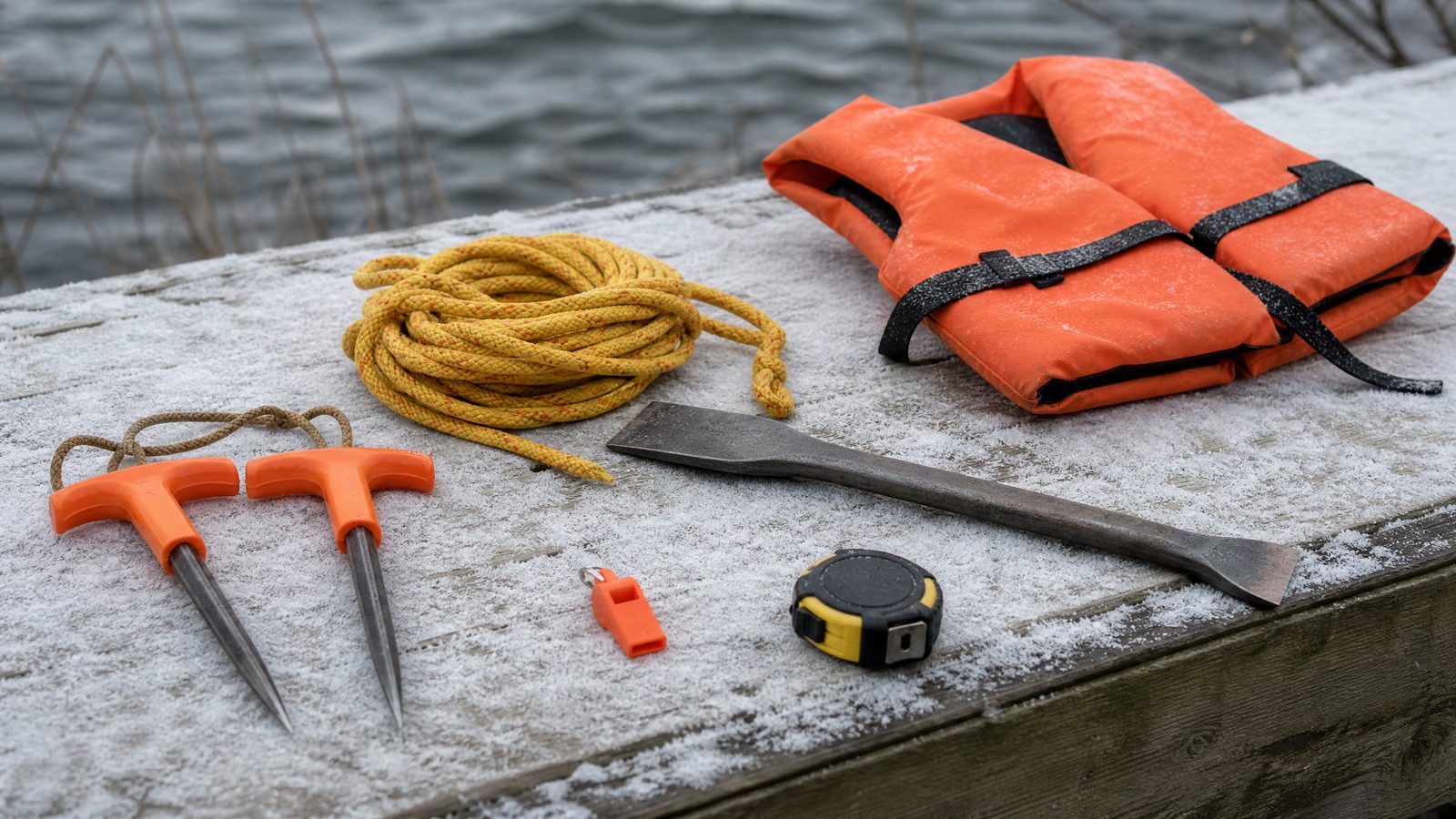
Our judgment: a set of ice picks is one of the cheapest pieces of life-saving gear there is. If you only add one thing to your winter kit this year, make it a pair of picks and wear them on every trip, even a short walk across a pond.
If You Fall Through
The first minute is about breathing. The National Weather Service says cold shock can cause involuntary gasping, rapid breathing or hyperventilating, which "can quickly create a drowning emergency if you inhale water and cannot stay afloat."
| 01 | Get your breathing under controlMinnesota says that after you calm your breathing, you will have "about 10 minutes of meaningful movement" to climb out before you lose the feeling and strength in your hands. Don't spend it thrashing. |
| 02 | Keep your winter clothes onMinnesota says heavy clothes "won't drag you down," and can instead trap air to provide warmth and flotation. Michigan gives the same advice. |
| 03 | Turn toward where you came fromThat is probably the strongest ice, since it held you on the way out. Put your hands and arms on the unbroken surface. |
| 04 | Kick and pull, don't climbDig in your ice picks and kick your feet to work your way back onto solid ice. Minnesota's gear page describes it as pulling yourself onto the surface by sliding forward on the ice. Minnesota says if your clothes are full of water, you may need to lift yourself partly out on your elbows to let it drain first. |
| 05 | Roll away, then get warmOnce you are out, lie flat and roll away from the hole to spread your weight. Then get to a warm, dry, sheltered place right away. Minnesota says moderate to severe cold water hypothermia needs medical attention, and Michigan says to call 911 if you feel disoriented or have uncontrollable shivering. |
Our judgment: practice the motions in your head before the season starts. The steps are simple on a screen and very hard to remember in 33-degree water. On our sister site, 1st Hour's falling through ice guide and its piece on cold water shock go deeper on the first-aid side.
If Someone Else Falls In
Every instinct says run to them. The Minnesota DNR says to resist the urge to run up to the edge of the hole, because "This would most likely result in two victims in the water."
| 01 | Call 911 firstMinnesota puts it at the top of the list. There is a good chance someone nearby has a phone, even if you don't. |
| 02 | PreachShout to the person to keep fighting and tell them help is coming. |
| 03 | ReachIf you can safely reach them from shore, extend a rope, ladder or jumper cables. Minnesota also lists a long stick or tree branch. If they start to pull you in, let go and start over. |
| 04 | ThrowToss one end of a rope or something that floats. Minnesota says to have them tie the rope around themselves before they get too weak to hold it, then pull while they kick in a horizontal position. Once they are out, they should roll away from the hole and not stand up until they reach stronger ice. |
| 05 | Row, and only then goMinnesota describes pushing a light boat across the ice to the hole and pulling the person in over the bow. It says a non-professional shouldn't go out on the ice for a rescue unless every other option has been ruled out. And it is direct about pets: do not risk your life to save a pet or other animal. |
Our judgment: keep a throw rope in the truck all winter and know where it is. Most people who go to help someone through the ice have nothing to reach with, and that is what puts them on the ice.
Late Ice, Wind and Vehicles
The end of the season and anything with an engine add their own risks.
| 01 | Spring ice melts from the shoreMinnesota says ice typically melts fastest near the shore in spring, because shallow water and plants warm faster than the middle of the lake. Staying close to shore can feel safer and be the opposite. |
| 02 | Honeycomb iceMinnesota calls honeycomb ice one of the most dangerous types of ice and links it to many late-season fall-throughs. It takes little or no effort to shatter. The guidelines do not apply to it. Stay off. |
| 03 | Wind on big lakesOn large lakes that are not fully frozen, Minnesota warns that a wind blowing out from shore can break off the sheet you are on and carry it toward open water. Its advice: if winds are strong early in the season, don't go out, and if they pick up or change direction while you are out on early ice, head back quickly. |
| 04 | If you drive on the iceMinnesota recommends staying on plowed ice roads, rolling down windows and unlocking doors, and having an escape plan your passengers know. Bring a life jacket and ice picks, but do not wear the life jacket inside an enclosed vehicle, because it can make escape very difficult. Park at least 50 feet from other vehicles and move every two hours. |
| 05 | Slow down at nightMinnesota says many fatal snowmobile fall-throughs happen because the machine was going too fast to stop once the headlight showed the hole. It calls this overriding your headlights. |
Our judgment: when in doubt late in the season, the answer is no. Early winter and late winter are when the ice is least predictable, and no fish or shortcut is worth it. If you are on the road instead of the lake, our black ice driving guide covers that side of winter.
Get The Ice Safety Field Card As A PDF
One page for the tackle box or the truck: Minnesota's thickness guidelines, the danger spots to avoid, the gear to carry, and the steps for getting yourself or someone else out.
Download the Card (PDF)Build Out Your Winter Kit
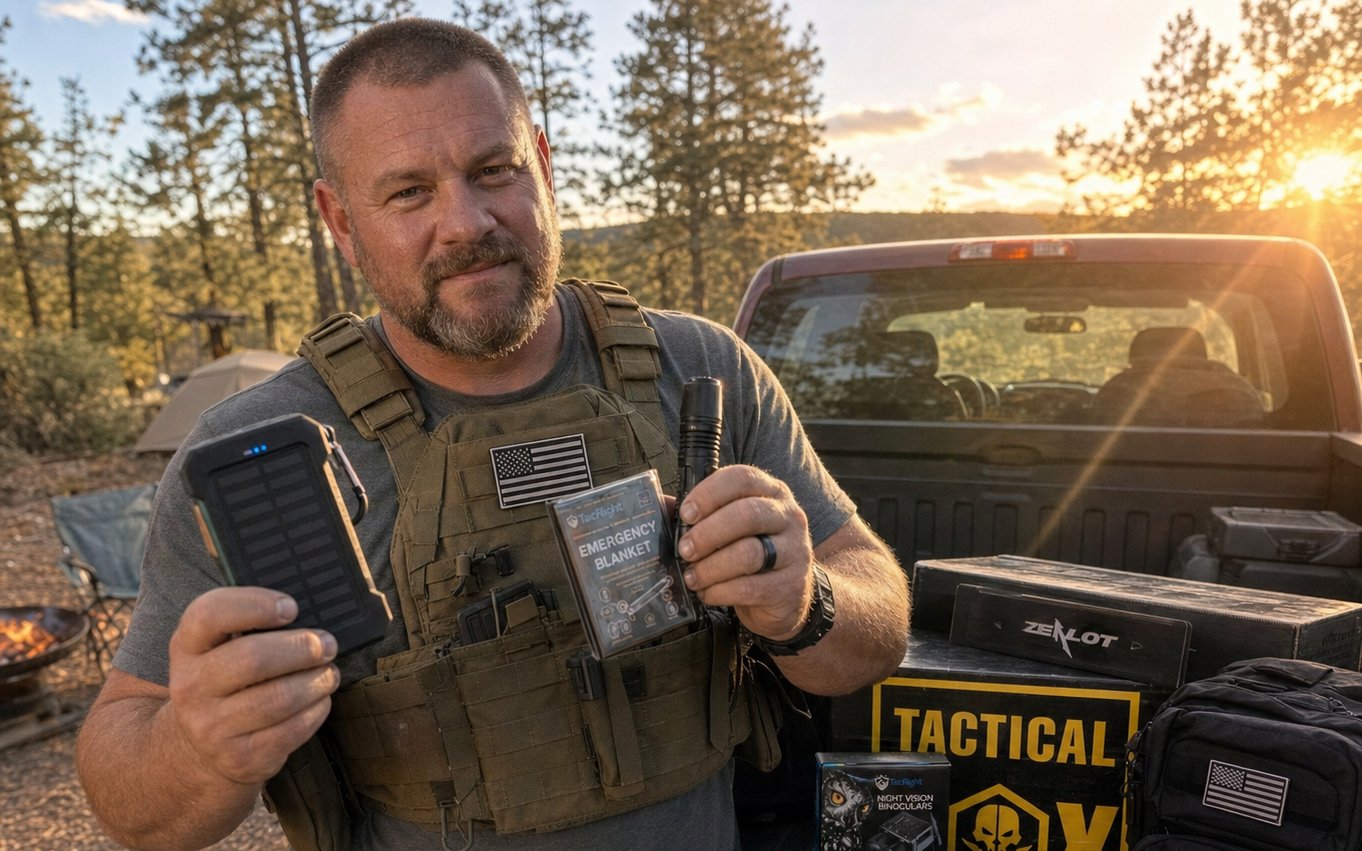
Every month, TacticalBox members get hand-picked tactical, survival, and outdoor gear, sourced ourselves from makers all over the country and curated to be some of the best equipment on the market, worth $150 or more per box on the Standard plan. It's an easy way to keep building out a real preparedness kit without hunting down every piece yourself. Backed by a money-back guarantee. Cancel, pause, or skip anytime.
Join TacticalBoxThis content is for informational purposes only. No ice is ever completely safe. Thickness guidelines come from the Minnesota DNR and apply to new, clear ice only; check local conditions and your state or local agency's guidance before going out, and call 911 in an emergency.