
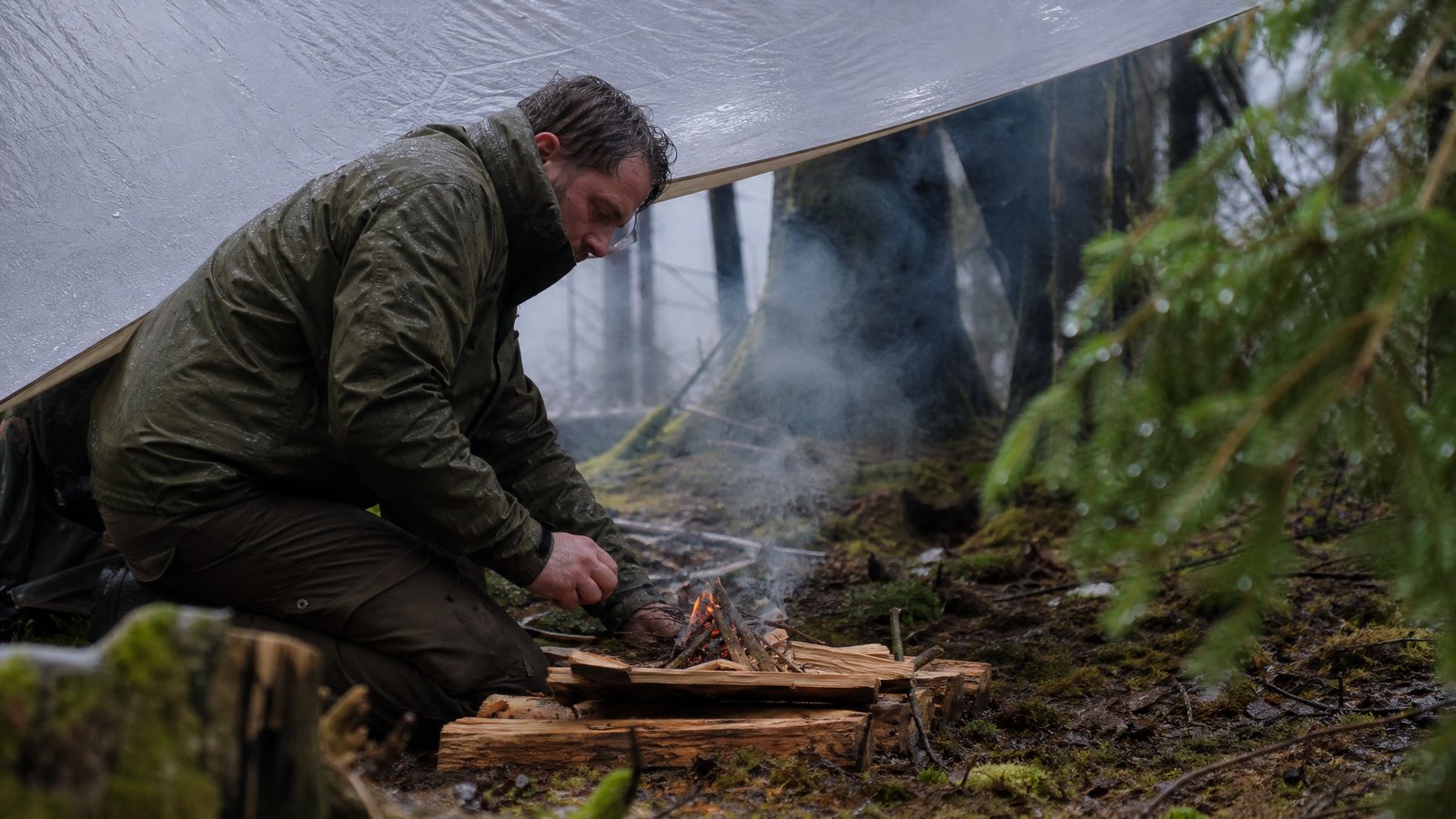
How to Start a Fire in Wet Conditions
The forest is never as wet as it looks. Skip everything lying on the ground and pull dead branches off standing trees instead, then split them: inside most rain-soaked wood is a bone-dry core. Build a raised platform of split wood so the soaked ground can't steal your heat, prepare three times more tinder and kindling than feels reasonable, shave feather sticks from the dry core, shelter the flame from above, and feed it slowly, from pencil-thin twigs up to wrist-thick fuel. Wet-weather fires die from impatience, not from the rain.
In dry weather, a campfire is a comfort. In wet weather, it can be the thing standing between you and a medical emergency. The CDC notes that hypothermia doesn't wait for freezing weather: it can set in at temperatures above 40°F if a person gets chilled from rain, sweat, or a dunk in cold water. That describes almost every rough night in the backcountry. Wet clothes pull heat out of your body far faster than cold air alone, and a fire is one of the few tools that can reverse the slide: it dries your layers, warms your core, and steadies your head. The problem is that the exact conditions that make a fire most necessary are the ones that make it hardest to light. Here's how to beat them, in the order the job actually goes.
Find the Dry Wood Hiding in a Wet Forest
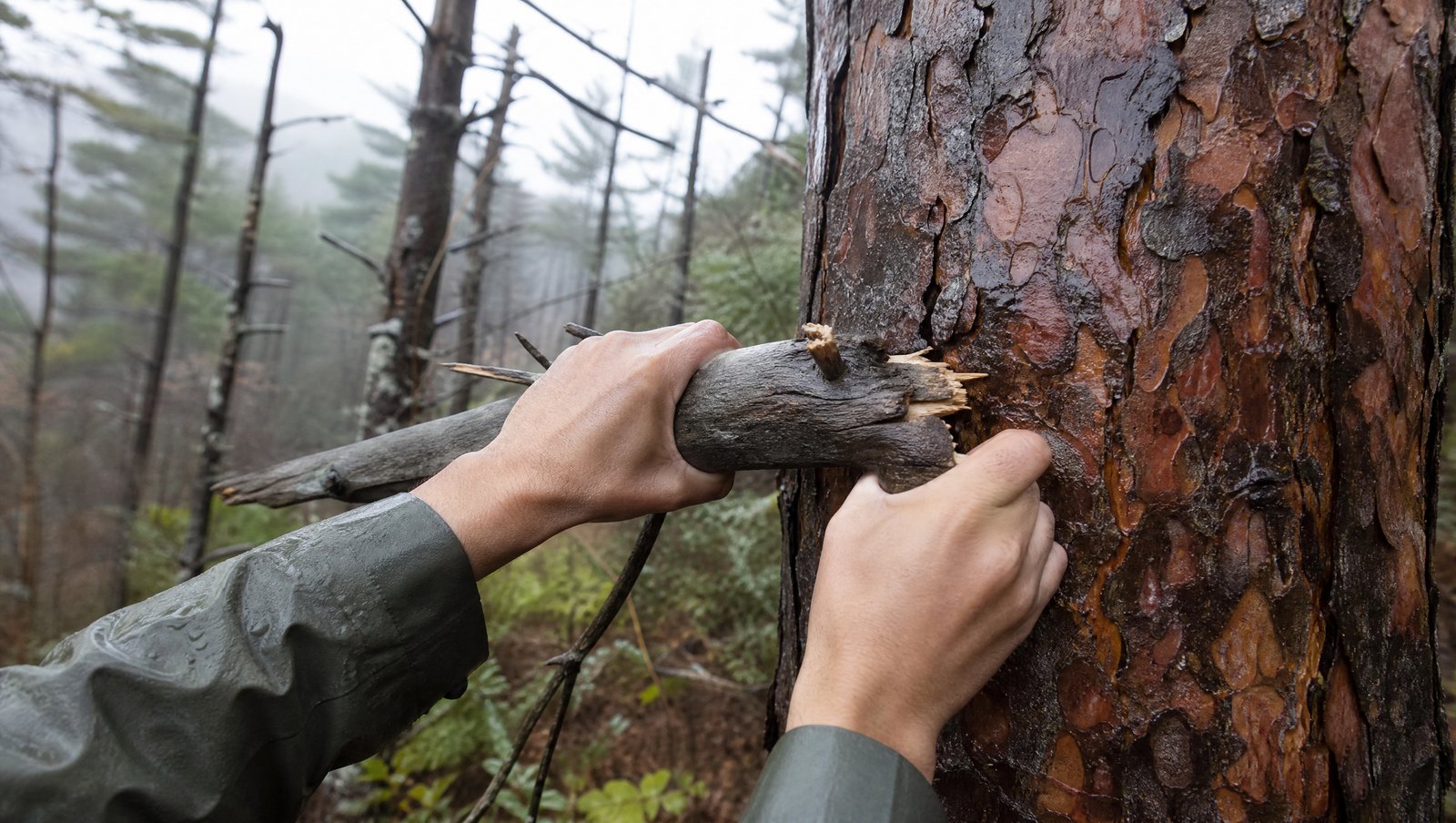
The first mistake almost everyone makes is gathering from the ground. Forest floor wood sits in contact with wet soil and soaks like a sponge, and no amount of coaxing will make it burn well. Look up instead. Dead branches still attached to standing trees, especially the bare lower limbs of pines and other conifers, are held up out of the wet and shed most of the rain that hits them. The test is simple: a dead branch that snaps off clean and crisp is fuel, and one that bends or tears is waterlogged or alive, so leave it. Standing dead trees, the underside of leaning logs, and thick bark overhangs all shelter dry material the rain never reached. Two finds are worth a detour. Birch bark peels off in papery sheets and burns hot even when soaked, thanks to natural oils the water can't touch. And fatwood, the resin-saturated wood at the base of dead pine branches and in old stumps, lights stubbornly well in foul weather and burns long enough to dry out lesser kindling around it.
Split It, Shave It, Stage It
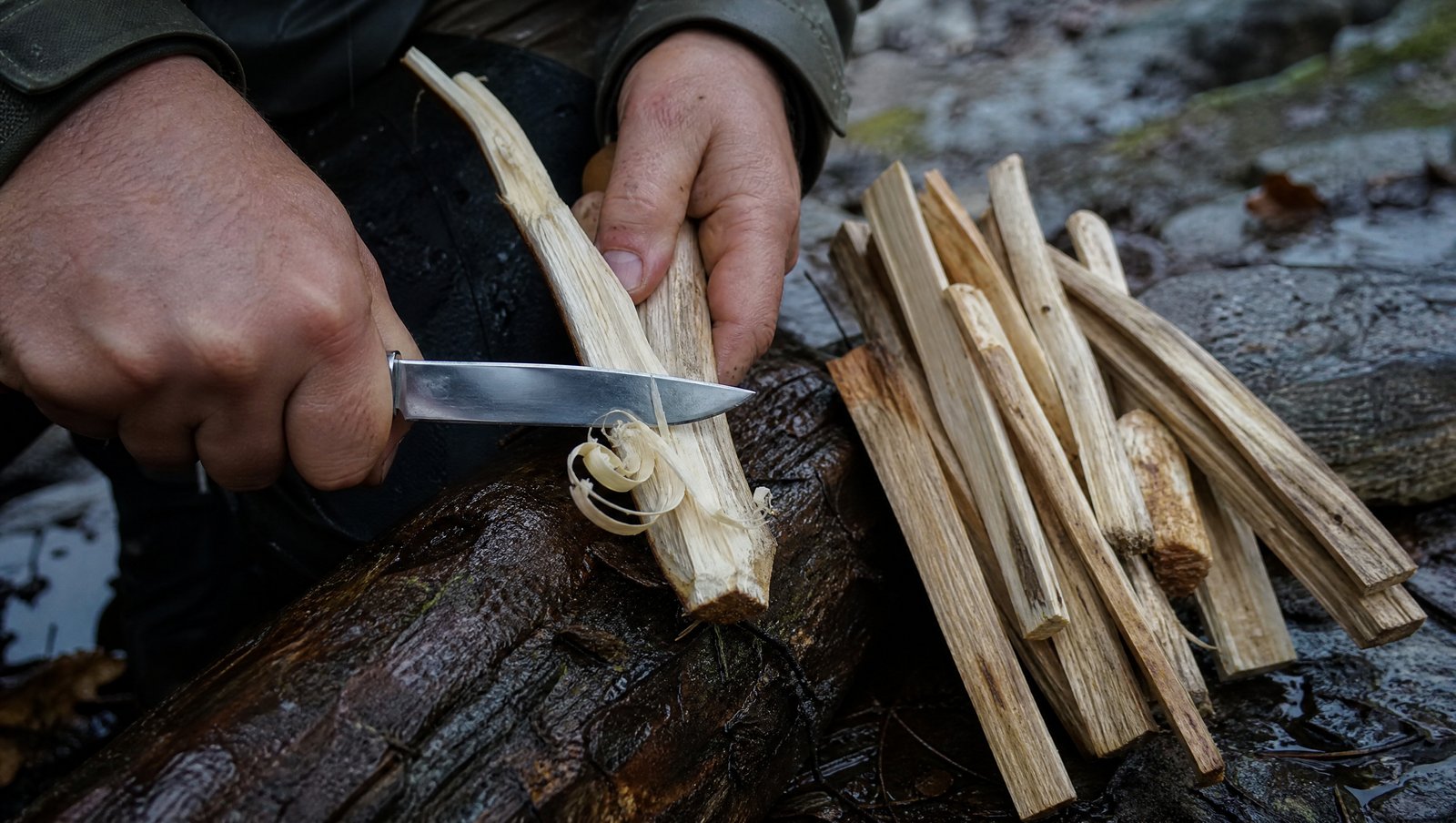
Wet wood is usually only wet on the outside. Split a soaked branch down its length and you'll find pale, dry wood in the middle, which is why processing matters more than luck. Use your knife or hatchet to split your gathered wood down to the core, then shave a few of those dry pieces into feather sticks: long, thin curls left attached to the stick so a small flame can climb them. Now stage everything before you strike anything. Sort a fist-sized bundle of fine tinder, a pile of pencil-thin kindling, a pile of finger-thick pieces, and your wrist-thick fuel, each within arm's reach. The honest rule is to prepare about three times more of the small stuff than looks necessary, because in damp air the fire will eat it fast before it establishes. Build a platform first: a raft of split wood or bark laid flat lifts your fire off the soaked ground, which would otherwise drink its heat and drown it from below. This is also where a prepared kit pays off. A ferro rod throws sparks just as well soaked as dry, while matches and lighters get temperamental in the rain, and a few cotton balls worked with petroleum jelly, carried in any waterproof container, will each hold a flame for minutes instead of seconds.
Light It Small and Keep It Alive
Shelter comes before spark. Rig a tarp high and angled over your fire site, well above flame height, or work under a natural overhang, and put a rock face, a log wall, or your own body between the young flame and the wind. Then start smaller than pride wants: tinder first, and once it catches, feed single pieces of the thinnest kindling and let each one take before adding the next. The urge to pile it on is exactly what kills wet-weather fires, because a smothered flame in damp air rarely gets a second chance. As the fire grows, stack your wet fuel around the edges of the platform where the heat will bake it dry, rotating it like a supply line, so the fire dries tonight's wood while it burns this hour's. And the responsibility doesn't wash off in the rain. Fire restrictions still apply in wet weather, so check them before you build, and when you leave, put the fire out completely: Smokey Bear's drown, stir, drown, and feel method is the standard, because buried roots and duff can smolder for days under ground that looks soaked. If it's too hot to touch, it's too hot to leave.
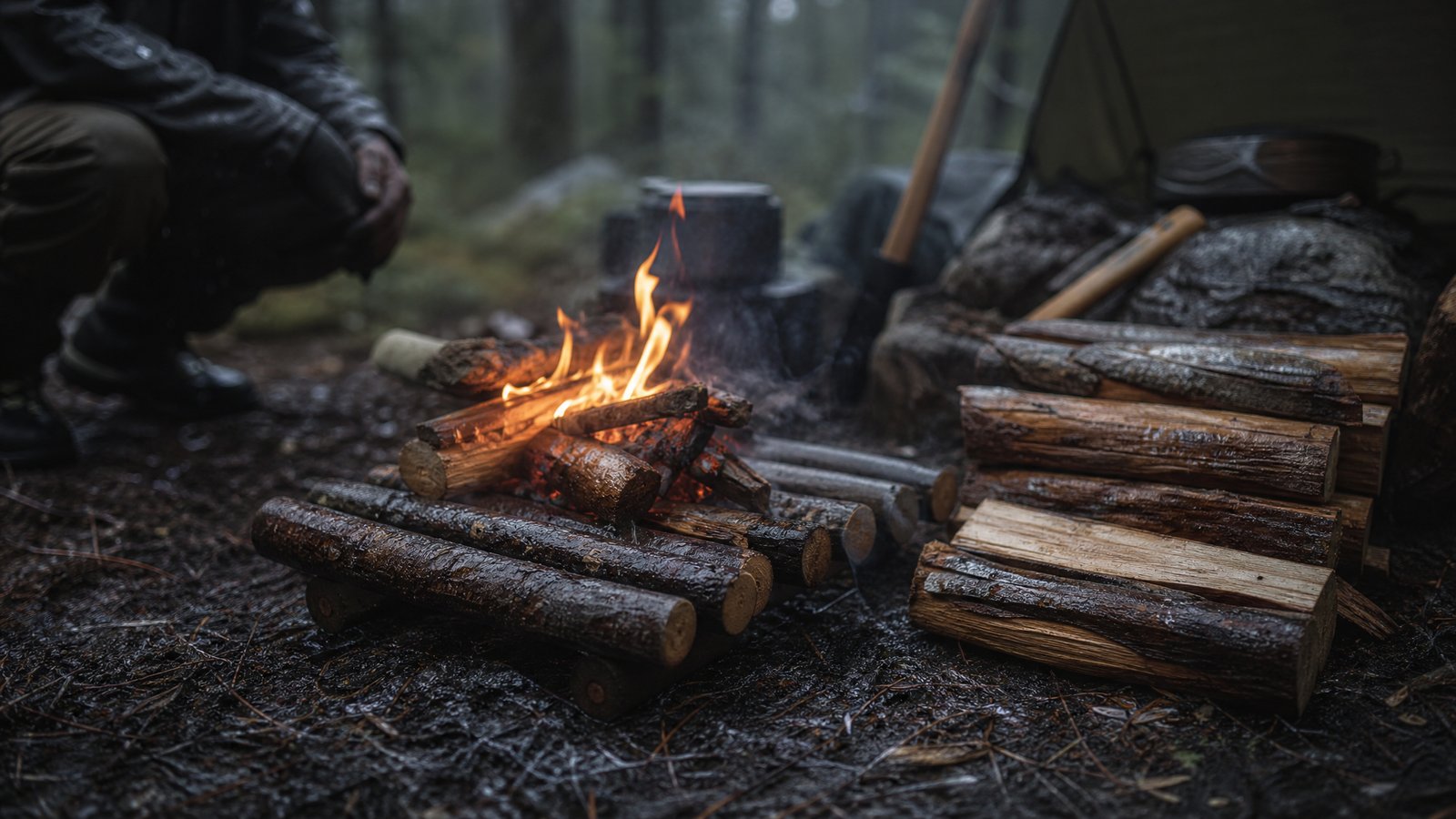
Every step above works better as practice than as theory. Try it on a wet Saturday in the backyard fire pit, when nothing depends on it, and the version you produce on a cold soaked night in the backcountry will come out of your hands instead of a half-remembered article. One more thing belongs in the same skill set: knowing what to do when the cold is already winning. If someone in your group has gone from shivering to fumbling, slurring, or strange decisions, the fire is only half the answer, and our friends at 1st Hour wrote a clear guide on recognizing and treating hypothermia that pairs well with this one. Warmth you can build and first aid you can perform: that's the full kit.
Get the Wet-Weather Fire Checklist as a Printable PDF
The dry-wood search, the processing sequence, the light-and-feed steps, and the fire kit worth carrying, all on one sheet for your pack or glovebox.
Download the Checklist (PDF)Never Scramble For Gear Again
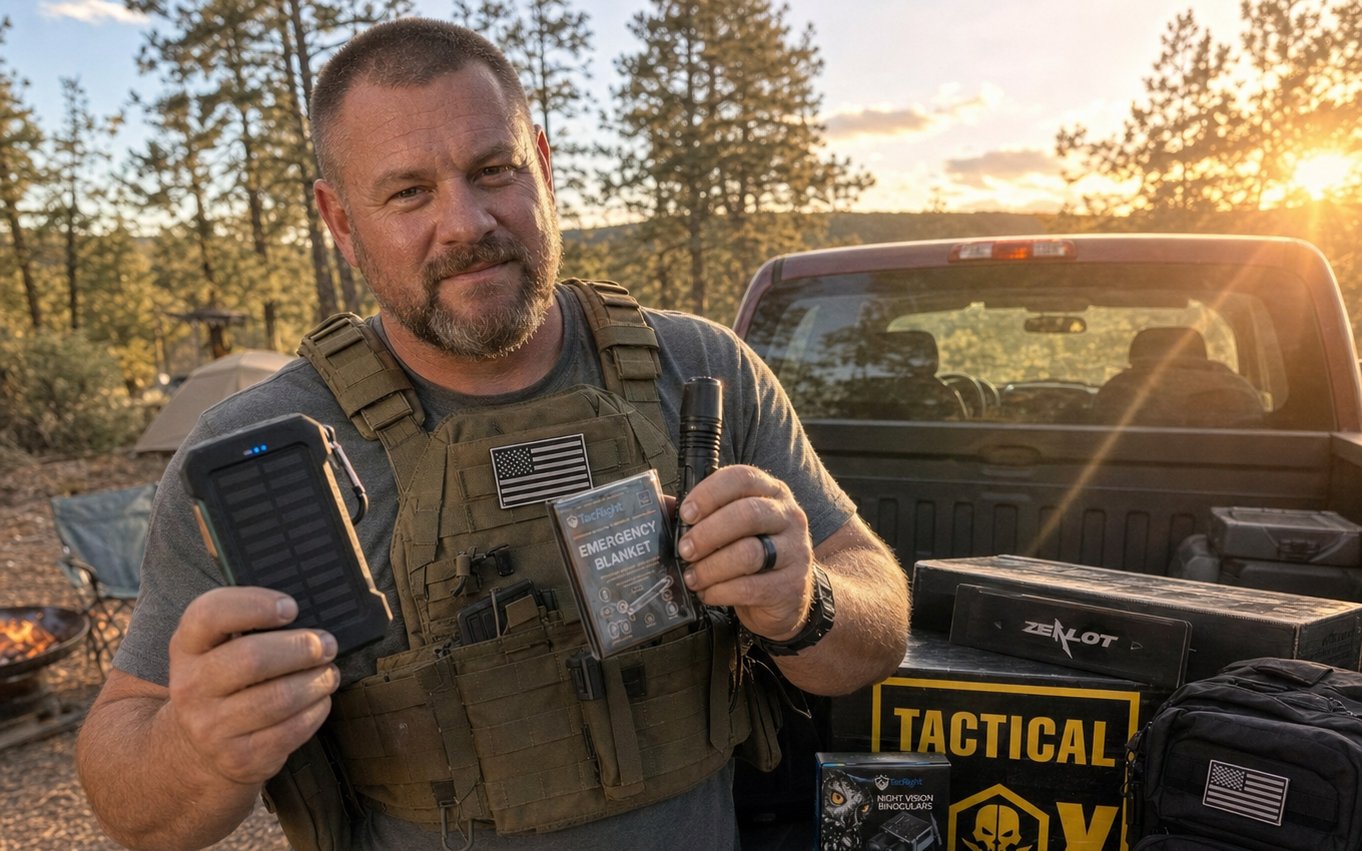
Every month, TacticalBox members get hand-picked tactical, survival, and outdoor gear, sourced ourselves from makers all over the country and curated to be some of the best equipment on the market, worth $150 or more per box. Subscribe once and the right gear keeps showing up before you need it, backed by a money-back guarantee.
Get Your TacticalBoxThis content is for informational purposes only. Open fires carry real risk in any weather: check local fire restrictions before building one, keep water and a shovel on hand, never leave a fire unattended, and extinguish it completely before you leave. Hypothermia is a medical emergency; if someone's condition is deteriorating, seek emergency medical help.