Cold-Weather Vehicle Recovery: Getting Unstuck Alone
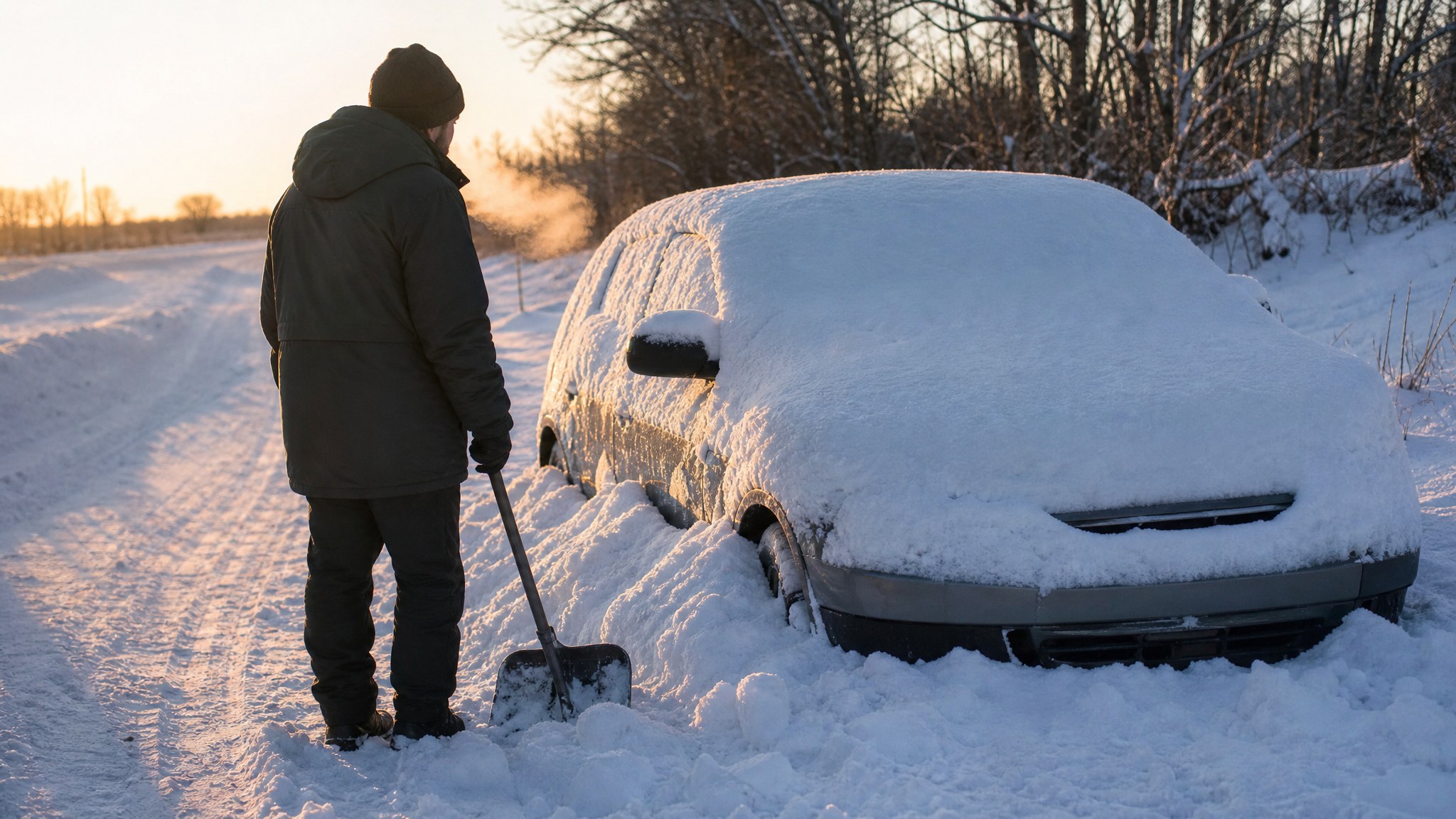
Most guides for getting a car out of snow assume a second set of hands is nearby to push. Plenty of people get stuck without one. Clear the snow and ice from around and under your tires first, including the exhaust pipe. Turn off traction control so the wheels can spin enough to find grip. Rock the vehicle in short bursts between drive and reverse. If that doesn't move it, wedge something solid under the drive tires. If none of it works, stop before you dig the car in deeper or run the battery down, and shift to staying safe where you are until help arrives.
In 2023, an estimated 101,390 police-reported crashes happened on roads with snow or sleet conditions at the time, including 320 fatal crashes and about 22,293 injury crashes, according to the National Highway Traffic Safety Administration. A lot of those days started the same ordinary way: a car that simply stopped moving in the exact spot the driver needed it not to.
Advice for getting unstuck usually assumes someone else is somewhere nearby, and often they are. A stuck car doesn't check anyone's schedule first, though. Early shifts, rural driveways, a job site down a mile of unplowed gravel, these are the moments a driver is genuinely alone with the problem, and the plan has to work without anyone else showing up to help push.
What Not To Do Before You Start
Before touching the gas pedal, AAA's own guide to getting a car unstuck from snow opens with what not to do, since the instinct to just gun it is usually the thing that makes everything worse.
| 01 | Don't floor the gas pedalAAA warns that digging the drive tires deeper into the snow makes it harder to get out, and can burn up the tires or strain the CV joints, U-joints, or transmission. |
| 02 | Clear the tailpipe before you start the engineAAA and NHTSA both flag the same risk: if the exhaust pipe is packed with snow, carbon monoxide can build up inside the car once the engine is running. |
| 03 | Keep a clear path back to firmer groundAAA notes this matters most on a hill, where losing track of the path out can mean sliding toward a tree, a ditch, or another car instead of away from the snow. |
| 04 | Recruit help if any is actually aroundAAA is direct about this one: extra hands save more time than working the problem alone. If a neighbor, a passing driver, or a coworker at the job site is available, that is still the fastest way out. The rest of this guide is for when nobody is. |
Clear The Snow And Ice First
AAA's next step is to remove the snow and ice packed around the tires with a shovel, which gives the car room to move back and forth and lets you check the undercarriage for anything blocking it. Clear the snow out from the front, underneath, and behind each drive tire, not just what's visible at the surface, and make a path long enough for the tires to roll a few feet forward and back.
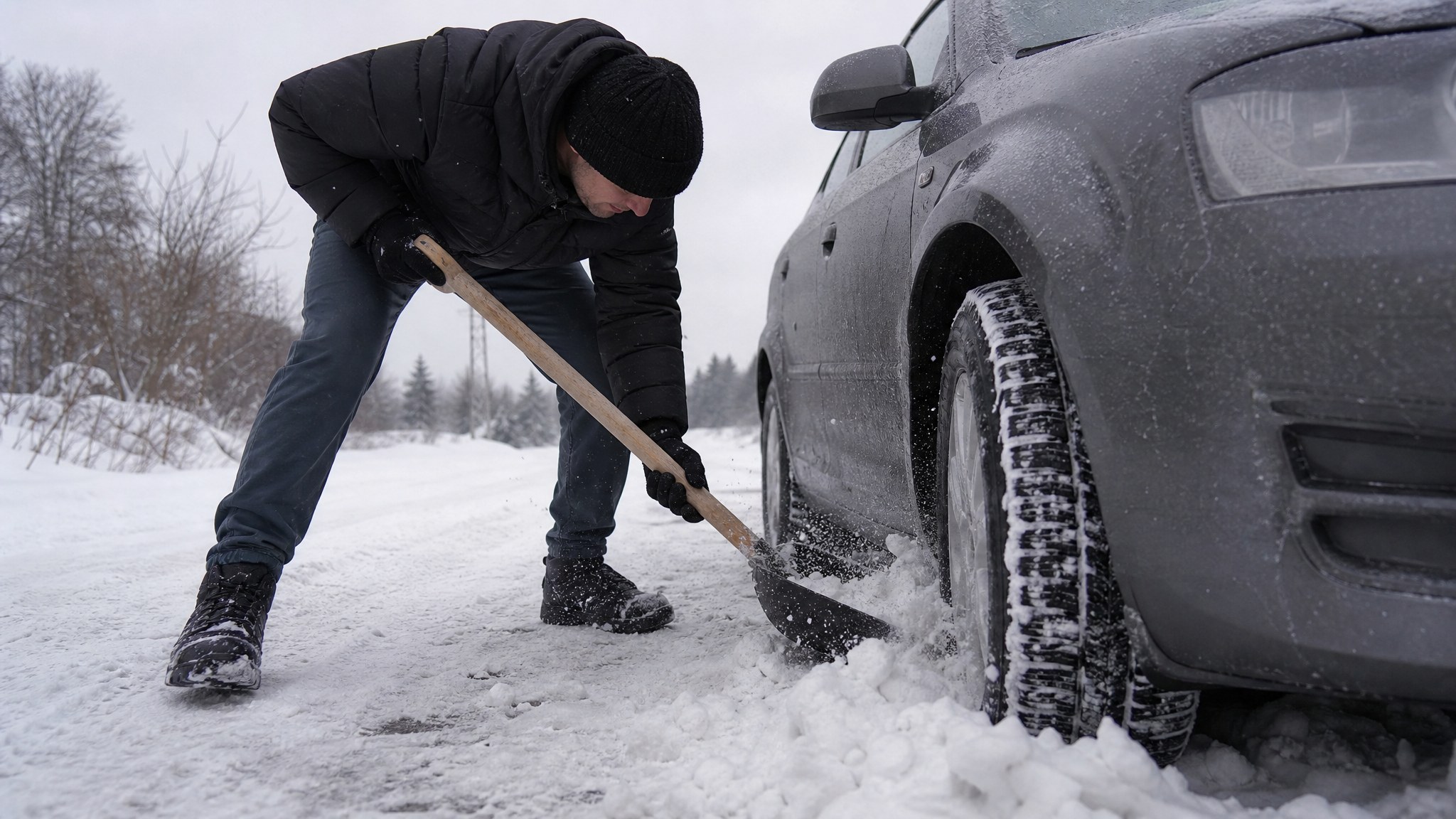
A shovel is the right tool, and NHTSA's own list of what to stock in a car for winter driving names one specifically, along with a broom and an ice scraper. A flat piece of wood or anything else that can break up packed snow under the tires works if a shovel isn't in the car. Ready.gov's recommended car emergency kit covers the same gap from a different angle: an ice scraper and cat litter or sand, kept in the car specifically for a morning like this one.
Turn Off Traction Control And Rock The Vehicle
Once the area around the tires is clear, AAA's next move is turning off traction control. The system is built to keep the car composed on ice while driving, but while stuck, letting the wheels spin a little more than the system would normally allow can help them dig down to a surface with actual grip.
| 01 | Roll the window downAAA recommends this so you can hear the tires spinning and, if possible, watch what they're doing as you work the throttle. |
| 02 | Straighten the wheelsAAA notes this reduces drag, especially if you're following an existing tire track instead of cutting a new one through deeper snow. |
| 03 | Rock between drive and reverseLight throttle forward in the lowest gear until the car rises on the rut, then brake. A pulsing brake pedal is the anti-lock system working normally. Come to a full stop before switching gears, then reverse the same way. |
| 04 | Ease off if the tires just spinAAA warns that spinning too long melts the snow under the tires into ice, which is harder to escape than what was there to start with. |
Add Traction Under The Drive Tires
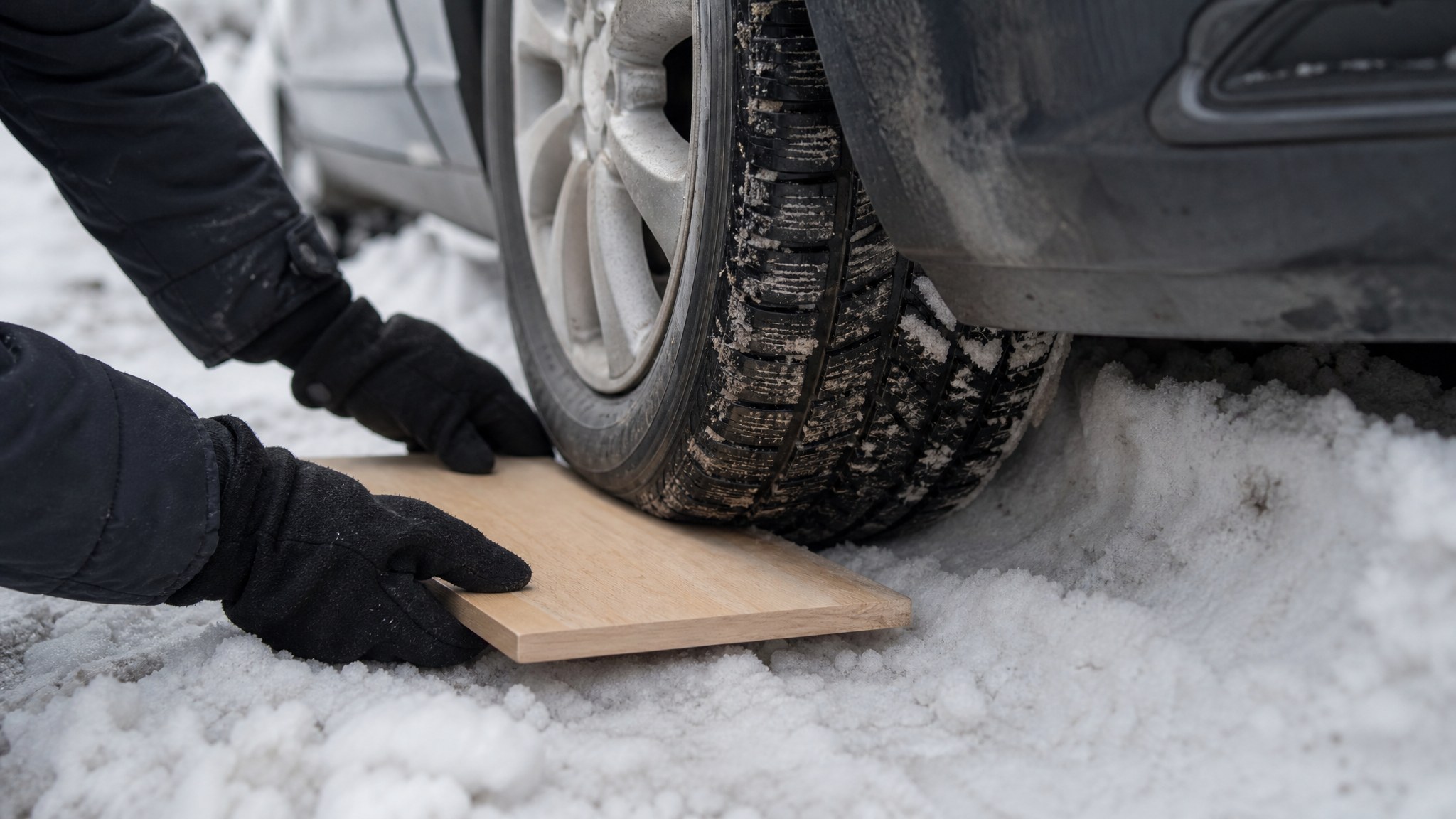
If the wheels are still just spinning, AAA's list of what to wedge under them includes tire chains, a block of wood, a plastic grate, the car's own floor mats, cardboard, sand, gravel, or non-clumping cat litter. Chains work best but aren't always in the car or legal everywhere, and floor mats will likely be ruined afterward, which still beats staying stuck.
Use an object roughly two feet long so the tire has room to gain momentum before running out of material. Wedge it in front of the drive tires to move forward, or behind them to reverse, and apply the throttle carefully, since a spinning tire can throw the object out from under itself if you're too aggressive. Placing traction material on both sides of the tire means if forward doesn't work, reverse still might.
Know Which Tires Are Doing The WorkAAA's own note: drive tires are the fronts on a front-wheel-drive car and the rears on rear-wheel drive. On all-wheel-drive and four-wheel-drive vehicles, all four tires are drive tires, so traction material under any of them can help.
If It's Not Working, Stop And Switch Plans
A couple of honest rounds of clearing, rocking, and adding traction is a reasonable effort. Beyond that, spinning the tires longer usually just packs the snow into ice, runs the battery down, and burns fuel without moving the car. Alone, with no one to spot the car's position or push at the right moment, that point tends to arrive sooner than it would with help on hand.
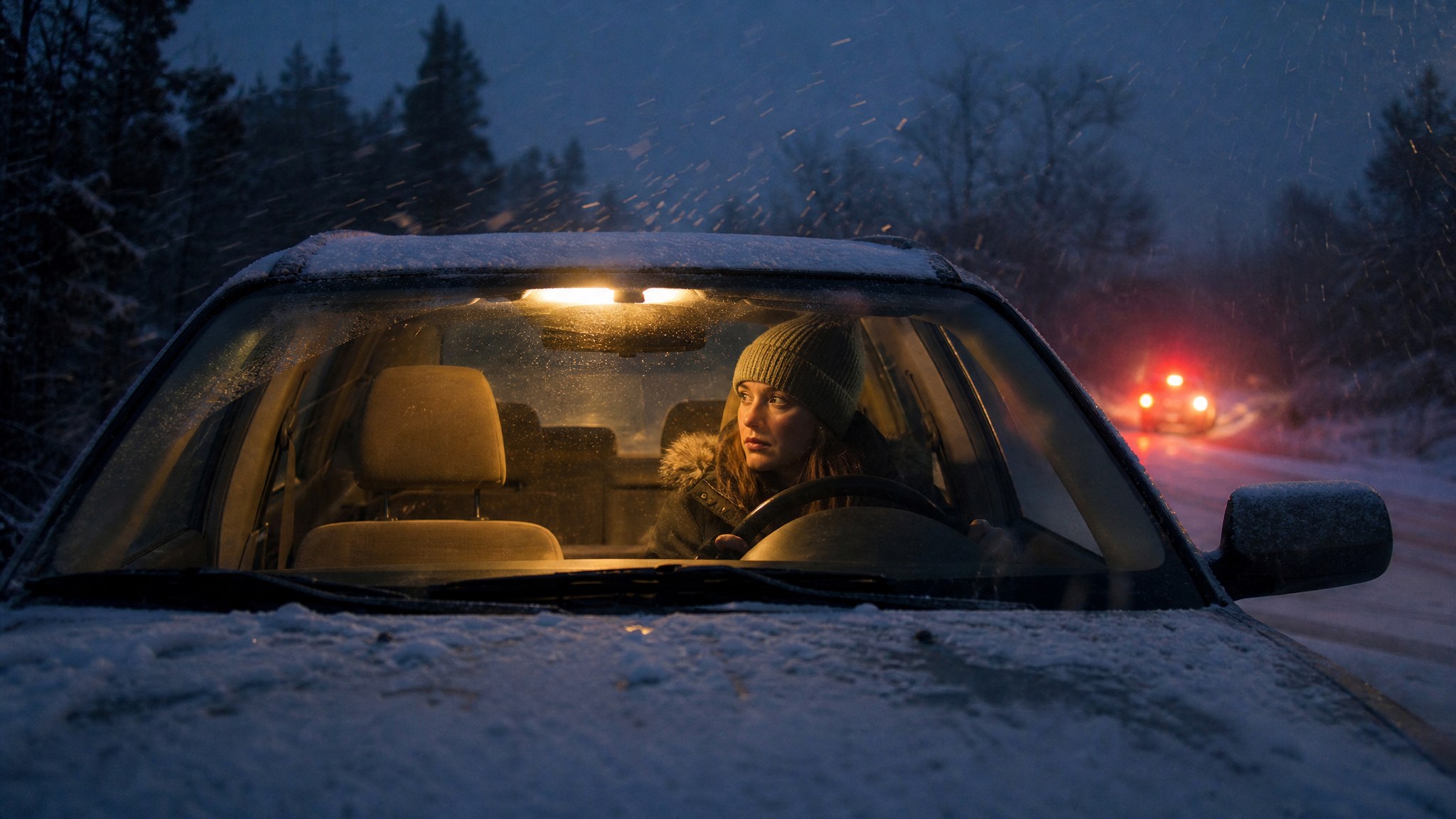
NHTSA's guidance for that point is specific: stay with the car and don't overexert yourself. Let the car be seen by putting bright markers on the antenna or windows and keeping the interior dome light on. Keep the exhaust pipe clear of snow and run the engine only sporadically, just long enough to stay warm, never for long periods with the windows up or in an enclosed space, since that's how carbon monoxide builds up. Ready.gov adds that if the car becomes hard to control at any point, pull over, stop, and set the parking brake rather than fighting it further.
Watch Your Hands While You WorkDigging and rocking a car out of snow with wet gloves in freezing air is exactly the kind of task that leads to frostbite before it's noticed. 1st Hour's guide on frostbite first aid covers the early warning signs and what to do if fingers or toes go numb and stay that way.
None of this replaces a car that was stocked for winter before the drive started. Between NHTSA's list (a shovel, jumper cables, a flashlight, cat litter or sand, blankets, a charged phone) and Ready.gov's (an ice scraper, jumper cables, a blanket, cat litter or sand, and a paper map), the overlap is the real starting point, and the map is worth adding either way since it still works with no signal and no battery.
Get The Cold-Weather Vehicle Recovery Field Card As A PDF
The full sequence condensed to one printable card for the glovebox: what not to do, how to clear and rock the car, what to wedge under the tires, and what changes once you're waiting for help.
Download the Field Card (PDF)Gear Up Before The Next Cold Snap
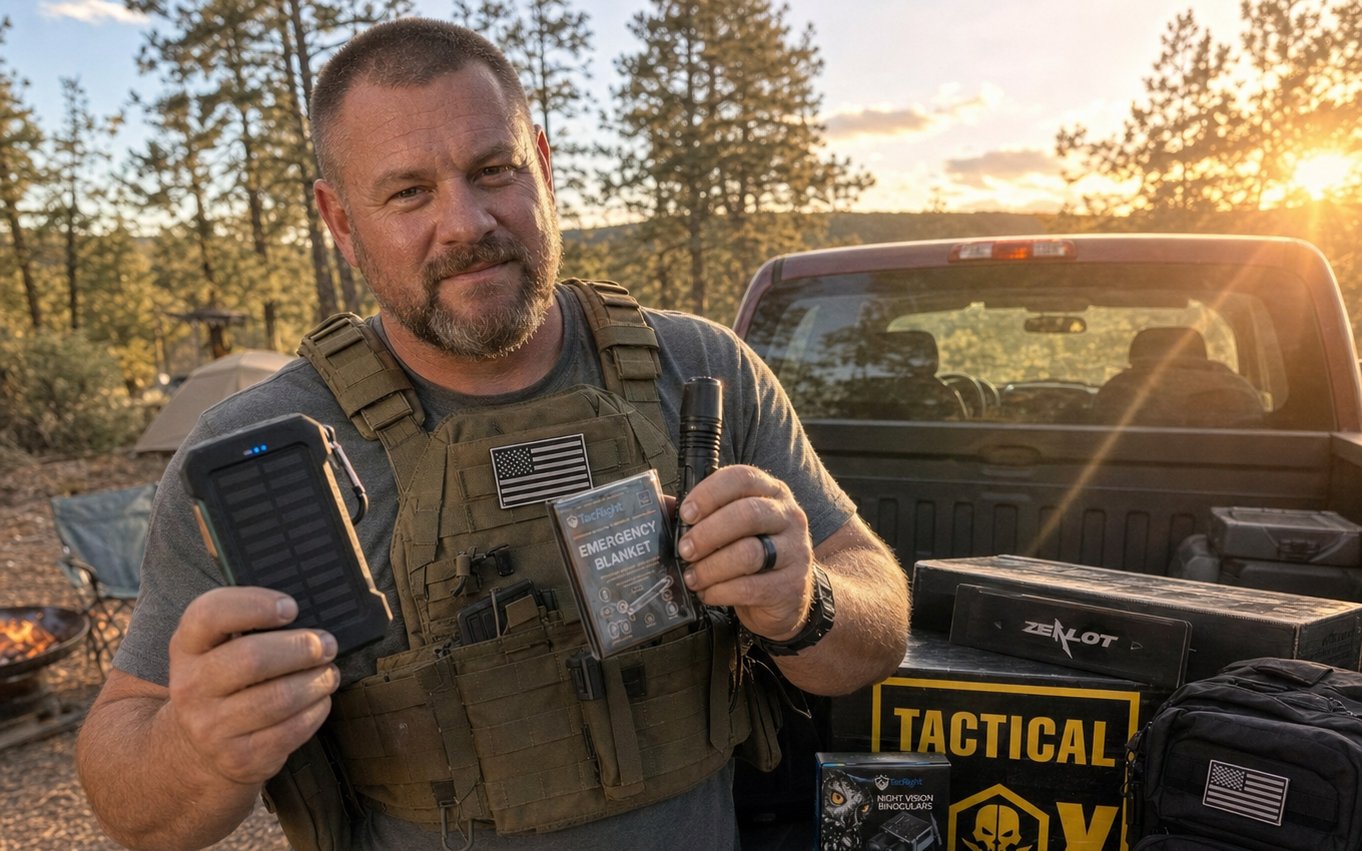
Every month, TacticalBox members get hand-picked tactical, survival, and outdoor gear, sourced ourselves from makers all over the country and curated to be some of the best equipment on the market, worth $150 or more per box on the Standard plan. It's an easy way to build out a real winter car kit without hunting down every piece yourself. Backed by a money-back guarantee. Cancel, pause, or skip anytime. Use code 25OFF for 25% off your first box.
Get 25% Off Your TacticalBoxThis content is for informational purposes only and is not a substitute for official emergency guidance from local authorities or your vehicle's owner's manual. Evaluate road, weather, and vehicle conditions for yourself before attempting any recovery technique, and call for professional roadside or emergency assistance when conditions are beyond what you can safely handle alone.