Choosing the Right Survival Knife
For a primary survival knife, look for a full tang fixed blade, 4 to 7 inches long, in a drop point shape. Steel is a tradeoff, not a right answer: high carbon steel (like 1095) takes a sharper edge and is easier to sharpen in the field but needs to be kept dry and oiled, while stainless steel resists rust with less maintenance but is slower to sharpen once it dulls. A folding knife is fine as a backup or for light tasks, but the pivot is a weak point you don't want on the one blade your whole kit depends on. Check your state's knife law before you carry anything, since blade length and locking mechanisms are regulated differently almost everywhere.
Walk into any outdoor store and the knife case alone can take you twenty minutes to get through. Drop point, tanto, clip point, S35VN, 1095, D2, full tang, partial tang, folder, fixed. Most of it is marketing noise stacked on top of a handful of decisions that actually matter. A survival knife has one job: hold up to the worst task you throw at it, on the day you can't just put it down and grab a different tool. Get the fundamentals right and the rest is preference.
Fixed Blade vs. Folding: Pick Your Primary
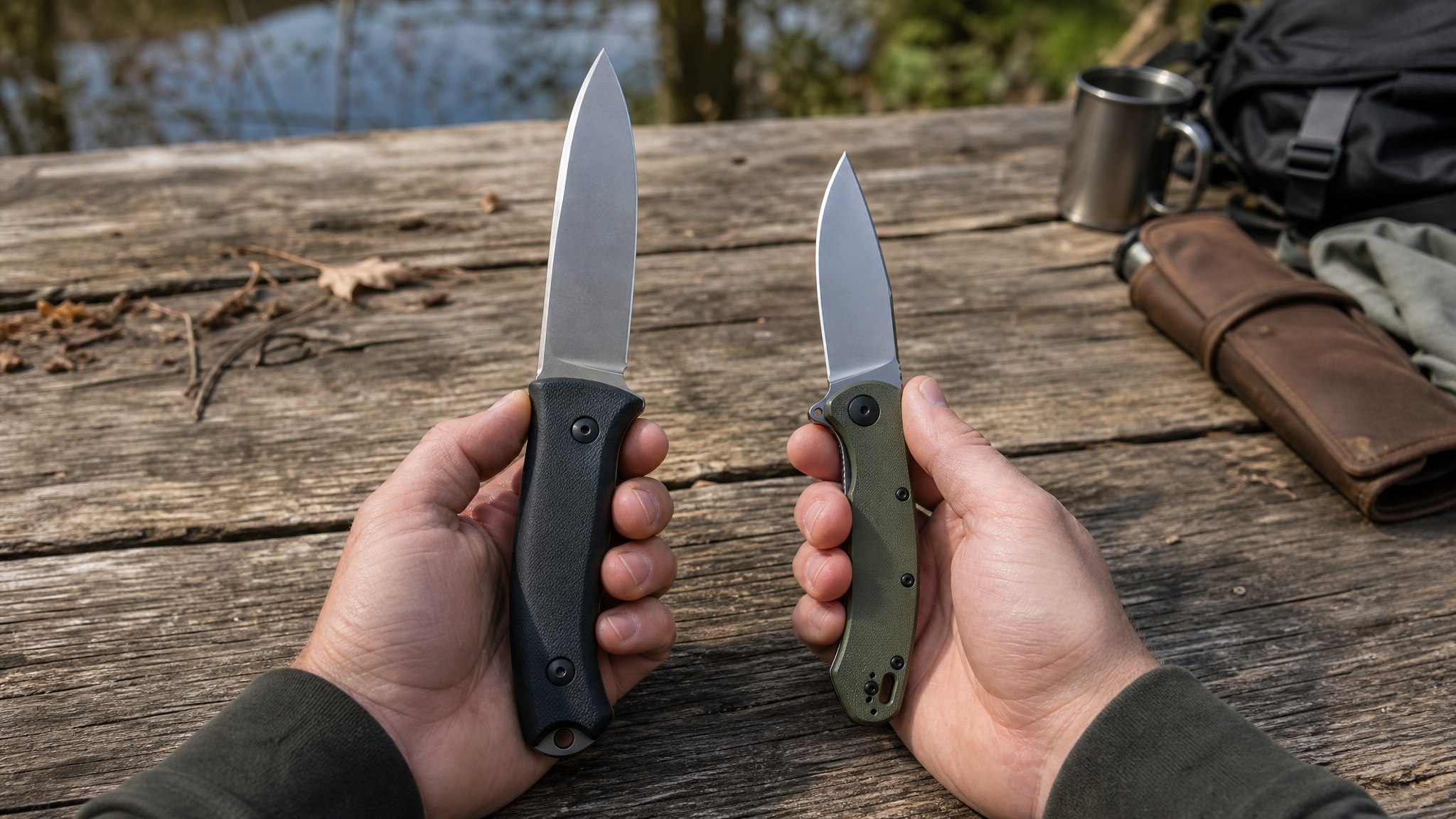
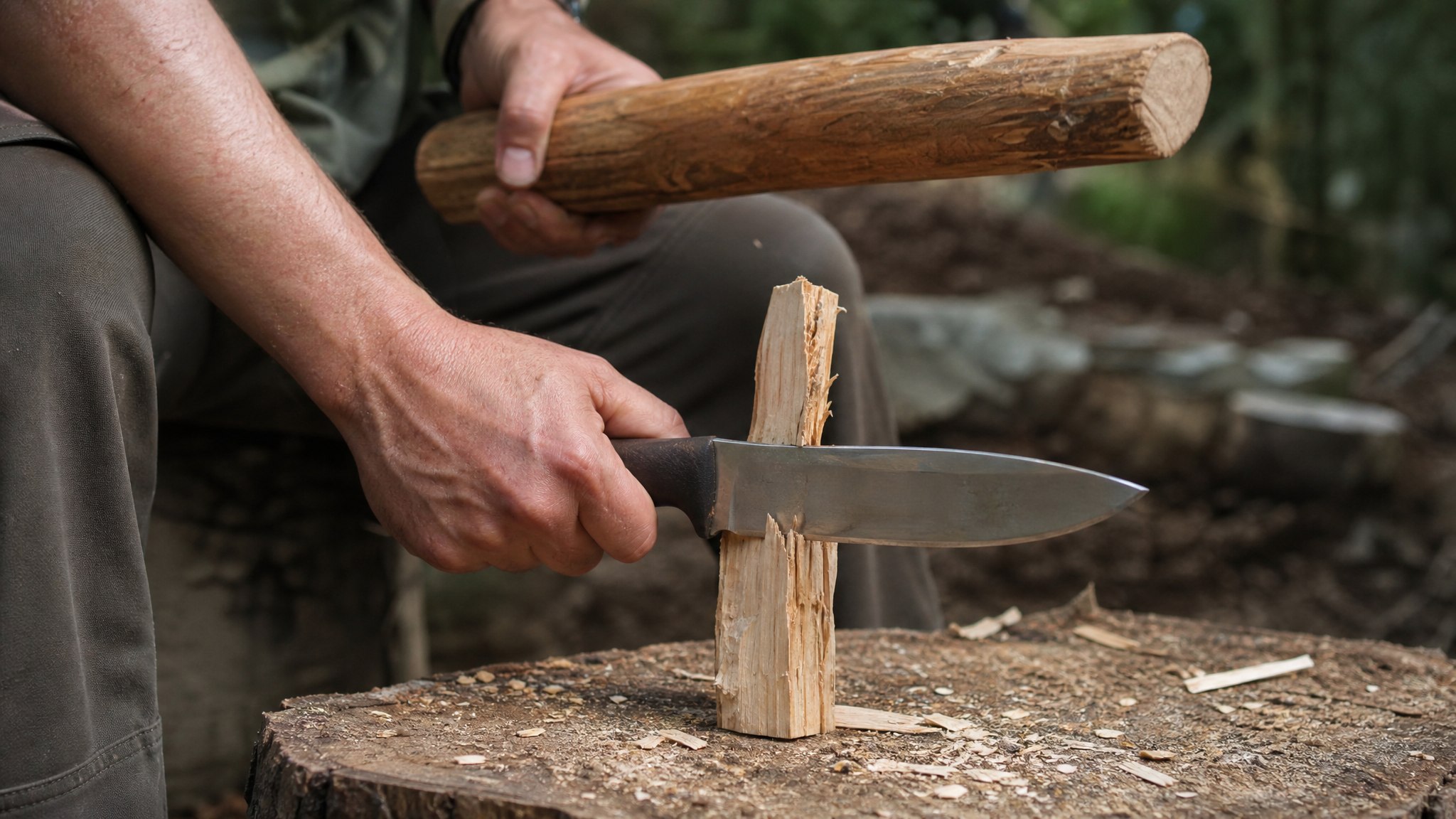
A fixed blade with full tang construction, meaning the steel runs in one solid piece from the tip through the entire length of the handle, is the standard for a primary survival knife because there's no moving joint to fail. That single piece of steel is what lets a full tang knife take a baton strike for splitting wood, pry without flexing at the handle, and keep working after the kind of abuse that would snap a knife built around a partial tang or a folding mechanism. A folding knife earns its place too, just not as your main blade. The pivot that lets it close is also the weakest point on the tool, and it isn't built for batoning, prying, or repeated heavy-force work. Where a folder wins is weight and pocket space, which makes it a smart backup or an everyday carry piece for lighter jobs like food prep, cutting cordage, or trap work. Carry one of each if your pack allows it. Rely on the fixed blade when the task gets serious.
Blade Steel: Carbon and Stainless Are Both Right, Just for Different People
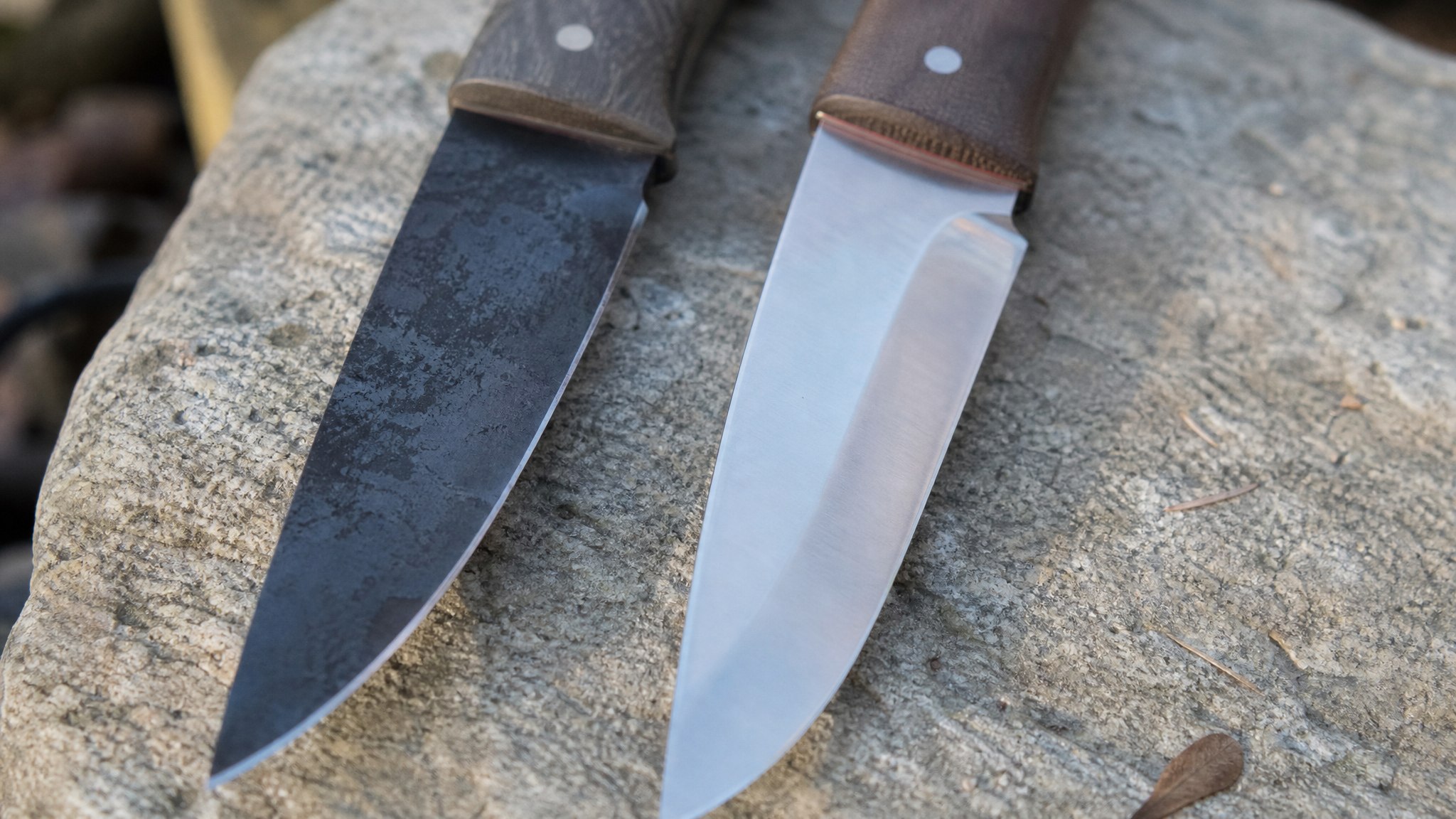
High carbon steels like 1095 are the budget-friendly, field-sharpenable choice. They take a sharp edge easily with basic tools, which matters if you ever need to touch up your knife without a proper sharpening kit. The tradeoff is corrosion. Carbon steel will start to spot with rust if it sits wet for even a few minutes, and it needs a light coat of oil to stay protected between uses. Stainless steel, by contrast, resists rust with very little upkeep, which makes it the lower-maintenance option and a better fit for wet environments or anyone who doesn't want to babysit their blade. It comes at the cost of edge work: stainless is generally harder to sharpen back to a fine edge once it goes dull, even though it holds a working edge for a reasonably long time. Higher-end steels like S35VN or M390 try to close that gap with better edge retention and decent corrosion resistance at once, but they cost more and are still harder to sharpen in the field than a simple carbon steel. There's no wrong choice here, only a mismatch between the steel and how you actually plan to use and maintain the knife.
Blade Shape, Length, and the Legal Side Most People Skip
A drop point blade, where the spine curves gently down to meet the edge near the tip, is the most versatile shape for survival use. It gives you a strong point for controlled work without the fragile, needle-like tip you'd get on a clip point, and it handles everything from food prep to skinning to general cutting without a specialized shape working against you. For length, 4 to 7 inches covers the vast majority of survival tasks. Go shorter and you lose leverage for batoning and heavier cutting; go longer and the knife gets harder to control for fine work and heavier to carry. Blade thickness in the 1/8 to 3/16 inch range resists snapping under baton strikes without adding unnecessary weight. On the handle, look for a full, comfortable grip in rubber, micarta, or a textured synthetic, ideally with a guard or contoured stop that keeps your hand from sliding onto the edge when it's wet or you're tired.
Before you carry anything, check your state's knife law. Blade length limits, restrictions on certain locking mechanisms, and where you're allowed to carry concealed versus open all vary by state and sometimes by city. The American Knife & Tool Institute's state-by-state knife law summaries are a solid starting point for what's regulated where you live, though they're not a substitute for checking your local statutes directly. And however sharp the edge you settle on, respect it: know how to handle a cut if the blade finds skin instead of wood, which is exactly what 1st Hour's guide to stopping severe bleeding walks through step by step.
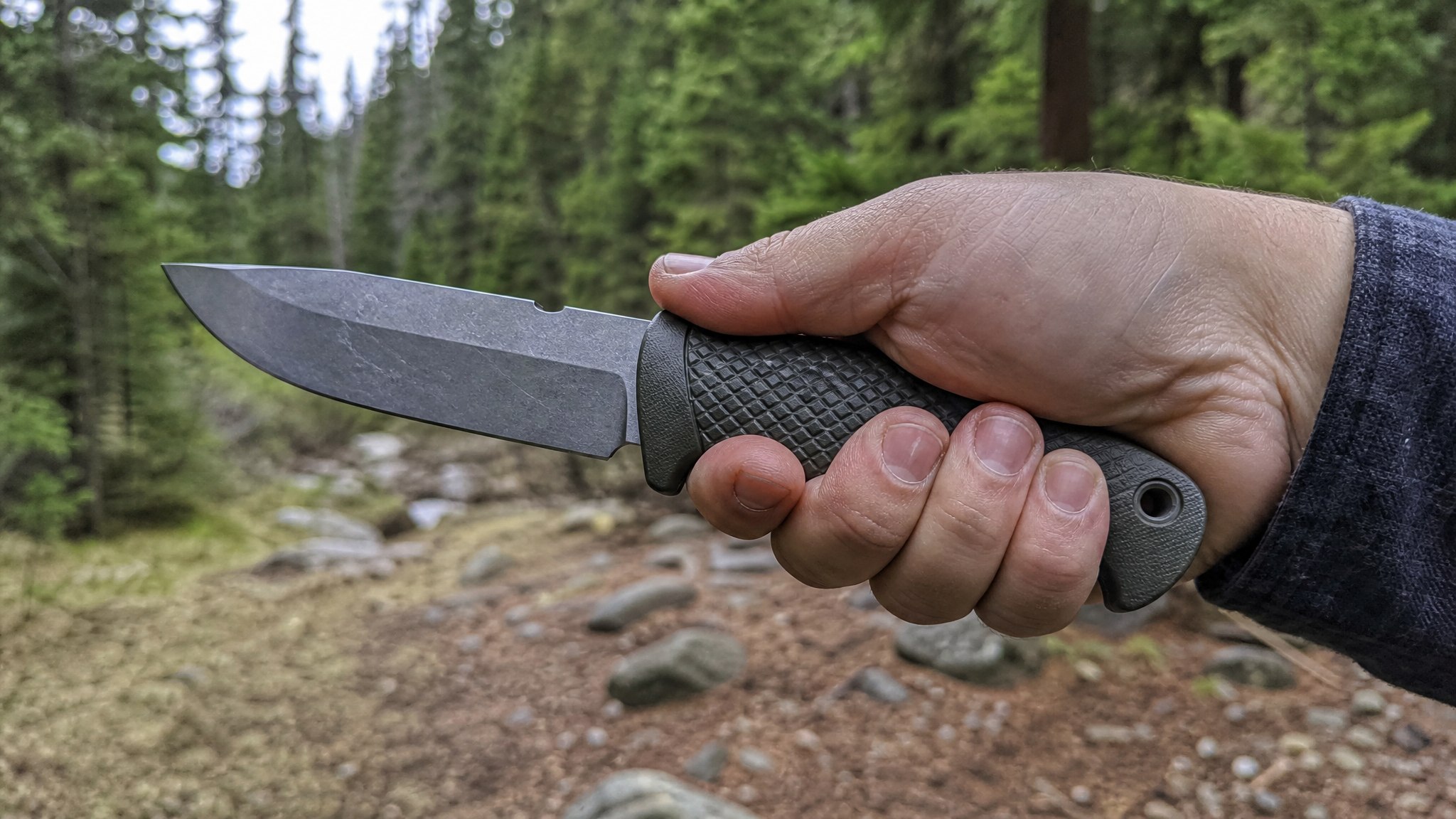
None of this means you need the most expensive knife on the shelf. It means matching a few real specs, full tang construction, a steel you'll actually maintain, a practical blade shape and length, to how you're really going to use the thing. A knife that fits the job beats an expensive knife that doesn't every time. That's the same standard we hold every piece of gear to before it earns a spot in a TacticalBox.
Get the Survival Knife Buyer's Checklist as a Printable PDF
The specs that matter, the steel tradeoffs, and a spot to check off what you're looking for before you buy.
Download the Checklist (PDF)Never Scramble For Gear Again
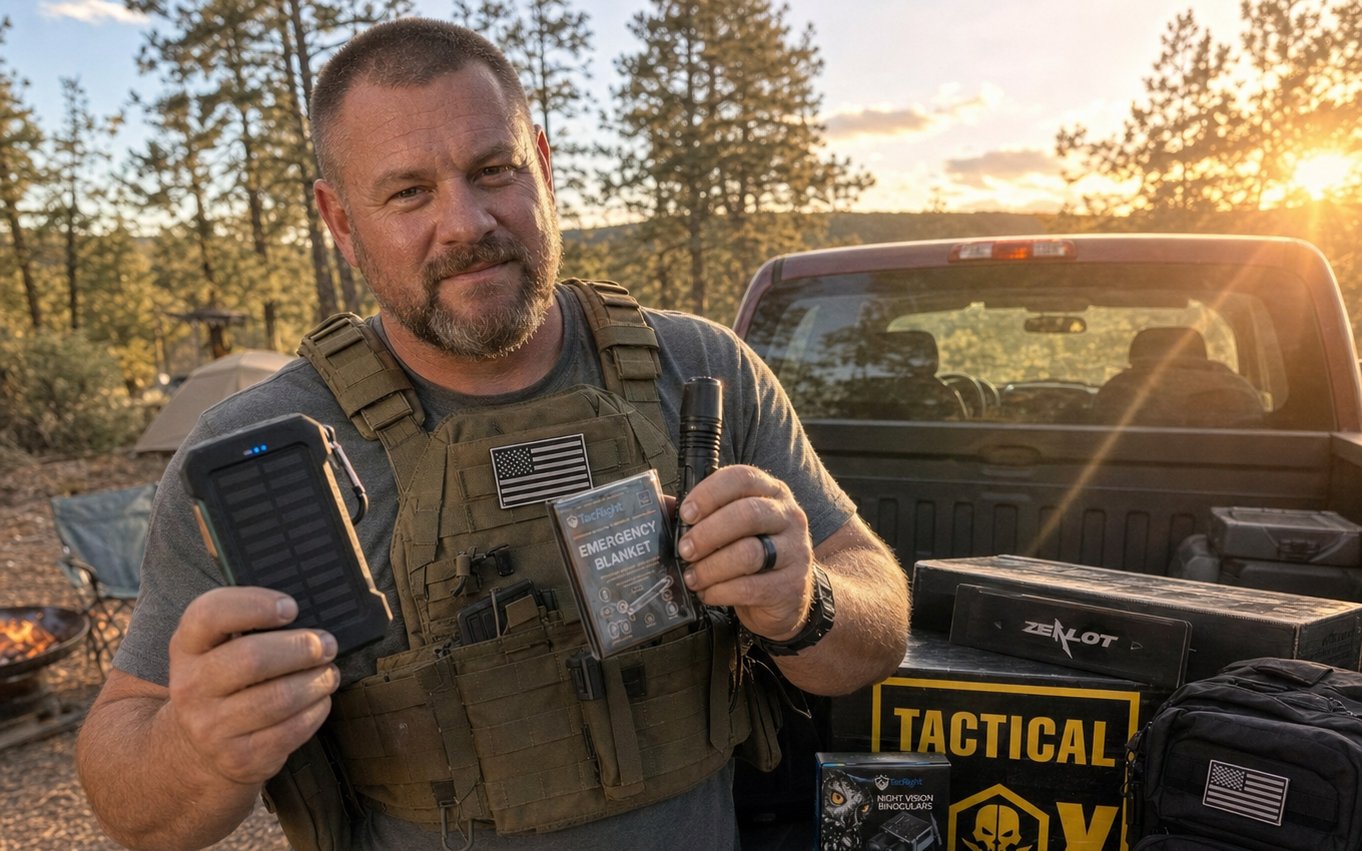
Every month, TacticalBox members get hand-picked tactical, survival, and outdoor gear, sourced ourselves from makers all over the country and curated to be some of the best equipment on the market, worth $150 or more per box. Subscribe once and the right gear keeps showing up before you need it, backed by a money-back guarantee.
Get Your TacticalBoxThis content is for informational purposes only and is not a substitute for professional guidance. Knife laws vary by state and locality and change over time — always verify current regulations for your specific location before purchasing or carrying any knife. Always handle blades carefully and follow the manufacturer's instructions for use and maintenance.